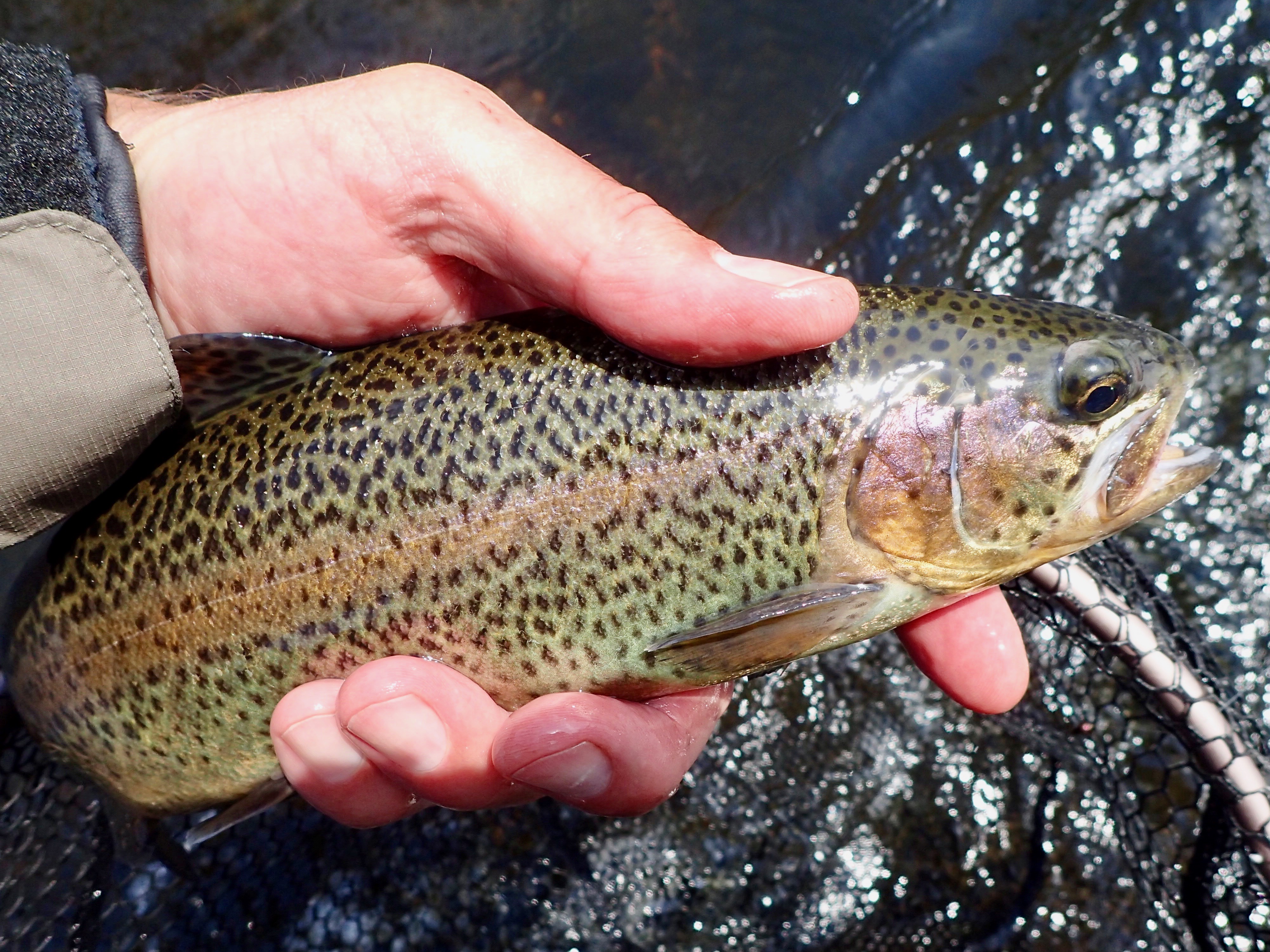
Hendricksons are here!

We all could use a good Hendrickson hatch, and now we don’t have to wait. Well, you might have to get to the river early enough to secure a spot, and then wait for the bugs to pop — usually early afternoon — but the hatch is on and moving upriver. I guided James and his daughter Charlotte last Friday on the lower river, and the hatch was just getting started. With favorable air temps forecast for the entire week, now’s the time to jump on it. it should be on in the PTMA this week.
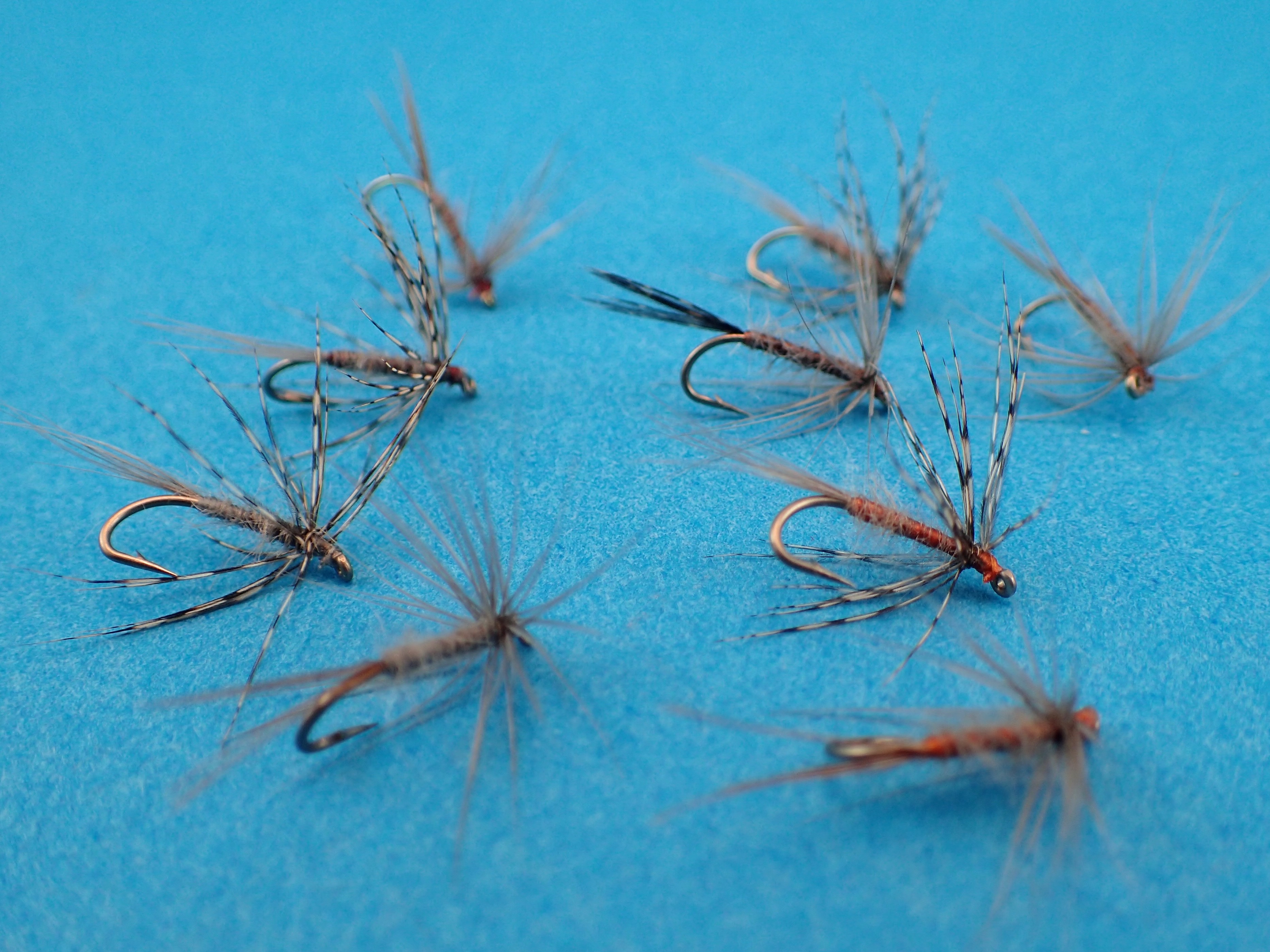
Pick an active feeder during the first phase of the Hendrickson hatch, place one of these soft-hackled Hendricksons over its lie, then hang on.

Hendricksons are one of the mayflies that will be featured in my book. They’ll be part of a general chapter on mayflies (caddisflies, stoneflies, midges, and other food sources are the other four categories) which then breaks down into some of the more popular/important specific hatches. The intent is not create an in-depth, Latin-heavy, scientific bug-biology geek white paper; rather, it’s to give you meaningful, useful information. The better you understand the hatch, the more fish you’ll catch.

Here’s this again in case you missed it: The best soft hackles and wet flies for fishing the Hendrickson hatch.

From the Archives: The best soft hackles and wet flies for the Hendrickson hatch

Yeah, baby, it’s getting to be about that time. OK, maybe not for a couple more weeks. We’ll see what Ma Nature has in mind as far as warmth and rain are concerned. But indeed it is coming. And right now is the perfect time for you to stock the box with your favorite Hendrickson patterns.

If you’re not fishing under the Hendrickson hatch with wet flies, you’re missing out. In fact, you’re missing out on some of the best trout-on-the-fly action of the year. Tie these up, place them over a rise, and hold on. Oh. And be prepared to clip one or two flies off your three-fly team. Such are the travails of the angler getting doubles and triples!

The Best Soft Hackles and Wet Flies for Fishing the Hendrickson Hatch.

Mssr. H awaits your pleasure…

From the Archives: Leisenring’s Favorite Twelve Wet Flies

Looking back at this post, I can happily say that I’ve given many of these patterns far more than a test drive. I find it highly satisfying that the flies that Leisenring fished with confidence on his beloved Pennsylvania streams work just as well on the Farmington River. The post is formatted so that if you click on a pattern title, you’ll be taken to the recipe, along with a little blurb about the fly.

You can find Leisenring’s Favorite Twelve Wet Flies here.

Hot tip: try Liesenring’s Old Blue Dun in a size 12 during the Hendrickson hatch. The original works, but if you want to make it a little truer to the natural, use dark dun for the tail and hackle.

Farmington River Mini-Report 4/21/21: First wet fly fish of the year

I only had 90 minutes to fish, so I chose the lower Farmington because it was closer to my house, and also to where I needed to be at 2pm. Plus, there was that front bearing down on us. Didn’t want to get stuck in that mess, especially after witnessing a foreboding fork of lightning slicing through the sky. After waiting for the dark clouds to disperse, I was on the water a little before noon. The plan was to swing wets and see if there was any Hendrickson action. Conditions weren’t great — 600cfs is a little high on the Farmington for wet fly, so I used a tungsten bead head Pheasant Tail soft hackle on point to sink things a bit. Still, the water I fished was fast and heavy, and if I was interested in numbers, nymphing would have been the way to go. I had a half dozen whacks in the fast water, with no hook sets, before I connected in a deeper slot. The wind was also a factor — forget roll casting for any distance — and I had to be vigilant to keep the rig from tangling. But by the end of the outing, I had three trout to hand, two on the BHSHPT and another, the biggest, on the top dropper, a Squirrel and Ginger. A My Father Le Bijou 1922 Gran Robusto proved to be a fine companion. Speaking of fronts, I can’t believe how much the temperature has dropped.

It always feels good to land the first wet fly trout of the year, even if it is a stocker rainbow. This one treated me to two aerials. The last two were fatter, and took a bit of forceful coaxing to come to net. I didn’t see any Hendricksons or caddis, but then again I only fished until 1:30pm. My wet fly box desperately needs a restocking!

Best of 2020 #3: Hendrickson Wet Fly Mania

When I give a wet fly lesson, I always tell my clients this: “If you hit a hatch just right, you can have one of those days you’ll never forget.” And it so it was for me on a cool afternoon in April. Hendrickson season can be tough on the Farmington, especially if you’re looking for an unoccupied mark. But sometimes luck smiles upon you, and on this day it was so. The run I wanted to fish was on lockdown, but just as I arrived, an angler left, leaving a prime lie open. Armed with a three fly team of wets, I proceeded to wreak havoc upon the residents. This was one of those days where I quickly lost count of fish, but it was easily in the multiple dozens range. (Fresh fish + epic Hendrickson hatch + wet flies = stupid good.) I had doubles galore. I finally quit because it was so ridiculous for so long. Really. You can read about it here.

I had several evenings of spectacular wet fly action during the sulphur hatches of 2020, but nothing that equaled the craziness of this day of Hendrickson mania! If the water is 450cfs+, or if you want to sink your team a little more, try this tungsten bead head Dark Hendrickson soft hackle on point.

Bead Head Soft-Hackled Dark Hendrickson

Or BHSHDH for short.  The Bead Head Soft-Hackled Dark Hendrickson is simply a weighted riff on the classic Dark Hendrickson Winged Wet. Take the basic color scheme. Add a tungsten bead to give it some serious weight. Tie it on point, and the next time the the creek is up you’ll get your rig down fast with a few strategic mends. (Recipe by request, because at currentseams.com, we aim to please.)

OLYMPUS DIGITAL CAMERA

Hook: 2x strong wet fly 12-14
Bead: Black tungsten, to size
Thread: Grey
Tail:  Lemon wood duck or dark blue dun hackle fibers
Body: Muskrat fur
Hackle: Dark blue dun hen

Tying Notes: I hate to lose the lemon wood duck of the winged wet, so I usually tie this fly with that wonderfully variegated buggy feather in the tail. Having said that, the fly pictured uses hen. Muskrat is the traditional body fur; you could substitute any grey fur or dubbing blend. The feather I happened to choose for this fly has a mysterious dark center; it’s just a random occurrence. Sometimes I’ll use a black Sharpie to color the eye of the hook — it’s a quick visual code that tells me I used a tungsten bead.