Revisiting the Rhody Flatwing (and a little flatwing history for good measure)

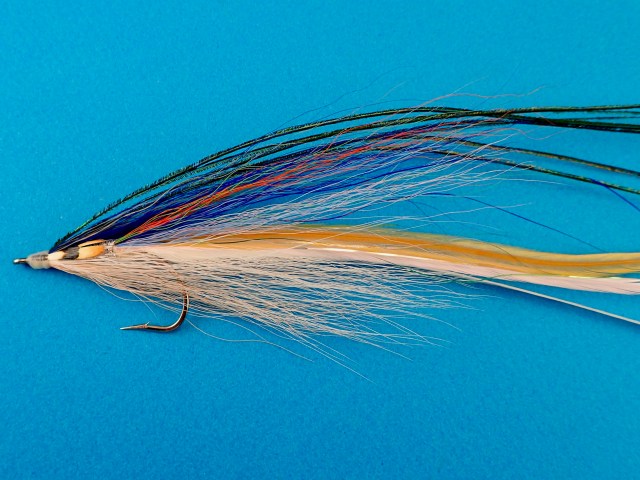
I wrote about Bill Peabody’s Rhody Flatwing pattern on currentseams seven years ago. Three years earlier, I’d posted the pattern on a public forum. It’s funny how these things play out, because someone recently followed up on that old forum post with a Rhody Flatwing timeline that didn’t make sense. I don’t know when Bill Peabody created the pattern, but it had to be some time after 1980. Before his death, Peabody clearly stated that Ken Abrames’ flatwings were the inspiration for the Rhody. I’ve also had conversations with Ken where he talked about sharing some of his flatwings with Bill. The point is: Ken didn’t start experimenting with the modern saltwater flatwing until the late 1970s, and he did not share them with the Rhode Island fishing community until the early 1980s. So. The Rhody Flatwing had to have come after that.

12RhodyFlatwings

Here’s a link to the original Rhody Flatwing currentseams piece.

Below is a pdf link to an excellent article by Tom Keer from the Summer 2001 Fly Tier. Part of it is about Ken and how and when he developed the modern saltwater flatwing.

Feature.ArtoftheFlatwing.FlyTyer

Small Stream B Comes Through; Big Stripers Continue Their No-Show

I wrote about my first springtime small stream outing last week. It was at a brook that has been on a bit of a slide in terms of numbers, and this disappointing trend continued. Small Stream B, however, continues to go great guns. I fished it for 75 minutes, first time this spring, and I pricked dozens. Fished a bushy dry on top and a size 14 Stewart’s Black Spider dropper for most of the trip, and the char went nuts for the dry despite the elevated water levels. Did a little micro streamer action, too, which is always fun. Bravo, Mother Nature!

Most of the action came topside, but this lovely gem fell victim to Stewart’s Black Spider.

OLYMPUS DIGITAL CAMERA

~

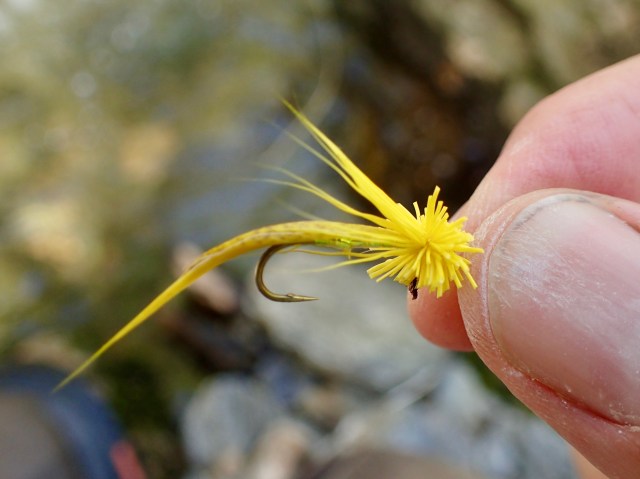
If you’re looking for a new way to have some fun on a small stream, try a micro Zoo Cougar. I usually tie these on size 2-6 streamer hooks, but I believe this is a 14. Chuck it or drift it (the deer hair head keeps it on the surface) down the pool, then make some drunken, frantic strips back. The fly will wake and dive and drive the brookies absolutely out of their minds. Color is probably insignificant.

OLYMPUS DIGITAL CAMERA

~

Now to the stripers. You’ve heard me say that every year is different, and with 2018 and 2019 goes the proof. Whereas last year was off-the-charts good for big bass, this year is not-so-much. I spent some time late last night greased line swinging a proven run that was dead as Julius Caesar. (Sigh.) Well, persistence will hopefully pay off.

Striper report: Everyone Knows It’s Windy

Yeah. Hard times for fly casters yesterday with a sustained 15 knot southwest blow in our faces (and an especially unfavorable quarter for lefties) with some stronger gusts mixed in. I debuted my new custom two-hander, but I don’t have the right lines for it yet and it wasn’t the synergy I know I’ll eventually enjoy. Still, some small bass were brought to hand, and they felt like giants in a ripping moon tide.

A Soft Hackled Flatwing in RLS Easterly colors (grey dun and fluorescent yellow) caught the eyes of several feisty schoolies. The colors really popped in yesterday’s conditions.

OLYMPUS DIGITAL CAMERA


Eight-feather flatwing: Ken Abrames’ R.L.S. Rat a Tat

I’ve been eyeballing the RLS Rat a Tat in the back of A Perfect Fish for about as long as I’ve owned the book. At first I didn’t really know what to make of this pattern. Over the years, its energy grew on me. Finally, this winter, I found the saddles I needed to tie it. Ken described the Rat a Tat’s genesis this way: “That’s a fly I designed just to irritate fish. It’s the kind of a fly that will get a reaction strike.”

I’ll be sure to hold on tight.

Ken once told me that he sometimes includes yellow elements in a fly to indicate the presence of fat, so this should make a fine greasy baitfish pattern (think herring or menhaden). Note how naturally the jungle cock nail integrates with the random black of the grizzly. Lots of magic going on here.

Ken Abrames’ R.L.S. Rat a Tat. This tie is about 11″ long.

OLYMPUS DIGITAL CAMERA

Hook: Eagle Claw 253
Thread: Chartreuse 6/0
Platform: Black
Pillow: Chartreuse dubbing
Support: Chartreuse neck hackle
Tail: First, a yellow grizzly saddle, second, a chartreuse saddle, third, 2 red Flashabou, fourth, a turquoise grizzly saddle, fifth, a light blue saddle, sixth, 2 gold Flashabou, seventh, yellow grizzly saddle, eighth, a ginger saddle, ninth, 2 emerald green Flashabou, tenth, a fluorescent green grizzly saddle, eleventh, 2 red Flashabou, twelfth, a yellow grizzly saddle
Body: Gold braid
Collar: Bucktail, ginger, bottom and both sides.
Wing: Bucktail, yellow
Cheeks: Bucktail, 3 hairs each turquoise, orange, chartreuse, dark blue and emerald green
Topping: Seven strands of peacock here
Eyes: Jungle cock

~

A closer look at the zebra-like tail section reveals great gobs of grizzly goodness.

OLYMPUS DIGITAL CAMERA


Best of 2018 #1: A Striper on the Fly from the Shore for 12 Consecutive Months

Whew! After nine December outings, over 30 hours of fishing, four different locations, it all came together at the 11th hour (both figuratively and literally). I didn’t think it was going to happen. December was by far the toughest month, with high and cold water, wind and subfreezing temperatures, and a maddeningly inconsistent bite. It only proves that catching a striper on the fly from the shore for twelve consecutive months takes skill, planning, perseverance, and — this cannot be understated — luck. Am I going for 13? Maybe. Stay tuned.

It all began on a whim. It was a warm(er) January night, and the tide lined up with some free time. Forty-five minutes in, there he was. I was crazy enough to try again in February, succeed, and off I went.

OLYMPUS DIGITAL CAMERA

~

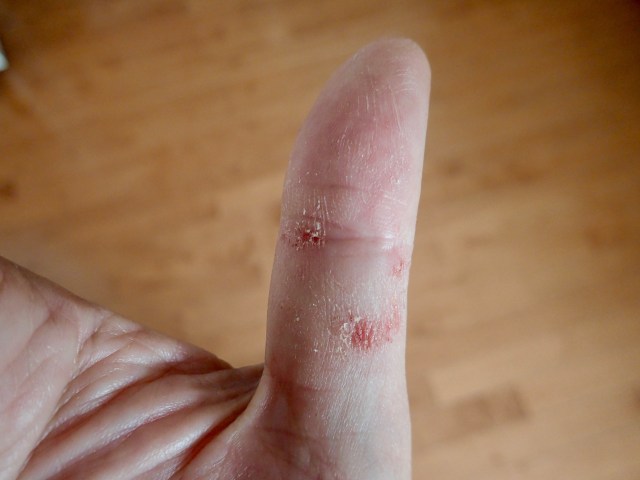
Once you get past March, things get a little easier. They certainly get warmer, as you can see from the gloveless, submerged (not happening in February) July water hand. 

OLYMPUS DIGITAL CAMERA

~

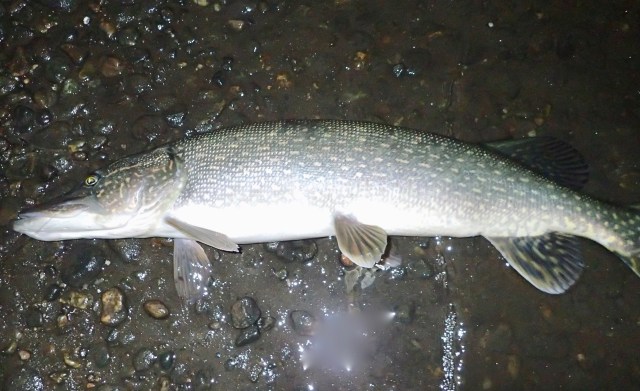
WHACK! I was dragging the deer hair head streamer across the surface to change it out when the fish hit. What a great story about how I caught my December bass! But wait. What is that? Not a striper. Nope, it’s a five-pound Northern Pike. I can’t remember ever being so depressed about catching a quality fish on the surface in 35 degree water. Good thing I didn’t lip it.

OLYMPUS DIGITAL CAMERA

~

I planned on paying homage to a friend (who’s had a very tough go with cancer this year) by catching the December fish with one of his flies, but I lost one on the bottom, and I wanted to keep the other. Ultimately, the winning fly was a three-feather flatwing/bucktail hybrid version of the Crazy Menhaden. I called Ken on the way home to tell him about it, and he said, “You should call that fly the ’12 Consecutive Months December Striper On The Fly From The Shore Crazy Menhaden.'” Who am I to argue?

Crazy CU

~

Cold but happy Post-December Striper Flashlight Hat Man.

Flashlight hat man

Best of 2018 #3: Big stripers, and lots of ’em

Every year is different, and where 2017 (if you’ll pardon the expression) fell short, 2018 was off-the-charts good for legal bass. Many, many stripers over 28″, with one that went a good 25 pounds and missed the magic 40″ mark by half an inch. I already mentioned Block Island in this countdown, which came back with a big striper vengeance. What’s my secret? Put in your time. Follow the tides. Floating lines. And as Ray Charles so eloquently sang, “Nighttime is the right time to be with the one you love.” (You can find out more at my presentation “Targeting Big Stripers From The Shore” at the Fly Fishing Show in Marlborough, Destination Theater Room A 10am Saturday 1/19.)

Yeah, baby. Love the colors on this one. Whenever possible, I try to keep the fish in the water for the photo op. Does it get any better than keeper-size summer stripers feeding on sand eels? As it turns out…

OLYMPUS DIGITAL CAMERA

~

…yes it does. I dubbed her “Long Jean Silver.” Hope she makes lots of baby bass next spring.

OLYMPUS DIGITAL CAMERA

~

Some stripers should be measured not in pounds or inches, but rather: could this fish eat a small dog?

OLYMPUS DIGITAL CAMERA


TU 225 awarded the Order of the Triple Jalapeño Burger with Octoberfest Clusters

You know it’s going to be a good night when you sit down at the table and moments later a server brings you a cold, crisp Octoberfest — which you didn’t order, but would have. Sometimes things just fall into place. Many thanks to my good friends at the Narragansett Chapter of TU who demonstrated once again their mastery of the concept of a fed presenter is a happy presenter. Always a pleasure talking fishing over dinner. The topic for the club was “Trout Fishing for Striped Bass,” and we had a some good Q&A afterwards. Now, I gotta make a new presentation for next year!

If you do what you’ve always done, you’ll always get what you’ve got. (And if it’s stripers like this, you’re probably doing something right.)

OLYMPUS DIGITAL CAMERA


Three-Feather Flatwing/Bucktail Hybrid Preview

For the uninitiated, a flatwing/bucktail hybrid combines the seductive motion and swimming action of the flatwing (three contrasting feathers here) with the color-blending deliciousness and adding-the-illusion-of-mass properties of bucktail. (See the Rock Island and Crazy Menhaden three feather flatwings.) So, just a taste for now.  Details to come soon.

I don’t know how important color is to a striper at any given moment, but I really like the blends on this fly.

OLYMPUS DIGITAL CAMERA

Tales from the Bass-o-Matic

I don’t usually publish these things but clearly the word is out, as evidence by overflowing parking lots and anglers massed together like so many sardines — the spring striped bass run is on. (And then some.) It’s been about ten days now. I caught it the day it turned on, and I returned yesterday for round two of the hysteria. Both days I stopped counting after 25 fish. (The intrepid angler, if he or she had several hours, could easily reach or surpass the century mark.) It’s rather insane, to the point where you go through stretches where you literally are catching the proverbial fish on every cast. The fishing isn’t technical: find a rip, cast, strip, fight, release. I’ve been using a full sink tip integrated line, a short (2-3 feet) leader, and an assortment of soft-hackled flatwings 3-4″ long. I have a limited interest in this kind of fishing, but I gotta admit that it’s a lot of fun while I’m doing it.

So: If you fish on the Cape, start sharpening your hooks. There’s a whole heaping helping of stripers heading your way.

These stripers are uber-aggressive gluttons who are wanton and reckless in their need to destroy your fly. Most are in the 14-20″ class, with a few bigger bass in the mix. They make for a decent battle in a ripping current. Yesterday I caught them on the strip, swing, dangle, and even with my eyes closed.

Schooligan.jpg

~

Four members of the Connecticut Surfcasters each hauled out a bag of garbage they collected on their walk back. I know you’d like to join me in thanking them for their efforts. Pictured here are Charlie and George. Well done, gents.

Garbagemen.jpg

~

So far, I’m giving this season a very enthusiastic striper thumb’s up.

OLYMPUS DIGITAL CAMERA


600 Followers Contest Swag

I spent part of yesterday hunkered down at the bench, fingers flying around fur and feather. My intention was to get these out today, but it will have to wait until early next week. In the meantime, feast your eyes — and think about the potential glory you hold within each cast. On we go to 700!

Roger and Vince asked for striper flies. Here’s a starter kit, with many major food groups covered. They’ll be getting one of each. Clockwise from bottom: Orange Ruthless (clam worm), Ray’s Fly (silverside), Inconspicuous (anchovy), Eelie (sand eel), Grass Shrimp Solution, and Soft Hackled Flatwing (generic baitfish/attractor).

OLYMPUS DIGITAL CAMERA

~

Here are Paul’s soft hackles and wets. Left cork, clockwise, starting upper left: Partridge and Light Cahill (2), Hare’s Ear wingless, Red Fox Squirrel nymph, Squirrel and Ginger, BH Squirrel and Ginger. Right Cork, clockwise, starting upper right, Hackled March Brown, Grizzly and Grey wingless, Dark Hendrickson (2), Drowned Ant (2).

OLYMPUS DIGITAL CAMERA

~

Many thanks to everyone for your readership, kindness, and support. I have lots of good stuff planned for this spring and beyond, so stay tuned.