You can be in the right place and the right time with the right fly. But if your presentation is off, you can still blank. Presentation is everything — that’s our mantra for this Currentseams Tuesday Night Zoom. If you haven’t been getting the Zoom links — I send them out Tuesday late afternoon — please check your spam box. See you then!
I had to change the time of the class to 3:30 p.m., so I thank everyone who signed up for being so flexible. We’re going to be tying “Favorite Nymphs,” proven patterns that get a lot of action when I’m in the mood to go low and slow. There’s still time to join us if you like; the cost is $10 and you register by sending me the fee through PayPal. See you at 3:30.
I fish the way I want to fish, and sometimes that means I go fishless. I’m OK with that. When it lines up, I may be doing battle with multiple high-teens browns. When it’s a day like yesterday, I get the not-a-touch trudge through the snow back to my car, wondering if my feet will ever be warm again.
Not that I’m complaining. I had a blast. Due to the inclement weather, angler activity was almost at its Farmington River-winter-ten-years-ago level. You still can’t access the majority of dirt pull-offs (they’re currently snowplow pile pull-offs) so you’re stuck with the major parking areas. That didn’t prevent me from going for a walk to find solitude. I fished three marks within the Permanent TMA (no slush, 370cfs). I started off tight-lining jig mini-streamers, but that was a problem with the 24-degree air temp; frozen beads of river clinging to the exposed leader. So I switched locations and did the traditional full-sink line. I did catch a lot of the bottom. Sadly, it never fought back.
Then, I decided to experiment. What would happen if I fished the mini-jig under an indicator? I could bounce it along the bottom, or suspend it near the bottom. I had one of my bigger home-brew yarn indicators with me, so I re-rigged and had at it. I tried it in different kinds of water, from fast-moving glides to languid dry-fly pools. In the faster water, I had to constantly check the indicator upstream and mend to prevent the fly from moving too quickly, but the rig proved to be the answer to the iced-up leader problem. Just because I didn’t connect doesn’t mean it won’t work on another day. More research to come…and I encourage you to try new things when you’re on the river.
Thanks to the Ottawa Flyfishers, I am now officially an internationally-known fly fishing speaker. We had a most excellent time last night via Zoom. I talked for an hour about “The Little Things,” my original presentation in the series, that can make a big difference in your fishing success. We did Q&A — I love Q&A — for a few more minutes, then wrapped it up with social pleasantries. A wonderful group of dedicated, enthusiastic anglers. Thank you very much!
Kenney’s in the house! Ken Abrames is doing a series of talks on YouTube: “Kenney Abrames begins a video talk series with this short audio where he discusses his connection with nature.” I know as much about it as you do at this point. I have not yet listened to the first but I’m sure it will be loaded with keen observations. You can find the first talk here.
Finally, I had to switch the time for this Saturday’s “Favorite Nymphs” Zoom tying class to 3:30 p.m. There’s still room if you want to attend. Once again, the day is the same, Saturday, February 20, and the new start time is 3:30pm. The cost is $10 and you register by sending me the fee through PayPal. This also seems like a good time to thank those already enriolled in the class for being so gracious when I had to change the time. I’m lucky to have so many good people who are part of this website!
I did not get to fish Leisenring’s favorite nymphs last year as much as I would have liked. There’s always 2021…
Shelf ice can be a problem when you’re out on a river — NEVER walk across shelf ice — but it can also be a difference maker when it comes to catching, especially on a river like the Farmington. The Farmington River has hatches of W/S (Winter/Summer) caddis. These bugs emerge, then scoot across the surface of the water towards the shore to mate. Trout know this — not in a cognitive sense, but rather in a programmed-by-nature way. If the water is deep enough, and there’s enough current, you can often find Farmington River trout hanging out near bankside structure in winter, especially ice shelves.
That makes these areas a priority target when I’m winter streamer fishing. If I find an ice shelf over deeper, moving water, I like to pound that water with my bugs. Sometimes I’ll even land the streamer onto the ice shelf, then gently pull it off into the water. The trout will tell you if they want the presentation to be a dead drift, slow retrieve, fast(er) retrieve, or swing.
You can’t really see it in this video, but I’m actually landing my streamer on top of an ice shelf that extends several feet off the bank. On this day, the only hits I had came from using this tactic.
I have a private gig with the Ottawa Fly Fishers tomorrow night, so no public Zoom. We’ll go for normal resumption of services (I like the way that sounds) on Tuesday Feb. 23. In the meantime, I’d like to hear from you. What subjects would you like me to talk about? If I see something that looks like it has wide appeal — and it’s something I feel comfortable talking about, I’ll certainly consider it. Last week’s Small Stream talk was well-attended, so I many do another variation on that theme. The ball’s in your court.
I received a question the other day about cinder worms in CT: when/where, etc. They can be impossible to predict, but I find that when the Connecticut state flower is in bloom, and the moon is new or full, that’s generally a good time to look for them in your local estuary.
Busy-busy-busy is the word around currentseams headquarters these days. I’m pleased to announce that I have a couple projects in the works for Field & Stream. Both are striped bass related. The first is how to make a best fishing days striper calendar; the second on lessons that striper fly anglers can glean from surfcasters. I’ll let you know when they come out and how you can read them. But since I have not yet taken fingers to keyboard, off I go to my lonely writer’s garret…
I’ll be tethered to my laptop for the next several hours.
This is my third (I think) year participating in On The Water magazine‘s “Guide Flies” column, written by Tony Lolli. You’re familiar with he concept of a guide fly — a pattern that is typically simple to tie and can be relied upon to produce day in and day out. (Or night after night, as it were.) The Big Eelie delivers the goods. Developed by Ken Abrames, this pattern imitates larger sand eels. Part flatwing, part soft hackle, the Big Eelie is understated elegance at its finest. I think what I like most about the Big Eelie is that its template — four pencil-thin saddles and a marabou collar — lends itself to as many color combination as your inner artist can conjure up. My Rat a Tat Big Eelie, based on Ken’s larger flatwing, is just one example. Have at it and hold on tight!
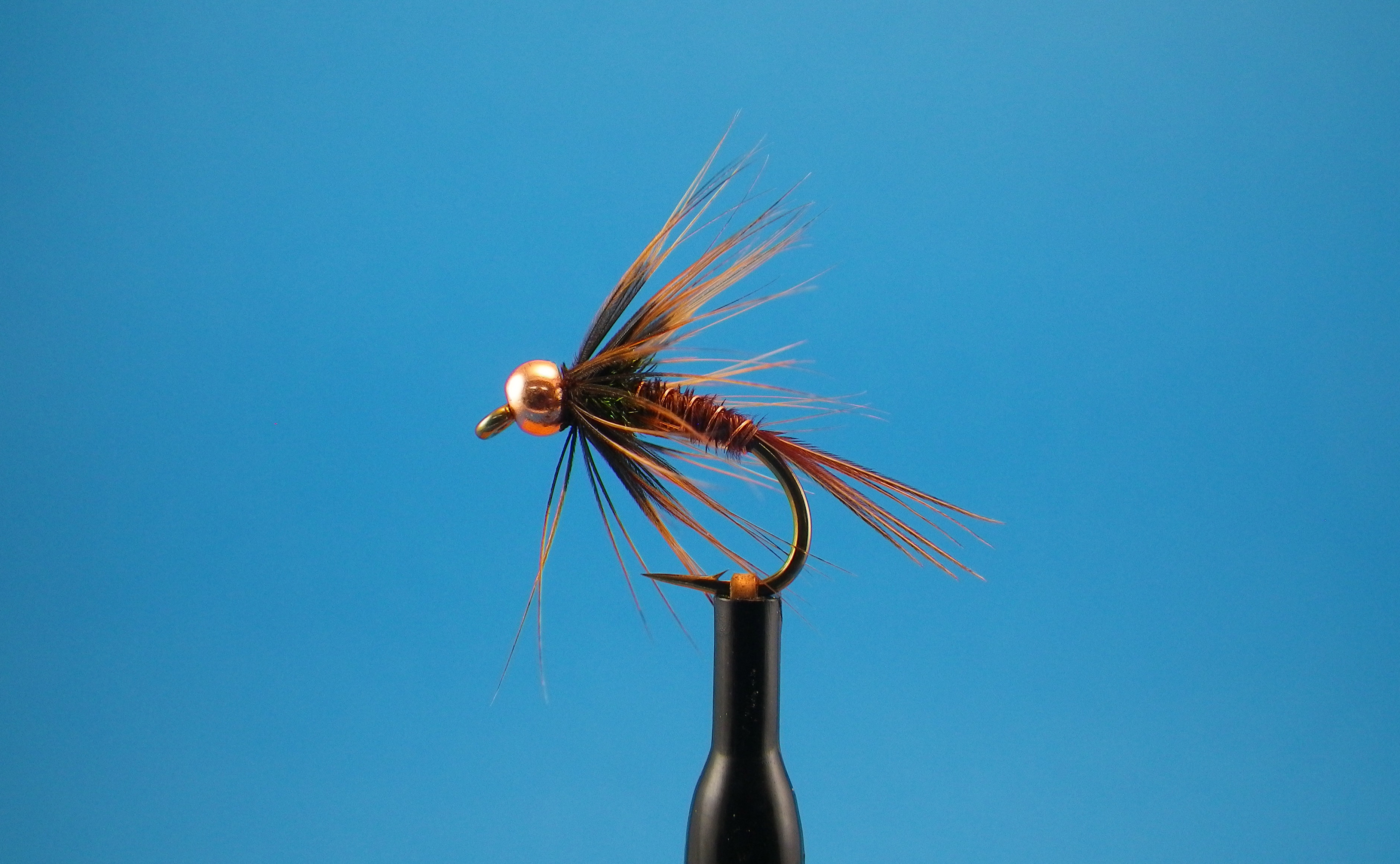
My third winter fly tying pay-per-Zoom event is Saturday, February 20 at 1pm. Like the others, this will be about 90 minutes of fly tying/tie-along instruction. The cost is $10. To “register,” you send 10 bucks to me at PayPal (ID is swculton@yahoo.com) and I’ll send you the link to the meeting. Favorite Nymphs will cover some basic, useful patterns that are proven producers. Again, the focus is on template and technique. You should have different color threads, different hooks, beads, tools, etc. You should have at least one hen hackle/hen cape — Whiting makes a good basic hen hackle — or some other kind of soft hackle, whether it’s grouse, starling, partridge, etc. The “right” color is not critical, but if you want to go all in you should have grey or brown or black. The point is, if you don’t have a specific color hackle, you can find it later. Questions? You know where to find me.
Many of you will want a complete materials list, so let’s plan on these patterns: Soft-Hackled Bead Head Pheasant Tail, Bead Head Squirrel and Ginger, Frenchy Variant, Blue Glass Bead Midge. You’ll need 2x short scud hooks (anything from sz 12-16 for the first three and a size 18 or smaller for the last); metallic beads, your choice color, to match hook size; blue glass seed beads (mine are the Mill Hill brand; you can find them online or at a fabric/craft store, sized to your hook, and if you can’t find them you can substitute a tiny metallic bead of your choice); small copper wire; extra small silver wire; pheasant tail; ginger/orange dubbing (I like Angora goat); a squirrel skin if you have one (if not you can substitute a small soft hackle); bright contrasting color Ice Dub, your choice of color; high tack wax (like Loon Swax). Again, if you don’t have some of these specific materials you can substitute/make do as we are just learning some basic patterns and techniques.
I also like the Rainbow Warrior variant, a high confidence pattern. Scud hook, silver bead, PT, opal tinsel, rainbow sow scud dubbing if you have it. Maybe if we’re ambitious we’ll get to this one, too.




 currentseams.com