I can be a massive creature of habit. But sometimes I like to return to a mark several times within a short period of time simply because I’m curious how things change, evolve, or otherwise go chaotic. I had a little over two hours Monday night, so I revisited an old favorite place on the Lower River. This is where I slayed them two weeks ago, and had a slow night last week. Monday was a repeat of last week: little-to-no hatch activity and even fewer fish rising. I got into a half dozen trout, including some lovely wild browns, but I had to work my butt off for them. I was most disappointed in the lack of a hatch. You’d think with a warm, sunny day, cool water, and not too much of it, you’d get a gangbusters sulphur emergence. Nope. So off to parts elsewhere, when I can, that is. Busy rest of the week. I would think that the vast majority of the Farmington above Collinsville is in its very late spring wet fly wheelhouse. Catch ’em up!
No, I have not forgotten about you. Your time is coming.
I guided Larry yesterday and we fished from 2pm-6pm within the Permanent TMA. The river was a very manageable 500cfs, with good water clarity. Angler traffic was light, so we had our pick of pools. Unfortunately, hatch activity — and especially feeding activity near the surface — was also light, and we struggled to find fish that were willing to jump on. We fished three different marks and managed only one hookup. So I had to give Larry the speech that I hate to give. It goes something like this: “You’re not doing anything wrong. Those are fish-worthy drifts. If you do these same things on another day, you will be a wet-fly fishing catching machine.” Kudos to Larry for sticking with it and maintaining a positive attitude! I’m looking forward to getting that email from him where he tells me he hit it right and it all came together. It’s going to happen.
After our session, I ventured upriver to inspect the evening rise. It was a slow wet fly experience there as well (that should make you feel better, Larry!) as I could only manage one trout from 6:30-7:30pm. Hatch activity was solid, with midges, small caddis, and sulphurs, but again the surface activity was not where I would have liked it to be. I switched to dry flies at 7:30 and fooled fish on a mix of Magic Flies, Usuals, and Light Cahill Catskills dries. My two best fish came very late in the game during the spinner fall, both on the Light Cahill, both chunky mid-teens wild browns. A fine finish to a challenging day.
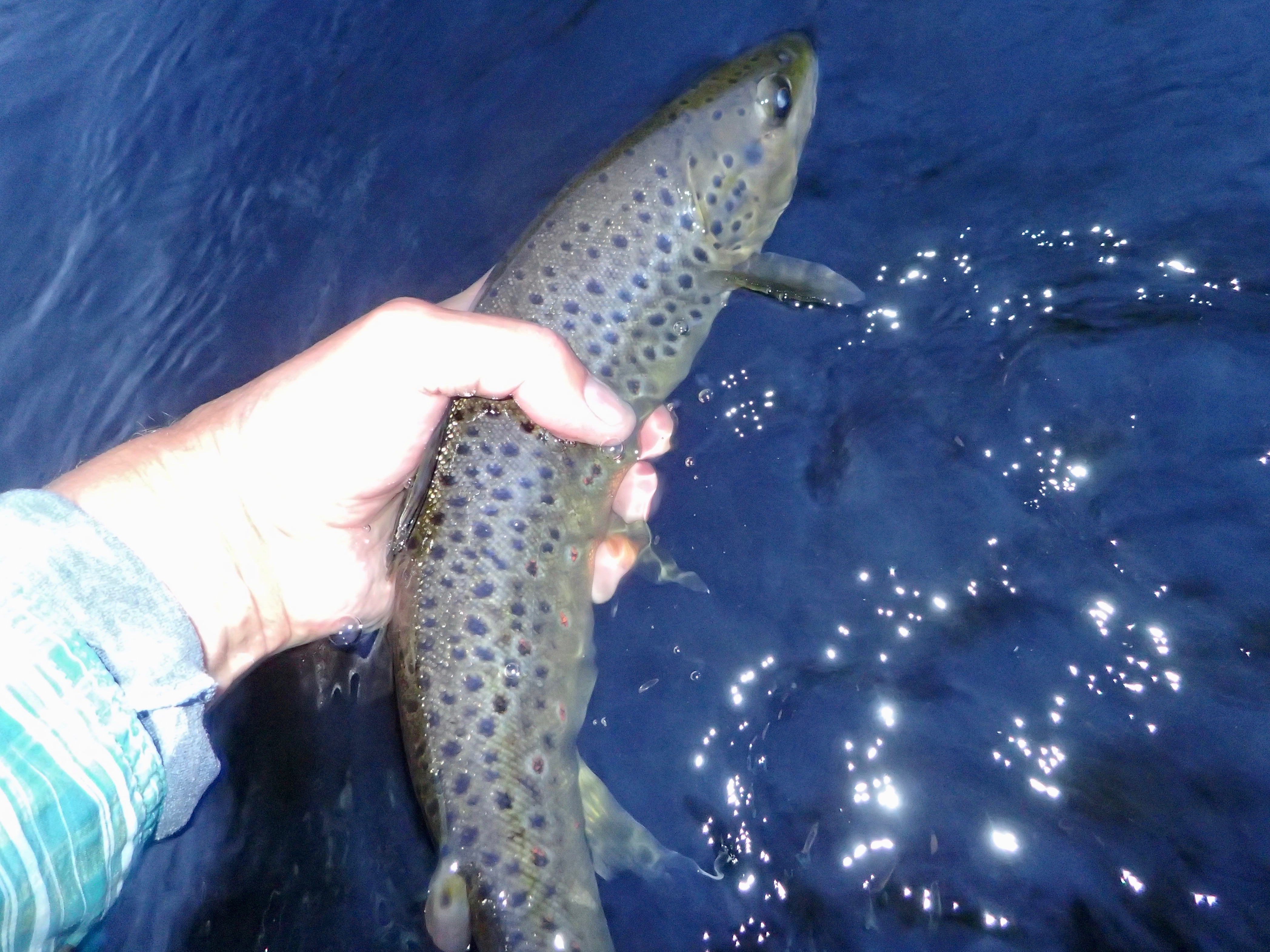
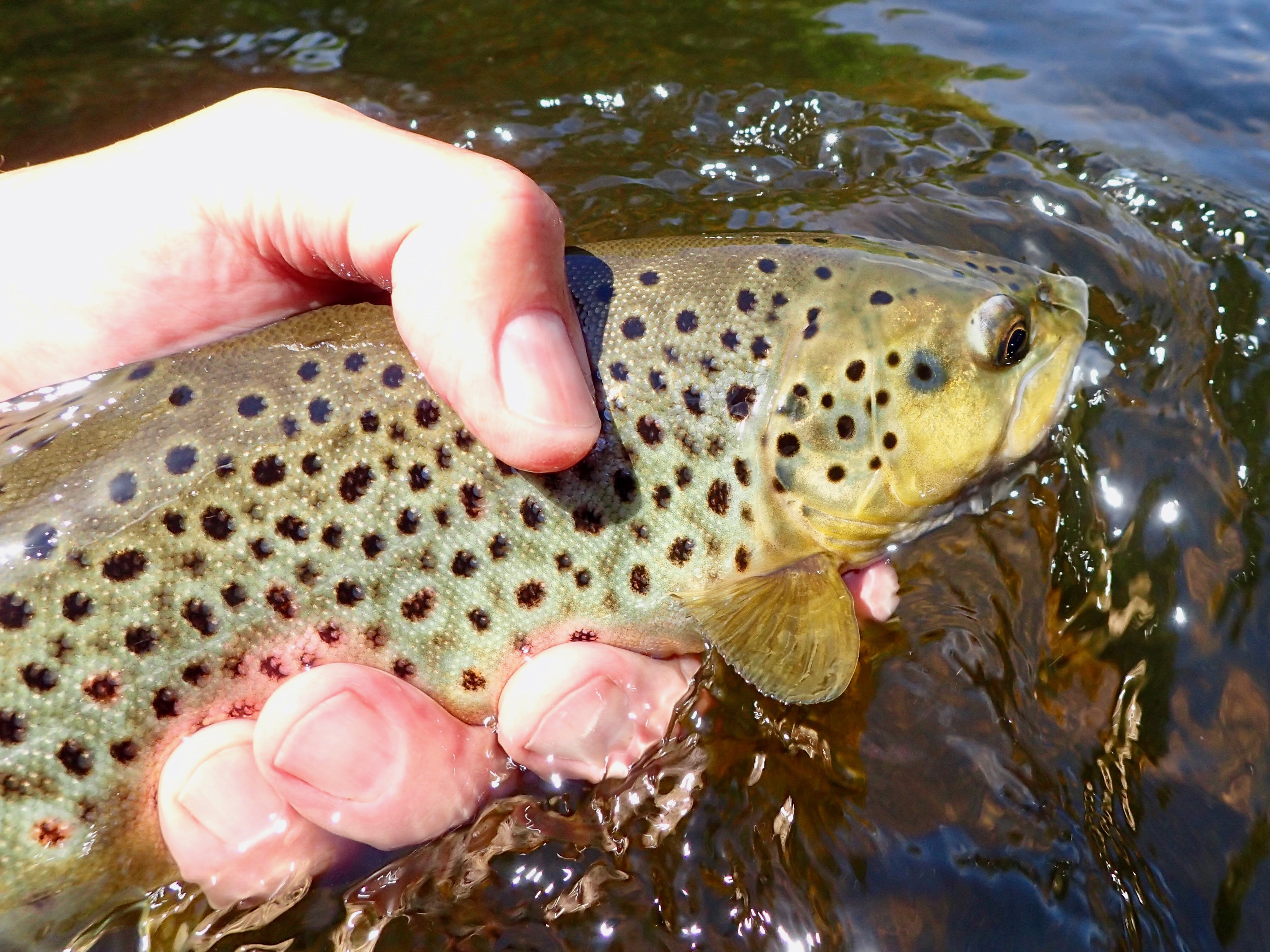
There comes a point in the battle where I wonder, “Is this one of those fat stocked rainbows, or a big wild brown?” No disrespect to the rainbows, but I am highly pleased when the answer is the second choice. Here’s the last fish of the evening. I saw him sipping spinners in some frog water along the opposite shore. Both of these last two browns were hefty, spirited, and refused to come quietly to net. You know you’ve got a decent fish when it sounds and heads for the deepest part of the run. See you soon, fellas.
Another year, another appearance in On The Water magazine‘s “Guide Flies” column, written by Tony Lolli. You’re familiar with he concept of a guide fly — a pattern that is typically simple to tie and is a consistent producer. I’d like to introduce the Grass Shrimp Solution as Exhibit A: some bucktail, a few wraps of braid, palmered wet fly hackle, and then you’re fishing. You can see the wet fly influence in its construction. I like this pattern at night when the grass shrimp are forming mating swarms, and are being carried out of an estuary on current. Make it part of your three fly team, and hang on! This pattern was originally published in the old American Angler magazine, Nov/Dec 2015, “Soft Hackles For Striped Bass.”
As many of you are already aware, my favorite caddis soft hackle, the Squirrel and Ginger, is featured in the “In The Vise” column of American Fly Fishing (May/June 2021). You get my narrative, materials list, and step-by-step tying instructions. Please support publications like American Fly Fishing, one of the few remaining fly fishing magazines.
On the heels of Tuesday night’s red-hot wet fly action, I returned to the scene of the crime. We’d had a little rain Wednesday night, so the flow was up 100cfs to 550cfs, which is still a very average flow for the lower Farmington this time of year. I fished from 6:30pm-8:30pm. Despite a warm, sunny day, neither the caddis nor the Light Cahills came off in any numbers. Rather than being surrounded by trout eagerly taking emergers, I experienced a boil here, a boil there, but nothing steady and rhythmic. Whereas all I had to do on Tuesday night was drift my team over a fishy area or target an active riser, on Thursday I had to work hard just to reach a half dozen trout. Not that I mind that. It’s just fascinating to me how unknown factors can have such a dramatic impact on the day-to-day fishing. I also went for my first swim of the season. It’s not an awful time to experience the sensation of water spilling down your waders and soaking into your drawers, but it’s still mighty unpleasant. As I write this today, the lower Farmington has topped 1600 and is no doubt the color of chocolate milk. More rain is on the way. Reset. Pause. Then we’ll start again.
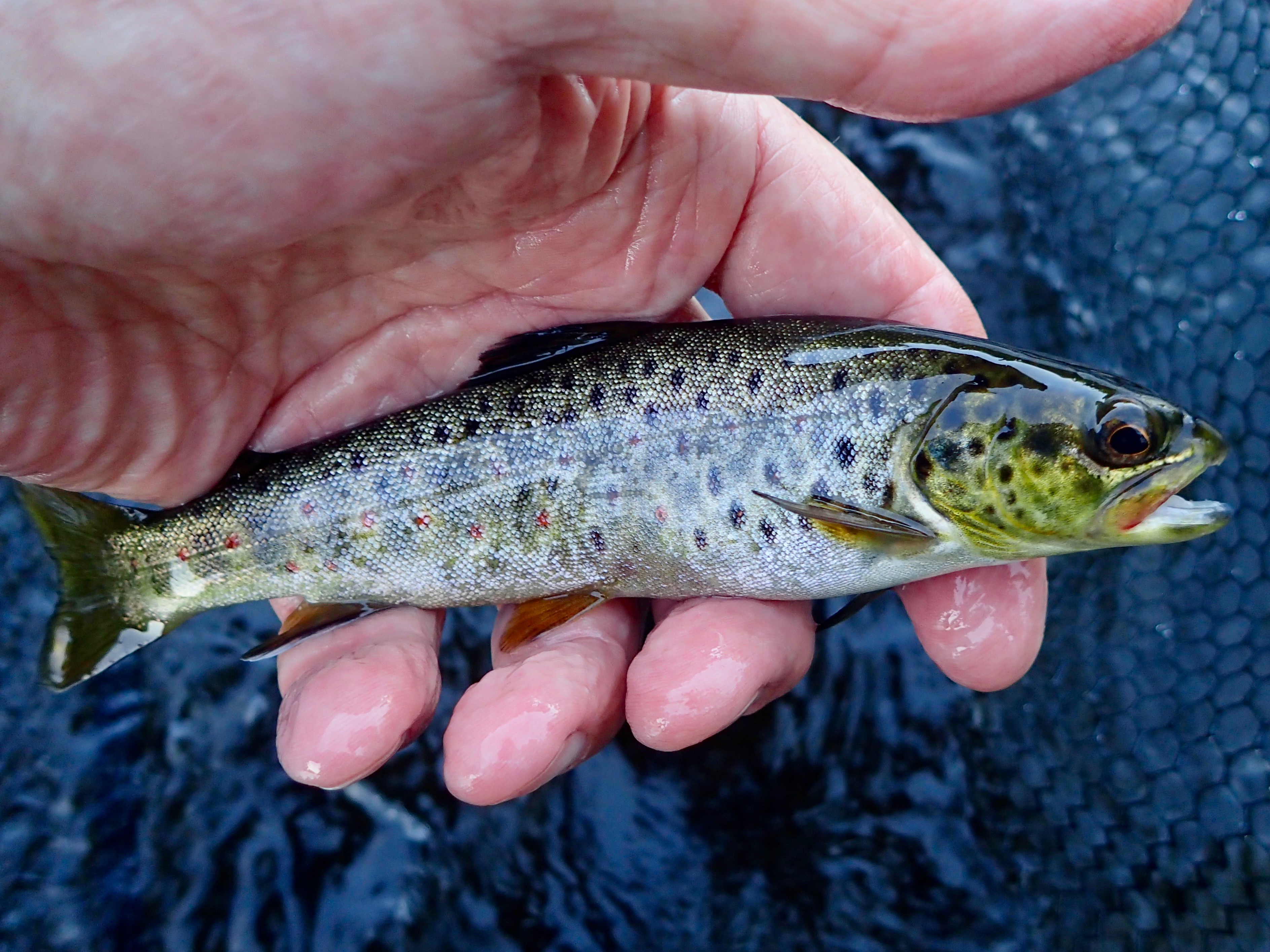
I took a mix of stocked rainbows and wild browns. My first fish came in some pocket water along the bank. Squirrel and Ginger was the winning fly. Parr marks, halos, a never-say-die fighting ethos — man, I love these wild jewels!
After my Instagram (stevecultonflyfishing) post the other day, I wanted to see for myself. So, following the advice of my rose bushes, I headed for the lower end of the Farmington River to fish the Light Cahill hatch.
The water has come down nicely — in fact, I’d call 445cfs just about right — and it’s still plenty cold. I started off at a favorite mark around 5:30pm, and worked my way down a series of snotty riffles and pockets. The action wasn’t quite what I expected, even though I stuck a half dozen trout. There just wasn’t nearly the hatch activity I’d expected, nor were there many fish feeding near the surface. I’d started out with a Squirrel and Ginger (sz 12) as top dropper, a Starling and Herl (sz 14) in the middle, and a Partridge and Light Cahill (sz 12) on point. After no hookups on the dark middle fly, I made two command decisions: replace the Starling and Herl with a Pale Watery Wingless (sz 12) and move to a new mark.
And those two choices made all the difference. I was in the water by 7pm, and for the next 90 minutes I took trout after trout. It was one of those I-have-no-idea-how-many-fish-I caught nights. What was most interesting to me was the difference a half mile makes. The new spot had more bugs and far more active feeders. The fish were mostly stocked rainbows (and a bonus big brook trout), but I did get a few wild browns in the mix, including a hefty 16″wild thing.
If you’ve taken a wet fly lesson with me, you’ve heard me say that when you hit it right, wet flies will make you look like a fly fishing wizard. I caught every riser I cast to, save for one. I caught them on all three flies. I caught them on the mended swing, the dead drift, the dangle, and the Leisenring Lift. Folks, I hit it right, and you can, too. Wet flies, people. Wet flies.
Lousy picture, nice fish. 16″ of wild Farmington brown taken on a size 12 Magic Fly on a dead drift. He was slashing at emergers at the wrinkled head of a pocket run. It took be a short while to figure out what I’d hooked — it was either one of those fat stocker rainbows or a chunky wild brown. I was glad it was Option B. This guy bulldogged and battled and generally behaved very poorly. I love him for that.
I guided Eric yesterday and we had a mix of sun and clouds and moderate, cold flows (380cfs in the Permanent TMA and 445cfs on the lower River). We fished two marks with mixed success. At the first, there was very little hatch activity and we observed no fish rising. One bump was the best we could do, so we decided to seek our pleasure elsewhere.
And that’s one of the best pieces of advice I can give you if you want, like Eric, to learn how to fish wet flies: if one spot isn’t producing, find one that is. And, once you get there, work the water. Cover as much of it as you can. Determine where you think the trout will be holding and feeding. We fished a three fly team of a Squirrel and Ginger on point, a dark soft-hackle of Eric’s creation in the middle, and a BHSHPT on point. All of our action came on the point fly. Eric did a great job of navigating some not-that-easy-to-wade water (sometimes it pays to get into those more difficult areas). While the second mark was not as productive as I’d hoped — the caddis hatch was disappointing, and there were no regular, active feeders — Eric managed to stick four nice trout.
The answer to the question, “Why is this man smiling?” can be seen in the foreground. Great job, Eric! You’re on your way.
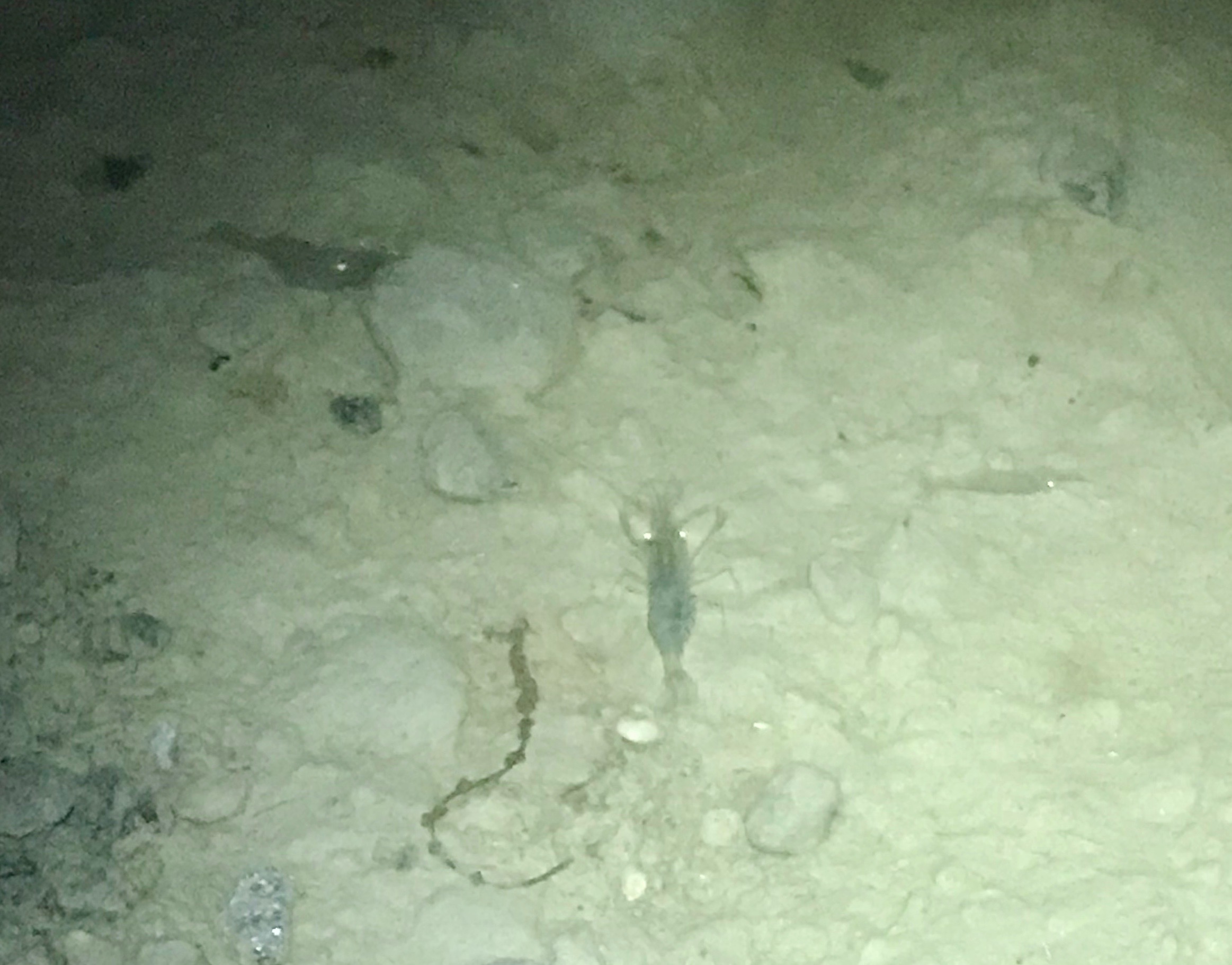
Last week, while you were asleep — certainly some of you were, as the tide widows crept into the wee hours — I was banging around several marshes and estuaries looking for stripers feeding on grass shrimp. I found substantial numberqs of grass shrimp in every mark I visited, and varying numbers of bass. Grass shrimp are present year round, but they spawn when the water warms, and it’s getting to be that time of year. You can find grass shrimp swimming around if you shine your light in the shallows, but they mostly prefer to skulk along the bottom. They’re translucent creatures, so they’re not as easy to see as, say, a green crab. Their eyes reflect your headlamp beam, so that’s an easy way to spot them.
I see your beady little eyes. These guys are in less than six inches of water.
I almost always fish the grass shrimp swarm with a team of three. The patterns vary, and sometimes I’ll throw a clam worm like the Orange Ruthless into the mix, but last week I fished a deer-hair head on top dropper, a black General Practitioner on middle dropper, and Micro Gurgling Shrimp on point. I took fish on all three flies, although I was intrigued that I only caught bass on the black GP on the one night when I had bright moonlight. (The lessons are never-ending.) The fish weren’t very large — 20″ was the best I could manage — but I could tell from some of the feeding pops that there were bigger bass around.
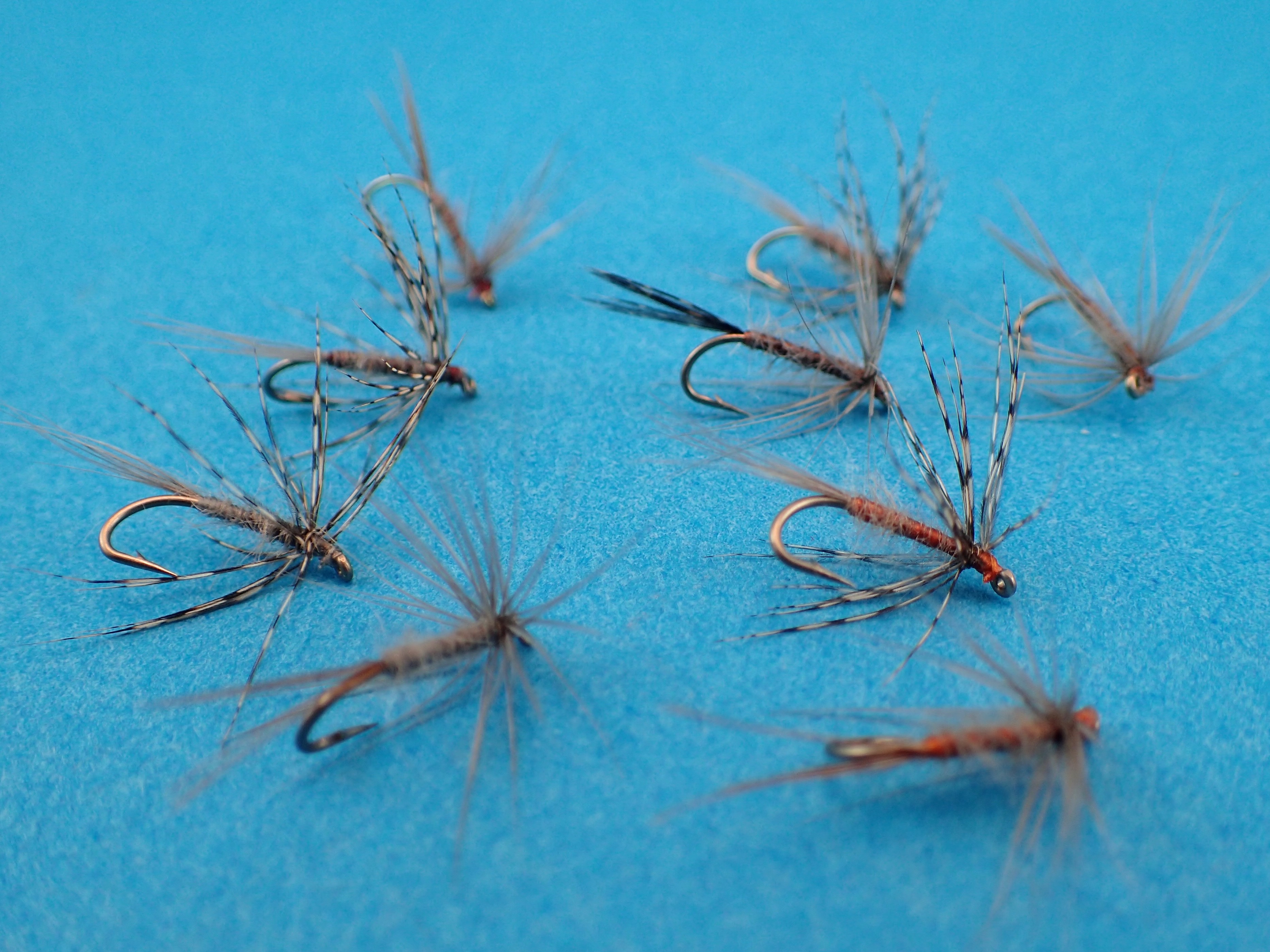
My most recent three-fly grass shrimp team. L-R: Black GP, Caddis Shrimp, Micro Gurgling Shrimp. This gives you a good idea of the size of the naturals, which are the size of these flies or smaller.Note that none of these flies attempt to be a carbon-copy of the actual bait. They’re simply designed to match size and profile, to look alive, and create a favorable impression on the stripers. Ultra-realistic flies are to be admired for their craftsmanship, but not necessarily for their fish-catching ability.
The more you fish wet flies, the more you’re going to encounter situations where you want your team of three to behave in a very specific way. This can happen from day to day, location to location, and even from moment to moment within a single run. As always, ask yourself the question “What do I want the fly to do?” Let the answer be your guide.
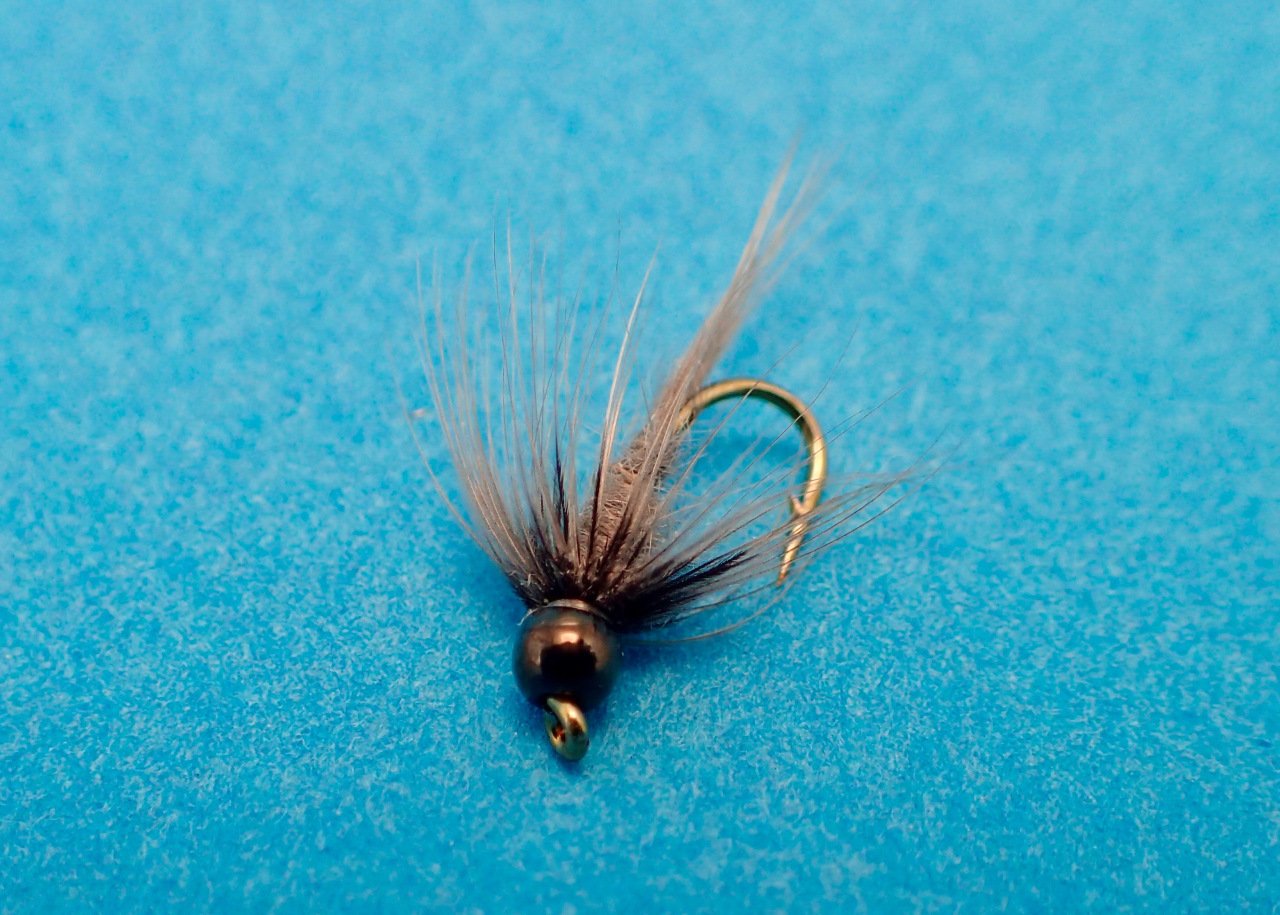
If you want to sink your rig, then a bead head on point is good choice. Of course, the size of the bead, the material (brass or tungsten), the speed of the current, your leader length, and your mending skills will all factor into how much depth you can achieve. I’ll use red thread at the head to help me identify the tungsten beads in my fly box should I choose to go heavy. I like to keep the heaviest fly on point; I find it easier to cast, and as the heaviest member of the team it will want to pull the entire rig down.
Say you’re fishing a bead head pattern on point, and you notice an active riser above your position. The fish is taking emergers just below the surface. In this case, a sinking rig may not be to your advantage — you want to make it easier for the buyer to buy.
To keep the team of three near the surface, I’ll switch out a bead head point fly for a soft hackle. If I’m making an upstream presentation to a fish that’s feeding just below the surface, I want the flies on my team likewise just below the surface. Of course, match the hatch if you can. We did this yesterday with a trout that was feeding on caddis in some slower, shallower water. Off came the bead head point fly, on went the unweighted caddis, and a few well-placed casts later, bingo! Fish on.
Mark contacted me over the winter about learning the ways of the wet fly. He booked two half day sessions, a brilliant move on his part, as we experienced a mixed bag of weather and catching on the first day, and then the Farmington River at its finest today. We fished both days from 11am-3pm. Water was 425cfs in the Permanent TMA, and 600cfs below it. The water is a little colder than usual, due to not only the weather but also the greater percentage influx of water from the dam. Caddis is king right now, and we saw good numbers both days, particularly today. Midges, too, and some tiny olives on Monday, par for the damp day course.
Monday 5/17: We started out with brilliant sunshine, then got poured on. Our first mark had the dreaded guide-catches-on-the-demo-cast (I’d rather the client do that), but we eventually connected with a couple fish, though none of them made it to the hoop. There was a decent amount of bug activity, but little in the way of consistent risers.
We had our first taste of success at Spot #2 with a gorgeous little wild brown. I never get tired of these jewels, or the way they attack a wet fly with primal fury.
Thunder eventually drove us off the water. Rather than wait it out, we solved the problem by driving miles away from it. We finished up below the Permanent TMA, and this set the stage for Tuesday. We found some trout that were willing to eat, and even though the numbers were not what I expected, the day absolutely qualified as a good one. Mark was a solid caster, a dedicated student, and best of all, a strong wader. That meant we could get into some areas that many anglers would find a challenge to navigate.
This is how we do it. One of the biggest challenges a new wet fly fisher faces is how to let the trout do the hook-setting work. After dropping a few fish Monday, Mark began to figure it out. By the time we finished up on Tuesday, he was sticking every trout. Awesome job, Mark! I spent Monday night ruminating where we should fish Tuesday, and decided that on…
…Tuesday 5/18, we would pick up at the same mark where we left off Monday. I wanted to see if the warmer air temps and sunshine would kickstart the hatches –and the trout — and that’s exactly what happened. Caddis, caddis, everywhere, size 12-14 — and then huge swarms of micro caddis. We didn’t fret about those, since the trout were more than eager to jump on the bigger flies. We took them on Squirrel and Gingers (top dropper), Starling and Herl (middle dropper), and generic bead head gray soft hackles on point. We took them on the dead drift, the mended swing, the dangle, and with upstream presentations. I lost track of how many trout, which is always a good day on the river. On Monday, I had kept telling Mark, “You’re doing everything right. You just need to find some cooperative trout.” I’ve made that speech to numerous clients, so it was gratifying to be there when the cooperative trout showed up. We played through the run, then walked 500 yards upstream where Mark — now a dangerous wet fly machine — connected with a spunky rainbow. Great job, Mark!
Mark’s best fish of the trip was this mid-teens wild brown that we witnessed repeatedly slashing at caddis in a feeding lane. Or, as Mark said: See the fish. Present to the fish. Catch the fish. He did just that, and his instructor couldn’t have been prouder. A Squirrel and Ginger did the trick.






 currentseams.com