Bad times in New Hartford

In case you didn’t hear, the historic New Hartford House building was gutted by fire earlier this week. The three-alarm blaze happened Monday night/Tuesday morning. New Hartford House was the large, stately building with the clock tower in the center of town. Please send your thoughts and prayers to those who lost their homes and businesses, and also to the first responders who were injured fighting the blaze. You can read more about the fire in this story from the Courant.

Meanwhile, you shouldn’t be fishing the Farmington right now. Here’s the Riverton gauge at noon — and the heat wave has only just begun.

We are certainly going to lose some trout (nature will find a way for others). If you must go fishing, pond bluegills are a blast on a small stream rod and an Elk Hair caddis. Bass, striped or largemouth or smallmouth, are other viable options right now. But please, give these stressed fish a break.

Upcoming articles for Field & Stream, and warm water caution

Good Monday afternoon! A bit of a late start for me today as I was out chasing fish last night and didn’t get to bed until the wee hours. August is traditionally viewed as a prime vay-cay month, but here at currentseams we are busy-busy-busy. First up: I have three new articles in the pipeline for Field & Stream Online. In no particular order (these are just working titles): Tactics and Strategies for Fishing High and Low Water; Seven Best Flies for Smallmouth Bass; Small Stream Fly Fishing 101. As I have not yet begun to write, I have no pub date other than ASAP. I’ll get that information out to you when I know it. In the meantime, it’s not all chained-to-my-writer’s-desk energy. I still have fishing — lots of fishing — to do.

To the Farmington River. August is typically an active guide month for me, but I’ve had to make the difficult decision to suspend lessons on the Farmington until further notice. The issue is one of elevated water temperatures, which begets limited time and access. This graph of the water temp out of the gate at Hogback says it all:

A short week ago, you had just a shade over 64 degrees out of the gate, with a spike of a still trout-friendly 66. Today we’re already over 68 degrees (keep in mind that this is Riverton) and it’s not even a scorcher kind of day. With a heat wave projected for this week, it doesn’t take a degree in environmental science to recon that the trout will be experiencing stressful conditions. So please: give the trout a break. Protect the resource. It sucks, but it’s the right thing to do. And, as with gravity, what goes up must come down.

Fish Untamed Podcast Ep 55: “Trout Fishing for Stripers with Steve Culton”

Fish Untamed is website that’s run by Katie. She is self-described as “obsessed with chasing fish” — so right away, we like her! Katie also does podcasts, and yours truly is the subject of her current offering. Or, more specifically, the broad concepts of what I call “trout fishing for stripers.” We talk about that and lots of other things. But enough rambling; you want to listen. Here’s Fish Untamed Podcast Episode 55: Trout Fishing For Stripers With Steve Culton.

A floating line, a striped bass, and a very happy angler.

Stuff I Use: Gear Aid Aquaseal FD

Gear Aid’s Aquaseal FD is a fantastic product. I’ve been using it for years. It has extended the life of numerous waders and served as a trip-rescuer multiple times. I’ve used it on both neoprene and breathables. It’s inexpensive, easy to use and store (pro tip: keep an opened tube in the freezer to extend its life) and it does what it’s supposed to do. What more could you ask from a product? Highly recommended.

Gear Aid’s AquaSeal FD is really, really, good stuff.
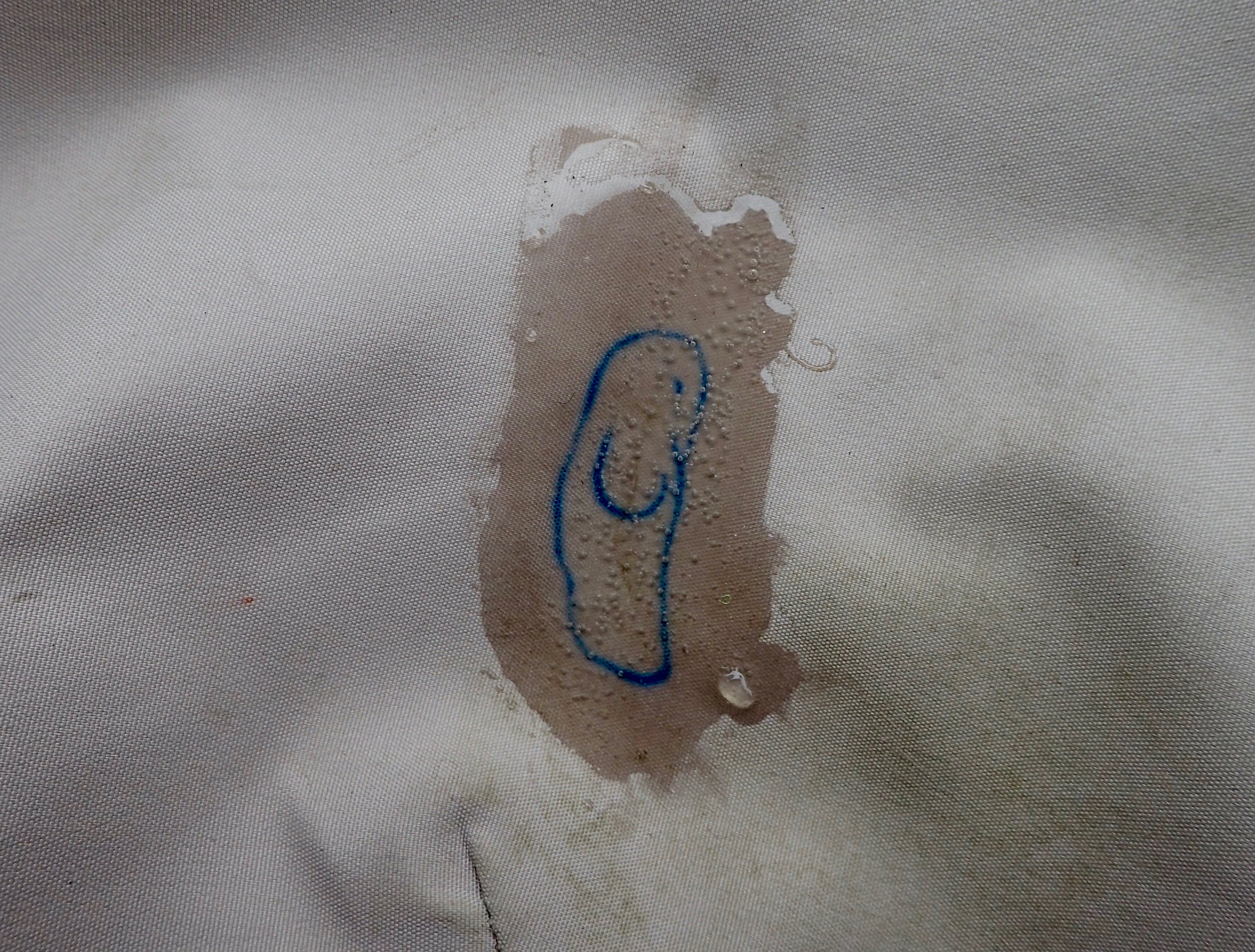
First night on Block this year I felt a pinhole leak near my right knee. Sure enough, a closer inspection revealed that the top layer of fabric was compromised, a spot about the size of a 1/8″ bead. Aquaseal to the rescue! I was dry for the rest of the trip. You can see that I made two marks with a pen; the smaller surrounds the actual hole, and the larger is the area I intended to cover.
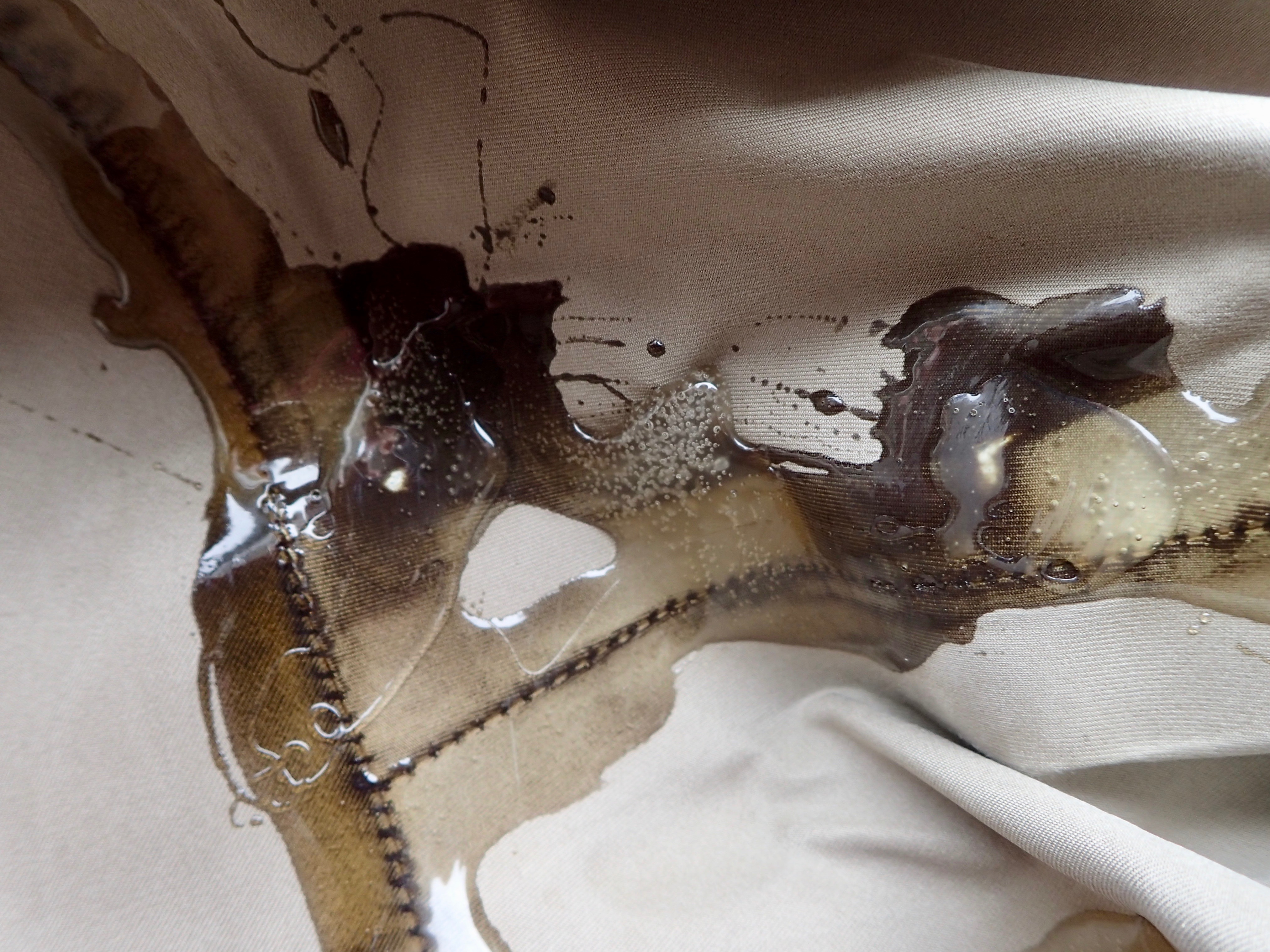
Two more holes fixed, and seams reinforced. The holes were again in the top layers of fabric; they’re the light colored dot to the left and the right angle shape to the right. This repair extended the life of my waders while I waited two months for a backordered pair to arrive.

Everything you need to know about the Magnuson-Stevens Reauthorization

In case you missed it, last month two Congressmen introduced an act to re-authorize Magnuson-Stevens. Briefly, “Mag-Steve” governs fisheries management in U.S. Federal waters. Given the ASMFC’s dismal track record, this act is desperately needed, and if you love striped bass and the concept of creating bountiful stocks, its title is sweet music: “Sustaining America’s Fisheries for the Future.” Here’s an excellent summary of the Sustaining America’s Fisheries for the Future Act from our friends at the ASGA.

Farmington River Report 8/1/21: Let’s be careful with those water temps

In a normal summer, August water temps are not an issue on a tailwater like the Farmington. When you get into an extended heat/drought matrix, it’s easy to see how water temperatures can get dangerously high for trout. Less obvious is our current situation. As a result of blowing so much water out of the reservoir — July was the third wettest month on record — the lake is now less temperature stratified. What’s coming out of the bottom isn’t in the upper 50s, but rather in the mid-60s. The issue becomes one of day and night-time air temperatures, and sunshine. Lower and lesser is better. The one current saving grace is that there is still a lot of water moving through the system, and more water means it’s harder to heat up. (Yesterday was 540cfs in the Permanent TMA, and 610cfs in Unionville.)

So, please try to use common sense. Check water temps before fishing, and pick and choose your locations (closer to the dam is better) and times (morning is best, cloudy days, and after the sun goes behind the hills also works) — not to mention your tippet and landing strategies. With that in mind, I was curious about both water temperatures and trout vitality. I fished a mark below the Permanent TMA for an hour yesterday, late afternoon. The water temp was below 70. It was a fast-moving, riffly/pocket water section that was sure to be highly oxygenated. I was fishing a team of three wets with Maxima Ultragreen 4#, which is strong enough to quickly land any Farmington River trout. Finally, I resolved to strip in anything I hooked fast. I stuck four fish and landed two. The two I landed were brought to net in under 15 seconds. They both looked and behaved like very healthy fish, with no signs of stress.

This was a surprise. Given the conditions, I debated the merits of taking a photo, but I can tell you this with certainty: the char was landed in 10 seconds, kept within the net in moving, oxygenated water, then removed for 3 seconds for the photo. All we can do is our best.

Noah’s Ark — er — Housy Report

Drat this cursed rain! Last year the river was pathetically low. This year it’s disgustingly high. The upper Housatonic has been mostly unfishable this month, and as a result we’ve missed out on what’s normally a very productive period. I’ve been feeling bitter about the whole thing, so I decided to take a drive out to the river and see what the conditions were first-hand, and maybe even wet a line. You know — you don’t know if you don’t go.

After peaking around 7K cfs, the river dropped about a thousand cfs a day in the trout TMA until it stalled at 2.1K. It’s holding there now (with more rain on the way, of course). At 2K+, the river is either raging whitewater or a vast, featureless glide. This mark is normally a series of riffles and pockets that dumps into a deeper run flanked by frog water on one side and a rocky flat on the other. Now it’s this garbage.
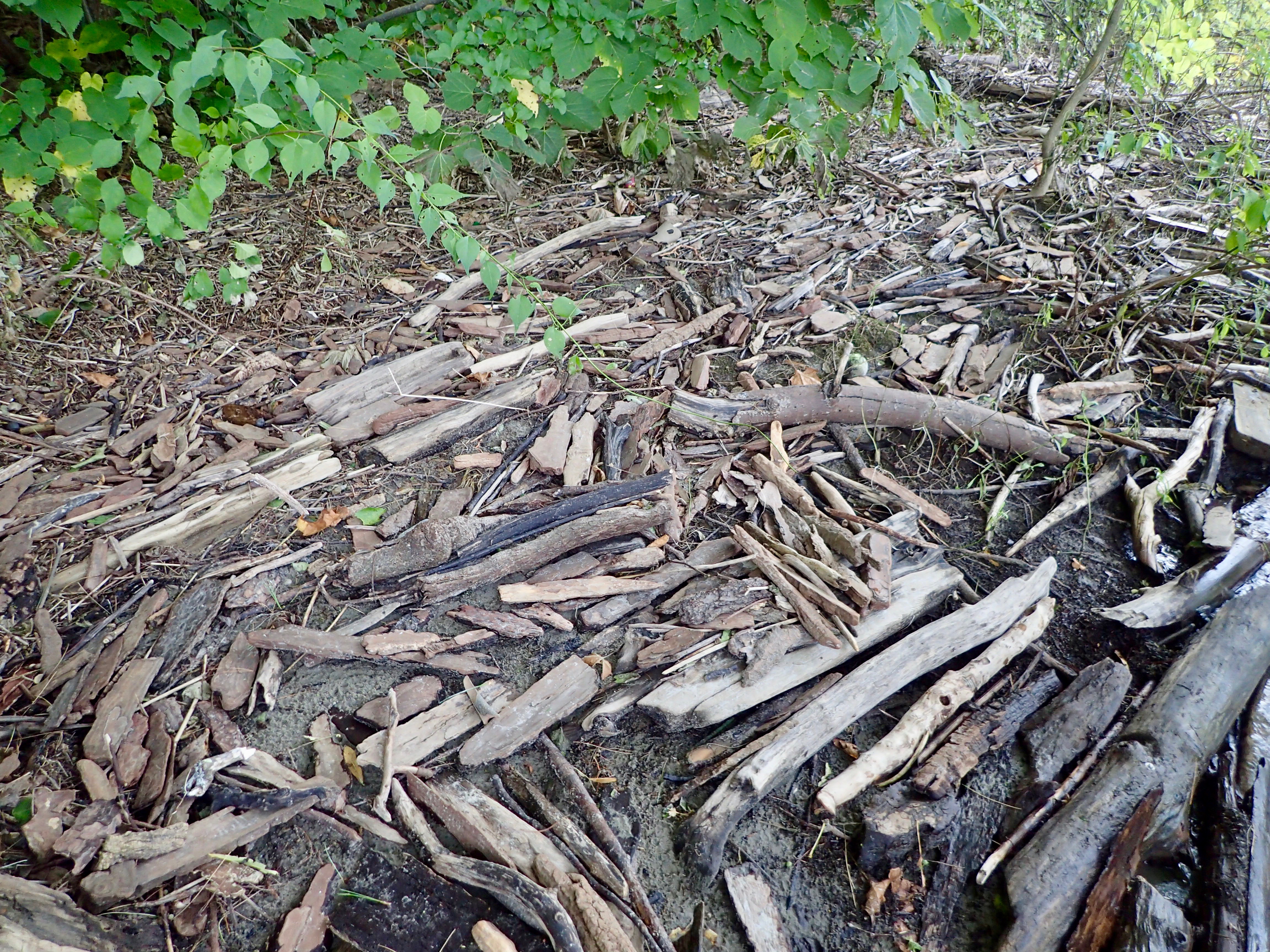
Speaking of garbage, the shores are littered with debris. Most of it is natural, like this driftwood, but there are also tennis balls, plastic bottles, and other man-made crap. This photo was taken ten feet away from the present water line.
My heart sank at my first sight of the river. I don’t know why, but I expected that perhaps the water would have cleared up a bit. Wrong. Depending on your location, its color ranges from tea-stain to chocolate milk. Visibility ranges from one to two feet. The culprit is silt, which is everywhere, particularly along the riverbanks. Your first couple steps off the bank will be a sinking experience. Never wade into low/no visibility water unless you know the bottom structure intimately, and then, never stray into the current. Studded boots and a wading staff are a must. Be smart and stay safe.
Here’s the thing: fish don’t know that the river is flooded. They’ve still got to eat. While you can’t wade to places you’d normally fish in high water, the beauty is that the bass aren’t out in the raging torrents — they’re in the calmer water close to shore, particularly as the daylight transitions to dusk. I fished two evenings this week. One was not good — only one 8″ smallie to hand. The other was a little better, including this slob that could be measured in pounds. What a battle in a 2K flow!

“Sensei Elmer & The 50-Fish Nights” in the current issue of Surfcaster’s Journal

Surfcaster’s Journal 68 is live right now — it’s an online-only ‘zine — and within its fantastic digital walls you can find my latest story, “Sensei Elmer & The 50-Fish Nights.” This is a piece I wrote a long time ago, revisited, rewrote, re-edited — and now, instead of hiding on my hard drive, it can be yours to read and enjoy. You get to see some decent photos taken by me, and some extraordinary shots from my immensely talented brother David . (You can see more of David’s work on Instagram @theplayoflight.) “Sensei Elmer” is about two memorable fly fishing nights I had one October. Or is it about something far deeper than catching fish?

Most of what I write eventually ends up here, but this piece won’t — so if you want to read it, you’ll have to subscribe to the Surfcaster’s Journal. It’s only $20 a year and you get six issues. Tell ’em Steve sent ya.

Get your Elmers here!

TGIF Currentseams odds and ends

Happy Friday! I hope your summer is going along nicely. If you’re a river and stream angler here in southern New England, it’s been a tough July. But it looks like we’re going to get a fairly long semi-dry spell, and that should allow the rivers to come down. I’m curious to see what, if any, negative impacts the flooding created. Rest assured, there will be impacts. As for the Farmington River, they’re still blowing water out of Hogback (over 2K cfs), but I think there’s a good chance they may lower the flow for the weekend. Check the USGS Water Data site for Connecticut for real-time information. In other happenings:

I’m working on a short piece about using a floating line in the surf. It takes the form of a case study, using a specific location/conditions, and it will be a currentseams exclusive.

Yesterday, I recorded a podcast for Fish Untamed. The subject is “Trout Fishing For Striped Bass,” and I’ll let you know when it goes live. (Give it two weeks.)

Drat this high water! I had all kinds of smallmouth fly experiments planned for July, and they’ve been blown to smithereens. So, we punt. I’m hoping flows drop enough in the next week so I can proceed. In the meantime, to the tying bench…

My article for Surfcaster’s Journal, “Two Nights in October,” should be live next week. This is an online subscription-only zine, so if you want to read it you’ll have get a subscription. It’s $20/year, which isn’t much for quality writing and storytelling, is it?

Stay safe, be well, and thank you as always for reading.

What’s the big deal, if any, with UV materials? Let’s find out. UV or not, this is going to get stomped.

How to organize and store your fly tying hooks and beads

The best system for organizing your fly tying hooks and beads is the one that works for you. In the case of my ever-growing collection of such stuff, that means storage compartment boxes. But not just any boxes. They need to be adjustable, stackable, and easily transportable. Since I’m not fishing this week, I’m using the time to organize the disaster area that is my tying space. I thought I’d share my process of sorting and storing hooks and beads with you.

Let’s start with the storage boxes. I’m a big fan of the 3700 Series Plano Prolatch(TM) Stowaway(R) and 3600 Series Deep Prolatch(TM) Stowaway(R) bulk storage containers. I’ve been using them for years. You can find them at many hardware and big box retailers, and you can also order them directly from Plano. They’re very reasonable priced, and they’re a quality product. I like these boxes because they allow custom configuration; you can create numerous different-sized compartments within each box. The boxes stack neatly atop one another. And if I’m doing a show or a class on the road, I just latch the box and toss it into a larger container for transport. (Plano offers many more options in the way of fishing hardware/lure storage — it’s worth browsing their site if you’re looking for ideas.)

This is the Deep Prolatch: 11″ x 7.25″ x 2.75″. I’m using this one for my freshwater streamer hooks. Everyone will have their own system of organization; for example, I’ve got hooks of different sizes and makes and models in the middle two compartments. But all the 3x long hooks are on one side, and the 4x long hooks are on the other. Stingers and other shorter shank hooks are in front. Large jig and Atlantic Salmon hooks in the back. Works for me!

I can’t tell you how to organize your boxes –that’s up to you — but I can tell you how I organize mine. I have one box for beads and dumbbell eyes, sorted by color and/or material. For example, I have one compartment for brass copper beads and another for tungsten copper beads. But there’s only one compartment for gold beads, regardless of material, because I don’t have a lot of gold beads. There’s a box for freshwater streamer hooks, and a box for saltwater streamer hooks. My smaller hooks box is organized by hook type, with compartments for light wire hooks, heavy wire hooks, shrimp/scud hooks, heavy steelhead hooks, egg hooks, etc. Again, there may be many sizes and different makers within a compartment, but I can easily find the right hook for a size 14 North Country Spider (light wire hooks section) or a size 12 Dark Hendrickson winged (heavy wire hooks section). Easy-squeezy.

The Beads Box, a 3700 Series Prolatch Stowaway, 14″ x 9.13″ x 2″.
Saltwater Hooks, 3700 series. I use fewer types of hooks for salt than other endeavors, hence the extra space at the rear. (Those are spare dividers you see. Each Plano box comes with a set of dividers so you can customize your box.) To be fair, I sometimes use freshwater hooks in the salt, such as Atlantic salmon hooks, and those are kept in the streamer box.
My workhorse freshwater box, also 3700 series.
Stack ’em up! It’s also very cool to be able to grab a box, toss it into a large container, and hit the road without having to worry that I’ll open the box to find a thousand mixed beads rolling around. Everything stays in its own little space.