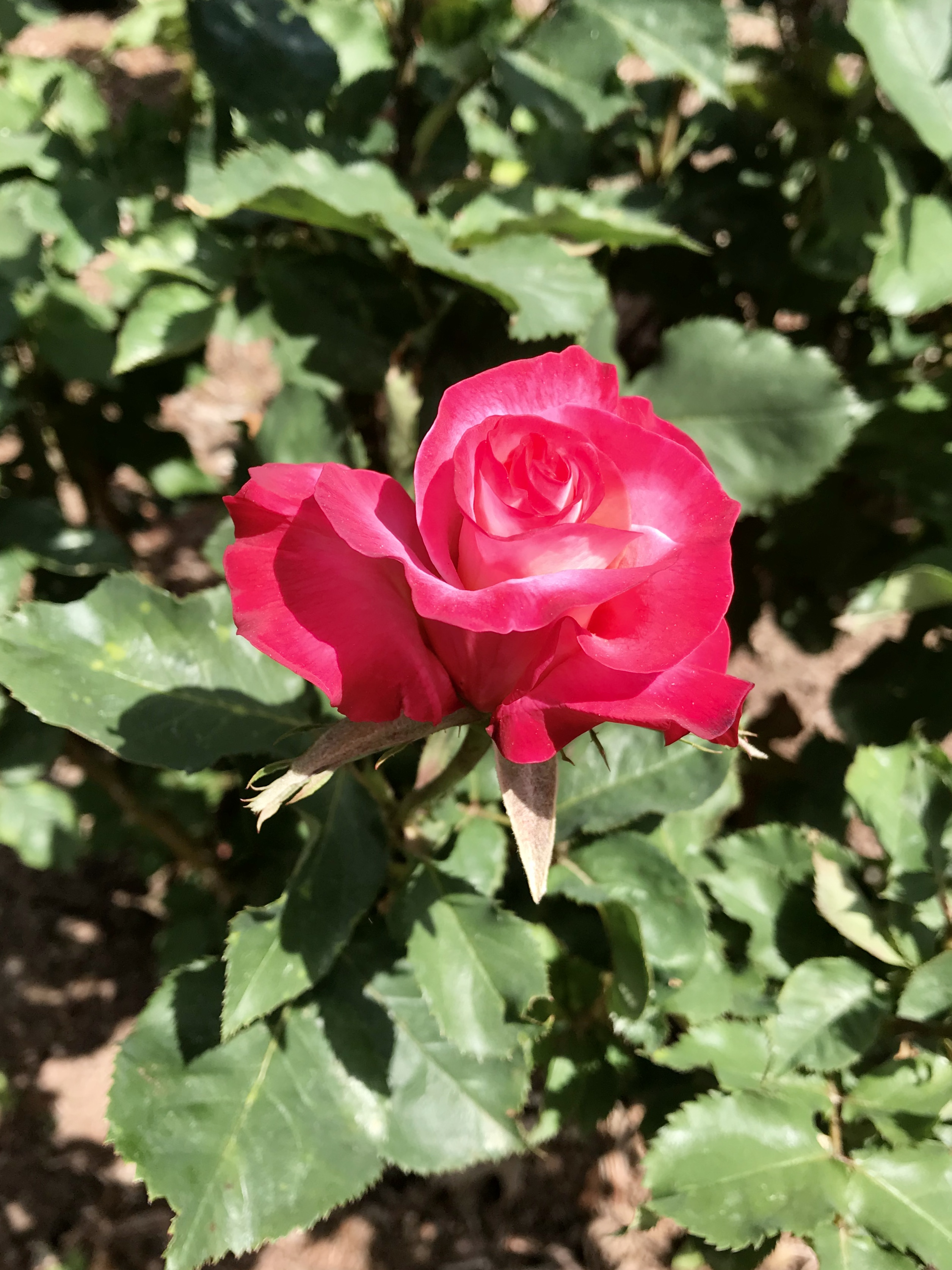
This happened Monday, so I’m a little late with the post, but my first rose blooms always mean there are Light Cahills on the lower end of the Farmington. The hatch is already progressing upstream. Call them what you want (Vitreus, sulphurs, etc.) — I see these first signs of summer as simple creamy mayflies, and I go with the generic term of Light Cahill, which suits me just fine.
Remember, you are matching size, color, and profile. These first invaders are usually a size 14-16 — sometimes you get a big 12. For dry flies I like the classic Catskills Light Cahill, the Pale Watery Wingless AKA The Magic Fly, and the Usual. For wets, the Light Cahill winged, the Pale Watery Wingless, and the Partridge and Light Cahill. Any of the creamy Leisenring or North Country patterns will also serve you well.
Old reliable “Grenada,” a hybrid tea rose, is always the first to pop. If I weren’t so busy with yard work, I’d be all over this hatch. Catch a few for me, will ya?
First, I’d like to apologize for the lack of recents posts. Busy, busy, busy is the word. I’m hoping to clear my plate by early June so I can get on the water and tell you about it. But I did manage to venture forth last night with #2 son Cameron for a grass shrimping expedition. We fished a secluded tidal marsh. Conditions weren’t ideal — I’d like it a little warmer — and I was concerned at the start by the lack of visual and audible feeding tells. I needn’t have worried. Once the feeding began, it grew exponentially, and we were surrounded by the cacophony of pops, splashes, swirls, and sharp reports.
Nonetheless, the fishing was tough. We dropped a few, landed a few, but the number of hits was not commensurate with the number of stripers present. So it goes when you have thousands of bait targets in the water. We fished a three-fly team consisting of a deer-hair head shrimp on top, a Black GP in the middle, and a micro gurgler on point. Droppers are the fastest way to find out what the fish want, and last night they wanted the deer hair head fly. We spent as much time sitting and watching and listening as we did fishing, and that seemed right. When I think of all the places in southern New England where the same thing will be happening tonight, I can’t help but smile and relish the sensory treat we experienced.
I don’t usually double-dip between here and Instagram, but this is the best shot from last night (credit to Cam) and I think it is worthy of inclusion. What looks like an impressionistic oil painting is actually a time-lapse photo taken in the black of midnight. Being surrounded by feeding fish is something every striper angler should experience. There were grass shrimp, mumies, and even a few random worms. Good stuff.
I can’t remember the last cold front that came through that was good for fishing. I can, however, remember plenty of times when it was bad. Like just a few days ago. Still, you take what nature gives you, and you do your best. That’s all anyone can ask. And maybe you still manage to have fun.
Tuesday May 17: I guided Herb today. Herb was dedicated to learning the ancient art of the wet fly — gotta love that — so we headed to a stretch of classic wet fly water. This was the morning after the cold front came through, and predictably, the action was slow. Hatch activity was virtually non-existent; we only saw one fish rise in four hours. It was a breezy, gusty day, and we got soaked by a couple of random rain squalls. We moved to a different location within the Permanent TMA. This was a difference maker as we had a couple bumps and then, hooray!, a hook set. Herb landed a lovely fat rainbow in a soft riffle, and there were smiles all around. Great job, Herb, for sticking with it, and I’m excited for you to swing wets under more favorable conditions.
Wednesday, May 18: Fred and Bud joined me for a late morning/early afternoon lesson within the Permanent TMA. Conditions were much better: still gusty, but sunny, warmer, and the water great height for wet flies (270cfs). Both anglers began with drop-shot nymphing, Fred tight line and Bud with an indicator (use the method in which you have the most confidence). Both of them caught fish. There came a point in the early afternoon when bugs started to pop, so we switched to wets. Because of the wind, I kept both anglers to a two-fly team. I think my favorite part of teaching these gentlemen was watching them improve as each hour passed, and doing it in the lovely stretch of water we had all to ourselves. Sometimes you get lucky. Kudos to Fred and Bud for fishing hard and well!
Why is this man smiling? A fat, well-fed trout, feeding right where we thought he’d be. My Hendrickson soft-hackle and Fred’s well-placed cast and mended swing did the trick.
Some of you may know that I am avid gardener. Right now, I am planting by the moon. What’s that, you say? The basic idea is that just as the moon’s gravitational cycle causes tides to rise and fall, it also affects soil moisture. So you want to plant seeds and transplant during periods when more moisture is being drawn to the surface.
Okay, Steve. But what the heck has this got to do with fishing?
I’m a firm believer in paying attention to natural rhythms.Using stripers as an example, I also believe that the angler who wants to catch more bass, and especially bigger bass, will not be one who places a premium on leader construction or casting distance — but rather one who focuses on things like tides, moon phase, wind direction, bait patterns, water type, structure, location, water temperature, frontal systems, and barometric pressure. What’s more, that angler should pay attention to common natural markers, like hearing the first spring peepers or when flowering trees bloom.
It’s all part of one magnificent puzzle. Every year is different, but nature is always right on time. It doesn’t hurt to be able to cast a plug or a fly line very far. But if you really want to crack the big bass code, pay attention to Mother Earth’s natural rhythms.
Yesterday was herb day. Today it’s peppers. I have it on good authority that this weekend is a great time to plant cukes and squash.
It’s an FAQ I get from my clients: “Can you recommend a place to stay?” The answer is yes. Legends on the Farmington. Located in Barkhamsted, CT, Legends is a gorgeous lodge-style B&B on the banks of the Farmington River. You’ve literally got great water right out the back door (Greenwoods pool). I’ve never stayed, but I’ve held classes there and it’s a fantastic space. It’s run by my friend Sal and his wife, and they’re swell hosts. Tell them Steve sent ya.
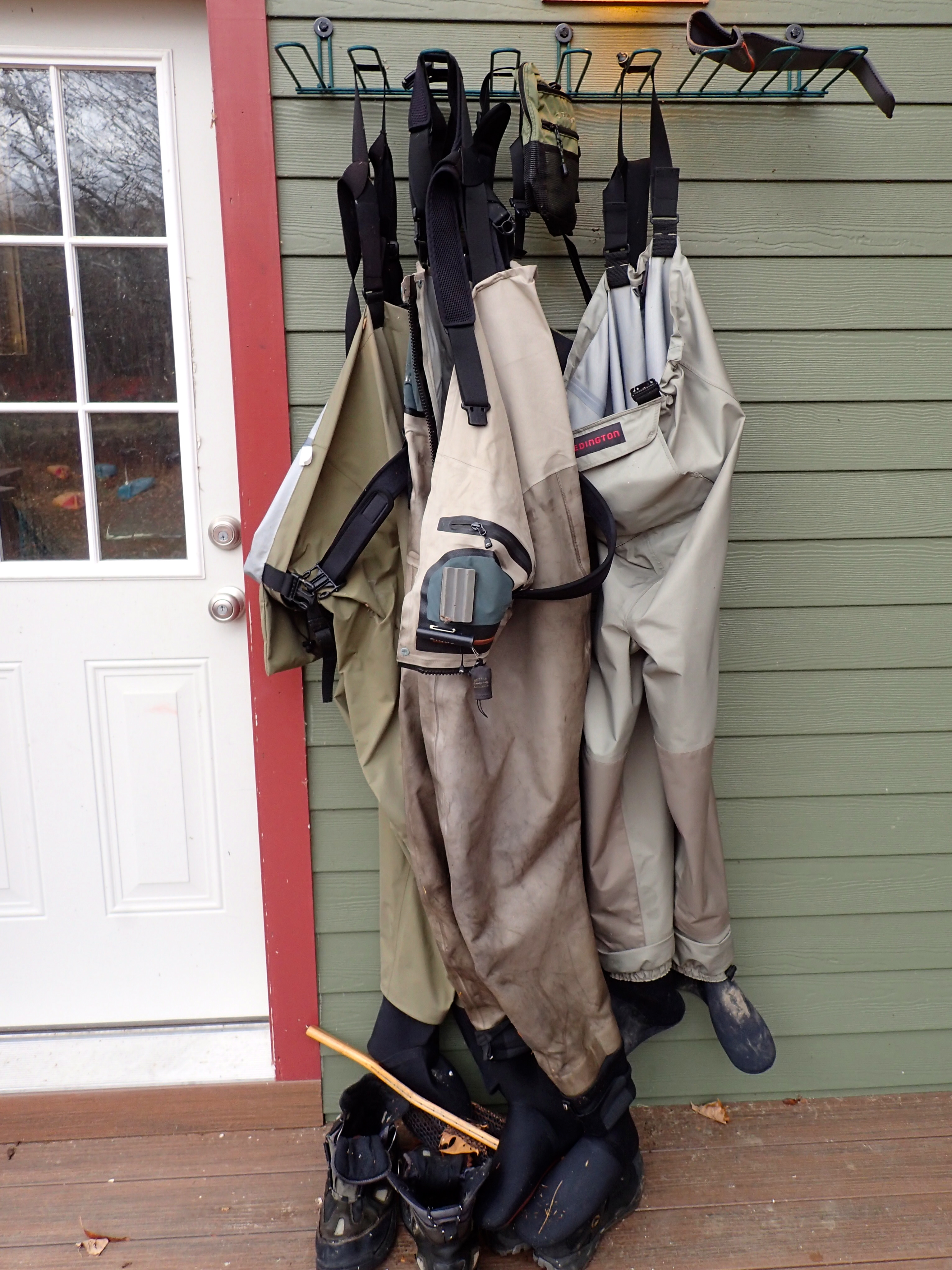
Hang your waders on the deck and come on inside. If you want to see the inside of the lodge, visit the Legends website.
“Every day is different.” That’s something my clients hear from me a lot. Thursday and Friday this week were the proof. I guided Jon and his grandson Jake; Jon’s an experienced fly angler, Jake not so much, but very eager to learn. It was exciting to have two generations of fly fishers on the water, and have the opportunity to teach them.
Thursday 5/5: warm, sunny conditions, and a reduced flow. Hot-diggety! As we arrived at the first mark, below the Permanent TMA, blocky caddis, size 12-14, filled the air. I liked our chances. Our first lesson was indicator nymphing with a drop shot rig. Jake did a great job figuring it out; in no time at all he was casting and making quality drifts.
Not bad, kid! A mid-teens wild brown Jake hooked while drop-shot indicator nymphing. Jake’s quote, pre-battle: “I think I’m stuck on a rock.” Nossir. You got a tank of a brown. Jake did a great job playing and landing the fish. We talked about proper release and photo techniques, in particular keeping the fish submerged until ready to shoot, then 1-2-3 lift, and shoot. Note the water dripping from Jake’s hands. This gorgeous fish took the top dropper, a Squirrel and Ginger size 12.
We moved upriver into the lower end of the permanent TMA for a wet fly lesson. The Hendrickson hatch was decent enough (5 out of 10) and both Jake and Jon connected with fish. I had them both rigged with a Squirrel and Ginger top dropper and a soft-hackled Hendrickson on point. I’d kept it a two fly rig on purpose, hoping to reduce the chance of tangling disasters; while I highly recommend a three fly team, two flies is certainly better than one. Both gentlemen caught fish on each fly. When the hatch matured and the trout wanted the dry, we switched over and had fun trying to fool them on the surface. The run was crowded, with seven anglers, but we all managed to share the water and keep it positive. Everyone got into trout on this glorious early May Day.
Friday 5/6: This is why I hate cold fronts. We carpet bombed the first mark with nymphs; not a touch. We moved to a second mark and tried wets; nothing doing. This was particularly frustrating because I know that particular run is infested with trout. But: the hatch activity stunk. No caddis. No Hendricksons. Over the course of four hours, a visible rising number I could count on a hand. We saw only one other angler hook a fish. Ugh. Jake and Jon deserved far better for their efforts, as both fished hard and well. All you can do on a day like this is make quality presentations and hope things turn. They didn’t for us, but we left the river with our heads held high. Great job, Jon and Jake, and you were a pleasure to guide.
I guided Gerry and Sam today, and while Gerry did most of the fishing, a splendid time was had by all. The subject of today’s lesson was wet flies. We spent about 45 minutes on a bench for some streamside classroom, then Gerry and I went to work. Our first mark was in the upper end of the Permanent TMA. Flow was a reasonable 360cfs, but the water is still very cold, and we had rain showers that seemed to bring what little feeding activity there was to a screeching halt. (This was to be today’s pattern: active fish, then stop. Wait a bit. Then more feeding, or no feeding at all. Wait for it.) We managed one hookup, then decided to seek our pleasure elsewhere.
Mark #2 was in the lower end of the TMA. By now, the rain had stopped. There were no Hendricksons that we saw, and a few size 16 BWOs here and there. Nothing much was going on in terms of visible feeders — and then, as so often happens, suddenly it was on. A rise here. A boil there. Gerry was fishing a team of a size 12 Squirrel and Ginger, a size 12 Dark Hendrickson winged wet, and a size 14 Old Blue Dun. Fish on! Then another. And another. The fish, a mix of rainbows and browns, ate all three flies. A half dozen trout in an hour doesn’t suck, and we gleefully took our bounty and ran.
Another satisfied customer. Gerry is now officially on the path to becoming a dangerous wet fly machine. Even though the fishing was off today, he kept at it, trusted the method, and was repeatedly rewarded with bend rod syndrome. Way to go, Gerry!
The Soft Daddy is an impressionistic, soft-hackled streamer that imitates the rusty crayfish. It’s currently featured in On The Water magazine‘s “Guide Flies” column, written by Tony Lolli. (Thanks, Tony, for letting me play!) The concept of a guide fly is twofold — it’s a pattern that is typically simple to tie, and is also a consistent producer. Like most of my flies, The Soft Daddy starts as an idea; is rendered on the vise; and goes through extensive field testing. Tweaks are made as needed, and the end result goes into the rotation. Like many of my patterns, you can see the wet fly influence in its construction. Smallmouth eat this fly like candy…or is that crawdads…or crawdaddies…?
Grady just bought someone’s collection of tying materials, and I’m happy to tell you that it includes Pearsall’s Gossamer Silk. Pearsall’s is no longer made, and nearly impossible to find, so this is a treat for those looking to tie classic North Country spiders with traditional materials. These spools are bargain priced, and as of Friday there were still plenty in stock. Naturally, I helped my self to a bunch, but I played nice and kept my silk gluttony down to a dull roar. Get ’em before they’re gone.
This photo was taken Friday afternoon. As you can see, there’s Pearsall’s Marabou silk as well.
You might also want to rummage through the bins — they’re in the room next to the parking lot — from this collection. Again, I can’t vouch for current inventory, but there were all kinds of game bird skins and other soft hackle delights at bargain prices. As always, please support your local fly shop!
I fished the lower end of the Permanent TMA yesterday afternoon and we had much better flows (under 400cfs) for swinging wet flies. So much, in fact, that after a while I replaced my tungsten bead head soft hackles with non-weighted bugs, the better to target all the slashing risers. Atmospheric conditions were as they have been: chilly, windy, and uncomfortable.
I arrived late, about 1:30pm, and as I approached the mark, I recognized the faces of the two anglers who had beaten me to it. It was Bob and Andy. I’d seen them here last year, introduced myself, and we shared the water. These guys are very giving, and a pleasure to fish next to. I’d like to thank them again for being so matey and kind.
Right away, I was into fish. I’d made the comment earlier to Torrey Collins at UpCountry that if you hit this hatch right, fishing with wets is almost unfair. I took them on the swing. I took them on the Leisenring Lift. I took them dead drifted deep on a short line. Active feeders almost always hit on the first cast. I even managed my first double of the year.
Then, the bugs came. Lots and lots of Hendricksons. I’d give this hatch an 8 out of 10. The point where the trout would no longer take the wet came at 2:45pm. Once I figured out what they wanted — it wasn’t, to my surprise, The Usual, with which I usually do boffo box office — I managed a bunch on the surface. (The winning fly was a Comparadun.) Dry fly was very much a challenge in the fierce gusts. But it’s supposed to moderate, so tight lines to those brave souls venturing out this weekend. I expect the hatch to continue to ramp up and move upriver. Enjoy!
‘Nuff said.
To this week’s mystery bug. I appreciate everyone’s input and guesses. My first thought when I observed them was some kind of early BWO. They were clearly too small for Hendricksons. After I captured a couple specimens, I was able to see that they all had only two tails. I ended up going to two people who have a far deeper technical knowledge of these things than I, and they both independently identified the creature as a Baetis. That’s good enough for me! (In case you’re wondering, my panel of experts consisted of Torrey Collins and Derrick Kirkpatrick. Those guys have forgotten more about Farmington River hatches than I currently know.)




 currentseams.com