A thought-provoking essay on the coming striped bass crash

That striped bass are a sport fishing species in trouble is not new information. We’ve already been to the edge in our lifetime. What’s most troubling about the situation is that there is no uniform policy in place to protect these fish — and the bait stocks they feed on —  from big government all the way down to grass-roots anglers. There is confusion at the grass-roots level as well — yesterday on Mike Francesa’s show on WFAN, one of his guests waxed nostalgic about what a great job the authorities have done to boost striper stocks. Really? You’re kidding, right? Sadly, he wasn’t.

This piece by Zach Harvey appeared in a recent Rhode Island edition of Coastal Angler Magazine: http://coastalanglermag.com/rhodeisland/2014/08/fish-focus-shame-us/

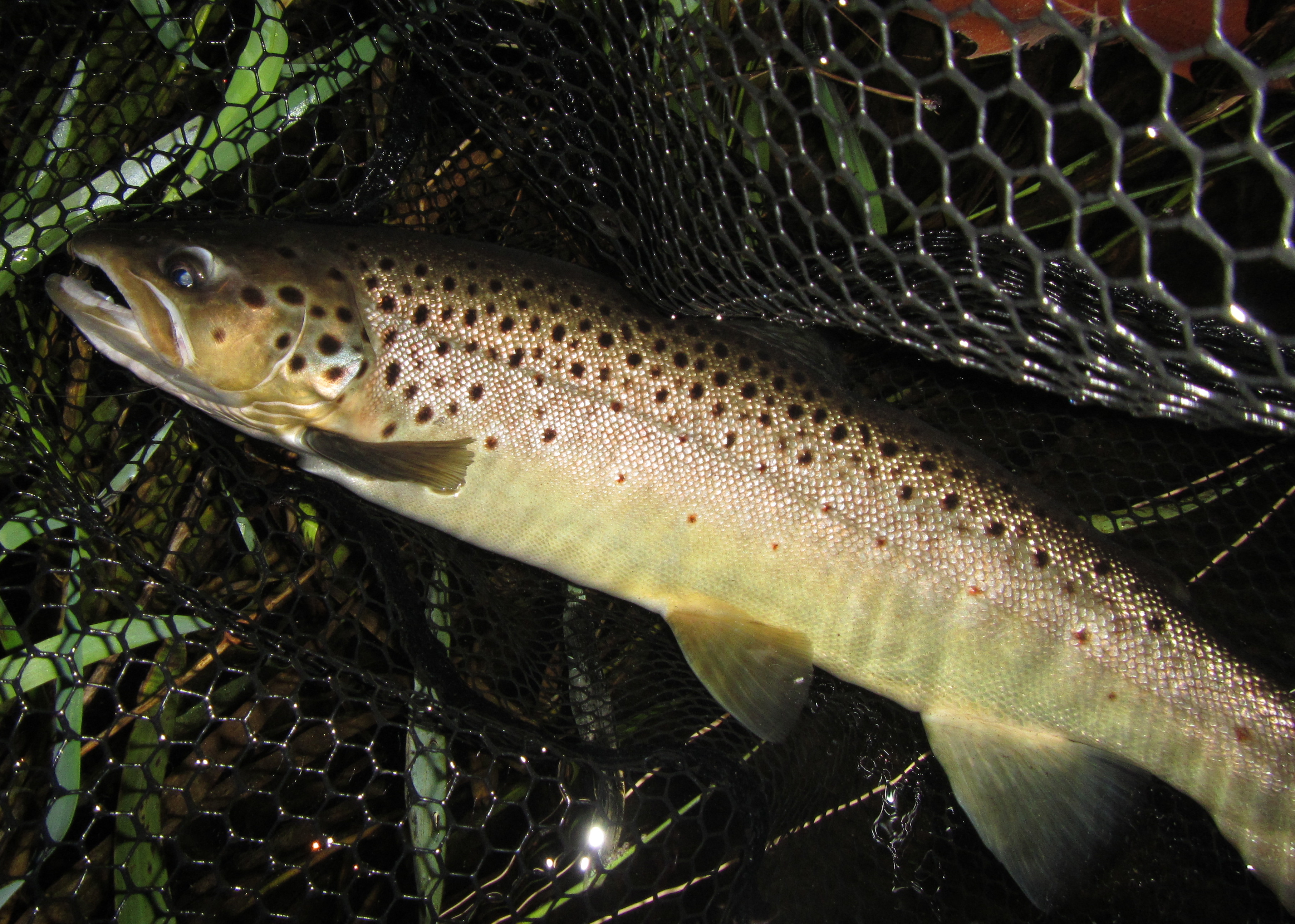
A Block Island keeper lives to fight another day. Every year, tens of thousands of her sisters aren’t so lucky.

FridayBIBass

Steve Culton on HAN Radio’s Yankee Fisherman

I must have a great face for radio. Why else would John Kovach be gracious enough to invite me back on his Yankee Fisherman show on HAN Radio? We covered lots of topics: this summer on the Farmington, the effects flows have on fishing, fishing wets as dries, long leaders, setting the hook, and just what the Dog Days really means.

Thanks again to John and his team for having me. Here’s the link to the show:

 
A grey, mysterious summer morning on the Farmington. Who knows what possibilities the day will bring?
Morning Fog

What’s going on around here?

Much. Here are some details.

Radio/Podcast: I just recorded a segment on fall/summer fishing the Farmington with John Kovach’s Yankee Fisherman show on HAN radio. I’ll post the link when I get it.

Magazine articles: Look for upcoming articles in the Mid Atlantic Fly Fishing Guide (Salmon Fishing for Stripers); The Drake (W/S Caddis); Fly Fish Journal (The Streak, a 12-month striper odyssey); and American Angler (tbd…this will motivate me to get those story ideas to the editor).

Web articles: Last night I started my 2014 Block Island Diary. I promise it won’t suck. I have a few interviews with Ken Abrames to sort through — currentseams.com exclusives. And of course regular fishing reports and tying articles/videos.

Appearances: Yup, it’s that time of year. I’ll be presenting Wet Flies 101 at the TU Croton Watershed meeting on Thursday, September 18th. You can find directions at cwctu.org. I’ll be presenting Eastern Brook Trout at the TU Naugatuck Pomperaug meeting on Wednesday, October 1. You can find directions at tunaugpomp.org.

I also see currentseams is approaching 200 members. I think we’ll have to do another fly drawing to celebrate.

We’re not quite yet to this point. But make no mistake — fall is here.

Leaf 10:13

Farmington River Report 8/12/14: Before the rains came

It’s been a slow summer for me swinging wets on the Farmington. Until today.

They dropped the flow from the dam to 340cfs, placing the upper river at a near-ideal 375cfs, and the lower river at 400cfs. Water temp on the lower river at 2pm was 66 degrees, darn good for mid-August, and no doubt cooler still at the bottom.

I visited several locations today on both ends of the river and found plenty of trout willing to jump on the wet fly. I fished my usual three-fly team; today it was a size 12 Squirrel and Ginger top dropper, a size 14 Drowned Ant in the middle, and a size 12 soft-hackle BHPT on point. I caught trout on all three flies, and even had a Farmington River Grand Slam with at least one brown, brookie, rainbow, and Atlantic salmon in the mix. One of today’s salmon was approaching the double-digit inches mark. Salar the Leaper indeed.

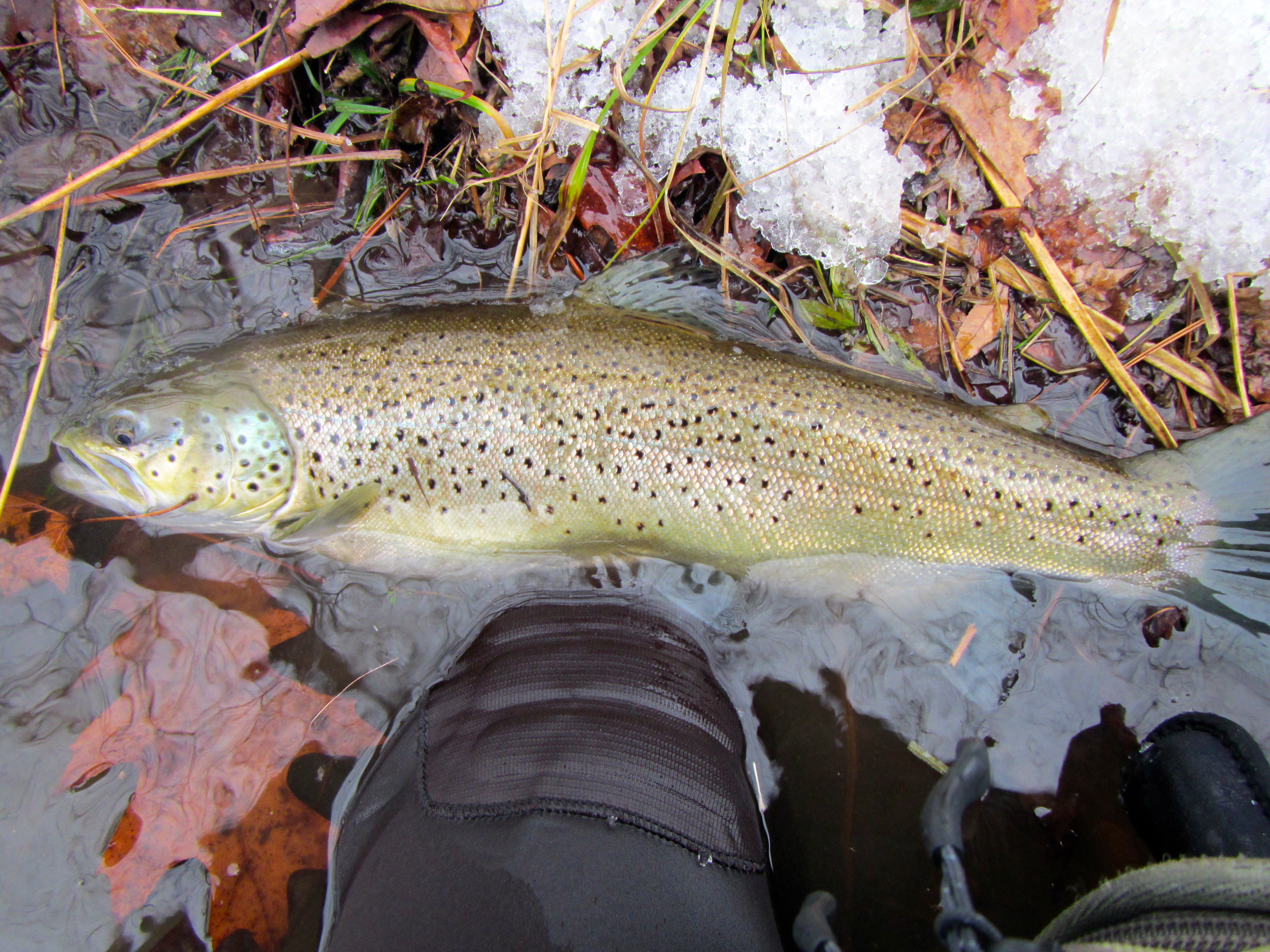
A staggeringly beautiful wild Farmington brookie who took a Drowned Ant on a mended swing. This is one of the best fish I’ve ever landed on this river, a tremendous fighter worthy of your applause. Also note the classic contrasting colors of the fontinalis fin.

IMG_2314

With the lower flows, my focus was on exploring some treacherous snotty water that had been previously out of reach. I almost went swimming a few times, and I even breached my waders when I stepped into a chest-high hole. (Please use a wading staff when you’re wading swift or difficult sections.)

Very little in the way of hatch activity today, although the Cedar Waxwings were busy.

The big one — 20+ inches —  on a wet fly still eludes me this year. But with a bounty of wild browns like this one, I’m not complaining.

IMG_2303

Where stripers come from

Just returned from a family reunion along the shores of the world’s greatest striped bass nursery, the Chesapeake Bay. I didn’t fish, but visiting the Chesapeake always makes me wonder how many of the stripers I’ve caught began their lives here.

If you’re an old Block Island hand, you know Ballard’s is lobster. Welcome to Ballard’s mid-Atlantic cousin, The Crab Claw. They cover your table with heavy paper, then pile your steamed seasoned crabs in front of you along with a wooden mallet and a roll of paper towels. I also had some oysters on the half shell and this apropos of everything ale.

IMG_1548

~

When he’s not catching fish, he’s piloting the boat. Cam at the helm of the Promotion, under the guidance of Rear Admiral George Ellis (Ret.), Annapolis Class of 1945, known to us simply as Uncle George.

IMG_1572


Farmington River Report 8/6/14: Follow the Heinie Trail

It seemed stupid to spend close to two hours driving to fish for only seventy-five minutes. But I did it anyway.

I turned my attentions to a snotty section of the lower river. At 510 cfs it was a challenging wade. I didn’t bring my thermometer, but it felt about 65 degrees at index finger depth. Not bad for early afternoon on a sunny day in August.

This year, the wet fly fishing has been slower than usual for me. I think some of it has to do with the elevated flows. I probably should be doing more nymphing. At least the trout are happy. I fished size 12 Squirrel and Ginger on top dropper, a sz 12 Drowned Ant in the middle, and a size 12 soft-hackleBHPT (tungsten bead) on point. I had several raps from those pesky JV salmon; I landed one of them. What a tub of fish flesh. Almost perch-shaped. I dropped a brown who was hiding behind a rock with a dopey reaction hook set. The one brown that came to hand was wild and in the foot-long class. He was quite exuberant in his reluctance to come to net.

That one fish was just enough to cover my lack of good judgement.

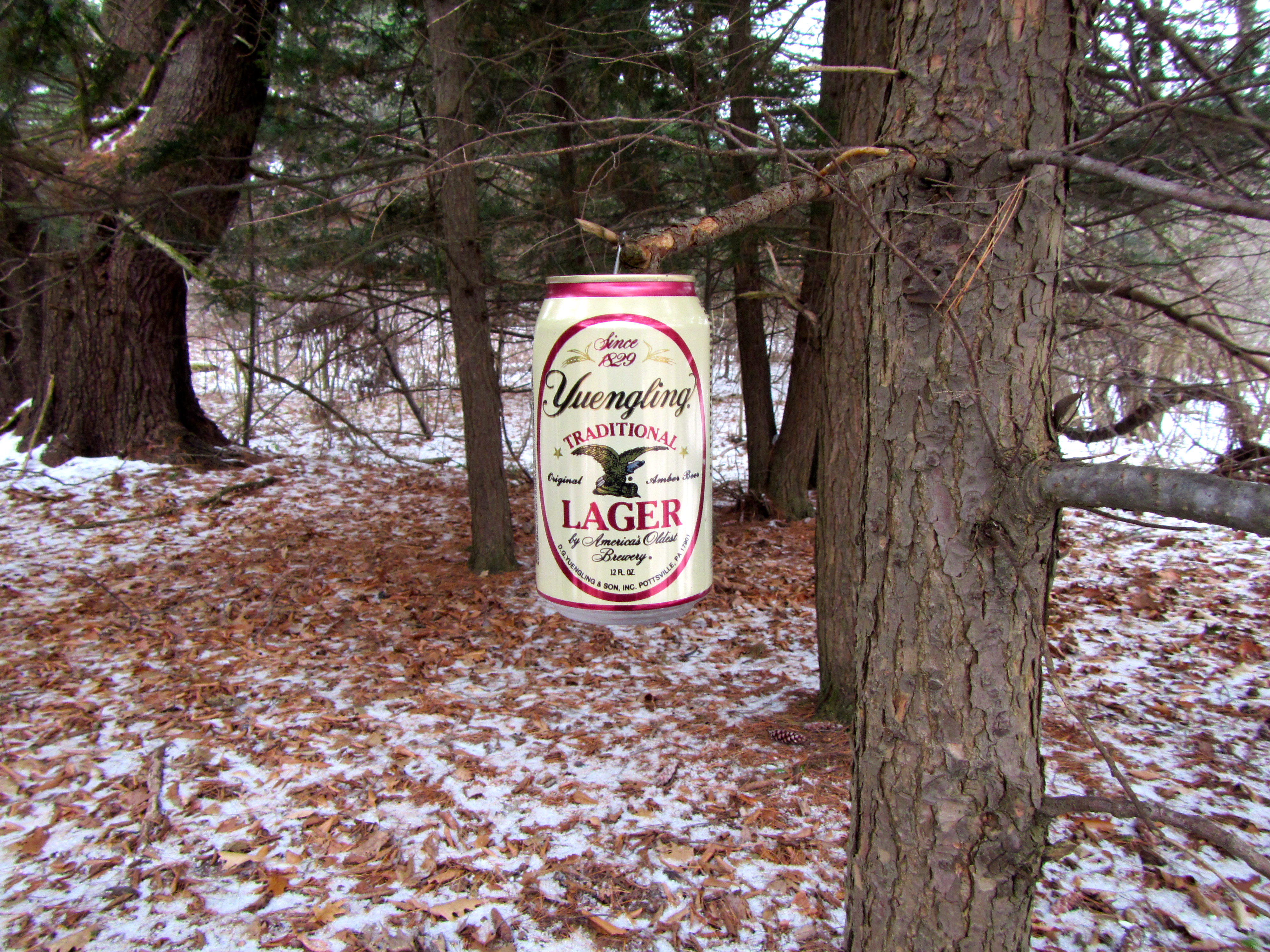
Classy litterers only leave premium cans behind. This says, “I’m not just a rude, ill-bred person; I’m a rude, ill-bred person with exceptional taste.” 

IMG_2295


Someone enjoying a snack in the cool shade of the tree-lined riverbank.

IMG_2300


Currentseams Q&A: Multi-fly striper rigs

Q: Just wondering how you rig to balance strength on the dropper and still allow movement in the fly?  Blood knot with a long tag?  Or surgeons knot with a long tag towards the tippet end? What do you think your hook-up ratio is for the front fly versus the trailing dropper?

A: I think you’re referring to a tandem rig; when I fish multiple flies for stripers, it’s usually a team of three. I build all my multi-fly teams with 20, 25, or 30# Worldwide Sportsman camo mono. The mono size depends on where I’m fishing and what flies I’m using. For example, crystal clear water or small flies would have me leaning toward 20. If I’m feeling lazy, I’ll use a triple surgeon’s knot to form the droppers. If I suspect larger fish may be in the mix, I’ll use a double uni knot. I had a “bad” experience many years ago with a school of high 30s bass — if I hooked two, the bottom fish would pull the triple surgeon’s knot right out from the top dropper. Now, if I’m targeting larger stripers, I go with a single fly.

If I am fishing multiple baits ( i.e. grass shrimp, peanut bunker, silverside) the fly that gets eaten most is usually the one that most closely matches the naturals the fish are feeding on, regardless of position. One night a small peanut bunker fly saved my bacon. It happened to be the middle dropper. It still worked when I re-rigged with a single fly.

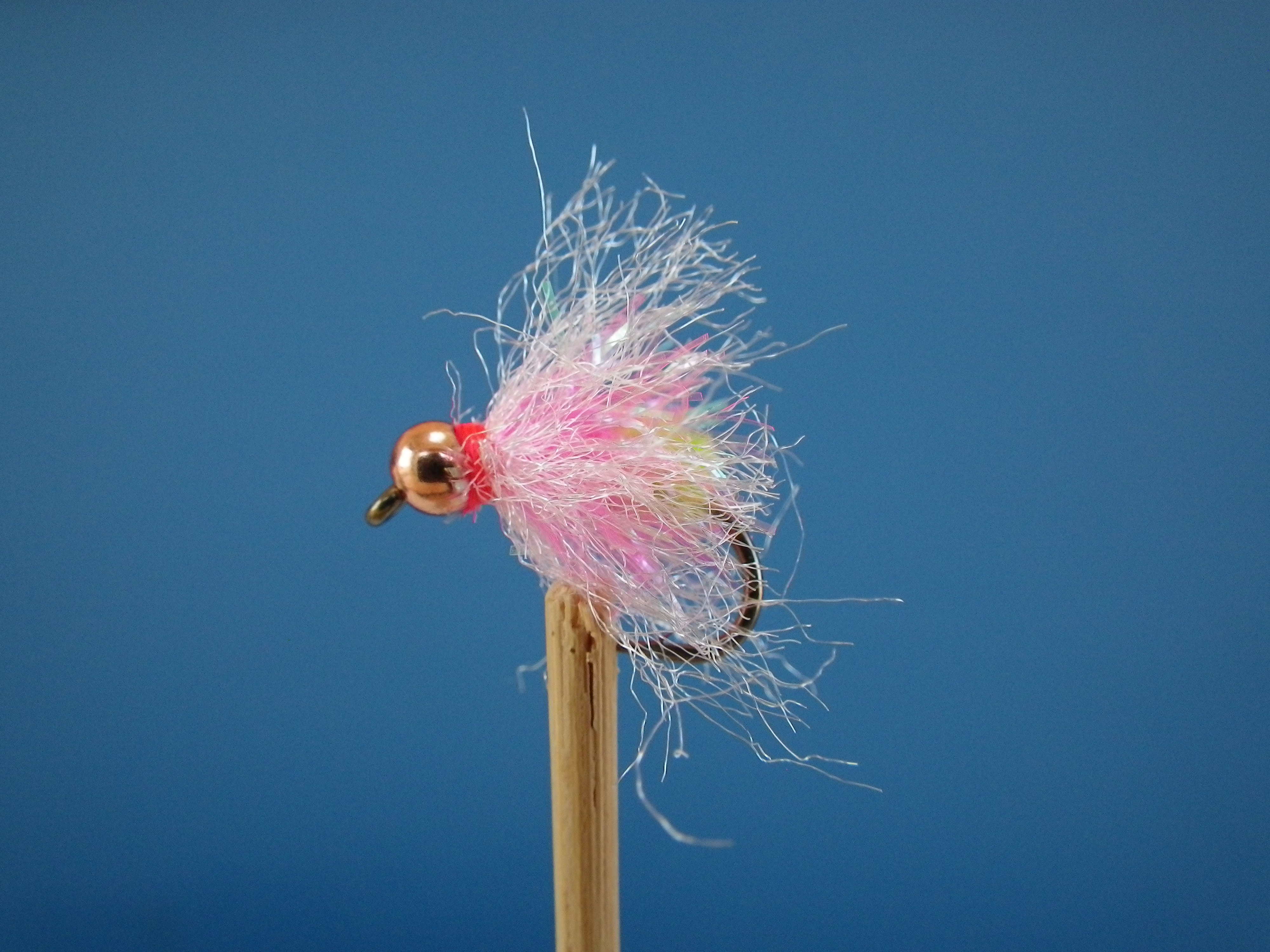
If I know what bait is present, I’ll hedge my bets. This June I fished two small grass shrimp droppers with a small clam worm on point. The water was infested with grass shrimp. 3/4s of the bass I caught came on the shrimp patterns.

My three-fly team from early June 2014, top to bottom: Grease Liner variant, pink Crazy Charlie, Orange Ruthless. The bass liked all three flies. These tags are about 5-6″ long.

Striper ShrimpDropper Rig

In early July, small sand eels were on the menu. I rigged a dropper system of two sparse sand eels suspended between a corkie and a Gurgler. This setup was fished in barely any current at a dead drift. Even though the bass were keyed on the sand eels, I still took one on the Gurgler (the point fly) while it was just sitting there.

This Golden Knight is tied on a small freshwater hook, but on an Atlantic salmon hook, it’s the kind of fly that I like to have when I’m fishing multiple sand eel patterns.

Sparse Golden Knight

Farmington River Report 7/31/14: Saving the best for last

I have to confess there are times when I am completely flummoxed by this river and its residents. Like last night.

I arrived on the upper TMA at 5:45pm, committed to the dry fly cause, cane rod and 14-foot leader ready. Here’s what I was dealing with over the next couple hours: trout feeding on caddis emergers. Trout rising delicately to something very small. Trout slashing violently on the surface, breaking the film and leaving an air bubble. Trout taking sulphur and March Brown duns off the top. All of it rather haphazard, with no consistency to the rise forms or even with specific fish feeding. In one thirty second period, five fish would rise. Then nothing for the next fifteen minutes. Random would be a good word.

So I took a kitchen sink approach to fly selection. Small Magic Fly. Big Cahills. Small Cahills. Small caddis emergers. Small ants. All I had to show for it was a bunch of refusals and a JV Salmon on the Magic Fly. So I made a plan: as darkness fell, the trout would get sloppy. A size 12 Light Cahill would do the trick.

And that’s how I managed to cross paths with this handsome fellow, a wild brown in the high teens  who gave me a thrilling battle on the click-and-pawl South Bend:

Dry Brown 7:14


I stuck a few more of his friends even after it was too dark to see the fly. Then celebrated with a cheeseburger from Five Guys.

River notes: upper TMA 475 cfs. Golden stones (about a size 14) came out at nightfall. Water running cool and clear.

What about Bill?

You’ve read of the steelhead and striper adventures of Cam. Followed the woodland wanderings of Gordon.

So how come I never write anything about Bill?

Last week, Number One Son returned to his natal shores from the far away land of Miami. He had mentioned the F-word several times during his stay. And so it was that father and son found themselves on the Farmington River last Friday evening to catch the evening rise.

Catch? Here’s one: Bill had never fly fished a big river for trout. At least, Grady Allen assured me, he would have a good instructor. I replied that maybe we should get Fred Jeans.

Bill did great. In no time at all he was mending like he’d been doing it for years. I’d like to tell you that he caught a ridiculous number of fish, but it was one of those nights where hook sets were few and far between. He had the right fly (size 20 Light Cahill Catskill dry) and the right presentation — he had one low-teens brown make a good half dozen rises — but a soup-to-nuts complete transaction was not in the cards.

I, on the other hand, had lottery luck. As we were starting, I was greasing his leader, fly dangling in the current six feet below me, when I hooked a nice brown. I handed the rod to Bill, who managed to hand strip in his first trout on a dry. Well done, son. Dad managed a few more later on the Magic Fly, size 20.

We stayed till dark, then re-rigged for night patrol with streamers. No bumps in a half hour had our stomachs arguing with the fishing center of our brains. Cheeseburgers finally won.

My cigar that night was a My Father Le Bijou 1922 Belicoso Bill had given me for for Father’s Day. I was using my father’s old cane rod.

Sometimes it is fun, being a dad.

Bill at the controls, ready to stick that brown. Note the ski goggles filling in for polarized glasses. Marines adapt, overcome, improvise.

Bill Dry


Currentseams Q&A: The Leisenring Lift

Q: Fished White Clay in Pennsylvania, after April and May. I tied some size 18, 20 wet flies using just yellow or orange floss and light Hungarian partridge or grouse. I noticed that the trout either hammer the wet fly as it swings; or, after it swings, as I pick up the line trout hit it and I didn’t know they were on it? Is this the idea of Leisenring Lift? Just finished reading your article (“Wet Fly 101”) in the Nov/Dec 2013 American Angler. Good stuff!!!

A: Thanks for your kind words, and thanks for reading. The Leisenring Lift is one of the most misunderstood of the wet fly methods. According to Dave Hughes, Leisenring would present to a fish, or to a lie that was in the two-to-four-foot depth range, in a slow-moving current. He’d make his cast 10-20 feet above the lie. He kept tight to the fly, tracking the drift with his rod, making sure that the line and the fly weren’t dragging. At the point of where he thought the take would occur, he’d stop tracking with his rod. This would cause the fly, which had been naturally sinking (Leisenring did not use weighted flies) to come off the bottom and start swimming toward the surface. So the lift comes from the physics of the fly lifting off the bottom due to drag, not from the physics of actually lifting the rod. What I think is happening in your case is a trout is following the fly subsurface — or holding at the point where your fly dangles — and as you begin to lift your rod, it sees a potential meal escaping (much like it does an emerging caddis). The trout decides, “I want that!” and you’ve got a fish on. Good for you. 🙂