It was about this time every year that Ken Abrames would post a reminder on his Striper Moon forum. The forum is long gone, but the sentiment and action statement lives on! Ken’s September Night is by far my favorite finger mullet fly, and you can tie it longer as the mullet get bigger and fatter. I’ve tied this with a ginger marabou collar, and the bass said yes. Here’s a good link with tying instruction from yours truly so you too can tie the September Night.
This might be the sexiest baitfish fly-without-eyes around.
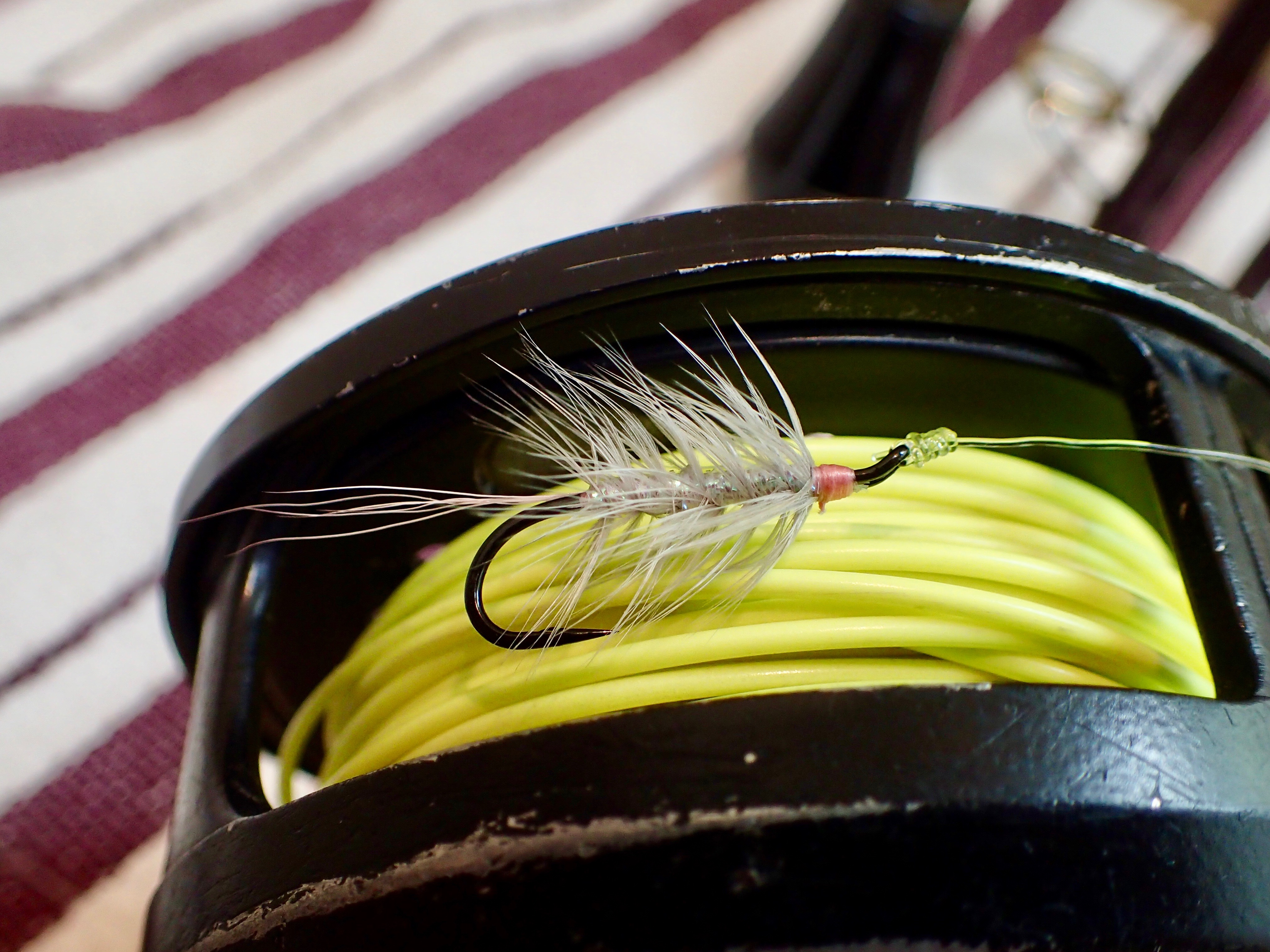
I can’t remember specifically when I came up with the Grass Shrimp Solution, but it was a long time ago, maybe decades. I do remember wanting to create a fast, simple-to-tie, impressionistic soft hackle that would mimic this tiny bait in size, color, and profile. Years later, this fly continues to be a favorite of other anglers who have discovered its deadly effectiveness. It’s one of my favorites, too.
In case you’ve missed it over the years, or are new to currentseams, here’s a crash course on the pattern. The Grass Shrimp Solution was first published in 2015 in my American Angler article “Soft Hackles for Striped Bass.”It was featured in On The Water’s “Guide Flies” Column. I frequently fish this pattern in estuaries when stripers are selectively feeding on small food items. Here’s an article that covers how to do that. This piece discusses the concepts behind the pattern’s bite triggers. Those four articles ought to keep you busy for while, after which, I would guess, you’ll be heading to your tying table — and then, to the closest tidal marsh or flat.
I’m way late on the draw here, but there’s still a lot of September left. Ken Abrames’ September Night is by far my favorite finger mullet fly, and you can tie it longer as the mullet get bigger and fatter. I have received confirmed, reliable reports that at least one RI salt pond is loaded with mullet, and that school bass have been harassing (if not enjoying) them. Here’s a good link with tying instruction from yours truly so you too can tie the September Night.
If you think this fly looks good on the vise, wait until you add some water and current. I also tie a variation with a ginger marabou collar. The stripers approve.
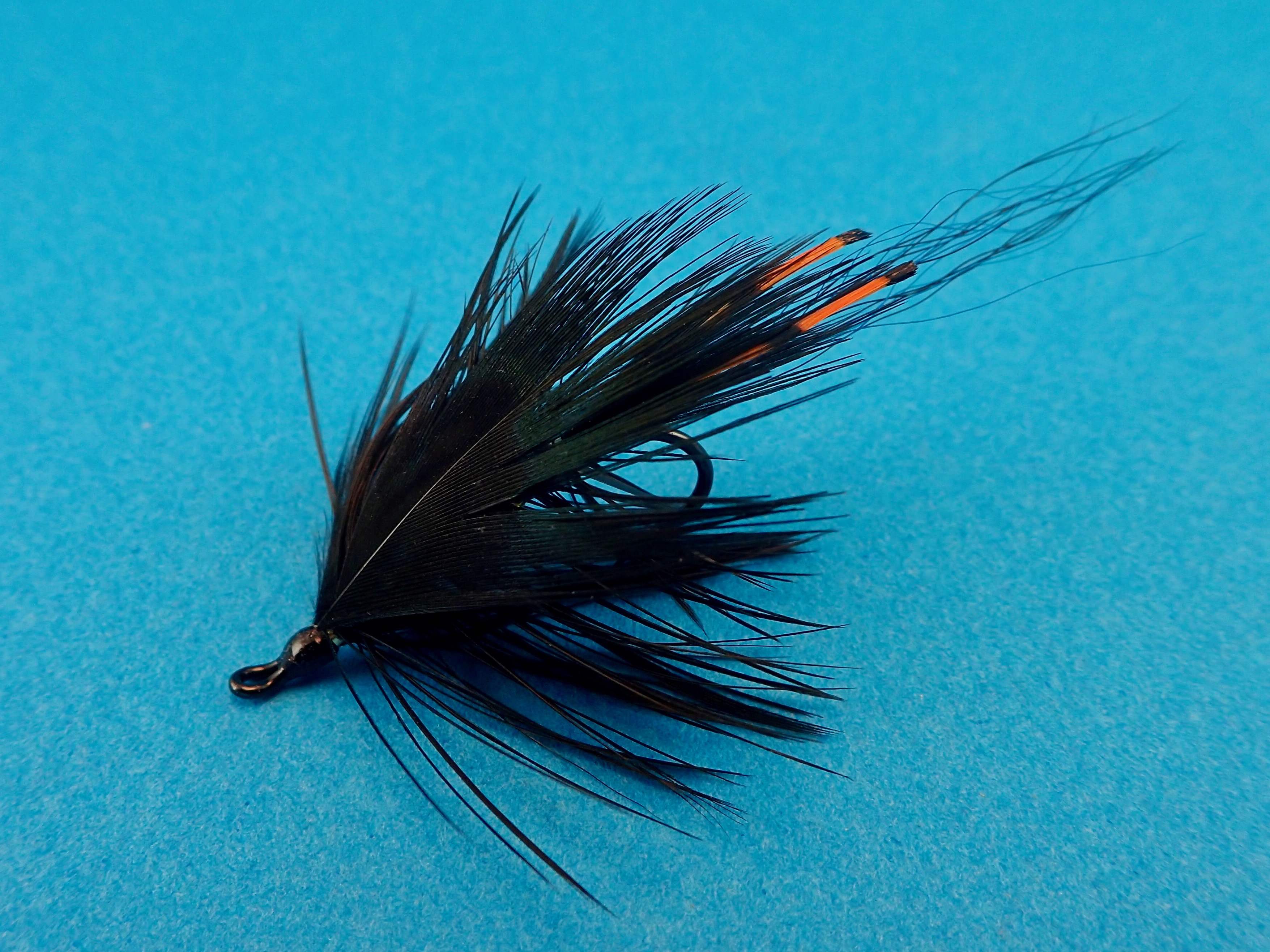
If you’ll pardon the wordplay, I offer relief to those who are already weary of the crass holiday commercialism that seems to start earlier each year. Here are three favorite patterns that feature basic black. Give yourself the gift of tight lines, and tie one on.
The Bombardier Flatwing. Treat yourself to an explosion when you swing this big flatwing in the wee hours of a chilly April very early morning.
The Bruiser Big Eelie. Unlike the unis of the New Zealand All Blacks rugby side, this lethal sand eel sports some blurple. Perfect for getting into a scrum with some stripers on a moonless night.
I’m a little late on the draw here — Ken used to make his September Night reminder post on his website early-to-mid August — but here we are and it is indeed time. While I try to provide you with original content, this is an important repeat. The September Night is a great fly. It’s a fly you should know about. It’s a fly you should be fishing. And, it’s traditional (in so many ways!). Here’s some of my text from a long ago post:
Fall has begun, and for striper anglers in the northeast fall means finger mullet. The September Night pattern can be found in Ken Abrames’ classic Striper Moon. It was one of the featured patterns in my 2015 American Angler article Soft Hackles For Striped Bass.) You don’t even need long flatwing saddles to tie it — I’ve gotten away with stung hackle in a pinch. Just look for chubby, webby feathers.
Ken Abrames’ September Night
Hook: Eagle Claw 253, 1/0-3/0; Thread: white 6/0; Tail: 30 gray bucktail hairs, then two white saddle hackles tied in flat, then two strands silver Flashabou; Body: silver braid; Throat: sparse, long white bucktail tied as a 3/4 collar, both sides and bottom; Collar: white marabou, folded or doubled 3-4 turns; Wing: 30 long white bucktail hairs, then 15 purple bucktail hairs, then 2 strands blue Flashabou, then one natural black saddle hackle.
Edward Ringwood Hewitt was one of the leading innovators in American fly fishing and fly tying. The Skating Spider…Bivisisble…Neversink Stone…these are all Hewitt creations. Hewitt was obsessed with finding out everything he could about what made fish eat. To wit, he created a list of seven factors that made a pattern successful, and ranked them in order of importance. Gary LaFontaine, another keen student of feeding behavior and effective fly design, lists them in his masterwork Caddisflies. Number one is the light effects of the fly, above and below the surface. Number seven, the least important, is accuracy of imitation of the naturals.
So it should come as no surprise that The Grass Shrimp Solution, a ridiculously simple pattern constructed of a few strands of bucktail, some braid, and a hen feather, excels at fooling striped bass. It has no eyes, no tail, no carapace. But it does have the essential bite triggers that stripers are keying on. In Caddisflies, LaFontaine makes a very big deal about what fish are looking for when they’re feeding; it’s often a single, essential characteristic of the natural. The Grass Shrimp Solution offers a translucent silhouette when viewed from below; the soft hackle and sparse feelers provide movement; and when held on the dangle, the fly creates a wake just like the naturals. Impressionism. It’s what’s for dinner.
If you placed the Grass Shrimp Solution in a shop next to patterns with shells and eyes, no one would buy it. Fortunately, striped bass don’t browse through fly bins.
Ray Bondorew calls for light yellow bucktail in his Yellow Rebel pattern. I’m sure light yellow bucktail exists, but I can’t ever recall seeing one at a shop or show. What’s an intrepid fly tier to do? Let the sun shine in! Here’s a yellow bucktail, color side out, taped to a south facing window in my house. It’s done when you like the degree of the bleaching. To quote Bob Dylan, “I never did engage in this kind of thing before,” but bucktail master Brad Buzzi confirmed with me at the International Fly Tying Symposium that it does work. Now all I gotta do is wait…
We’ll continue with the Traveling Wilbury member theme and say, “The waiting is the hardest part.”
I don’t know if you’ve noticed, but suddenly it’s fall. The shadows have started getting longer earlier. There’s an early morning nip in the air. (At least my wife tells me so — I’m still sleeping when she’s out running.) There are even a few leaves on the ground, although that can be attributed to drought as much as anything. Nonetheless, fall has begun, and for striper anglers in the northeast fall means finger mullet. The September Night pattern can be found in Ken Abrames’ classic Striper Moon. It was one of the featured patterns in my 2015 American Angler article Soft Hackles For Striped Bass.) You don’t even need long flatwing saddles to tie it — I’ve gotten away with stung hackle in a pinch. Just look for chubby, webby feathers.
Ken Abrames’ September Night
Hook: Eagle Claw 253, 1/0-3/0; Thread: white 6/0; Tail: 30 gray bucktail hairs, then two white saddle hackles tied in flat, then two strands silver Flashabou; Body: silver braid; Throat: sparse, long white bucktail tied as a 3/4 collar, both sides and bottom; Collar: white marabou, folded or doubled 3-4 turns; Wing: 30 long white bucktail hairs, then 15 purple bucktail hairs, then 2 strands blue Flashabou, then one natural black saddle hackle.
I’ve had the B.I.G. Big Eelie variant on my brain ever since I read Dennis Zambrotta’s Surfcasting Around The Block. In case you’re unfamiliar, Dennis devotes an entire chapter to the popular needlefish plug — and he details how bright, fluorescent lime green was all the rage among needlefish aficionados. Dennis dubbed the color, “Block Island Green,” and it was so popular back in the day that you could always find an incredible number of fluorescent lime green spray paint cans at the island hardware store. Fortunately, you don’t need to summon your inner painter to tie the B.I.G. Big Eelie. All you need is some bucktail, a few pencil thin saddles, and a sandbar over which to swing this bright green striper catching machine.
The B.I.G. Big Eelie
Hook: Eagle Claw 253 3/0
Thread: Fluorescent green or chartreuse 6/0
Platform: 30 hairs white bucktail
Tail: First, a white saddle; second, 4 strands light green Flashabou; third, three chartreuse or bright green saddles. (All saddles pencil thin.)
Body: Pearl braid
Collar: Fluorescent green marabou, tied in at the tip, 2-3 turns
I don’t know if there’s a best sand eel fly, but the sand eel pattern in which I have the highest confidence is Ken Abrames’ Big Eelie. And right now’s the perfect time to be tying them up. My Rhode Island spies tell me that sand eels are out in good numbers. Surfcaster extraordinaire Dennis Zambrotta, author of Surfcasting Around The Block, tells me that unless you had a sand eel teaser rigged next to your plug the other night, you didn’t hook up. (This was at an undisclosed oceanfront location in SoCo.) One of the things I love about the Big Eelie is that it lends itself supremely well to different color combinations. I tie all manner of variants (do a search on this site for recipes, and I’ll even start you off with one, the L&L Big Eelie). And of course, the original colors (white/yellow/olive/blue) remain deadly as ever!
A Crazy Menhaden Big Eelie, still hot on the vise. You can find this and many other Big Eelie variants right here on currentseams.com. In fact, I’m playing around with a couple new variants that I’ll share with you soon.



 currentseams.com