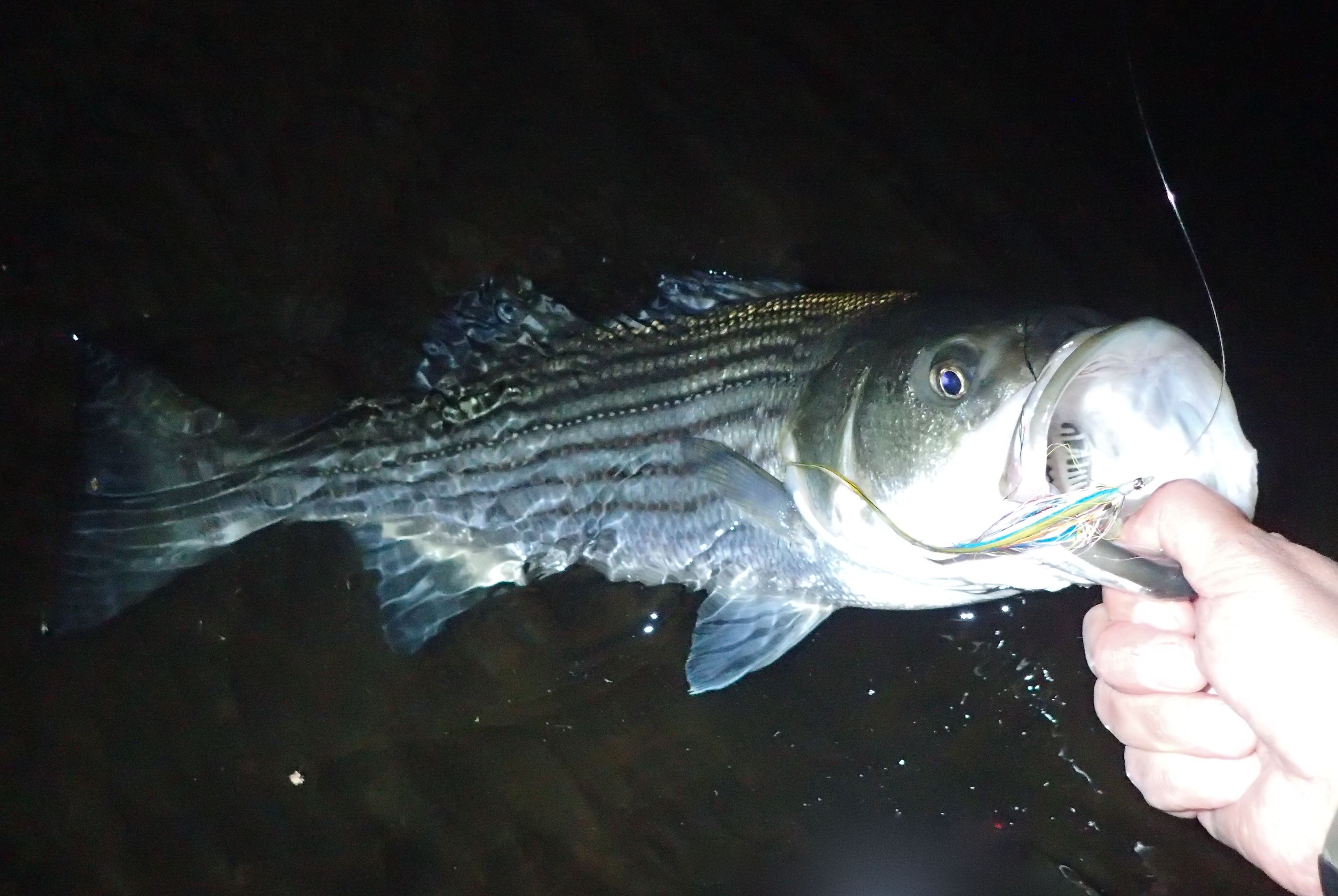
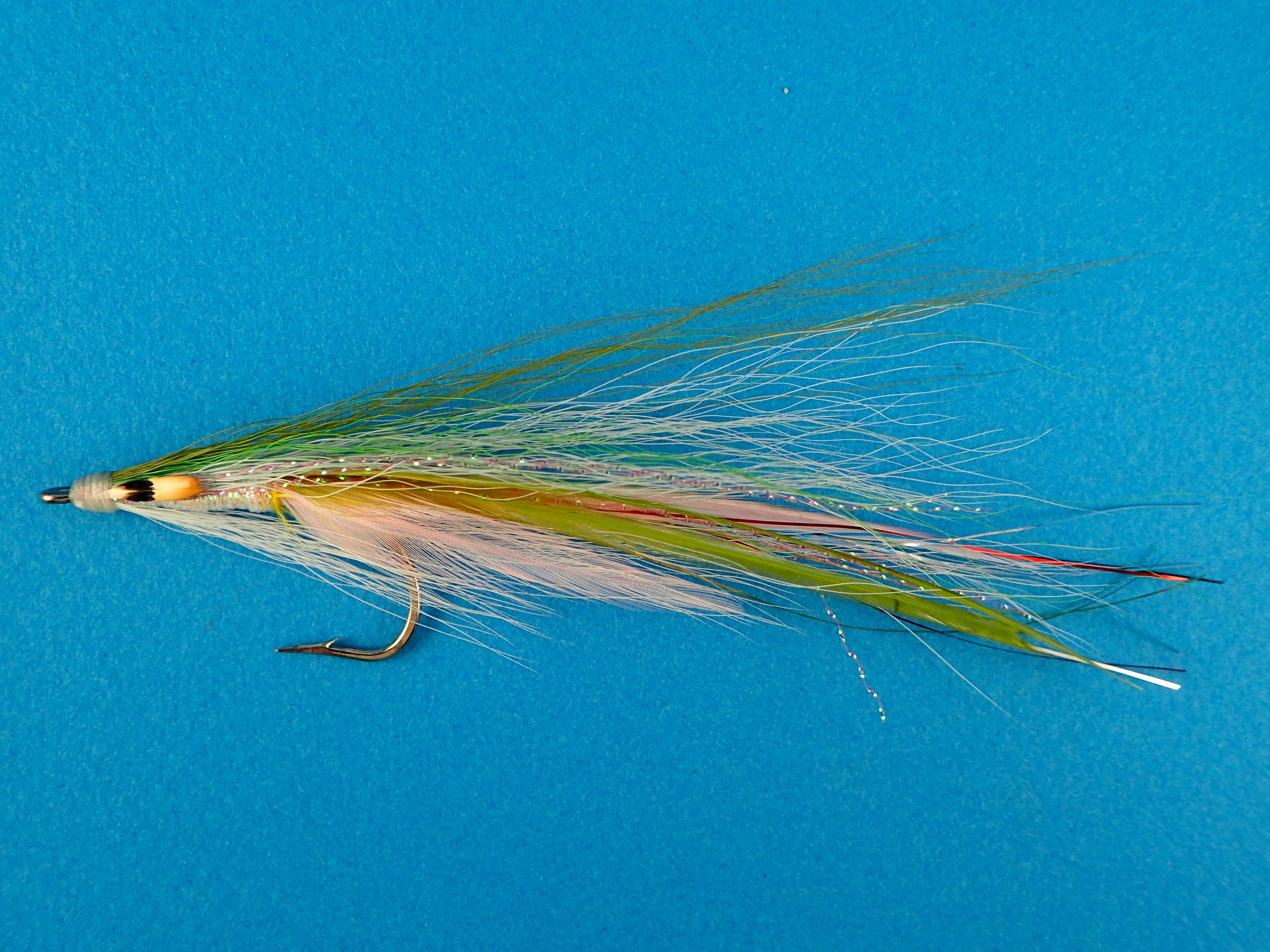
Orange Ruthless Single-Feather Flatwing Tying Video

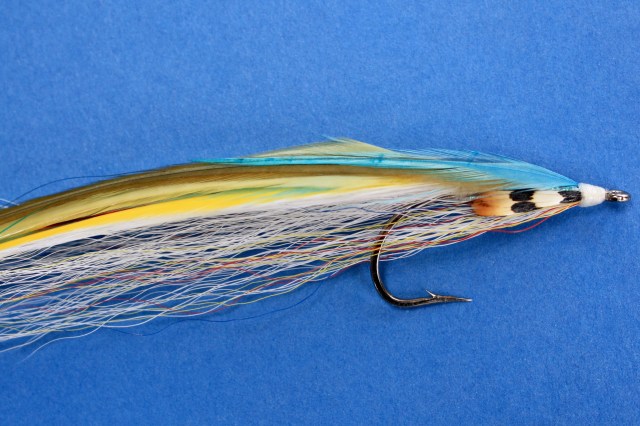
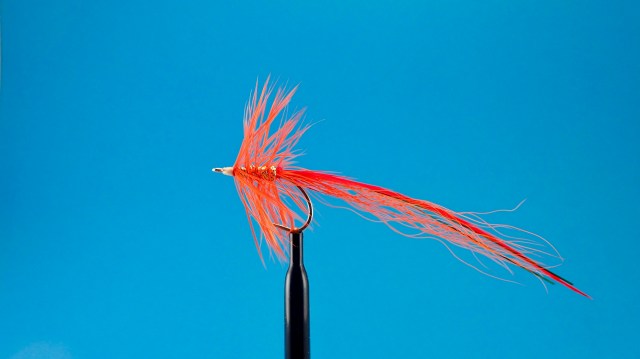
The Orange Ruthless has long been one of my favorite striper flies. It’s a simple pattern, and a good place to start if you’re just getting into flatwings. I like this fly about 2 1/2″ long, but I’ll tie it even smaller if the bait size warrants. The Orange Ruthless gets a lot of swim time as part of a three-fly team; I tend to place it in the point position. Although it’s a clam or cinder worm, it does double duty as a grass shrimp (or at the very least something that looks alive and good to eat.)

The SC15 hook does not sharpen well, but it is sticky sharp out of the pack and holds its point for a long time. I chose it because it’s easy to find and very light. You can get away with strung hackle for both the tail and the body, but make sure the feathers have plenty of web.

If you have Ken Abrames’ A Perfect Fish, you’ll find a fly called the “R.L.S. Ruthless” in the chapter on single-feather flatwings. This is a variant of that pattern, taught to me by Ken himself at a Tuesday night tying session many years ago. It was the first striper fly I ever tied, and I had the good fortune to be seated next to the artist, lashing bucktail, flash, and feather to hook under his watchful eye.
~
OLYMPUS DIGITAL CAMERA
Hook: Gamakatsu SC15 sz 2
Thread: UNI 6/0 white
Platform: 30 hairs orange bucktail
Tail: 2 strands green Flashabou under a red saddle tied in flat, curve side down
Body: Webby orange hackle palmered over gold braid


Revisiting the Herr Blue: a three-feather flatwing-bucktail hybrid

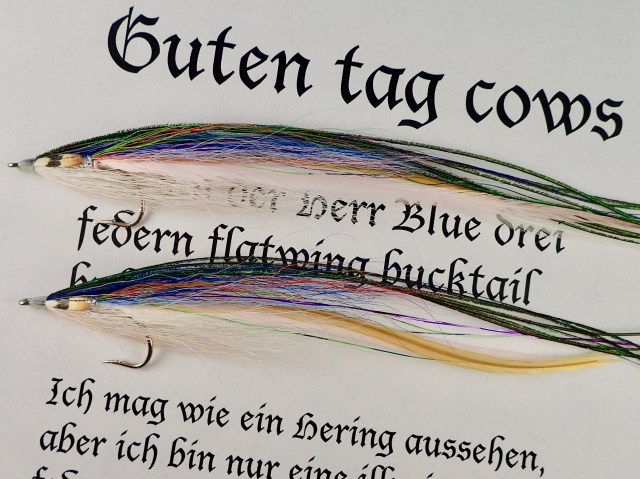
Many years ago I adapted Ken Abrames’ R.L.S. Herr Blue bucktail into a large nine-feather flatwing. I was pleased with the result, and that fly produced many large bass for me. But the recent acquisition of a ginger saddle brought out the tinkerer in me. And since I never did a three feather flatwing-bucktail version of the Herr Blue, I went to work.

If you’re unfamiliar with the concept, a flatwing/bucktail hybrid combines the seductive motion and swimming action of a flatwing (using three contrasting saddles) and the color-blending deliciousness and adding-the-illusion-of-mass properties of bucktail. I originally started tying these not only as a way to conserve precious flatwing saddles, but also to use bucktail in place of saddle colors I did not have. The template is Razzle Dazzle, with all strands of flash extending at least 3/4″ beyond the longest feather. (See the Rock Island and Crazy Menhaden three-feather flatwings.)  Bonus: they’re easy to cast for their size, and they swim beautifully on the greased line swing.

Obviously this fly is intended to imitate a river herring or alewife; it could also easily pass for other larger baitfish like menhaden. I tied two, one 8″ and the other 10″. So without further ado, I present the Herr Blue three-feather flawing. DIA. (Danke In Advance.)

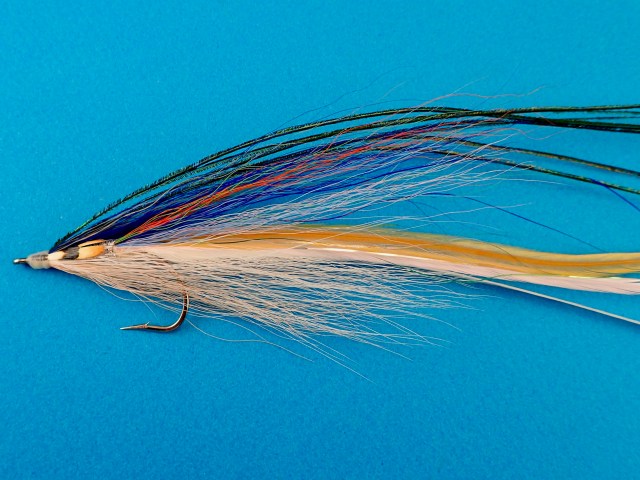
OLYMPUS DIGITAL CAMERA

Hook: Eagle Claw 253 3/0
Thread: White 6/0
Platform: White bucktail, 30 hairs
Tail: First, a white saddle; second, 2 strands silver flash; third, a pink saddle; fourth, a ginger saddle; fifth, 2 strands light green flash; sixth, 15 hairs light blue and 15 hairs pink bucktail, mixed; seventh, 10 hairs light blue and 10 hairs violet bucktail, mixed; eighth, 2 strands purple flash; ninth, 10 hairs orange and 10 hairs emerald green bucktail, mixed.
Body: Silver braid
Collar: White and ginger bucktail, mixed about 5:1 respectively
Wing: 15 hairs smoky gray bucktail and 30 hairs dark blue bucktail, mixed
Topping: 7-8 stands peacock herl
Eyes: Jungle cock

~

A closer look at the blend of nine different colors of bucktail.

OLYMPUS DIGITAL CAMERA


Three-Feather Flatwing/Bucktail Hybrid Preview

For the uninitiated, a flatwing/bucktail hybrid combines the seductive motion and swimming action of the flatwing (three contrasting feathers here) with the color-blending deliciousness and adding-the-illusion-of-mass properties of bucktail. (See the Rock Island and Crazy Menhaden three feather flatwings.) So, just a taste for now.  Details to come soon.

I don’t know how important color is to a striper at any given moment, but I really like the blends on this fly.

OLYMPUS DIGITAL CAMERA

Going way back in the archives: “The Art of the Flatwing” by Tom Keer

“The Art of the Flatwing,” written by Tom Keer, appeared in the Summer 2001 issue of Fly Tyer. I’ve had this article in pdf form for years — and now it’s got an online home. Speaking of flatwings, I interviewed Ken Abrames yesterday. Our focus was on the Razzle Dazzle-style patterns in A Perfect Fish: color rationale, nomenclature, genesis, anecdotes and other good stuff. I’m not sure what form it will take, but you’ll get to read/hear some of it in the future.

Feature.ArtoftheFlatwing.FlyTyer

Here’s my take on the Razzle Dazzle, one of the featured flies in the piece. Ken once described this fly as a caricature rather than a detailed painting or sculpture.

RLSRazzleDazzle

~

Instead of peacock herl, the topping is an olive saddle and a silver doctor blue saddle tip.

RazzleDazzleTopCU

~

What you leave out of a fly is as important as what you put in.

RazzleDazzleCU


A new flatwing from the Culton bench: The Bombardier

Long before I fished for stripers, I was aware of striper plugs. I’d see rows of them in gleaming packages in the local sporting goods store (remember those?) and think that some day I’d like to throw one and catch a big bass. I remember liking the blue and white glitter-flecked Atom plugs.

I also remember the Bomber. Something about that plug in basic black said badass cow catcher. Would that translate to a large flatwing? One way to find out.

Creating a striped bass fly that draws from the color and energy of a plug is not new. Ray Bondorew did it it in Stripers and Streamers with his Yellow Rebel. My goal was not to make a carbon copy of the Bomber Long A, but to capture its essence. So, lots of black saddles and bucktail. Some purple to jazz things up. A glowing core of light blue and chartreuse. High contrast jungle cock nails. And some seductive flash tied “Razzle Dazzle” (thanks, Ken!) style.

I like this fly 9″-12″ long. It shines when fished on the greased line swing. Cue up The Gap Band!

The Bombardier

Bombardiers

Hook: Eagle Claw 253
Thread: Black 6/0
Platform: 30 hairs light blue and chartreuse bucktail, mixed
Pillow: Black dubbing
Support: Black neck hackle, curve side up
Tail: First, 3 black saddles, second, 2 strands silver Flashabou, third, 1 black saddle, fourth, 2 strands light blue Flashabou, fifth, 1 black saddle, sixth, 2 strands red Flashabou, seventh, 1 black saddle, eighth, 2 strands purple Flashabou, ninth, 1 black saddle, tenth, 2 strands black Flashabou, all Flashabou to extend 1″ past longest saddle
Body: Purple braid
Collar: 2/3 black and 1/3 purple bucktail, mixed
Wing: 30 hairs black bucktail
Topping: 7 strands peacock herl
Eyes: Jungle cock
~
A more detailed look at the Bombardier’s explosive energy.

BombardierCU

~

You get the idea.

Bombardier&Plug

~

The Bombardier Rogues’ Gallery:

Twenty pounds, short line swing, 2017

OLYMPUS DIGITAL CAMERA

~

Fifteen pounds, greased line swing, 2017

OLYMPUS DIGITAL CAMERA


25 pounds, 39 inches, greased line swing, March 2024

Flatwings, flatwings, everywhere!

A wee video sampler of flat wing streamers for striped bass, also part of my new presentation, “Trout Fishing for Striped Bass.”

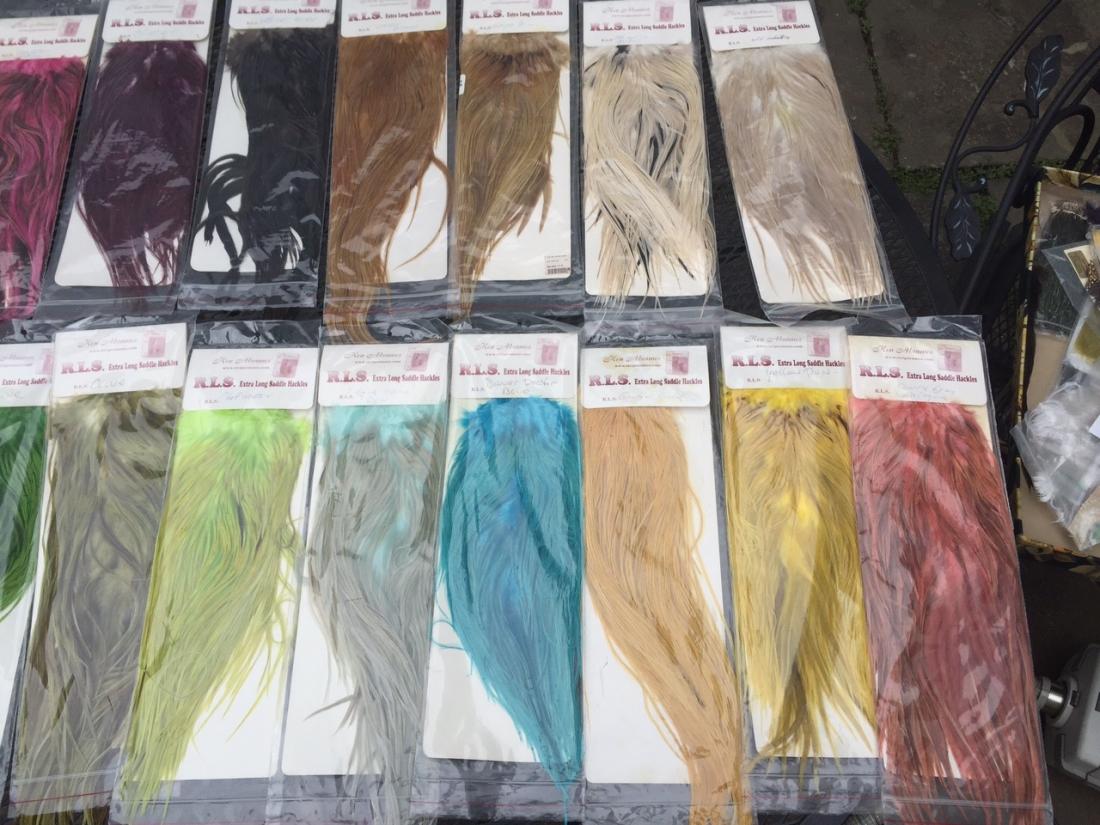
Rare find for flatwing fans: R.L.S. Extra Long Saddle Hackles available

A selection of Ken Abrames R.L.S. Extra Long Saddle Hackles was recently put up for sale online. These are the genuine item — “New Old Stock” as we’d call them in the vacuum tube world — as originally sold by the creator of the modern flatwing. The saddles are in their original packaging and are in excellent condition. Many are unused; some are missing only a few feathers, leaving you hundreds of hackles to work with.

I want to make this very clear: I am not selling these, nor do I have an interest other than helping the seller offer these to people who may be passionate about tying and fishing flatwings. 

The saddles are priced from $45-$50 depending on color, which I believe is a very fair price (shipping cost varies). Available colors include — this is current to my best knowledge but of course will change as he sells these off — Claret, Off White, Off White Variant, Natural Black, Umber Brown, Ginger Olive, Olive (seller’s comment: “The same name on pkg but looks more like Emerald Green to me.”) and Eggplant Harlequin.

If you’re interested, please email georgejjohnson@gmail.com.

This was the original lot. Many of the colors shown are gone; jump on the remaining ones while you can.

RLSsaddles


Why I love fishing for stripers with big flatwings on the greased line swing

After three very slow springs, things turned around a bit in 2017. It wasn’t as good as the old days. (Is it ever?) But the skunks were few, and the keepers more plentiful than in recent years. I wish I could say the baitfish were making a comeback. Sadly, I saw precious few swirls of mating herring. But enough with the negative. This is a celebration  of elegant flies fished with a traditional method — and the brute force of striped bass that can be measured in pounds.

The Rock Island flatwing saw plenty of swim time. It may not look it, but this is a legal fish, one of three I took that night.

OLYMPUS DIGITAL CAMERA

~

Another old favorite, the Razzle Dazzle. The Razzle Dazzle is responsible for my biggest striper on the fly from the shore, 30 pounds. This one is a wee bit less than that. Still, a good keeper bass on the long pole.

OLYMPUS DIGITAL CAMERA

~

We’re getting there. 15 pounds of power. I landed her at 1:00am after two hours of fishing without a touch. Since it was raining, I decided to end on a high note. A JR Cuban Alternate Cohiba Robusto was lit in celebration, and smoked on the long walk back to the truck.

OLYMPUS DIGITAL CAMERA

~

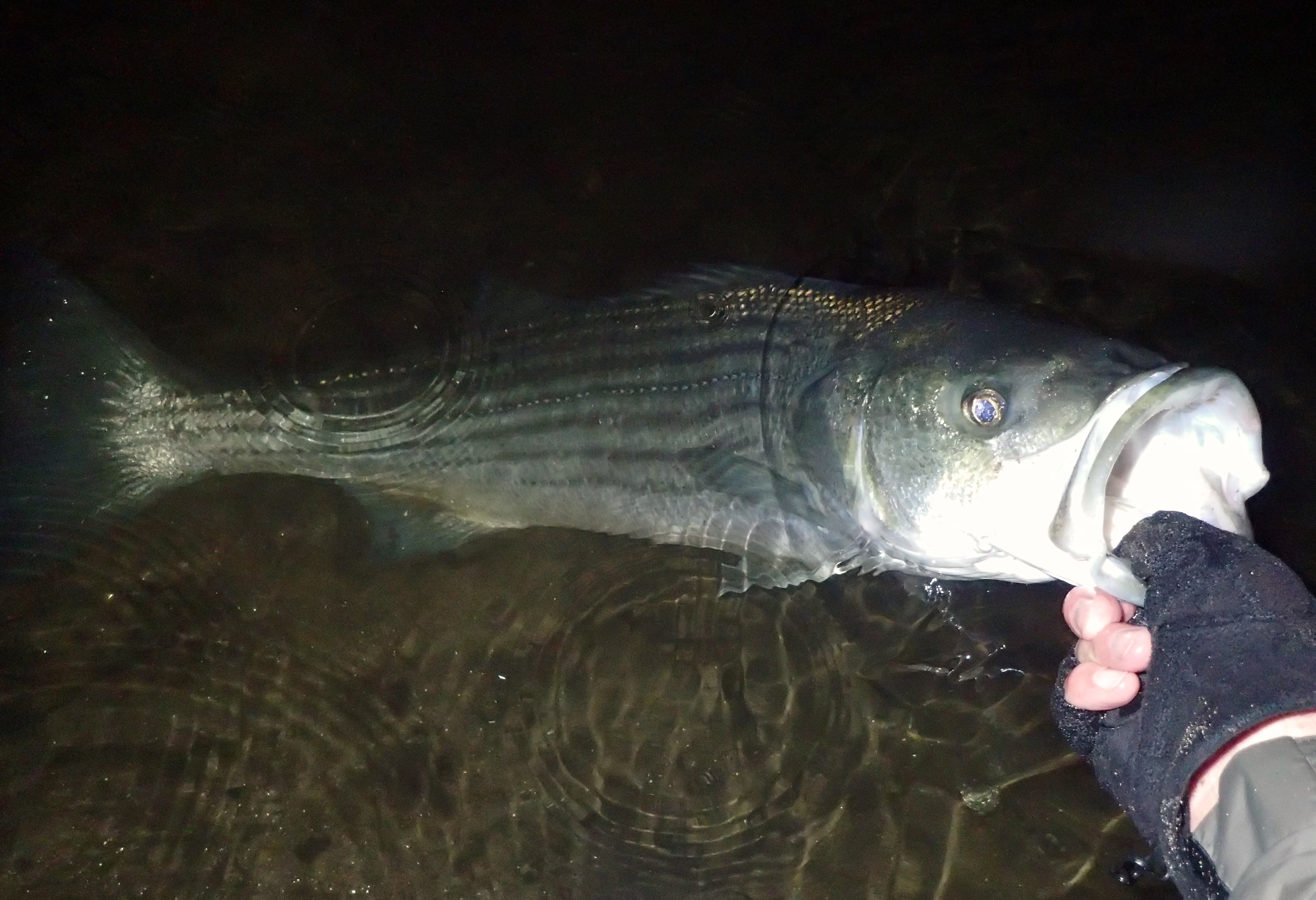
I don’t handcuff myself to the dogma of black flies at night. But occasionally, I do fish them. This spring I prototyped and tested a large, mostly black multi-feather flatwing (patience — recipe and photos to come). My intent was to have a big fly to silhouette against the dark of the moon sky in stained water. Here are my test results — all 20 pounds of it.

OLYMPUS DIGITAL CAMERA

~

Following the tides is a tough job, but some damn fool needs to be out while the rest of the world is sleeping.

401AM


Ray’s Fly Featherwing: A simple, sparse flatwing

Many years ago, I was having trouble with some bass that were feeding on silversides in a Rhode Island breechway. The fish were active, but I couldn’t get them to bite. Ken Abrames recommended that I try the Ray’s Fly Featherwing, a dressed-down flatwing version of Ray’s Fly. I remember him telling me that it was, at the least, another arrow  in the fly box quiver.

That was a long time ago. I remember tying some up, but I don’t know what became of them. I know I caught stripers on them. I think I lost my last one to a bluefish.

Recently, someone on one of the forums asked about a “Ray’s Fly flatwing.” I think the Ray’s Fly Featherwing is the fly he was referencing. I haven’t tied in a couple of weeks, so I went down to the bench this morning and churned out a few. So simple. And sparse. I’d be as inclined to use these for a sand eel as I would a silverside.

All saddles are tied in flat — flatwing style, as they say. Note that the olive saddle is tied in at the head. All you need to do now is add water.

Ray’s Fly Featherwing flatwing

OLYMPUS DIGITAL CAMERA

Hook: Eagle Claw 253 1/0
Thread: White
Tail: 30 strands white bucktail under white saddle under 4 strands pearl flash under yellow saddle
Body: Pearl or silver braid
Wing: Olive saddle
Topping: Peacock herl

“Bill Peabody’s Flat-Wing Patterns”

A few years ago, Capt. Ray Stachelek gave me a copy of an article Bill Peabody had written in the May-June 1998 issue of Fly Fishing In Salt Waters. I mentioned it here, then mostly forgot about it. A few weeks ago, one of you asked if I could share the piece. With my Compleat Angler flatwing demo tomorrow, this seemed like a good time to do it.

Below is a pdf of “Bill Peabody’s Flat-Wing Patterns.” The quality is as good as I can make it, this being photos of a photocopy. I want to be clear that I did not write this piece. Bill Peabody did.  Enjoy!

Bill Peabody’s Flat-Wing Patterns

My rendition of Bill Peabody’s Flat-Wing Bay Smelt. The fly has not yet been shaped under water.

OLYMPUS DIGITAL CAMERA