Re-discovering the Farmington River, or: There’s a lot of sexy water below Collinsville

I spent a good chunk of last Thursday banging around the lower Farmington with Farmington River guide Steve Hogan. (Steve grew up in the area, and knows that section way better than I do.) To say we covered a lot of ground would be an understatement — Steve’s device said we walked 20,000 steps, which, for those of you keeping score at home, translates to over 8 miles.
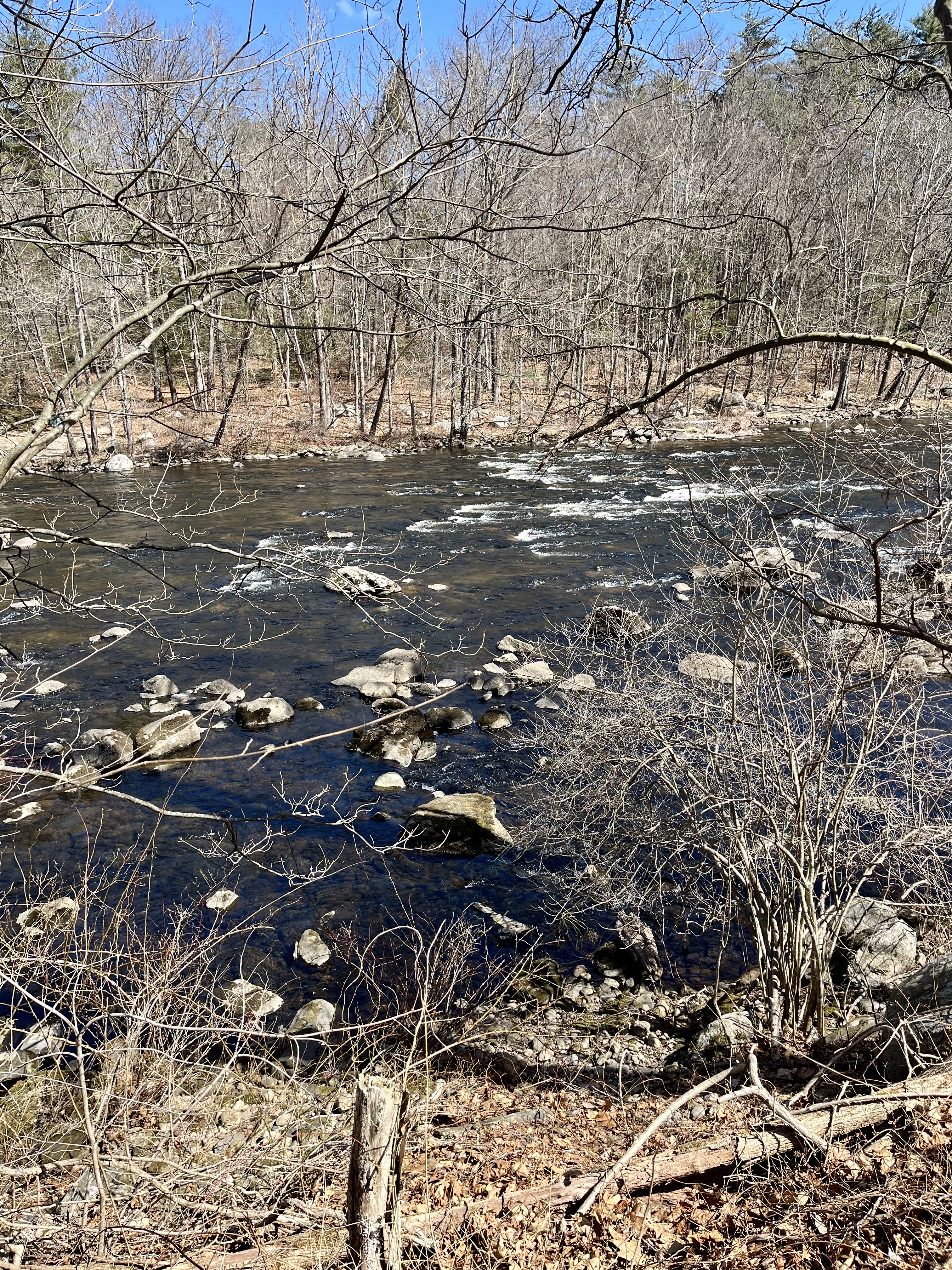
Exhibit A. So many pockets to pick, so little time.

But the point isn’t that we got some exercise. The point is, man, there is so much incredible water between Collinsville and Unionville! That I’ve fished so little of it boggles my mind. The wet fly possibilities are virtually endless. Yes, you have to walk to get to much of it. Yes, a good percentage of it will be tough wading. Yes, sometimes there’s bushwhacking involved. Yes, there will likely be many spin/bait anglers. And yes, that area can get very trout-unfriendly by mid-June. But I’m licking my chops at the thought of going back and fishing some of the marks that, incredibly, I had never seen before last week.

Virgin water for me. A challenging walk and wade for sure, but I’ll bet it would just be you and the trout!

Swinging with Dave, 2H rods, fishing starting to pick up

I spent last Wednesday afternoon with Dave, who wanted to explore the river and learn how to swing streamers and wets, and give his trout spey rod some action. We hit several marks within the PTMA, both to fish and investigate. While the weather was gorgeous (mid 60s and sunny), the water was still very cold (below 40 degrees in New Hartford). That’s a little chilly to expect significant action on the swung fly. Still, we managed a couple touches, and Dave did a fantastic job casting and managing his drifts. In another time and situation, he’s going to be a dangerous trout-catching machine.

I don’t usually talk about specific pools, but when we hiked into the Boneyard — the gate is still closed — the advantages of the two-handed rod became glaringly evident. Especially if you’re swinging a streamer. Dave was making effortless 60-75 foot casts — well, semi-effortless — and reaching spots most single hand casters would struggle with. Food for thought if you’re considering the 2H rod.

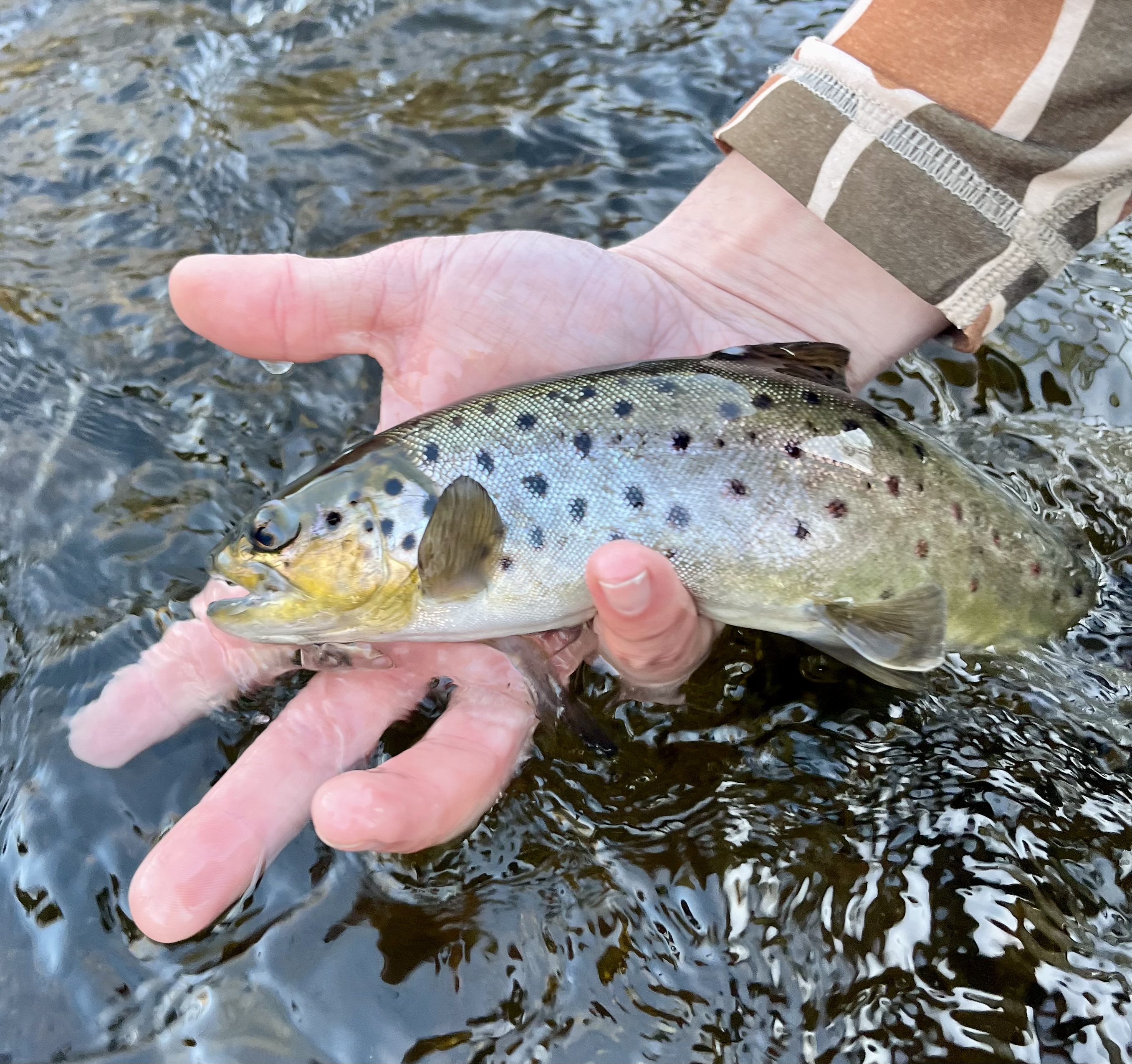
Ed releasing a lovely wild brown his buddy nymphed up. The size of the fins and the fish’s skinny I-made-it-through-winter body told me that it has been in the river for a very long time.

After our session, I went to do some scouting for the book, and I ran into Ed and Drew from the Avon Orvis store. They were nymphing with a couple friends below the PTMA, and having some success. To illustrate how a cold front can squash the bite, I went back the next day to do more recon, and hit the marks where they were getting into fish. Not. A. Touch. The overnight cold front and gale-force winds clearly had the trout in a dour mood.

Still, the fishing is starting to pick up. And it will only be getting better as we get into April. Fish ’em if ya got ’em!

Question of the week: Fishing a 3-fly team on an intermediate line

Back from a weekend trip to the Windy City. I was able to write up a storm in my down time, and today’s a day for other projects. While I was away, this came in the mailbox, and I thought I would share my answer with the group.

Q: Steve, I currently only have an Air Flo intertmediate line …but I want to fish a 2 or 3 fly set up (with) an Orange Ruthless in the marsh …how would you set that up? A: The dropper rig (leader/tippet) portion of the setup would remain the same. You can read about dropper rigs for stripers here. (Note that the tag length in the diagram is probably too short; I’d recommend 6-8″ for the tags.) The elephant in the room is the intermediate line. Since it’s a sinking line, you cannot mend it. And mending is at the core of traditional presentations with a three fly team . (Here’s a good article on the shortcomings of intermediate lines.) Using an intermediate line doesn’t mean that you’re doomed to failure; it just means that you’re going to have limited control over your presentation. Once the current grabs the line, the flies will move at an unnatural speed. But there’s a village idiot in every pool (or marsh, as it were). If you’re fishing the setup on the dangle, in the current straight below you, the intermediate line will not hurt your cause. I’m simply excited that you want to fish the Orange Ruthless, and that you want to try fishing droppers! Good luck, and let us know how you do.

A nice double caught by someone who took my class at the Fly Fishing Show a few years back. He used a floating line, a three fly team, and some small, marshy bait fly patterns. I believe that’s a Grass Shrimp Solution in the mouth on the right.

Fishing with Joe, trout stocking, and finally a weather break!

I gave Joe a wet fly lesson last week — a little early to expect action on a swung fly, but that’s when we had a window. The rain held off, and we enjoyed having vast stretches of the river all to ourselves. The bite was predictably slow, but Joe did a great job with his presentations. I have the highest confidence that he will be a deadly wet fly machine this spring once the Hendricksons begin to pop. Sadly, I saw very little bug activity — not even some courtesy winter stones — only a couple lonely midges.

How Pipeline Pool got its name. I’m working hard on researching accurate information on river access, including parking. Of course, each of you is ultimately responsible for where you park and fish. Pipeline is one of those places where there is plenty of easy access and parking.

The next day, I spent a few hours on river recon for the book — it was blustery and cold and we even had a few sun snow showers to add to the wintry ambiance. But today, it’s warm, and it looks like a decent week to get out and fish. I’ve got more recon time scheduled tomorrow, and hopefully I’ll be able to play a little hooky and wet a line. The river got blasted by that rain last Wednesday/Thursday, but has dropped nicely. What’s more, the state has stocked the Farmington (and a lot of other rivers) — not within the PTMA, but from Hogback Dam down to Whittemore; below the 219 bridge down through Canton; and from Collinsville dam down to Unionville. Enjoy the fresh fish while they last.

Hatcheries update, Yale, fishing, and who ordered this cold weather?

Happy Monday. I suppose I am one of the lucky ones who doesn’t view Mondays as a collective negative. Such is the fortune of working for yourself at a job you love. (Of course, the money stinks, but that’s a different story.)

I’ve learned that at this moment, we’re in a holding pattern with the hatcheries budget thing. DEEP was surprised to see this manifest, and for now it’s just a line item on a proposed budget. When I hear that it’s time to take meaningful action, I’ll let you know, and what your action should be.

Many thanks to the Yale Fishing Club for hosting me last Thursday. We tied some soft hackles, and at some delicious New Haven-style apizza. While I loved the white clam pie, the potato and bacon was on another level of wonderfulness.

Now that’s a bird’s eye view! Many thanks to filmmaker extraordinaire Matthew Vinick for lending his time and fine drone photography skills.

I did manage a couple hours of fishing during last week’s research/photo outing. Total blank. But I’m not surprised, given that fact that there was an active snow melt which was dumping gallons of icy cold water into the system. And today, we have more winter-like temperatures. Thankfully, those are supposed to go away soon.