Farmington River Report 4/17/20: Hendricksons & spectacular wet fly action

“Do you always fish three wet flies at the same time?” I get this question a lot. “Almost always” is the answer. The “almost” comes from days like today when I had to remove the middle dropper because I was catching multiple trout on every cast.

I certainly didn’t expect it to be that kind of day.

Wind was an issue. Cold was another. The Hendrickson hatch I experienced was nothing extraordinary — I’d give it a four out of ten. But I hadn’t done a session dedicated to wets this year, and the start of the Hendrickson hatch seemed as good a time as any.

Spot A below the permanent TMA was a blank. Off to Spot B inside the permanent TMA, which was fully occupied. (If you haven’t been to river yet, you may be shocked by the number of anglers. Church Pool was as close to looking like the Riverton Opening Day Fishing Derby as I’ve ever seen it.) But then, as luck would have it, one of the anglers decided to leave, and I took his place in the lineup. Thank you, generous stranger, because I discovered a pod of ravenous trout that showed themselves the moment the hatch began.

Today’s lunch, fresh from a captured brown’s mouth. 

OLYMPUS DIGITAL CAMERA

So, for two hours, I bailed trout. The tally was surely in the multiple dozens. I know I had close to ten doubles, even after I took one fly out of the mix. Business was about 10% on the Squirrel and Ginger and the rest on the Dark Hendrickson Winged Wet, which, if you don’t tie, you should. (You can thank me later.)

Having so many active feeders was certainly a plus, but the guy above me was nymphing and I didn’t see him hook up. Ditto the guy below me, who, after I waved him up and he changed to wets, began catching in earnest. I’d say most of my fish came from placing my team over the positions of active feeders. The trout did the rest.

This is great time of year to be swinging wet flies. Hit a prolific hatch (like the Hendrickson) just right, and you’ll be giggling in your waders, too.

Who wants to Zoom?

I’m thinking of hosting some fly fishing talks on Zoom. Probably a weeknight, probably evening time frame. If you’re interested, please leave a comment and let me know. This is simply to gauge a general interest level. And please tell me how you’d like it structured — would you like me to choose from my exitsting presentations (shortened since I’d only have 40 minutes) like Wet Flies 101 or Trout Fishing for Stripers — or would you rather have it be more free form, maybe a general subject like smallmouth on the fly, or Help! I suck at nymphing, or fly tying/design, etc.? And of course, we could do both!

I look forward to hearing from you.

No sleeping while I’m talking…

CamMenu

Hackled March Brown Tying Video

The Hackled March Brown is one of my favorite big fish wet flies. Long time readers may recall the first time I wrote about it — you can read that piece here. I don’t have much to add, other than this has become a supremely reliable pattern for me when the Isonychia are flying. (Next time you’re fishing sulphurs, and you hear a rise that sounds like someone threw a bowling ball into the river, betcha your lunch money it was a trout eating an Iso.) The Hackled March Brown is almost always my point fly on a three fly team. Fish it this summer and you’ll see why I recommend you tie it on a 2x strong hook.


Partridge and Light Cahill Tying Video

Patterned after a classic North Country spider, the Partridge and Light Cahill is another example of a fly that is ridiculously simple and devastatingly effective. The first time I tied this fly, it sat in my box, unused, for the better part of four years. Then came a late May evening on the lower Farmington. Creamy mayfly duns were out in force. Trout were slashing at the flies, their feeding frenzy creating a cauldron effect on the river’s surface. I tied my experiment onto my team of three wets, and the trout overwhelmingly showed their approval. To the vise, good angler, then fish the Light Cahill and Sulphur hatches with confidence. The vote will surely be yes for you, too.


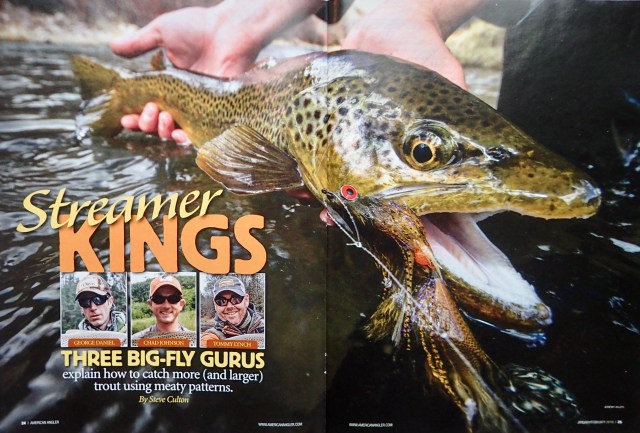
“Streamer Kings” by Steve Culton: inside tips on how to catch big trout on streamers

“Streamer Kings — Three Big-Fly Gurus Explain How To Catch More (And Larger) Trout Using Meaty Patterns” first appeared in the Jan/Feb 2018 issue of American Angler. For this piece, I interviewed George Daniel, Chad Johnson, and Tommy Lynch. The result is a masterclass on streamer fishing. Many thanks to George, Chad, and Tommy for sharing their expertise. So…what’s a good, all purpose streamer rod? How important is color? If you could fish only one streamer for trophy trout, what would it be? For these answers and more, click on the pdf link below.

StreamerKings_Culton

Somebody was ringing the dinner bell…

OLYMPUS DIGITAL CAMERA


Steve Culton’s Countermeasure featured in On The Water’s “Guide Flies”

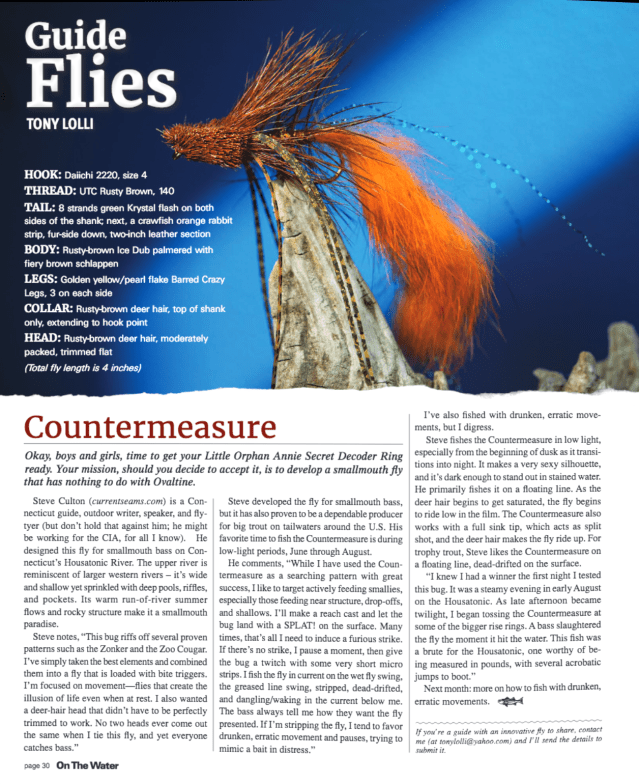
The Countermeasure, my favorite smallmouth bass bug, is the featured pattern in Tony Lolli’s “Guide Flies” column. It’s in the current (April 2020) issue of On The Water. Here’s a link to my original post on the Countermeasure. For bonus material, you’ve got a photo of the column and a pdf. Please support fishing magazines and writers by reading and subscribing. Without readers like you, we are nothing.

CountermeasureOTW

CountermeasureOTW

More Stupid Striper Fishing Tricks from Maryland

The incompetence of the Maryland Department of Natural Resource DNR continues to expand endlessly like the universe. As proof, I offer Maryland, COVID-19, and Fishing: An Arbitrary Double Standard that Endangers Public Health, written by Tony Friedrich and William Goldsmith of the ASGA. You really can’t make this stuff up.

I know what he’s thinking: Against stupidity the very gods themselves contend in vain.

OLYMPUS DIGITAL CAMERA


Striper Report 4/8/20 and a great piece on fishing and social distancing

First, to the ohfer. That’s right, folks, I blanked yesterday at the Mouth of the Hous. On the one hand, I feel like the kicker who misses a chip shot FG in OT. On the other, it’s not like the river was en fuego (fifteen anglers spaced out on both banks where I fished, and I saw two bass landed in nearly three hours of fishing). Not exactly the stuff from which legendary days are created.

The tide was massive and the currents and rips were in full moon form, but for now I’ll hang my hat here: you cannot catch what isn’t there — or doesn’t see your fly. And I made sure they could see my fly.

While the Mouth of the Hous in April is not a place you’d normally go to practice a CDC-Approved space between you and the next person, the number of anglers was eye-opening. This was 70 degrees and sunny Saturday afternoon traffic. Solitude seekers, you will not find your bliss here. Except maybe today or Friday when the winds are supposed to be in the 20s with gusts to 40mph. (Thanks, I’ll pass.)

I can see it. You can see it. But if there are no bass to see it…

Rod-Fly-Grey

~

Second, here’s a terrific read from Joe Cermele: Don’t Blow This for the Rest of Us: How We Keep Hunting and Fishing During the Pandemic.  Joe was my editor at Field & Stream, and this article is worthy of your time.

Please stay safe and healthy, and thanks for reading.

Farmington River Report 4/6/20: And then, the bottom fought back…

Yesterday’s expedition was dedicated to nymphing the lower River. The action was spotty to say the least: six marks visited, three of them total blanks. But…we’ll get to that in a moment.

First, be advised that Monday is the new Saturday on the Farmington. I’ve never seen the river this crowded on a Monday this early in the season. There were anglers in four of the six pools I hit, sometimes three or more. If you value solitude, gird your loins.

The method was drop shot nymphing, about 25% tight line and 75% indicator. I fished a size 18 soft-hackled pheasant tail on top dropper, and a Frenchie variant on point. I took trout on both flies.

It’s semi-sweet to say that you may have already landed your biggest trout of the season, but it is what is. I was nymphing a deeper run when the indicator dipped and I set the hook. The emotional and logical thought protocols immediately kicked into gear: “Is that the bottom? No, it is not, I can feel a head shake. Let me re-set the hook. OK, that’s a decent fish. Wow, that’s a strong fish. Shoot, he’s sulking on the bottom. Gotta keep him away from that submerged boulder. Gotta move him. I’ll do that steelhead side-to-side rod arc thing. Gotta get him out of the current so he can’t breathe. That frog water looks like a good LZ.”

And then, as you get your first visual, you wish for a bigger net. But you’ve whipped the fish fast (remembering the sage advice of Stu Apte: “To play him long is to play him wrong.”) and now the moment of glory is at hand. Swing and a miss. Again…yessir. Wow!

Hunk-a hunk-a burning Survivor Strain love. Wotta tummy! Wotta tail! And shoulders that simply aren’t done justice by this photo. Easily over 20″, but this is a fish that should be measured in pounds. 

DCIM100GOPROG0013613.

A trout like that called for a celebration. So I fired up a Rocky Patel The Edge torpedo and did just that.


Three Great Early-Season Nymphs for Trout

What are the best nymphs for early-season trout? It’s hard to say. “Best,” after all, is not an absolute like the firmness of the earth or the sun rising in the east. But if you asked me make a choice, I’d tell you you could do a lot worse than these three proven nymph patterns — and the trout would agree.

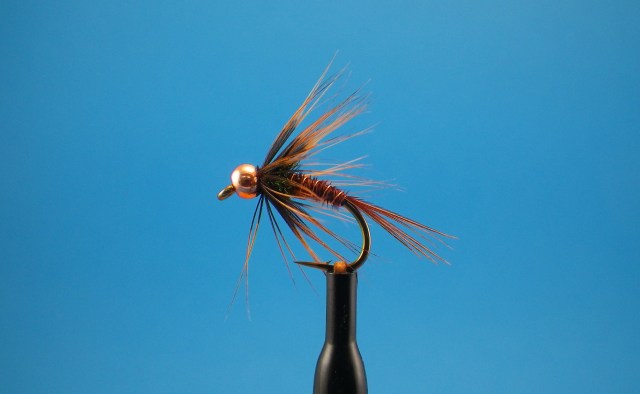
Soft-Hackled Bead Head Pheasant Tail. Size it up, size it down, the pheasant tail remains a classic because it looks like so many things that trout like to eat. I love this version for its buggy peacock herl thorax and so-many-quivering-sexy-legs of a soft hackle. For recipe and tying video, click here.

SHBHPT

~

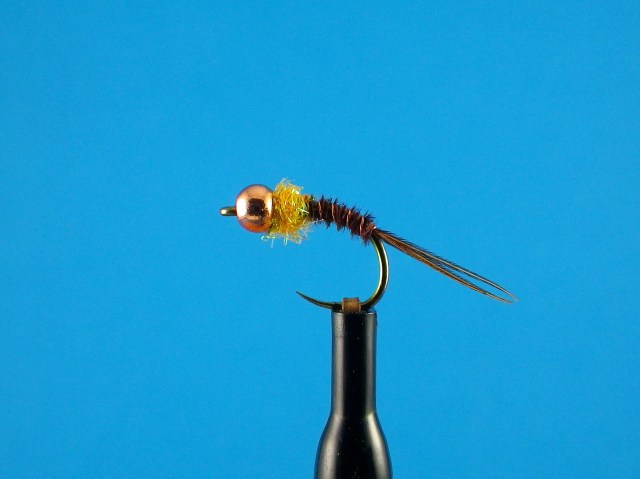
Frenchie Nymph Variant. The same fly as above — but different! We’ve traded the wiggly legs for a flashy hot spot. The result is a slimmer profile with different bite triggers that keeps this a high-confidence early-season nymph. What makes it variant? Unlike Lance Egan’s original, this has a brass bead, not tungsten, and it’s tied on a scud hook. (Since I don’t Euro-nymph, I rarely use tungsten beads in my nymphs.) For recipe and tying video, click here.

FrenchieVariant

~

Rainbow Warrior Variant. Another Lance Egan creation, this version uses a brass bead instead of tungsten (see Frenchie, above) and omits the mylar wing case. The Rainbow Warrior takes the flashy attractor nymph to a whole new level.  Good stuff!

OLYMPUS DIGITAL CAMERA

Hook: TMC 2457 size 12-22
Bead: Silver, to size
Thread: Red 6/0 or 8/0
Tail: 5-6 pheasant tail fibers fibers
Body: UTC Pearl mylar, 3/64″
Thorax: Rainbow Sow Scud dubbing