Farmington River Report: Fishing under the Hendrickson hatch with wet flies

After’s Wednesday’s hatchstravaganza, I decided it was a moral imperative the go back to the Farmington on Thursday. Unfortunately, the time-space continuum prevented me from attempting another daily double. So I sacrificed a repeat of the morning caddis frenzy for Hendricksons in the afternoon.

Got to my spot at 1pm. Not a bug in sight, not a fish rising, but the Hendrickson hatch on the Farmington is like clockwork. Even though you don’t see anything on the surface of the river or in the air, there’s a lot going on down below. First cast, a mend across some current seams into a pocket, and bam! Just like that, we’re catching trout on Hendrickson wets.

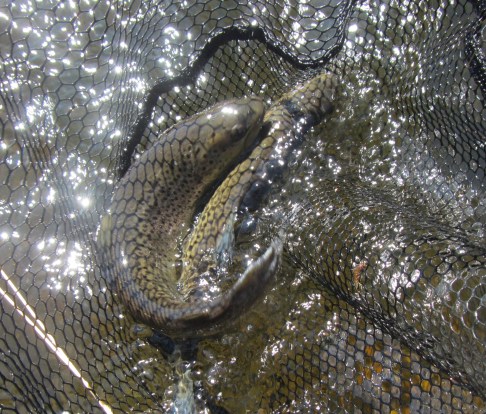
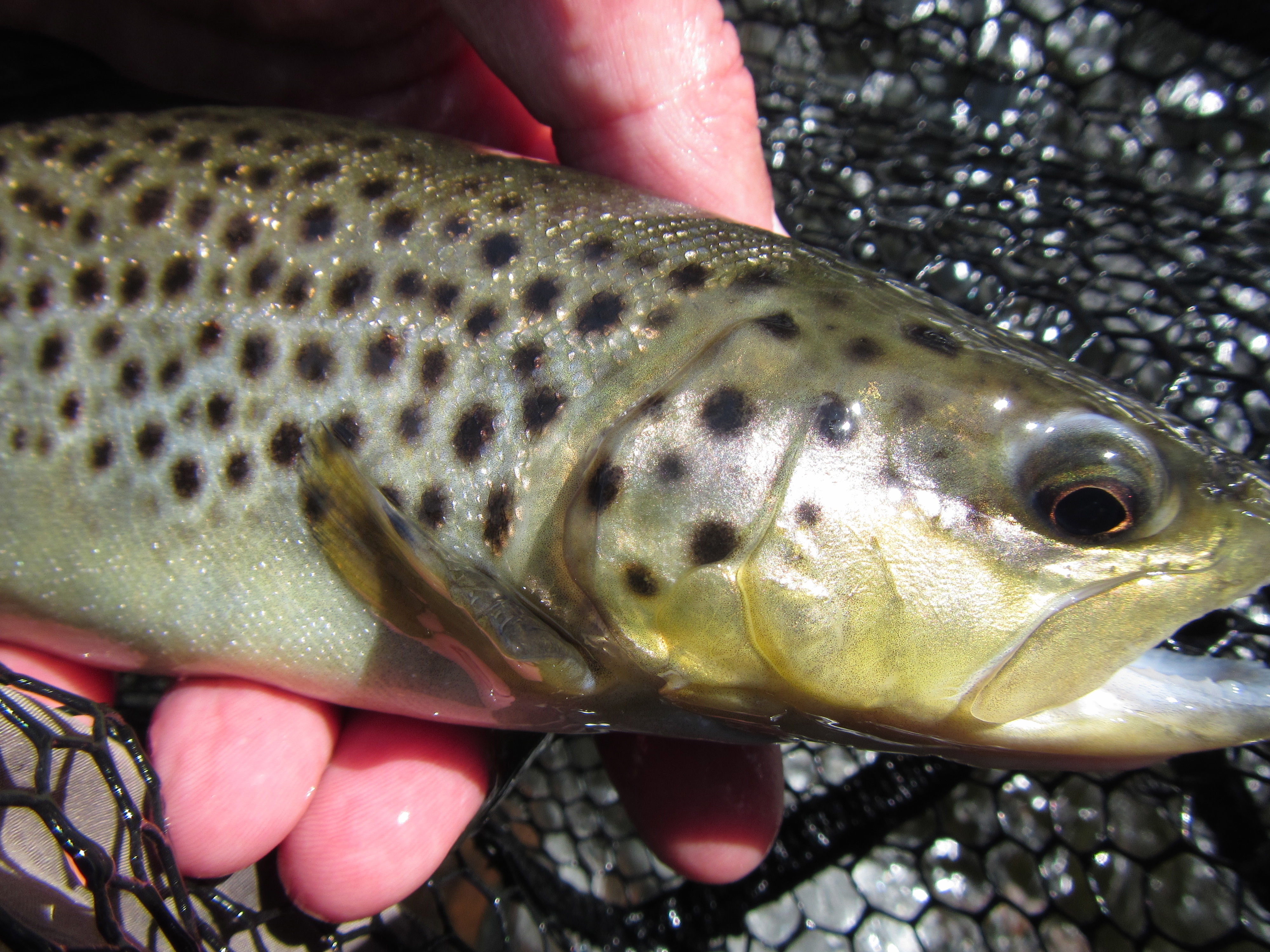
Like yesterday, a good mix of stocker browns, chubby rainbows, and holdovers. This brown has been in the river for a while. It took me several attempts to hook him, but it was well worth the wait.

Image

The hatch was even stronger today, and as it picked up in intensity, it was harder to catch trout, I think because of the sheer number of bugs in the water. Unlike yesterday, where all you had to do was pick a rise and put your flies over it, there were a good half dozen trout today that I could not entice to strike, and another half dozen that took repeated attempts over the course of an hour. Fortunately, there were plenty of wanton gluttons willing to jump on. I caught trout on the dead drift, the greased line swing, and the dangle.

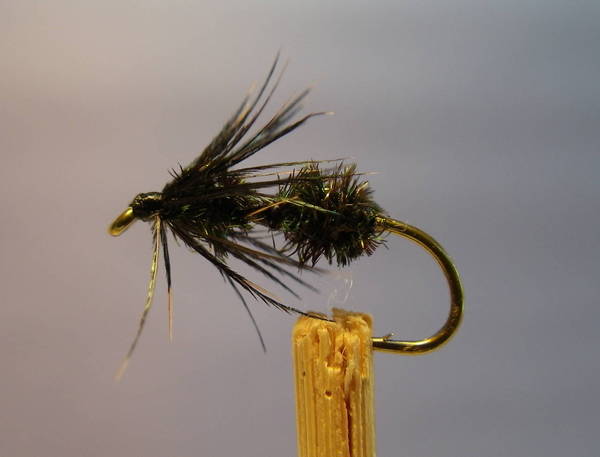
My rig was a Squirrel and Ginger caddis as the top dropper, a Dark Hendrickson winged wet as the second dropper, and another Hendrickson below it. As the hatched waned, I did see some caddis start to come off, and a few of my last fish took the S&G caddis.

And, like clockwork, it was over by 3:30. Water temp was 53 degrees.

Spectacular wet fly action on the Farmington River

“People tell me I’m the world’s greatest comedian. Ask me why people tell me I’m the world’s greatest comedian.”

“Why do people tell you –“

“Timing!”

Sometimes it’s like that with wet flies. Time the hatch just right, and you can look like the second coming of Joe Brooks. Legions of obliging trout and the right fly don’t hurt, either.

Such was my good fortune on Wednesday. The DEEP had recently stocked the upper TMA with several thousand trout. Armed with this intelligence, I met Todd Kuhrt and his brother in New Hartford, and we were on the water by 10:30am. We had won the April weather lottery, with blazing, brilliant sunshine and temperatures that were supposed to climb into the low 60s. I was rigged up for nymphing, so I wandered off to the head of a deep run while Todd and his brother set up shop a hundred yards downstream.

 A nice holdover brown taken on a Dark Hendrickson winged wet.

Image

Catching nothing when you’re expecting to bail fish is lesson in humility, and I took my licks for an hour. By the time had I worked my way down to Todd and Scott, I still hadn’t had a touch. They had each taken three on nymphs. The ignominy.

But, sometimes you must endure such hardships to reach Nirvana. I realized that what I really wanted to do on this glorious spring day was swing wet flies, smoke cigars, and relish the fact that I was blowing off all the work to do. So I swapped out my nymph rig for a team of three wets I had tied up the night before: a size 14 Partridge and Green dropper, a size 12 Squirrel and Ginger caddis in the middle, and a classic Hendrickson Dark on point. I had just finished nymphing a run, and now I made a quartering cast downstream. The trout hit just after the third mend. First cast. Wet fly. Squirrel and Ginger.

Life was good again.

It was about to get great.

For the previous fifteen minutes, I had been eyeballing some splashy rises about 50 yards downstream from me. Unfortunately, a spin angler had the area on lockdown. But now he was packing up his gear. I coiled my line in my hand and made a beeline for the trail along the river’s edge. This being a gentleman’s sport, it’s probably uncouth for a middle-aged man to race through the woods with his fly rod just to secure a fishing spot. But sometime we must toss propriety to the wind and indulge our inner barbarian.

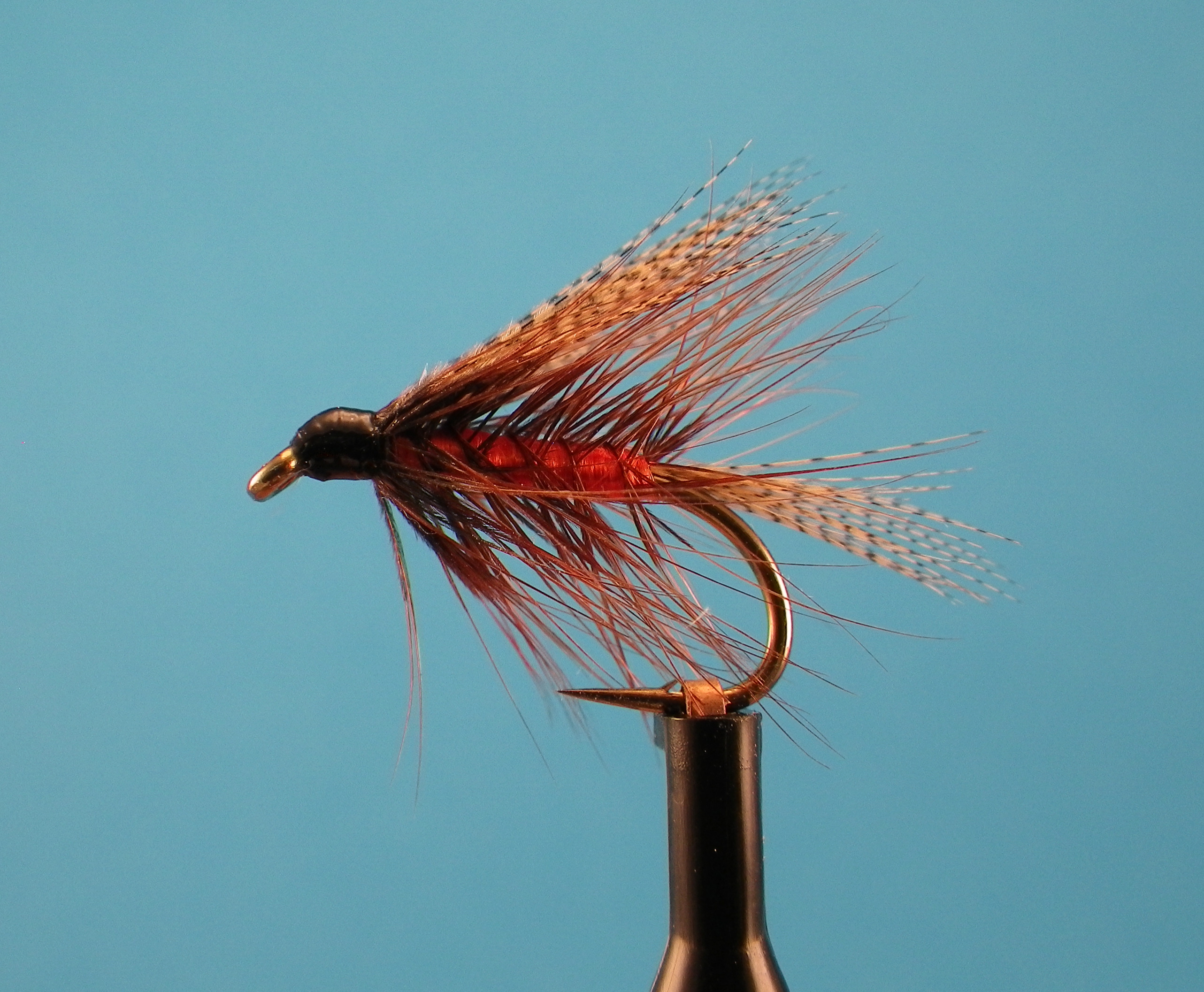
 The fly of the morning, my Squirrel and Ginger caddis wet.

Image

The air was teeming was caddis, and the surface film was being punctured by the slashes of feeding trout. I couldn’t see any bugs on the water, so I figured the trout were taking emergers just below the surface. That’s the cool thing about newly stocked fish on the Farmington. They discover pretty quickly that those food pellets aren’t on the menu anymore. I picked out a rise, and made a cast. Bap! On the caddis emerger. In fact, the first eight trout I caught all picked that Squirrel and Ginger out of my lineup of three. I clipped off the Hendrickson and tied another caddis on. I soon had my first double.

Crazy kids. My first double of 2013.
Image

OK, so they were just dumb stockers. But, it’s hard to embrace self-loathing when you’re having so much fun. I waved Todd and his brother down so they could get in on the caddis orgy that was – hard to believe – building in intensity. I can’t say it was a fish on every cast. But I also can’t remember too many drifts that didn’t draw a strike. All you had to do was look for a rise, then swing your fly over it.

It would have been unfair to expect a repeat on the lower TMA. I really just wanted to see if the Hendrickson hatch was in full swing. Turns out that it was. We got to our target pool around 2:00pm. Same intense, splashy rises, and the air thick with windblown Hendrickson duns. Same drill, too: find a rise. Swing your fly over it. Come tight to the take that was sure to follow. Unfortunately, Todd and his brother had to leave at the height of the action, but I stuck it out for another 45 minutes until the hatch wound down. Upstream, it had been all stocked browns; here, the fish were bigger, with a substantial number of fat rainbows and a few big holdover browns in the bargain.

 Ending on a high note: the best fish of the day was my last, this chubby holdover brown hen. 

Image

That night, I noticed a little sunburn on my hands. My arm was pretty sore, too. Life’s tough, you know?
Steve Culton’s The Fisherman LLC Guide Service

My name is Steve Culton, and I’ve been fishing Connecticut’s Farmington and Salmon Rivers for nearly 50 years. My areas of specialization include wet fly fishing, dry fly fishing, streamer fishing (fresh and salt), and indicator nymph fishing. Small streams are also a passion, as they give us an opportunity to catch wild trout in a natural, more intimate setting. And let’s not forget those cantankerous Housatonic River smallmouth bass. My approach to fly fishing for striped bass is quite different from most other anglers’: I use a floating line, traditional trout and salmon presentation methods, and sparse, impressionistic flies like flatwings and soft hackles.

Image

I am a teaching guide. (I have had many clients ask me if I am a teacher for my regular job. The answer is no, but I am flattered by the question.) We all like to catch fish, but if your immediate goal is sheer numbers you’ll probably be happier with another guide. If you’re interested in learning new methods, building your skill sets, fishing new flies, expanding your general knowledge, or exploring a river, small stream, or salt pond, I might be the right guide for you. Of course, I will do my best to put you onto fish. I think you learn more when you’re catching.

Image

My teaching philosophy is pretty straightforward. There are no experts — we all have something to learn. I’m really just a guy who loves to fly fish. I’ve done a lot of it, read a lot about it, written a lot about it, and I’m very enthusiastic about sharing what I’ve learned with others. I sometimes take a spiritual, zen approach to the lessons of the day. Fly fishing has a soul, and I encourage my clients to explore and expand upon whatever that means to them. There are many, many ways to catch fish on a fly rod. People fish best when they use methods and flies they have confidence in. Since I am a self-taught fly fisherman, I know the struggles of learning the game. When you’re fishing with me, there are no such things as dumb questions – or for that matter, too many questions.

Image

Above all, we’re out to have fun. James Leisenring wrote, “We fish for pleasure; I for mine, you for yours.” It is important to me that you enjoy yourself during our time on the water. Before any outing, I like to talk to my clients so I have a clear understanding of what their goals and expectations are.

So – let’s go fishing. You can reach me at 860-918-0228 or at swculton (at) yahoo.com.

Preparing_For_Your_Trip

For information on striped bass guiding and lessons, click here.

Due to other commitments, my weekends are almost always booked. The good news is that weekdays usually mean far fewer anglers.

2024 Rate Schedule  (Subject to change. Does not include gratuity.) Rates may vary for non-Farmington River outings. Clients are responsible for their own gear (rod, reel, leaders, waders, boots, etc.), food, and drink. For lessons, I strongly suggest half-day sessions.

                         Half day (4 hours)                   Full day (7 hours)

One person                $325                                       $425

Two persons              $375                                       $475

For client testimonials, click on the comments button below.

Fisherman-Logo_RGB-color_small

The Peter Ross Wet Fly

The next time you fish the Peter Ross, be grateful that his name was not Aloysius Karbuncle. The Peter Ross is a traditional Loch style fly that dates back to the late 19th century. Ross based his pattern on the Teal and Red, another stillwater fly.

This fly is also a popular sea trout pattern, and you can easily see why. I like the contrast of the red, the black, and the dramatic barring of the teal. With its silver body, I’m thinking small baitfish or fry. Perhaps even something shrimpy. Something that looks alive and good to eat. I’ve already used it for steelhead, and I’m going to try it as the point fly on a team of three wets this spring.

The Peter Ross

Image,

Hook: 8-16
 (this is an Orvis 1641 size 10)
Thread: Black
Tail: Golden pheasant tippets
Body: Rear half silver wire, front half red angora goat
Rib: Fine silver tinsel
Hackle: Black hen
Wing: Teal flank

Tying notes: When you’re tying a small wet that calls for a body of “half this, half that,” it’s easy to mess up calculating how much area you need on the shank for each section. (Ask me how I know). You end up with a body that’s two-thirds one and one-third the other. Remember to take the head of the fly into consideration. Then, divide the remaining space between where you think the head will end and the end of the shank. There are many ways to tie in waterfowl wings. Some like to create an effect like a quill wing. Others like to fold the wing several times on top of itself, dull side in. Another way, the one I used here, is to tie the wing in small folded sections. For this size fly, I used three sections of teal flank about ¼ to 3/8 inch wide, folded them once, dull side in, and tied them on top of each other.

Thanks to everyone who attended my wet fly class at River & Riptide.

I love tying flies, but teaching others how to tie runs a close second. I am fortunate enough to be able to do it at a number of area fly shops. Today’s was at River & Riptide in Coventry, RI. Great group of guys, all eager students. It’s amazing watching the transformation that happens in someone’s tying in just a few hours. Our focus today was on wet flies. We covered basic soft-hackles, wingless wets, winged wets, and fuzzy nymphs. Thanks to R&R for letting me teach, and thanks to everyone who made the afternoon so enjoyable.

Drowned Ant Soft-Hackle

Image

I’ll be doing the same class tomorrow at UpCountry Sportfishing in New Hartford, CT.

A Classic Bergman Wet: The Fontinalis Fin

This is a fly with a great backstory.

The Fontinalis Fin Wet Fly

Image

Hook: 6-16 (this is a 1x short, 2x strong Orvis 1641 size 10)
Thread: Black
Tail: White hackle fibers
Body: Orange wool with fine gold tinsel rib
Throat: Furnace hackle fibers
Wing: Orange mallard married to a thin strip of black or natural grey mallard, then a slightly thicker strip of white mallard

The old-timers up in Maine (or down East, if you’re going for authenticity) who were fishing for brookies thought their quarry was highly territorial. So after they creeled a fish, they’d clip off one of the fins and use it for bait. And what an attractive bait it was: shiny, deep orange, contrasted against dramatic black and white bands.

An enterprising fly tyer named Phil Armstrong realized he could replicate this bait in the form of a married-quill wing wet fly. And thus was born the Fontinalis Fin. “Fontinalis” from the second half of the brook trout’s taxonomic name, Salvelinus fontinalis. “Fin” for rather obvious reasons. What a brilliant concept.

The real McCoy

Image

While it’s tempting to look at the flies featured in the color plates of Berman’s Trout (this fly appears on plate 10) as more of an exercise in tying legerdemain than practical fish catchers, I can tell you from experience that this fly does work. It’s pretty simple as far as married quill wings go, and the rest of the pattern is something anyone with basic tying skills can do.

Tying notes: If you’ve never tied a quill wing, don’t start. Your first quill wing can be the fly-tying equivalent of the Bataan Death March. While I was kidding (mostly) about not starting, I think it took me over a half hour to tie my first quill wing — and that was accompanied by a generous use of rather colorful language. Once you get it, though, the process becomes easier. I’m often asked at classes and demos, ‘How do you glue the different quill sections together?” You don’t. The edges of quill fibers are like velcro — they stick together quite nicely. There’s a specific technique to matching quills (the wings should be a mirror reflection of one another) and marrying the sections. Perhaps someday I’ll post them. In the meantime, you can probably find a good how-to by doing a web search. Also, the quill wings should sit a little higher on the shank so as to not hide the body; I was in a rush to finish this fly, so I plead sloth.

The Catskill Wet Fly

I first learned of the Catskill when I read Ray Bergman’s classic, Trout. While it lacks the garish palette of the majority of the flies that appear on the color plates at the beginning of the book, the Catskill is nonetheless an attractive fly – albeit in a rather understated way.

There’s something seductive and buggy about wood duck. The soft brown hen hackle will collapse and pulse in the current, contrasting nicely against the orange floss body. It’s easy to imagine this as an over-sized caddis. Or at least as something that looks alive, and good to eat.

I tied it large, but I can see going down to about a 16 or so with this fly. Although I have not yet fished it, I already have supreme confidence that it will be a fish catcher.

You can, too.

The Catskill

Image

Hook: 1x short, 2x strong size 8-16 (this is an Orvis 1641 size 10)
Thread: Black
Tail: Wood duck
Body: Orange floss under brown hen, palmered
Wing: Wood duck

The Kate McLaren Wet Fly

Ah, Kate-O, my little not-so-yellow friend.

Every year, I’m on the lookout for new flies to tie and fish. My friend Jon, who’s been wet fly-fishing forever, also happens to be from the UK. So he’s been exposed to a broad cross-cultural mix of patterns. When I asked him for some suggestions, he immediately offered up the Kate McLaren. It’s fair to say that I liked Kate the moment I laid eyes on her.

The Kate McLaren is a Scottish loch fly, intended to be the top dropper (or bob fly) on a team of three. While its traditional use is on still water, I’m going to be fishing this on rivers. And while I might give it some time as a top dropper, it’s going to get the lion’s share of action on point.

There’s something about the contrast of the golden pheasant crest tail and the dark body that I find magnetically appealing. Golden pheasant crest almost glows when wet. Who knows what a fish will think this fly is – perhaps a flash of spotted salamander, or a chubby stonefly – but I can’t wait to feel that first take.

Kate McLaren

Image

Hook: 8-14 (this is a 1x short, 2x strong Orvis 1641 size 10)
Thread: Black
Tail:  Golden pheasant crest
Body: Black seal fur (I used angora goat)
Rib:  Fine oval silver tinsel
Body Hackle: Black rooster (I used soft hen)
Head hackle:  Brown rooster (ditto on the hen)

Tying notes: Technically, this is a Kate McLaren variant since I used soft hen instead of stiffer rooster hackle. Since I primarily intend to fish this fly subsurface, I wanted the action the soft hackle would provide. When finishing the body, I tied the black hackle in near the head, leaving the thread at the tie-in point, and then wound the hackle backwards toward the tail. I then secured the hackle with the tinsel, and wrapped it forward to the thread. Also note that the black hackle is smaller than the brown. Some of the Kates I’ve seen have a longer tail, but I like the proportions of this one. I got lazy on the head and left it rough. As Dave Hughes said, trout aren’t interested in neatness.

Rescheduling of 2/16 Wet Fly Tying Class

The Wet Flies and Fuzzy Nymphs class at UpCountry Sportfishing in New Hartford, CT originally scheduled for last Saturday has been rescheduled for Sunday, February 24, 9am-2pm. There are a couple spaces still available. Contact the store at 860-379-1952 to enroll.

Speaking of wet flies, I have a few new patterns to post. I’ll try to get them up soon.