8/2/13 Farmington River Report: The obesity crisis among rainbow trout

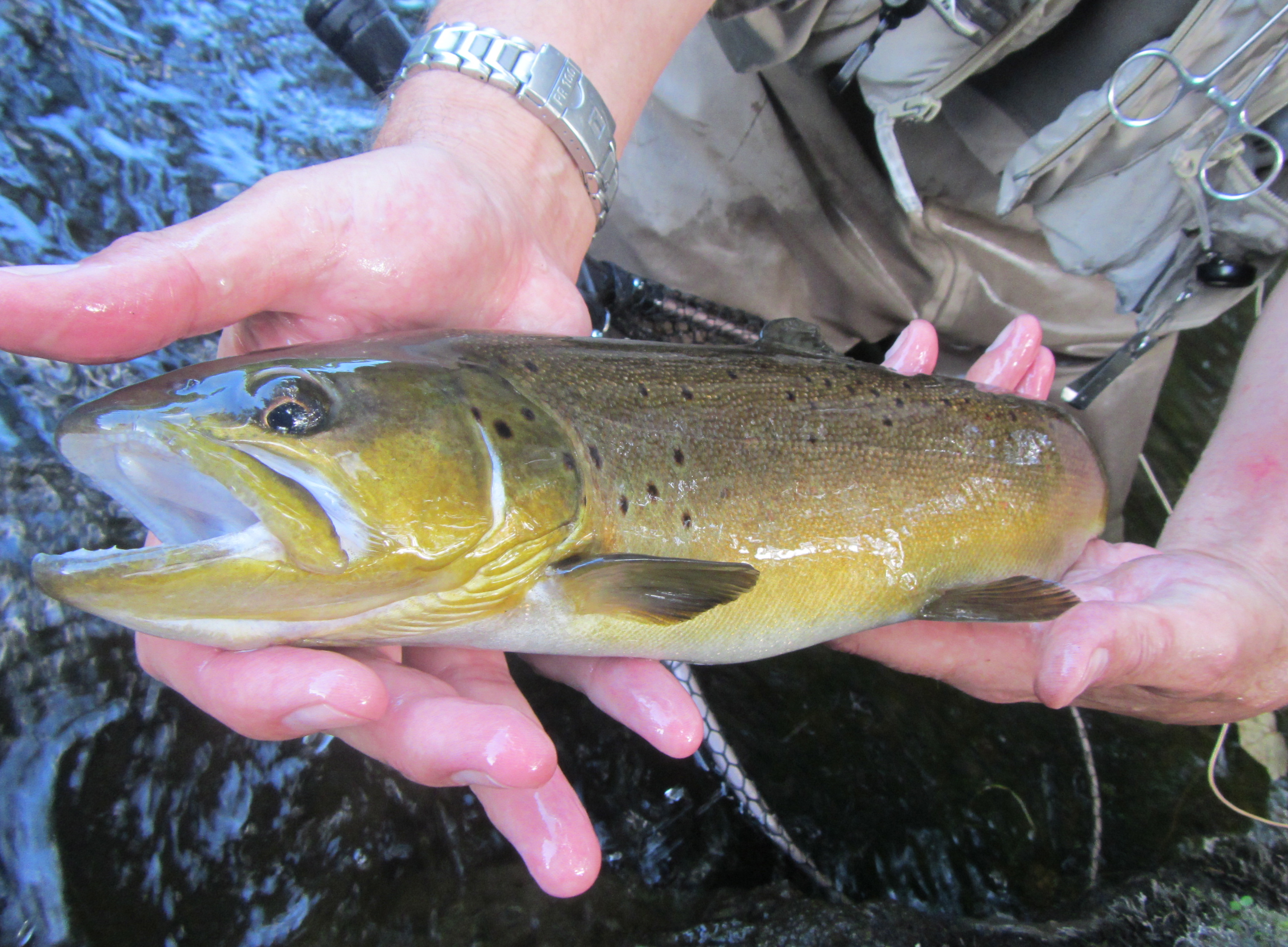
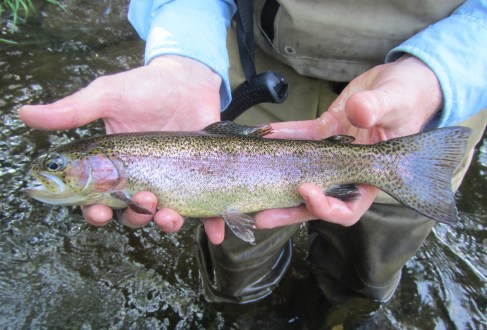
If you went fishing Friday on the Farmington, you won the weather lottery. Low humidity,  temps in the low 80s, plenty of sunshine, and not a lot of other anglers(!) on the water. I guided Matt from noon into the early evening. We had a mixed bag of success, with a fish on our first couple casts, then a long time with nuthin’. It wasn’t for lack of effort. We bounced around the river, and Matt fished his wets well from top to bottom. Very little bug activity, with water temps in the mid-60s. In the last run we fished, success! This chubby rainbow was the best of the bunch.

This is what a steady diet of cheeseburgers and fries will do to your figure.

Image

She took a Starling and Herl on the swing. What a terrific fight in the current, complete with aerials. Matt hand-stripped her in. Well done, Matt! I helped him celebrate by smoking the Punch Punch he had offered me.

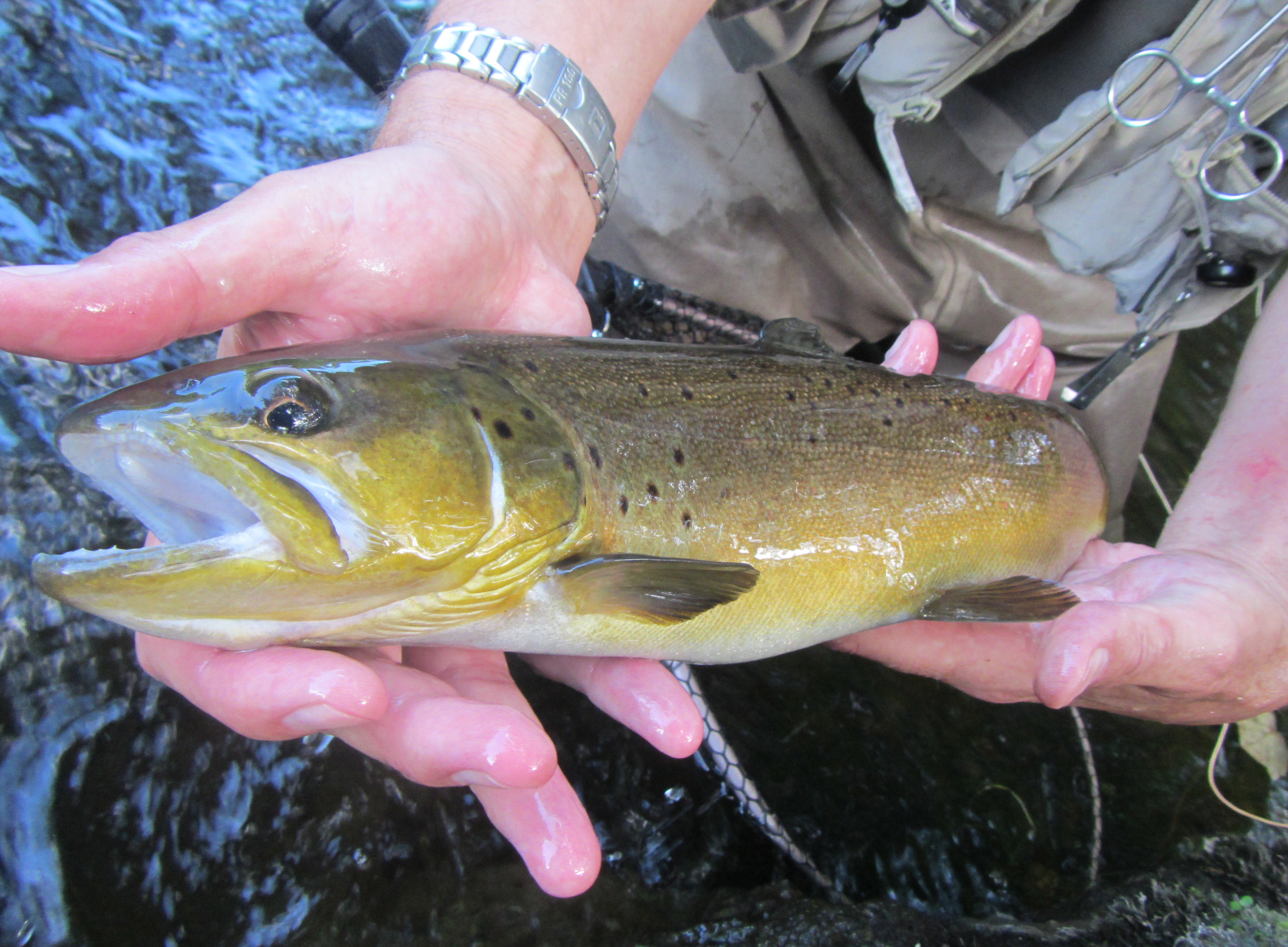
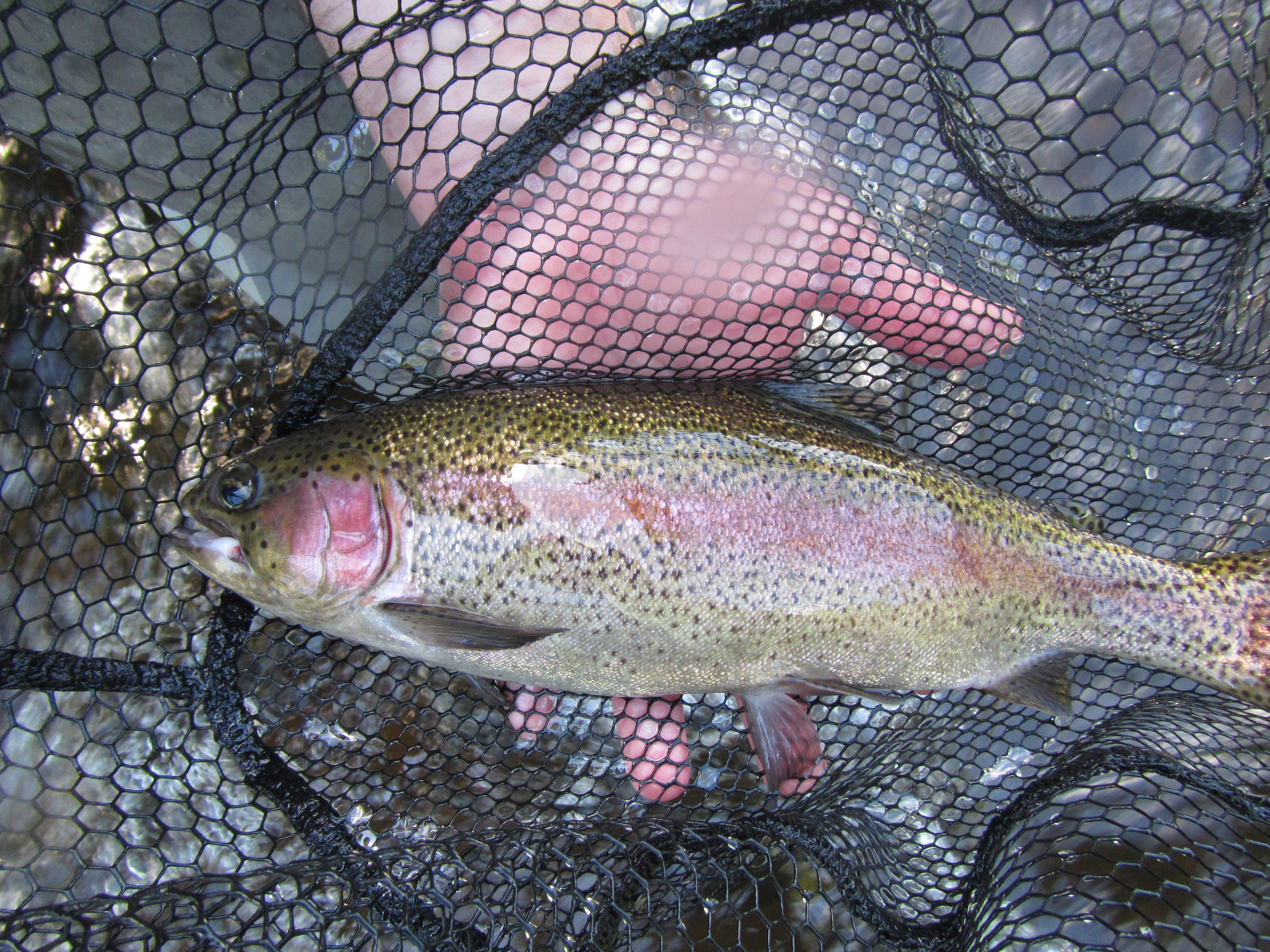
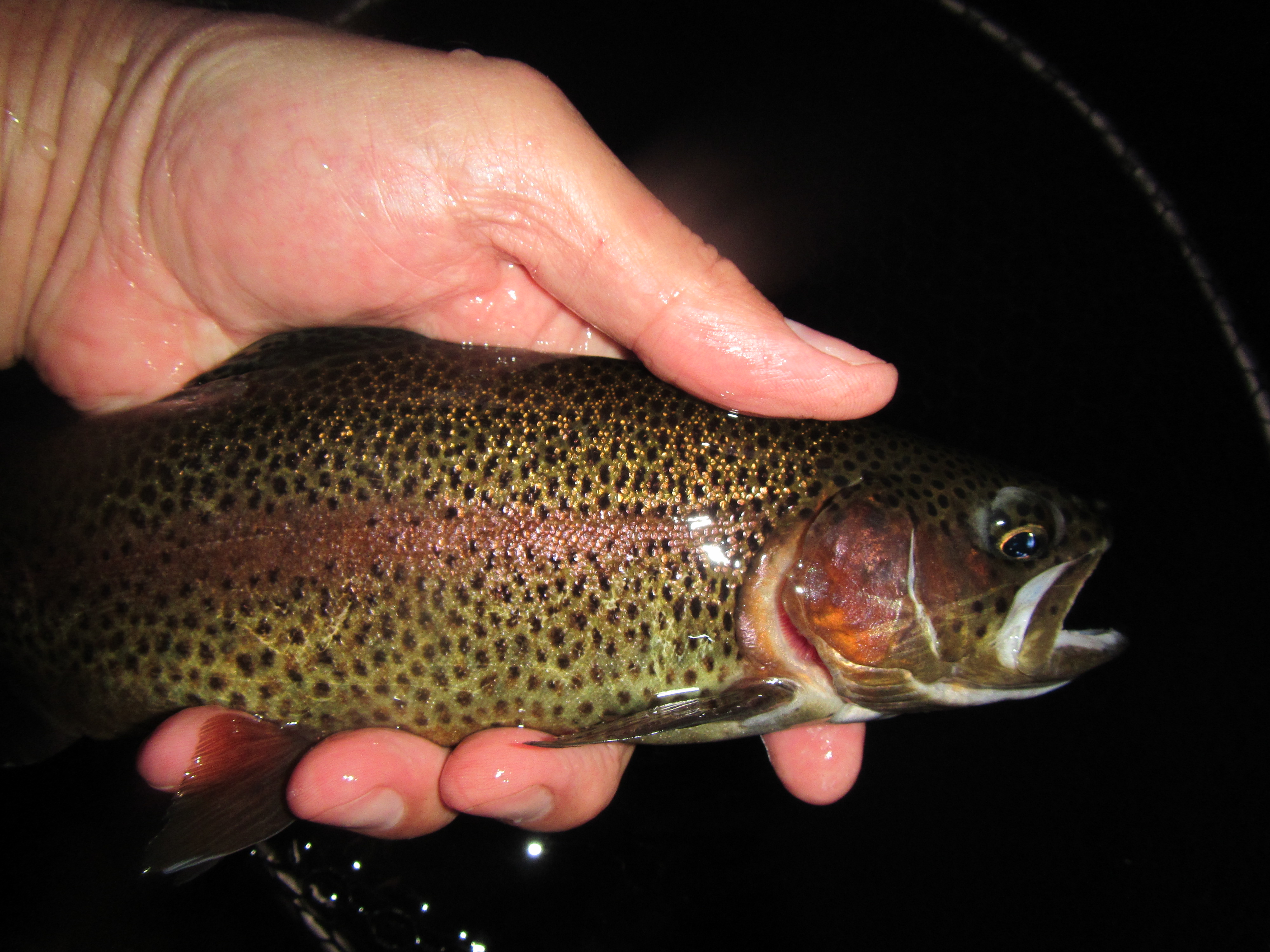
After Matt left, I fished solo for a half hour. I almost bagged it, as there were precious few bugs coming off. But a pod of fish gently sipping in the twilight talked me into it. Nothing on a size 22 Sulphur spinner. Switched over to a size 20 Pale Watery wingless wet that I fish dry and got two takers, one a brown and the other this dark matter rainbow.

I think this rainbow has been in the river a while. Besides its dramatic coloring, it did not want to come to net. Strong fish. Look at those pectoral fins. Profuse black spots, and then some.

Image

OK, so I did have a cheeseburger on the way home. But I made up for it with oatmeal for breakfast this morning, and some interval training on the bike this afternoon.

Cheeseburger after paradise

There are 365 or so days every year when you can fish the Farmington. I manage, on a good year, to do it about 40 times. But of all those days, none is more important than July 21.

I’ve made a pilgrimage to the Farmington on that day for four consecutive years now. It’s not by accident. July 21 is the day the Summer Stenos come out. Whether they appear earlier or later isn’t important; the Stenonema have their schedule, and I have mine. There’s a certain place I go to greet them, and since it’s an evening hatch, a certain time I like to be there. Admittedly, I have an unhealthy relationship with Summer Stenos. At times I hold them in starry-eyed adoration. Others, I view them with extreme disgust and intolerance. No other hatch on the Farmington so charms me that I have the date burned into my mental calendar months in advance. No other hatch baffles me with its rise-to-hookup ratio that frequently exceeds 10:1 – even though I’ve found the perfect fly for fooling the trout.

On Sunday night I got my first three trout of the year on Summer Stenos. But first, there was some swinging to be done.

I hadn’t fished with Jon in almost two months, and for our reunion outing we agreed that wet flies and riffly pocket water were in order. At 630cfs the run was quite wadeable. Jon took the first fish, a smallmouth bass, but after 45 minutes all we had to show for our efforts was a couple of juvenile Atlantic salmon. While it’s nearly impossible to get down on the bite when you’re swinging wets with an old friend on a delightful sunny day in July, I suggested we move to another spot, upstream. I guaranteed Jon he’d catch a trout there.

Such predictions are a minefield. I had second thoughts about opening my big mouth from the time we piled into our vehicles until he took his first trout a half-hour later. I was still swinging wets, working below Jon, while he had switched over to short-line nymphing. Just as my three-fly team made the transition from swing to dangle, I felt a herky-jerky tug. The fish made two quick micro-runs, peeling a small amount of line off the reel. I thought nothing of it at the time, as the take came in the heaviest section of current. No need to get this fish on the reel.

A big ol’ wild Farmington brown. These fish with a scarcity of spots are intriguing. Check out that tummy. Someone’s been eating well. He took a size 14 Drowned Ant soft-hackle.

Image

Each fight has the potential for comedy, drama, or tragedy – sometimes all three – but this one quickly declared itself a drama. The trout is usually a good one when you never see it during the encounter. Big fish have a way of hugging the bottom and using the current against you. By the time I had negotiated the trout into calmer waters, I could see that I had underestimated its size. A wild brown with an odd scarcity of spots and, despite his length, only the suggestion of the beginning of a kype.

How can you tell that you should buy a lottery ticket that day? You’re just standing in the water, savoring the moment, line dangling harmlessly beneath you, and you hook another trout. Moments later, a Cedar Waxwing lands on your rod as you hold it over the water like some conjurer’s wand. He waits there. Eyeballs you. Looks as if he’s about flee. Then stays long enough for you to call out to your friend to be your witness.

This rainbow looks like it’s been in the river a while. Jon took him short-line nymphing not too far from where he was standing.
Image

But, lest you think we have forgotten about the Summer Stenos, rest assured. We have not.

Shortly before 7pm, we were wading into a pool where friend Todd was already fishing. Jon spotted a trout rising against the far bank. Since I was already rigged for dry, he suggested I have a go at it. As I began my false casting, Jon predicted that I would stick him on the first drift. I was thinking the same thing almost as he said the words. After all, it was a day where I could do no wrong. But, after my sixth cast, we agreed I had most expertly put the trout down. There’s nothing like fly fishing to keep a man grounded.

While the hatch hadn’t gained any steam, there were a few trout feeding sporadically on the edge of a pocket. The current seam they were rising in demanded a precision cast perilously close to an obstruction. Then a rapid series of mends to keep the fly from looking like it was on the Scrambler carnival ride. I saw a few size 18 creamy mayflies come off, and switched over to my Pale Watery wingless wet variant that I fish as a dry. With a twelve-foot leader that tapers down to 6x, the line hits the water well before the fly. I was beginning to mend even as the fly was slowly settling onto the surface.

I rose trout several times, but came away with nothing but air. Then, in a glassy plate of water three feet from the shore, I saw another active feeder. This trout obliged on the first cast. A fine Farmington brown, probably not stocked. My first Summer Steno trout of the year. July 21st. The universe is in balance. A half hour later, another beauty, lower in the pool, again on the first cast.

Time races when you’re dry fly fishing. Probably because you’re so keenly attuned to the rhythm of the rises, and the limited opportunities presented by a waning hatch. Evenings, there’s also the looming specter of darkness. Can’t see your fly, can’t dry fly fish. Or at least, not easily. Dusk was just crossing the no-man’s-land into night when I hooked my last trout. I had been repeatedly casting to a small riser – or so I thought. The splashy feeding tells were slight enough to suggest a juvenile salmon. But like that big brown, I underestimated the size of this brute, a well filled out rainbow that ignored several entreaties to come to net.

A good day on the river longs for a happy ending. So I am pleased to report that if you leave the Upper TMA, waders off, rod broken down, gear stored, by 9:20, you can make it to Five Guys in Farmington before their 10pm closing. With several minutes to spare.
Yoram’s excellent wet fly adventure

I guided Yoram for a half-day today on the Farmington. Conditions were tough due to the rain. The upper TMA was 790cfs and the color of coffee ice cream. So we headed up to Riverton, where it was a more manageable 350cfs, with only a light stain. We fished streamers and the going was slow. Schizo weather with brilliant sunshine one moment and tropical downpours the next.

The last hour, we switched over to wet flies. That got us a few hits and an almost catch, but sadly we were well into overtime for our session. I saw a trout rise along the far bank, and told Yoram he had five casts to catch him. It wasn’t an easy cast to make, cross-river and just beyond the clutches of a fly-eating downed tree, then a quick mend to get a good drift. But Yoram nailed it the first three casts, and on that third cast the surface erupted. Yoram set the hook. And moments later we had a beautiful wild brown to net. He took the Drowned Ant soft-hackle on the top dropper. No picture, as Mr. Brown slipped away during his photo op. But I wanted to give props to Yoram for coming through in the clutch.

Farmington River 7/19/13: What hatch?

With the air temp in the upper 90s and a miserably high dew point, even standing in the brisk waters of the Farmington River offered little relief. Then the sun went below the tree line, and things were quite nice, thank you. I didn’t even need a jacket after dark, despite the cooling effects of some dense fog banks.

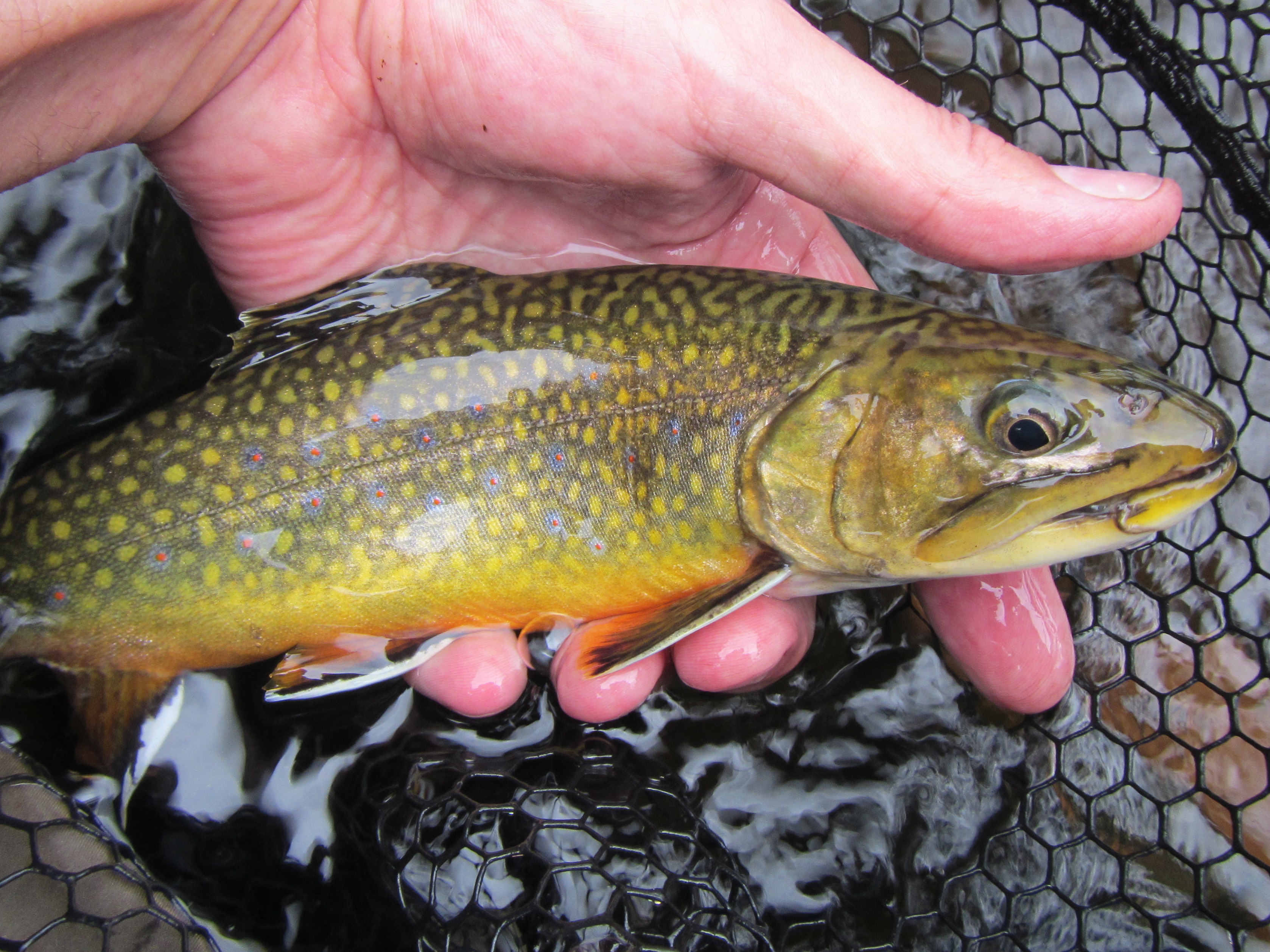
5:45pm found me wading a stretch of swift riffles, made all the more challenging by the MDC’s decision to bump the dam release up 125cfs. Along with the Still dump-in, that gave the upper TMA about 575cfs. I was swinging a team of three wets, and had several hits before landing a nice wild brookie.

A wild Farmington River brook trout. He was feeding right where the main current met the slower water in the shallows. Got him on the dangle on a size 12 March Brown soft-hackle.

Image

There were all kinds of birds working over the water, and sure enough there were caddis and sulphurs coming off. Since I had my heart set on some dry fly action, I closed up shop and headed to one of my favorite pools. Sadly, 575cfs is not an ideal height for this spot. Worse, nothing developed hatch-wise. I gave it a good long wait, but by 8:30 I decided to take a walk downriver and see if anything was happening there. I found some smutting trout in a glassy pool about 70 feet out, in water that I could only reach with a shorter cast-and-long-drift-presentation. I managed to fool one of them, a densely-spotted wild brown about 10″ long. Sorry, no pic. He give me the slip before I could shoot him.

Walked back up to my previous location at 9pm to see if it had begun. It had not. So I packed it in for some night streamer duty. I’ll make quick work of this: fished two long, deep pools. Not a bump. Not a lot of bugs out, either. Usually you can see thousands of spinners in your headlamp beam. Tonight, it was more like dozens.

McDonald’s is a poor substitute for Five Guys. But when you’re out close to the witching hour and your stomach’s been howling at the moon for two hours, you take what you can get.

Just like with fishing.

The Squirrel and Ginger Bead-Head Nymph

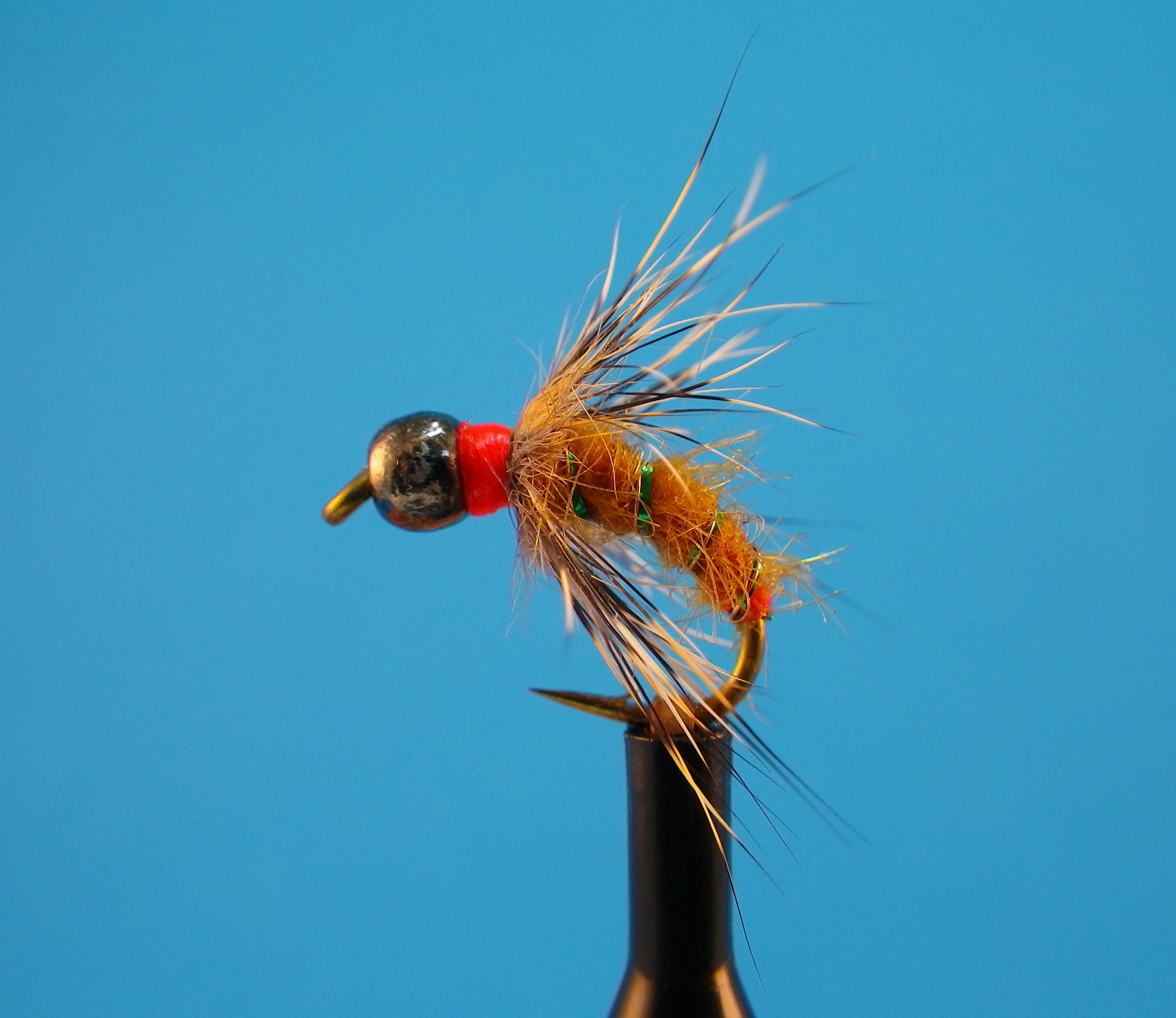
After catching a bajillion trout on my Squirrel and Ginger fur-hackled wet, I wondered how the fly might transition into a nymph. So last summer, I took to the bench and fiddled with the basic pattern a bit. Add some copper wire to the flash to re-enforce it. Make the wing just on the top of the fly, or make it a full collar. Use the working thread to create a hot spot, if that’s your pleasure. And top it off with a black tungsten bead. I’ve been catching on it ever since.

Image

Hook: 2x short, 2x strong scud size 12-16
Thread: Uni Fire Orange 6/0
Body: Ginger Angora goat
Rib: Green Krystal Flash under extra small copper wire
Hackle: Red fox squirrel
Hot Spot: Working thread
Head: Black tungsten bead

~

Tying notes: I don’t use a dubbing loop on the body, but I do chop up the Angora goat with scissors before applying it to the thread with Loon Swax hi-tack wax. Likewise, no dubbing loop on the hackle. I tie the hackle in several different ways: as a full collar, pictured here, giving the nymph more of a weighted wet fly look; as a much sparser, shorter collar; and as a sparse wing. All of them work. I can’t tell you that you’ll catch more fish with the hot spot, but I can tell you that it certainly does no harm. Play around with different hot spot colors (fluoro red, chartreuse) to your heart’s content, and let us know what the fish think.

~

The Bead Head Squirrel and Ginger Nymph Rogues’ Gallery:

Farmington River, 9/4/14:

Big Rainbow 9-14

The Drowned Ant soft-hackled wet

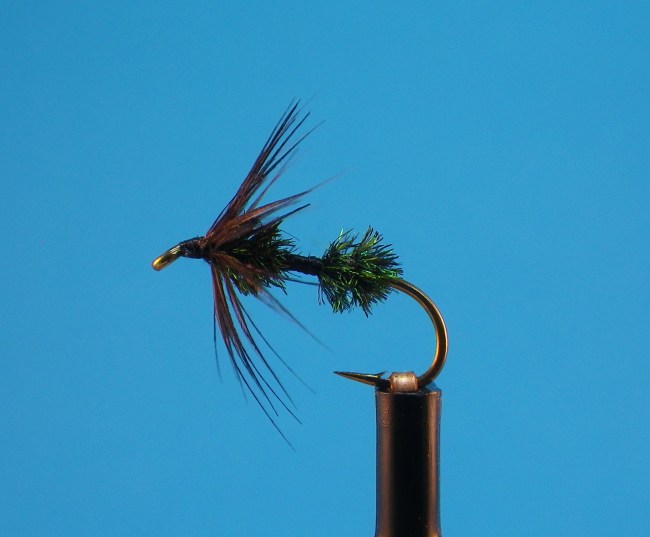
Farmington River dry fly angler extraordinaire Don Butler likes to say, “Ants is good food.” He’ll get no argument from me – or the trout. As we move into deeper into summer, terrestrials — ants, beetles, hoppers, crickets, and even field mice — become a significant food source for opportunistic feeders. This fly is a variation of the classic soft-hackle Starling and Herl. All I’ve done is add a few wraps of thread to form an ant-like body segment. You can also treat this fly with Frog’s Fanny and fish it like a dry. A lethal summertime wet, especially on small wooded streams with wild trout populations. I also do very well with this fly on the Farmington River. Now, I’ve never seen an ant tread water in a three-knot current, but I get plenty of trout fishing the Drowned Ant on the dangle. This pattern is so impressionistic it could easily double for any number of darker bodied caddis or stoneflies. Only trout know what they think it is, and at the very least, it’s that it looks like something alive and good to eat. I almost always have this fly tied on my wet fly dropper rig from June through September.

Image

Hook: 1x fine, size 10-18
Thread: Black 8/0
Hackle: Iridescent starling body feather
Body: Two strands peacock herl, twisted on a thread rope
Segment: Working thread
 
~
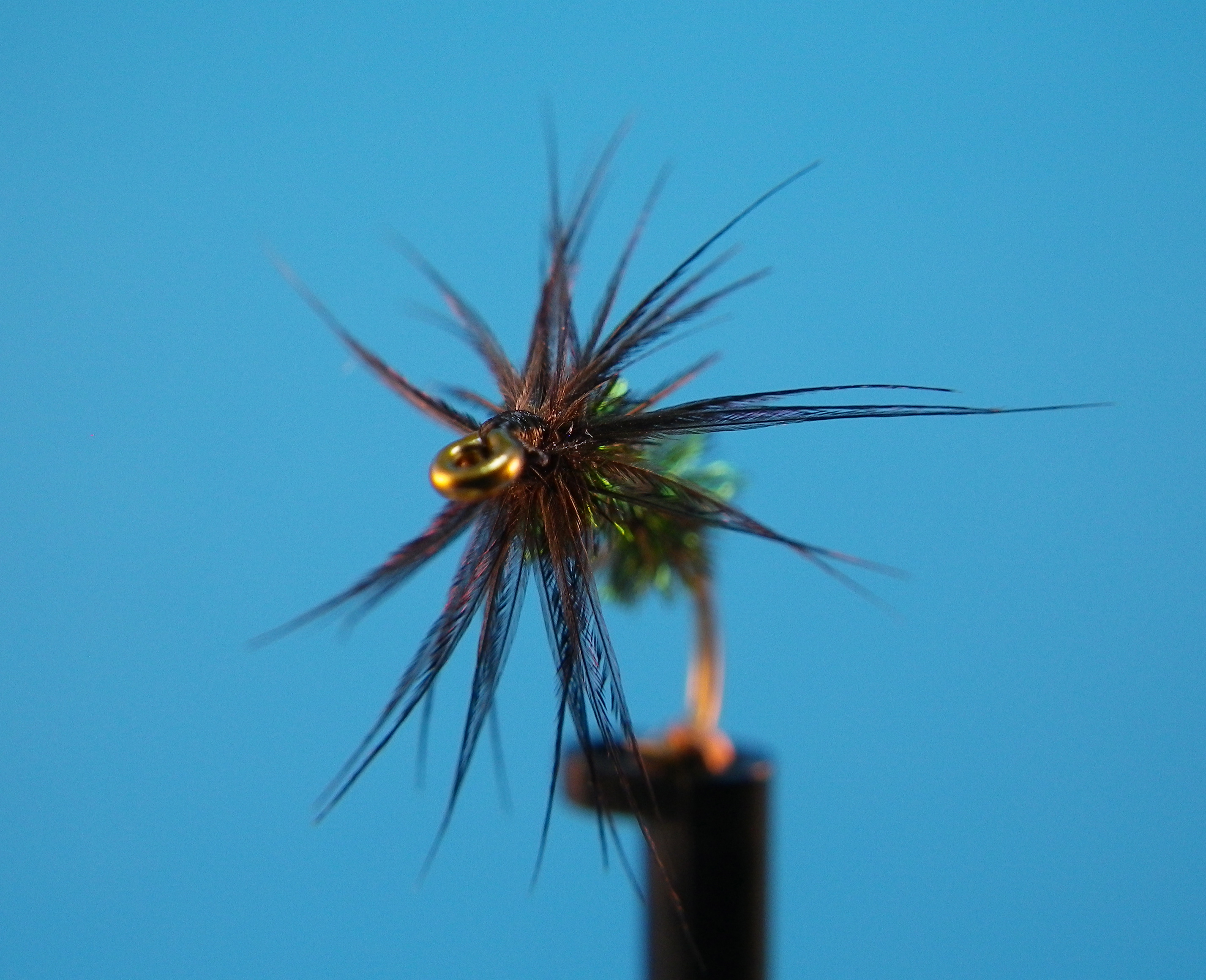
A head-on view. Starling is a fragile hackling material, but it does wonderful things in the water.
IMGP2498
 
~
Tying notes: For a more durable fly, make a rope of herl and thread before you wind the body. I tie this on a fine wire hook, and fish it as the top or middle fly in a three-fly team. When I was working this pattern out in my head, I considered using a more solid material for the body, like wool, working thread, or floss. But there is something about peacock herl and its mystical ability to attract fish that enchanted me. Besides, peacock herl is a traditional material, and seemed a proper nod to the heritage of wet fly tying. There are all kinds of feathers on a starling. Look for those iridescent purplish ones to add another subtle splash of magic to this terrific little fish-catcher.
~
 
The Drowned Ant Soft-Hackle Rogues’  Gallery:
 
7/21/13, Farmington River
BigWildBrownFarmy 7:13
 ~
 8/12/14, Farmington River
 IMG_2314


Farmington River Report 7/8/13: Wet, dry, then very, very wet

Good God, man! Has it been over a month since I fished the Farmington? Incessant rain, work, and home improvement projects have kept me from my beloved river. But not yesterday. There would be fishing for trout, come hell or high water.

As it turns out, I ended up with both.

Started off in the Upper TMA in a run that rarely gets fished. While most of what I’ve caught there in the past few years has been of the smaller, home-grown-in-the-river variety, there are some big trout that lurk within. I fish it not only because it’s textbook wet fly water, but also, as my friend Eric once said, to keep it honest.

It was still steambath hot at 6pm, and even in the cool confines of the water I was dripping with sweat after a few minutes of wading. I was mostly fishing lazy wet fly swings and dangles as I worked my way downstream, with the occasional upstream presentation. In certain spots, the saplings extended a fair distance over the river, and an upstream water haul, lob, and heave was the only way to cast. My wet fly team consisted of a Squirrel and Ginger top dropper, Partridge and Cahill middle dropper, and an Alexandra on point. I had a few touches in the first 50 yards, but no hookups.

Then, in a nondescript run, I was making a series of upstream casts, taking in the slack line as the rig flowed toward me, then throwing mends as the flies continued downstream. On one of those casts, my floating line stalled. I immediately set the hook.

I fought the good fight with the hand-stripping method, but in the end this big brown buck made the put-it-on-the-reel decision for me. Twice I almost had it to net. Twice, it darted away into the current, pectoral fins flared and tail powering it with strong, determined strokes.

Someteen inches of holdover Farmington River brown, taken on an an upstream wet fly presentation. It choose my Squirrel and Ginger caddis emerger, the top dropper on a team of three wet flies. The more I fish this fly, the more it proves itself as a core subsurface pattern.

Image

There’s a logjam just below the run I was fishing. I took two of his little brothers, both on the Alexandra, then decided to seek my pleasures elsewhere.

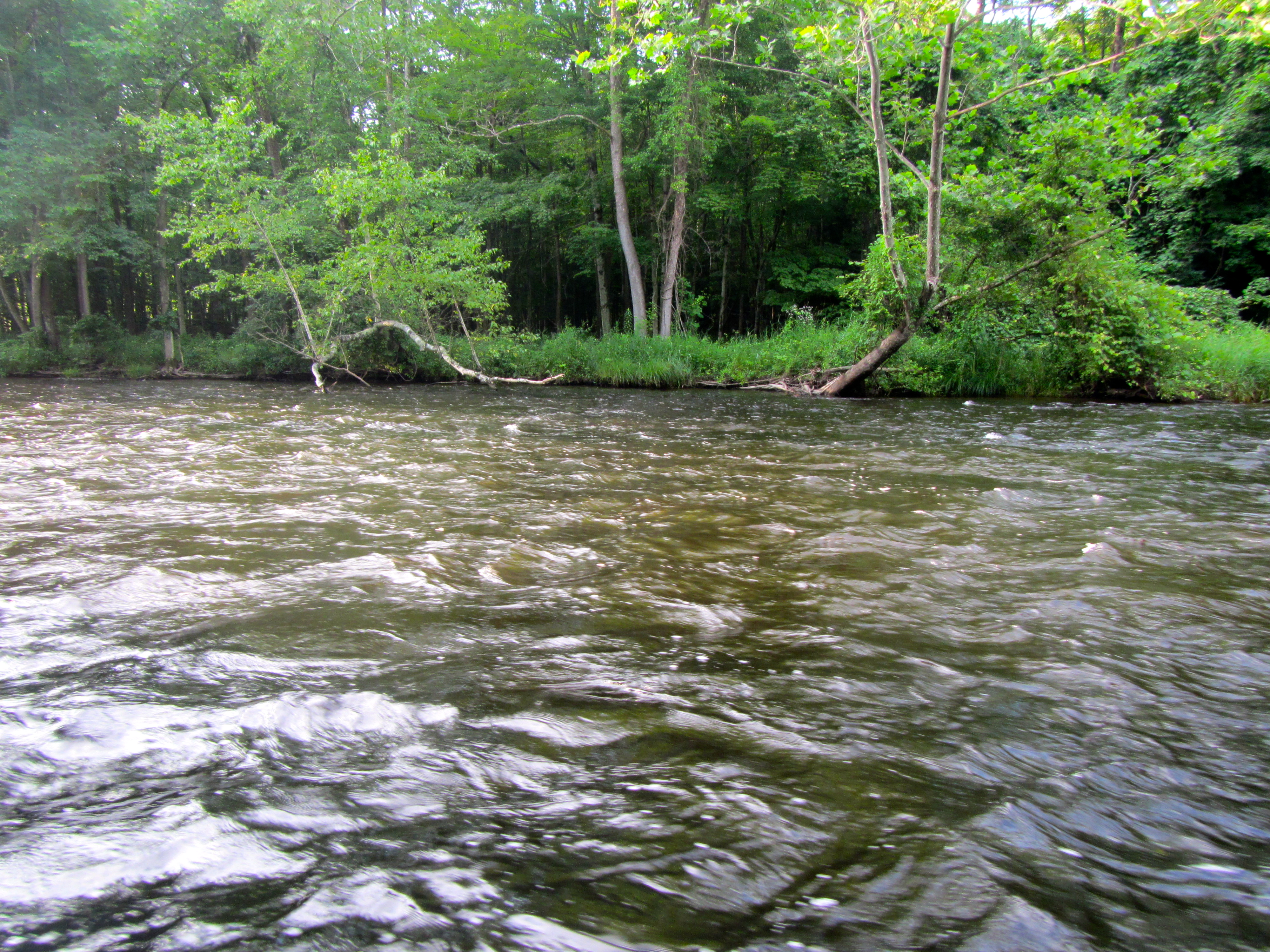
Classic wet fly water: broken surface, about three-to-four feet deep, and moving at a brisk walking pace. I’m thinking that nymphing here is now on the short-term bucket list.

Image

I love fishing wets, but since I missed the June sulphur hatch I thought I’d better make it up to myself with a little dry fly until dark session. The good news was that I had one of the upper TMA’s most popular pools to myself; the bad was that at nearly 600cfs, it wasn’t the placid, easily wadeable water I love to fish on the surface. What few trout were rising were out of reach for me. Since there was no hatch to speak of, I thought I’d make one. I tied on a size 16 Usual variant with an Antron tail. I had just released a fine 9″ wild brown when I head the low grumble of thunder. A steady drizzle soon followed. As I waded toward shore to put on my raincoat, lightning shattered the rapidly darkening skies. Moments later, I was in a good old-fashioned southern Baptist downpour. Picture me crouched on the forest floor in an electrical storm with rain so heavy it extinguished my cigar. When I timed a lightning strike at less than a quarter mile away, I made the command decision to sprint for the car.

By the time I reached Canton, the rain was over. I relit my cigar. I had just enough of it to last me till I got to Five Guys, where I had a very important appointment with a cheeseburger.

The Light Cahill Winged Wet

This is a classic American wet fly, named for Dan Cahill. Ray Bergman wrote in Trout, “If it was necessary to confine my assortment of flies to only two or three, this would be one of them. Basically, it is an Eastern pattern, particularly effective in the Catskill waters and similar Eastern mountain streams.”

High praise indeed. I’ve been fishing this fly with great success for years. So when creamy mayflies are coming off on the Farmington — or any river for that matter — the Light Cahill winged wet is usually  the first fly I’ll tie on. There’s something about wood duck that states “buggy” and “alive” in no uncertain terms. I usually fish at least two of them on a dropper rig, and look to target specific rising fish. Trout will hit the fly on the dead drift (mend your rig like you would a dry) and at the drift’s end. Just let the flies sit there – and hold on. Some of the most violent takes I’ve ever experienced while trout fishing have come on this fly.

Image

Hook: 2x strong or 1x fine, size 10-20
Thread: Tan 8/0
Hackle: Light ginger or cream hen
Tail: Fibers to match hackle
Rib: Fine gold oval tinsel (optional)
Body: Hareline Dubbin #1 Light Cahill, or light fox
Wing: Wood duck

Tying notes: Sometimes I tie this fly with a tail of wood duck or partridge, or substitute partridge for the hackle. Sometimes I’ll add a gold rib. While all these iterations work, the fly pictured here on a 2x strong hook is the one I fish the most.  I like to keep the body sleek and tapered, so no dubbing loop. It’s a pretty straightforward tie, and you can crank out a bunch in a short time. I’ve seen some versions of this fly where the hackle is clipped off the top half of the fly, but I leave it on. I tie the wing in last.

6/1/13 Farmington River report: Catch-and-release works.

Fished the Lower TMA last evening from 6pm-8pm. I haven’t fished the lower river at close to a 1,000cfs in a while, and I was curious to see how some of my favorite spots fared in the higher water.

It was still crazy humid, but the water was warm enough (67 degrees within a foot of the surface –don’t worry, it’s colder along the bottom) to defeat any notion of those classic Farmington River fog banks. Visibility was good, although there was still a light stain. My plan was to fish wets with an emphasis on Light Cahills (three fly rig from top dropper to point: Squirrel & Ginger, Partridge and Cahill, Light Cahill winged wet), but the hatch never materialized. I only saw two lonely creamy duns, a few stray caddis, and the omnipresent swarming midges. That last crew made me happy I had a cigar.

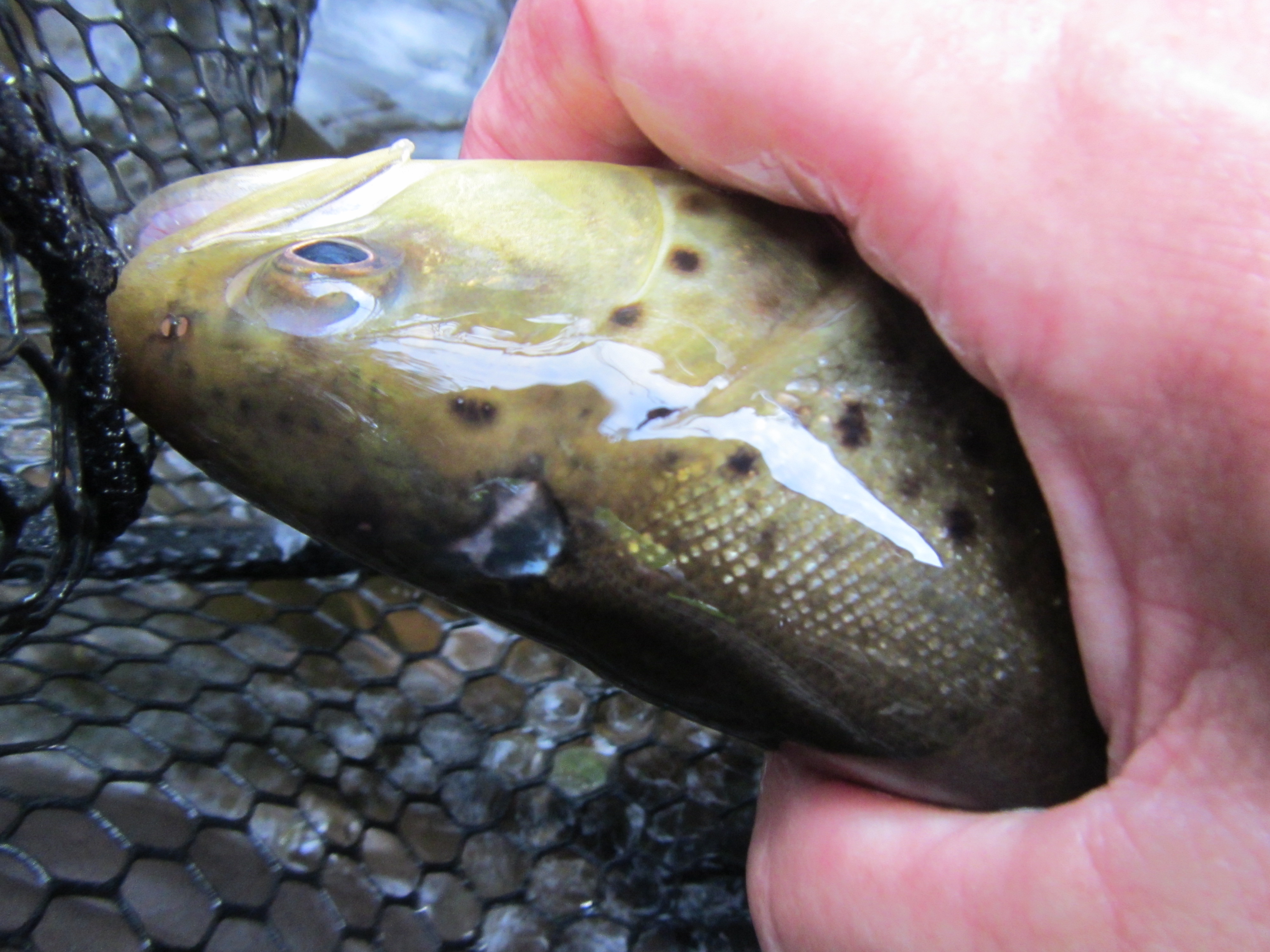
Catch-and-release works. Some sporting bird of prey tried to drill a hole in Mr. Brown’s head, then had the decency to let him go.

Image

Fished a long deep run for about 45 minutes, waiting for a hatch that never happened. So I hiked upstream about 500 yards, and fished a series of rapids, walking, wading, and swinging the flies close to shore. Took the bird-wounded brown above in that maelstrom, along with a JV Atlantic Salmon.

Finished up in a deep pocketed run where I took a leaping brown on my second cast. Signs of good things to come? Sadly, not. One more courtesy tap, and that was it.

Lousy fishing, terrific class

Many thanks to Mark, Ron, and Ted for taking my Wet Fly 101 class yesterday. We had excellent weather and a good group of anglers who came loaded with questions. Unfortunately, we didn’t find too many cooperative trout (I found the wet fly fishing to be slow on Friday, too).  But the day will come when those bashful fish be racing to get to that soft-hackled fly, and then it will all fall into place. We learned some new water, and plenty of new fishing tactics. Thanks again, guys.