Striper mini-report: Our Blessed Lady of the 3/0 Shot

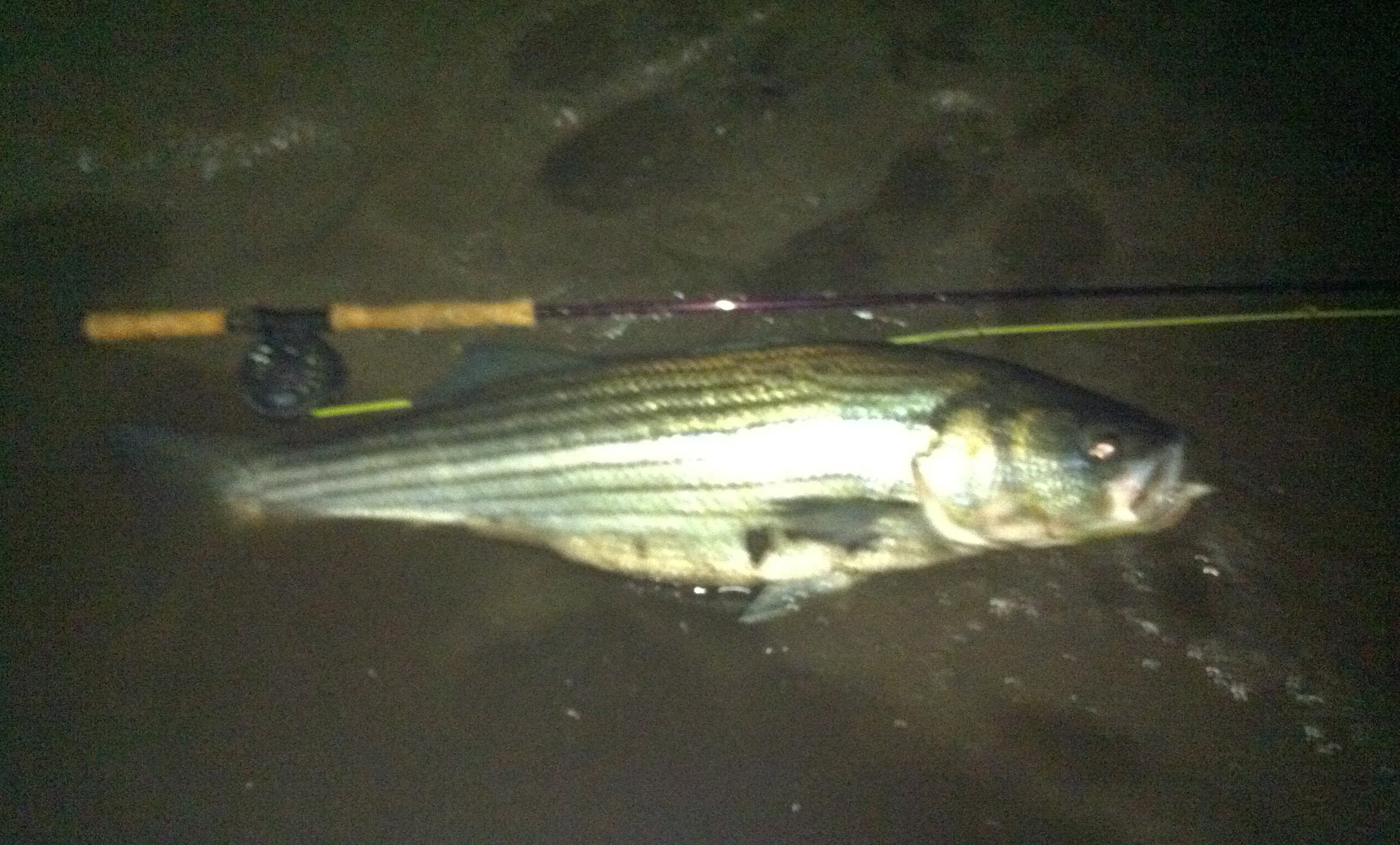
A quick zip in, zip out striper mission yesterday to see if anyone was around. They were, for a brief window. I missed the first 45 minutes (according to the other angler I spoke to — I didn’t get your name, but thanks for sharing the water). But for a half hour, it was nearly a Bass-O-Matic.

Hellooooooo down there.

Little guy big mouth


While the fishing wasn’t very technical, there was a key to success: getting the fly to the bottom where the bass were hanging out. I was fishing a floating line with a four-foot section of T-11 sink tip and a weightless soft-hackle about three-to-four inches long. Not deep enough. Once I added a 3/0 shot to the leader and threw some mends, it was bottom — and striper — city.

And then, like that, they were gone. I tried a few other rips (not easy to find with a 10-20mph SW wind disturbing the surface) but decided that when the local who fishes this spot all the time left, he knew something I didn’t. And off I went.

The tide comes in. The tide goes out. Leaving lovely sculptures in its wake.

Outgoing

Thanks to the FRAA for hosting me

You’re never sure how a new fly fishing presentation will play out, but the feedback is in and the final tally is, “The Little Things” does not suck.

Many thanks to the FRAA for hosting me. There were a lot of familiar faces, and it’s always nice to not be the youngest person in the room. And thanks for so many post-presentaion questions. Speakers like lots of questions. Except maybe if you’re President Nixon during a Watergate-era press conference.

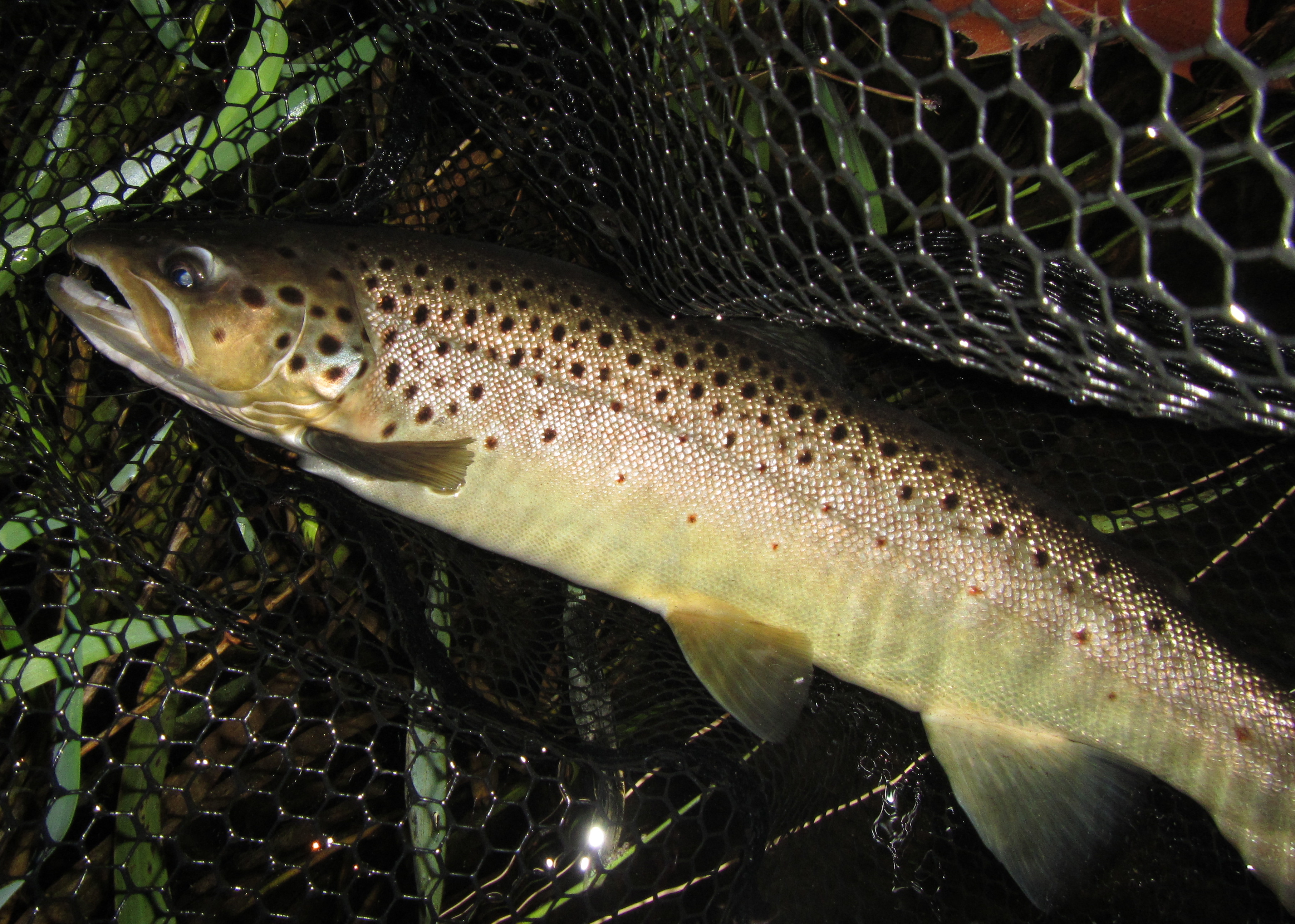
“The Little Things” matter in fly fishing. I caught this brown this summer in the shallows just a few feet off the bank as darkness fell.

Dry Brown 7:14

Return of the Good Night For The Five Weight

Some day, I’ll have to tell you about the two nights in October many years ago when I caught seventy-five striped bass on the five-weight. But for Friday night, one was the number I happily settled for. It’s been a tough fall for me, with many hours put in for very few stripers. Such is the price of exploring uncharted potential big bass waters.

So Friday night I returned to some old haunts in Rhode Island. Even on the inside, a steady 15mph southwest blow made casting a chore. The first place I fished was a blank. I wasn’t feeling it from the start. So I went back to the truck for for Plan B, swapping out my three-fly rig for a single fly, a Crazy Menhaden flatwing/bucktail hybrid.

I spooked a bass on the wade out, so that was encouraging. Inside of five minutes, I had a follow and a missed hook set. Also encouraging. Then nothing during a half hour of casting, mending, swinging, and dangling. Weeds were a minor nuisance. Suddenly, bang. I was on. A twenty-four inch bass in a ripping current on a five-weight is about as much fun as you can have wearing nylon pants and rubber boots. If this were a Hardy Boys book, I’d say I chortled.

The last stop was anticlimactic. How far the mighty have fallen: this used to be a place I’d visit when I absolutely positively needed a striper. I don’t think I’ve taken a bass here for three years now. But the heavens were lovely and deep, and a shooting star was my reward for looking up at the right moment.

The wind was still blowing when I climbed into bed at 3am.

Crazy Menhaden flatwing/bucktail. Friday night, one of these in the 7″-8″ range made a crazy good-enough mullet.

Crazy CU

New article in the current issue of MAFFG: “Salmon Fishing for Striped Bass”

“Salmon Fishing for Striped Bass” is a primer on greased line fishing for stripers. I’ve been wanting to write this article for a long time, since the greased line technique is one of my favorite ways to fish. If you’ve never tried it, you’re in for a treat. It is an elegant, effective, and just plain fun way to catch stripers. The greased line swing is tailor-made for presentation flies like flatwings and soft-hackles. You can read all about it in the Steelhead — Salmon — Saltwater issue (October 2014) of the Mid Atlantic Fly Fishing Guide. MAFFG is available free in fly shops from Connecticut to North Carolina.

GLS MAFFG

In any given year, my largest stripers come on big flatwings presented on a greased line swing — like this thirty-pound beauty taken on a 10-inch long Razzle Dazzle.

IMG_1367

Striper Report 8/24/14: Back to Silverside City (with apologies to David Bowie)

Hey man, this report is so late.

Hey man, the fishing wasn’t that great.

Enough of that. To the outing. Hoyo de Monterey double corona on the drive down. Most excellent. Time and tide conspired to create supreme fishiness at dusk. Sadly, the bass did not cooperate. So after an hour of good old-fashioned college trying, I left the windswept rocky shores and rolling breakers for the friendly confines of the inside.

Out of the truck and a walk and wade to spot B. The bad news: weeds. An obscene amount of weeds. Weeds on every cast weeds. The good news: infestation levels of silversides, with bass feeding on them. The challenge: make your fly (or in my case, flies: 2″ super-sparse peanut bunker bucktail on top dropper, a 2.5″ Eelie in the middle, and a 3.5″ September Night [have I mentioned that it is time to tie up some September Nights?] on point) stand out among the thousands of naturals.

On the one cast out of a hundred that I managed to both, I hooked two bass. They weren’t big, but they gave me the illusion that I had triumphed over nature.

Last stop, another spot on the inside. In theory, it was a brilliant move. In practice, it was good for casting. Ten minutes in, I realized that I was tragically flawed as a prognosticator, and I should lick my wounds on the way home. And celebrate my one-in-a-hundred good fortune.

With no listening choices other than AM or FM, I subjected myself to what passes for classic rock, but is in reality dreadful pre-programmed subscription crap for the masses. Seriously, I don’t need to hear “Bohemian Rhapsody” twice in one night. Once every six months would be fine. Ditto anything by Journey or Billy Joel. And I don’t ever need to hear “The Joker” again.

Sorry if you like those artists or songs. Don’t lean on me man.

Here’s a short video of the bait situation. I actually hooked more silversides than stripers tonight.


Public Hearing on Striped Bass Management, August 26, 2014, Old Lyme, CT

This information comes from Charlie Kreitler, a fellow striper and fly aficionado:

Please take a moment to read up on the proposed management plans for striped bass in 2015 and beyond. There is only one public hearing on this in Connecticut, which will be August 26 in Old Lyme.

http://www.asmfc.org/calendar/08/201…ddendum-IV/563

The Draft Addendum can be read here:
http://www.asmfc.org/files/PublicInp…licComment.pdf

Options that are being considered are:
* What level of harvest reduction should be made?
* Should the reduction in harvest take place over 1, 2, or 3 years?
* Should bag limits and minimum size change, and should a slot be imposed?
Specific options under consideration are in the proposal. I suspect that supporting one of them is much more effective than proposing your own solution, but that’s just me.

Public comment is being accepted in writing or in person at the hearings. 

To me, the most important thing here is that fishery managers are FINALLY acknowledging that the species is not healthy and that action should be taken. Let’s encourage them to be responsible and protect the health of the species.

~

Thanks to Charlie for the alert. Grass-roots activism, baby. Grass-roots activism. If you can’t attend, make your voice heard and send Mike Waine your thoughts at mwaine@asmfc.org.

How can you refuse a beautiful face like that?

FridayBIBass


A thought-provoking essay on the coming striped bass crash

That striped bass are a sport fishing species in trouble is not new information. We’ve already been to the edge in our lifetime. What’s most troubling about the situation is that there is no uniform policy in place to protect these fish — and the bait stocks they feed on —  from big government all the way down to grass-roots anglers. There is confusion at the grass-roots level as well — yesterday on Mike Francesa’s show on WFAN, one of his guests waxed nostalgic about what a great job the authorities have done to boost striper stocks. Really? You’re kidding, right? Sadly, he wasn’t.

This piece by Zach Harvey appeared in a recent Rhode Island edition of Coastal Angler Magazine: http://coastalanglermag.com/rhodeisland/2014/08/fish-focus-shame-us/

A Block Island keeper lives to fight another day. Every year, tens of thousands of her sisters aren’t so lucky.

FridayBIBass

Where stripers come from

Just returned from a family reunion along the shores of the world’s greatest striped bass nursery, the Chesapeake Bay. I didn’t fish, but visiting the Chesapeake always makes me wonder how many of the stripers I’ve caught began their lives here.

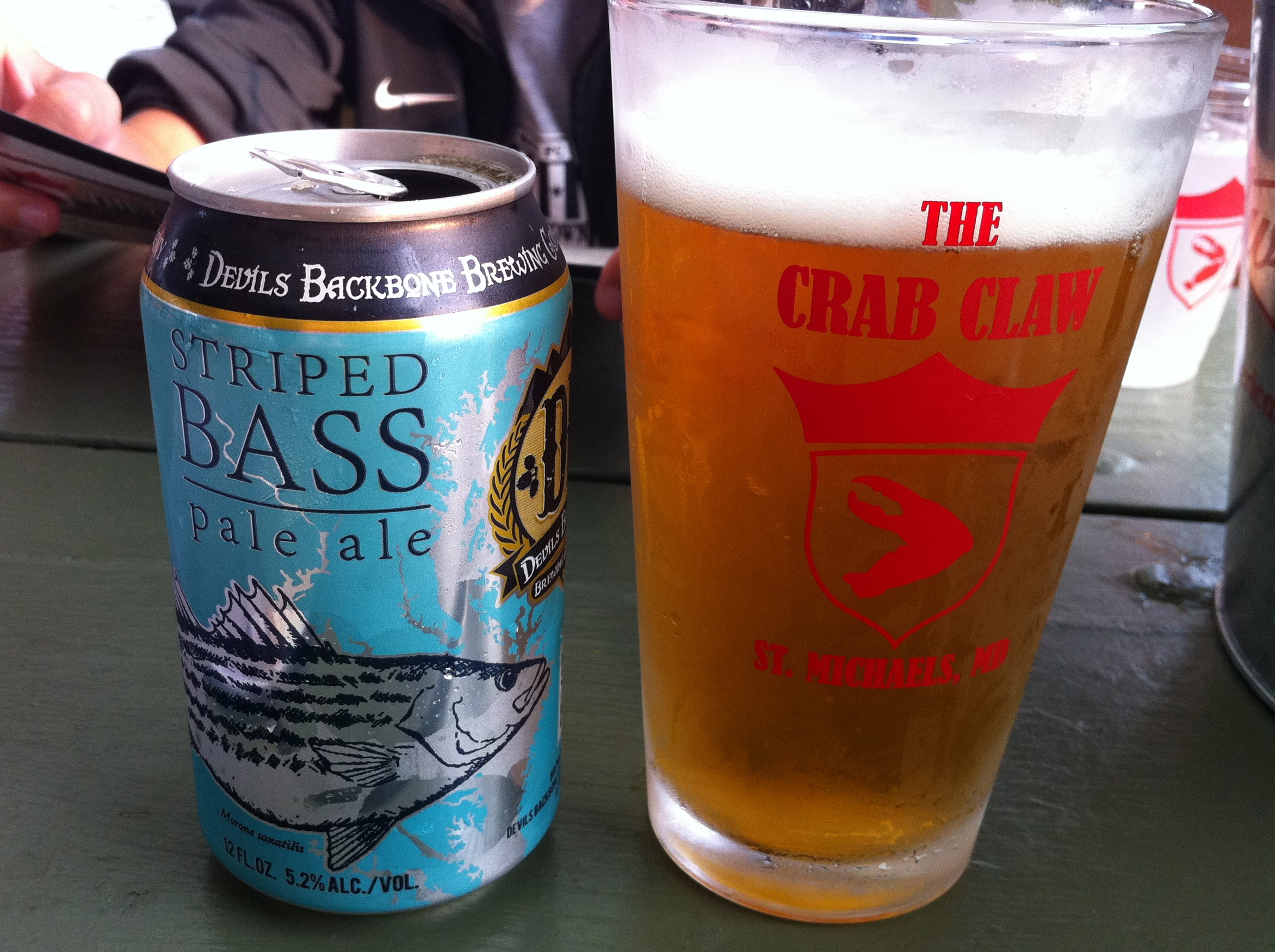
If you’re an old Block Island hand, you know Ballard’s is lobster. Welcome to Ballard’s mid-Atlantic cousin, The Crab Claw. They cover your table with heavy paper, then pile your steamed seasoned crabs in front of you along with a wooden mallet and a roll of paper towels. I also had some oysters on the half shell and this apropos of everything ale.

IMG_1548

~

When he’s not catching fish, he’s piloting the boat. Cam at the helm of the Promotion, under the guidance of Rear Admiral George Ellis (Ret.), Annapolis Class of 1945, known to us simply as Uncle George.

IMG_1572


Currentseams Q&A: Multi-fly striper rigs

Q: Just wondering how you rig to balance strength on the dropper and still allow movement in the fly?  Blood knot with a long tag?  Or surgeons knot with a long tag towards the tippet end? What do you think your hook-up ratio is for the front fly versus the trailing dropper?

A: I think you’re referring to a tandem rig; when I fish multiple flies for stripers, it’s usually a team of three. I build all my multi-fly teams with 20, 25, or 30# Worldwide Sportsman camo mono. The mono size depends on where I’m fishing and what flies I’m using. For example, crystal clear water or small flies would have me leaning toward 20. If I’m feeling lazy, I’ll use a triple surgeon’s knot to form the droppers. If I suspect larger fish may be in the mix, I’ll use a double uni knot. I had a “bad” experience many years ago with a school of high 30s bass — if I hooked two, the bottom fish would pull the triple surgeon’s knot right out from the top dropper. Now, if I’m targeting larger stripers, I go with a single fly.

If I am fishing multiple baits ( i.e. grass shrimp, peanut bunker, silverside) the fly that gets eaten most is usually the one that most closely matches the naturals the fish are feeding on, regardless of position. One night a small peanut bunker fly saved my bacon. It happened to be the middle dropper. It still worked when I re-rigged with a single fly.

If I know what bait is present, I’ll hedge my bets. This June I fished two small grass shrimp droppers with a small clam worm on point. The water was infested with grass shrimp. 3/4s of the bass I caught came on the shrimp patterns.

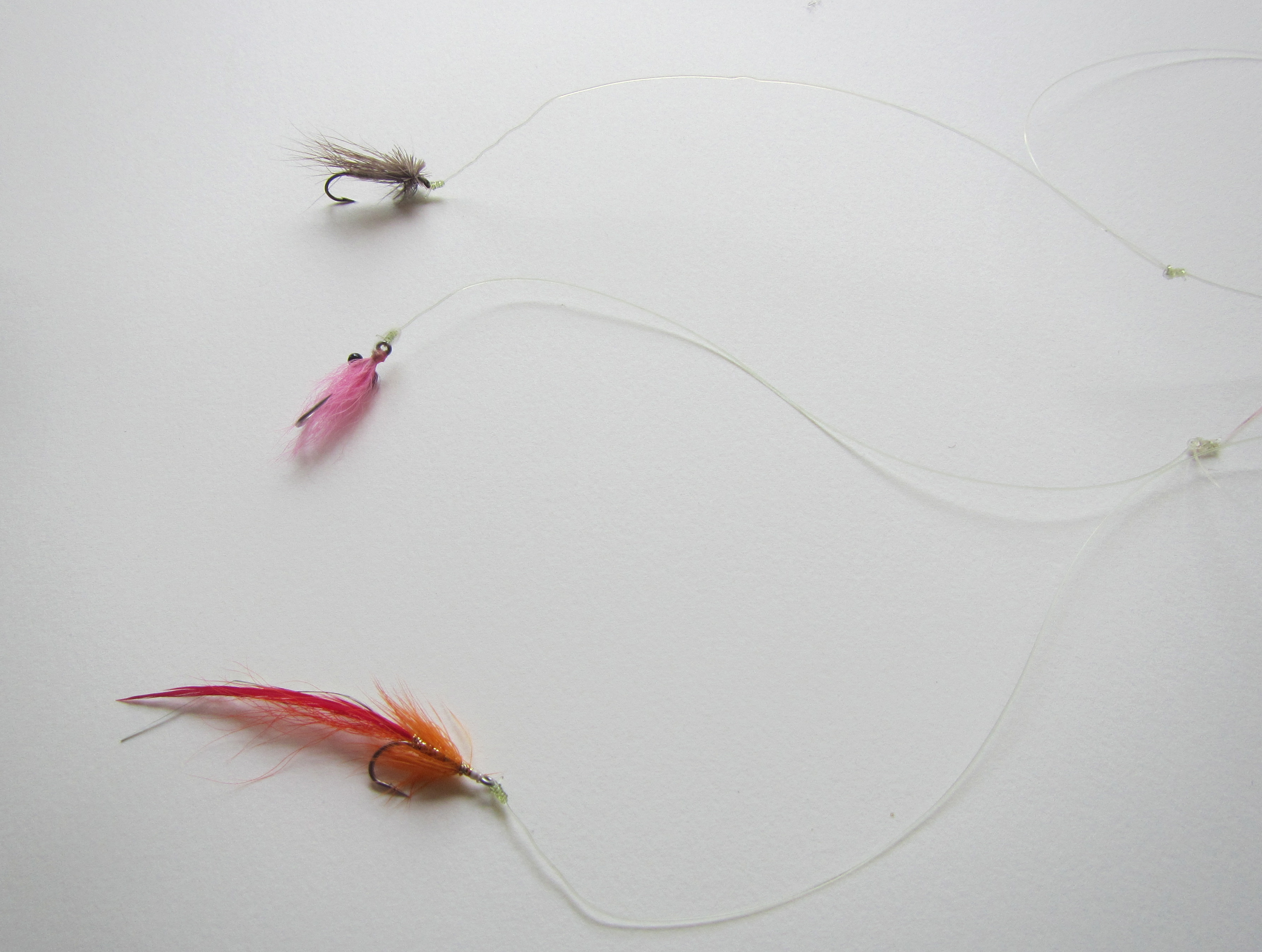
My three-fly team from early June 2014, top to bottom: Grease Liner variant, pink Crazy Charlie, Orange Ruthless. The bass liked all three flies. These tags are about 5-6″ long.

Striper ShrimpDropper Rig

In early July, small sand eels were on the menu. I rigged a dropper system of two sparse sand eels suspended between a corkie and a Gurgler. This setup was fished in barely any current at a dead drift. Even though the bass were keyed on the sand eels, I still took one on the Gurgler (the point fly) while it was just sitting there.

This Golden Knight is tied on a small freshwater hook, but on an Atlantic salmon hook, it’s the kind of fly that I like to have when I’m fishing multiple sand eel patterns.

Sparse Golden Knight

Introducing Currentseams Q&A

I get a asked lot of questions about fly fishing: from clients on the river, people in forums, club members I speak to, followers though email, etc. I’m happy to answer them, and flattered that someone thinks I might be able to help. In the spirit of help, I’d like to introduce Currentseams Q&A. When I get a question that I think might have broad appeal, I’ll post it and my answer here.

We’ll kick things off with a striper question.

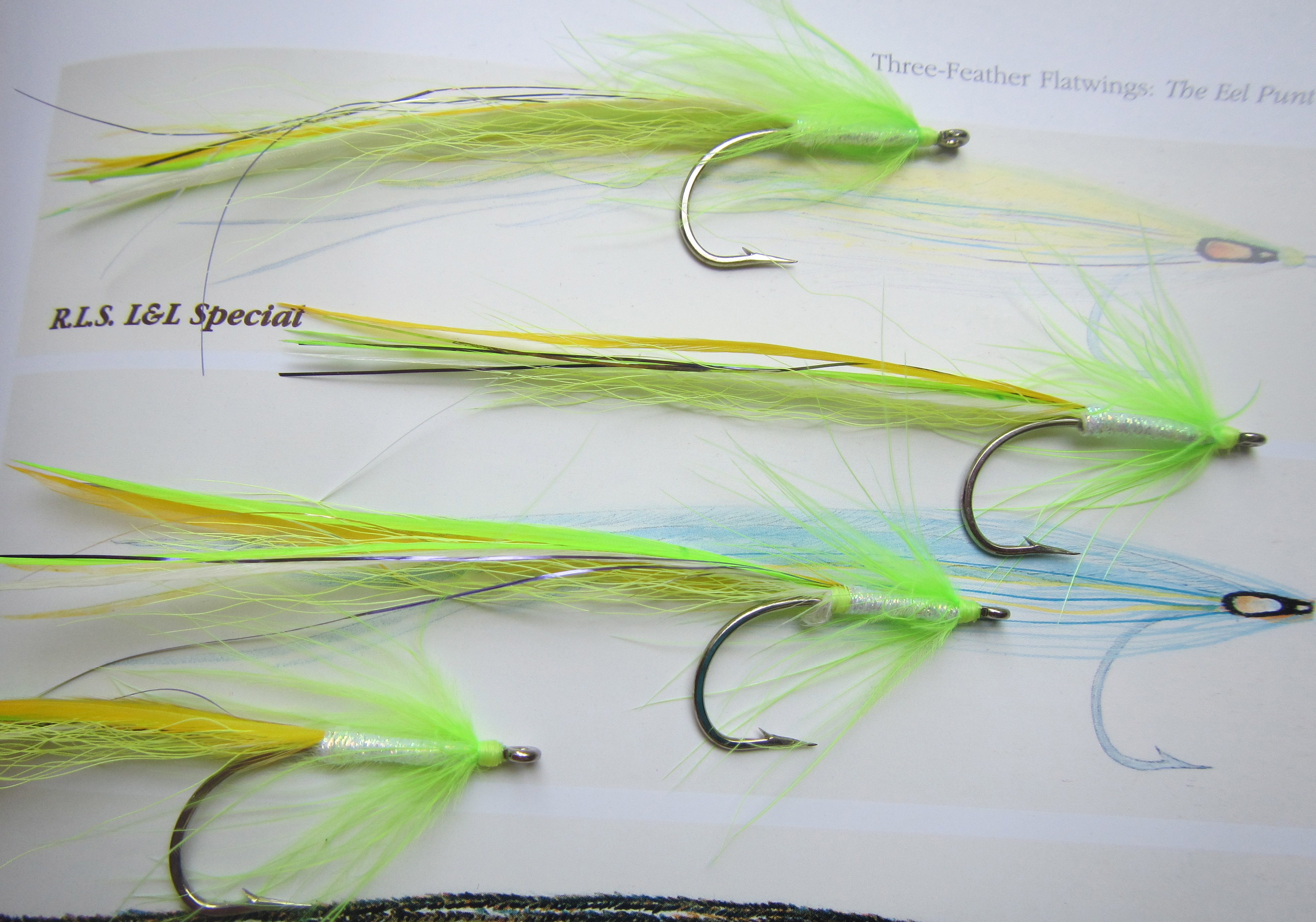
Q: I finally will be getting to fish salt a few mornings next week up in Maine.  It’s an area I’ve fished a fair bit, but most often, using fairly substantial 5-8” flies – like the Grocery Fly (a harbor Pollack imitation), bigish deceivers and clousers and my favorite, a big Ray’s Fly.  How big?  6-8” on a 2-3/0 gami hook. That said, normally I’ve gone out a few times and have some hands on “data”… this year… no luck.  So, my “research” has been scanning surf talk threads in the maine/nh forum… which results in what looks like a likely ticket right now – 3-3.5” sand eels. So, I humbly ask…  Big Eelies and variants or small bucktails/deceivers, or even small “candy” like flies? If you’re open to it, I’d love to hear your thoughts on solid flies in smallish sizes. Point blank, for some reason in the surf I have a brain block on tossing little stuff… It’s a big ocean man, how will they see it?

A: Stripers are not humans. What you or I might find hard to see can be a billboard to a striper. I couldn’t possibly count how many striped bass I’ve caught on 1-2″ long grass shrimp flies (in murky water) or sparse (30 bucktail hairs and couple strands of flash) sand eels tied on #8 hooks. Bass also eat things like crab larva and isopods that are a fraction of an inch long. They find them just like you’re able to find M&Ms. The Big Eelie is a good bet, as is anything that is sparse and thin and matches the profile. Try Eelies: two thin saddle hackles over 30 fine bucktail hairs and a braid body. 2-3″ long. Maybe a couple stands flash. Small Ray’s Flies to match the bait. Play around with colors: the stripers will always tell you what they like. Ray Bondorew has a small sand eel fly made of marabou. Simple. No eyes. And effective. I fished hard/epoxy/tube bodied sand eel flies for years. I caught fish on all of them. But they all seemed to me like they were trying too hard to be an exact replica of the bait, right down to the detailed eyes. I haven’t fished a sand eel fly with eyes in years. Impressionism is more my style and energy, and I like to fish flies that don’t give the bass credit for being anything other than the primitive animal they are. (Thanks to Bill McMillan for that last line.)Have fun, experiment, and fish with confidence.

Here’s a sparse sand eel I call the Golden Knight. Two-and-a-half inches long, 30 fine bucktail hairs, a few strands of blue flashabou and black Krystal flash. This one is tied on a hook for small streams; for stripers, I use a TMC 7999 Atlantic salmon hook. This is a very effective fly to imitate small sand eels; I like to fish it as a team of flies near the surface, suspended between a corkie and a floating fly like a Gurgler.

Sparse Golden Knight

L&L Special Big Eelies. No matter what colors I tie the Big Eelie in, stripers love it.

L&LBIg Eelie

Things you can catch on sparse sand eel flies. This girl is nearly 40 inches long. Look at that tummy spilling over my right hand! Also dig the Jimi Hendrix guitar-on-fire psychedelic halo. The bite was incendiary that night.

900x900px-LL-8da1a41d_38incher-1