The Everglades, Part 4: Bill and Dad Ride Again!

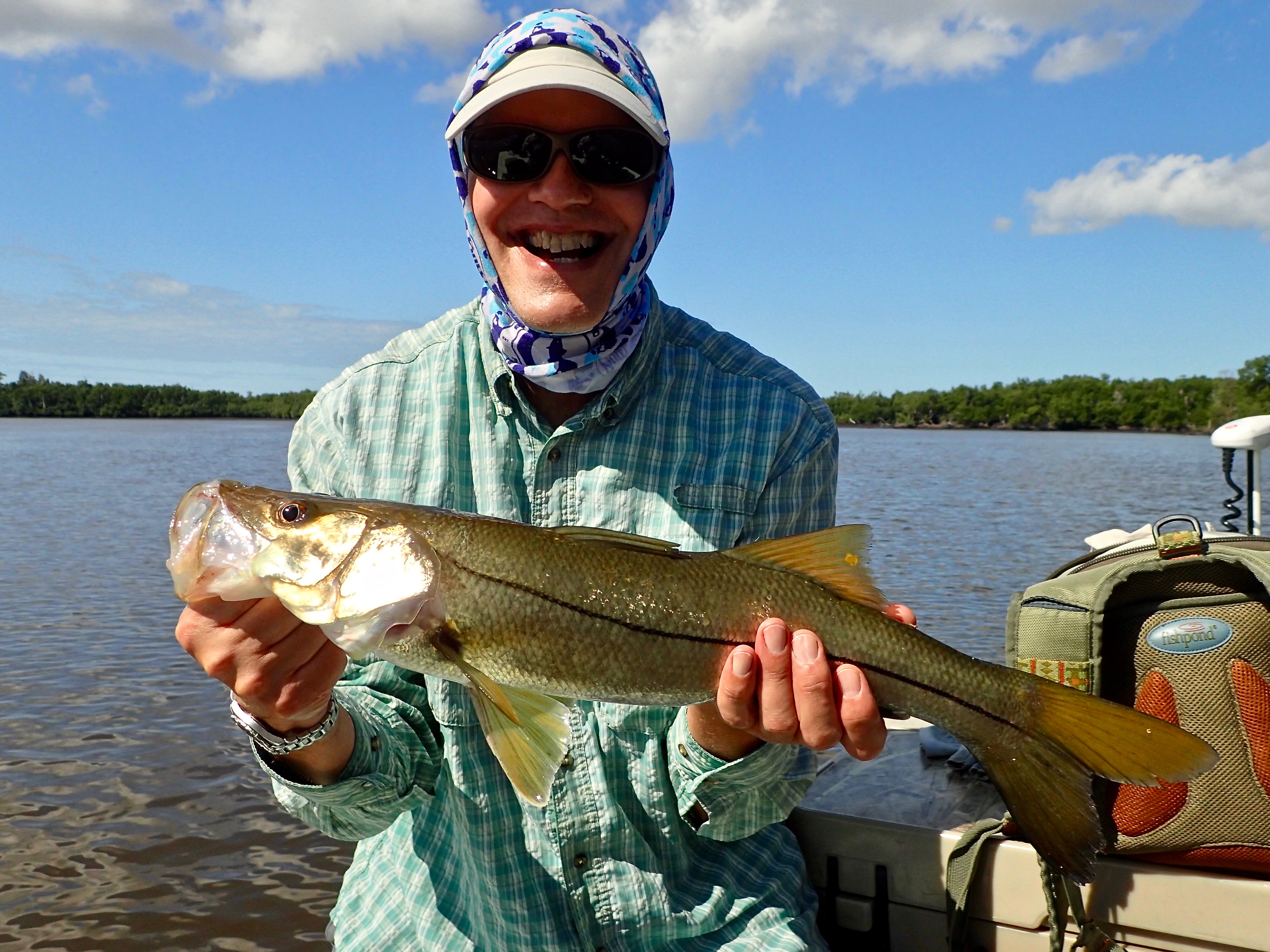
Before this trip, I’d had only one Everglades fishing experience. That was four years ago, and it was a single day excursion with my oldest son, Bill, who was graduating from law school. Our target on that May day was snook and tarpon, but I never even got a taste of a tug. Sure, the jacks and ladyfish and sea trout were fun, but I was disappointed. The highlight of the day was a fine snook Bill grabbed out of a shallow tidal flat.

And so it came to pass that Bill and I were heading out again. I’d already gotten my snook, and then some, and had an all-too-brief encounter with a tarpon, so in a sense this was a gravy day for me. Bill was getting married in three days, and at the very least we’d soak up some sunshine and enjoy some cigars.

Wednesday turned out to be the warmest of the three days, but there was still an early morning chill that was amplified by the boat slicing through the pre-dawn canals. I wore fleece pants all three days — I’m generally always inclined to be cold — but later on this day I almost broke the shorts seal. I knew what was coming in a couple weeks, and I kept reminding myself that regardless of the action, this wasn’t steelheading — and I should enjoy the blessing of actually being able to feel my toes and fingers.
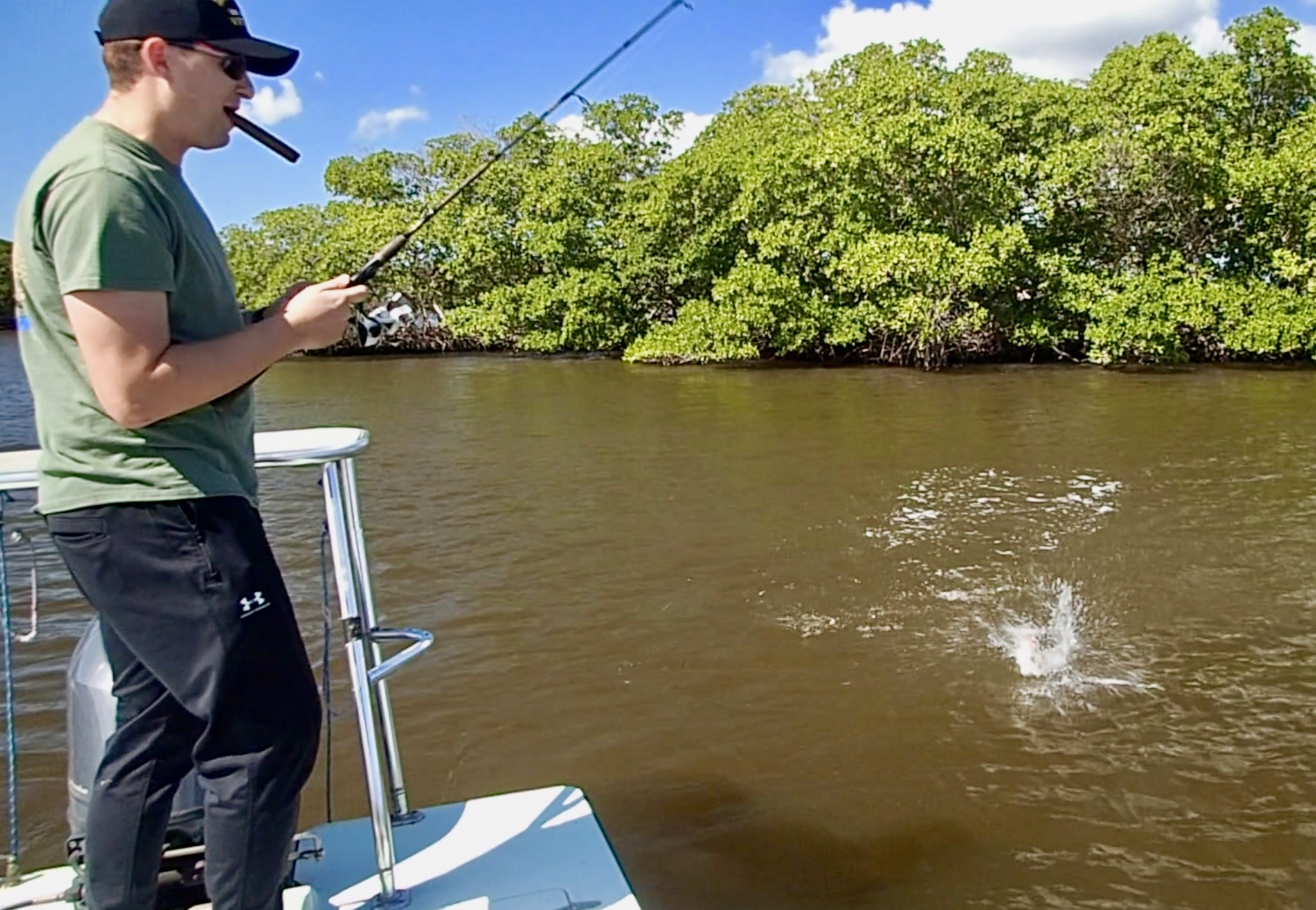
A left-handed fly caster on the bow and a right-handed spin guy on the stern makes it easy to do double duty. However, as we drifted past this island, I wanted to get some footage of my Marine doing battle. Bill found a pod of sea trout and had at them. These are beautiful fish, and they can be highly aggressive with their follows and takes. We liked this spot so much that we asked Mark to do another pass around. we never saw another boat until the very end of the day.
We made a run to where the Everglades dumps into the Gulf, and I loved this mark: current, loads of structure, and all kinds of birds and mammals and reptiles to eyeball. We actually fished hundreds of yards of shoreline. By now, I felt like my presentations and hook sets had come light years from my first trip. As we drifted past a downed tree within a pocket channel, I thought I saw a shadow. One cast, a couple strips, snook on! A decent fish for sure, but sight casting him in lightly stained water made me feel on top of my game. Bill and I each took multiple smaller snook at this mark. Of course, just when you think you’re all that, a baby tarpon in a cove near a creek mouth will remind you that you aren’t. And so, having touched two tarpon on the trip, I am resolved to get one on my next. Like Boss Rojack said in My Favorite Year, “The fighting is rounds…this is round one”

The Peter Ross Wet Fly

The next time you fish the Peter Ross, be grateful that his name was not Aloysius Karbuncle. The Peter Ross is a traditional Loch style fly that dates back to the late 19th century. Ross based his pattern on the Teal and Red, another stillwater fly.

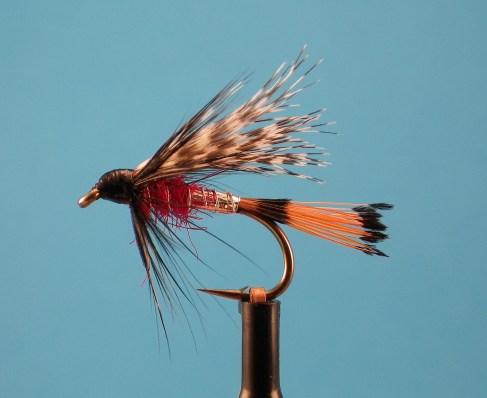
This fly is also a popular sea trout pattern, and you can easily see why. I like the contrast of the red, the black, and the dramatic barring of the teal. With its silver body, I’m thinking small baitfish or fry. Perhaps even something shrimpy. Something that looks alive and good to eat. I’ve already used it for steelhead, and I’m going to try it as the point fly on a team of three wets this spring.

The Peter Ross
Image,

Hook: 8-16
 (this is an Orvis 1641 size 10)
Thread: Black
Tail: Golden pheasant tippets
Body: Rear half silver wire, front half red angora goat
Rib: Fine silver tinsel
Hackle: Black hen
Wing: Teal flank

Tying notes: When you’re tying a small wet that calls for a body of “half this, half that,” it’s easy to mess up calculating how much area you need on the shank for each section. (Ask me how I know). You end up with a body that’s two-thirds one and one-third the other. Remember to take the head of the fly into consideration. Then, divide the remaining space between where you think the head will end and the end of the shank. There are many ways to tie in waterfowl wings. Some like to create an effect like a quill wing. Others like to fold the wing several times on top of itself, dull side in. Another way, the one I used here, is to tie the wing in small folded sections. For this size fly, I used three sections of teal flank about ¼ to 3/8 inch wide, folded them once, dull side in, and tied them on top of each other.