Farmington River Report 6/10 & 6/11/24: Foul language and frustration, then a wet and dry fly high

I fished the lower river Monday evening. The weather was vastly different than today’s; it was overcast and downright chilly for June. I swung wets for a couple hours, and the action was disappointing. Three trout on wets late afternoon this time of year ain’t exactly lighting it up. Part of that had to do with a sub-par hatch and very little visible feeding activity. Then, there was the cursing incident. Another angler thought I was bogarting his water; instead of talking to me about it, I was treated to a torrent of f-bombs and called various other unpleasant names that use slang to describe parts of the human body. Even though I thought he was being unreasonable (given the size and popularity of the pool) I apologized and backed away — and still, the venom and vitriol rain down upon me. Here’s the punch line: before I entered the water, I’d spent a few minutes asking where he was going to be fishing (he had been sitting on a log, taking a break), talking about flies, and I’d even gave him one of my favorite patterns. No good deed, etc.

To top it off, the fishing mostly stunk. I fooled a good number of fish on dries, and came away with no purchase on the hook set. I did eventually catch fish, but it wasn’t the lights out feeding orgy I had hoped for. Observed: midges, small caddis, a few sulphurs, a couple bigger Light Cahills.

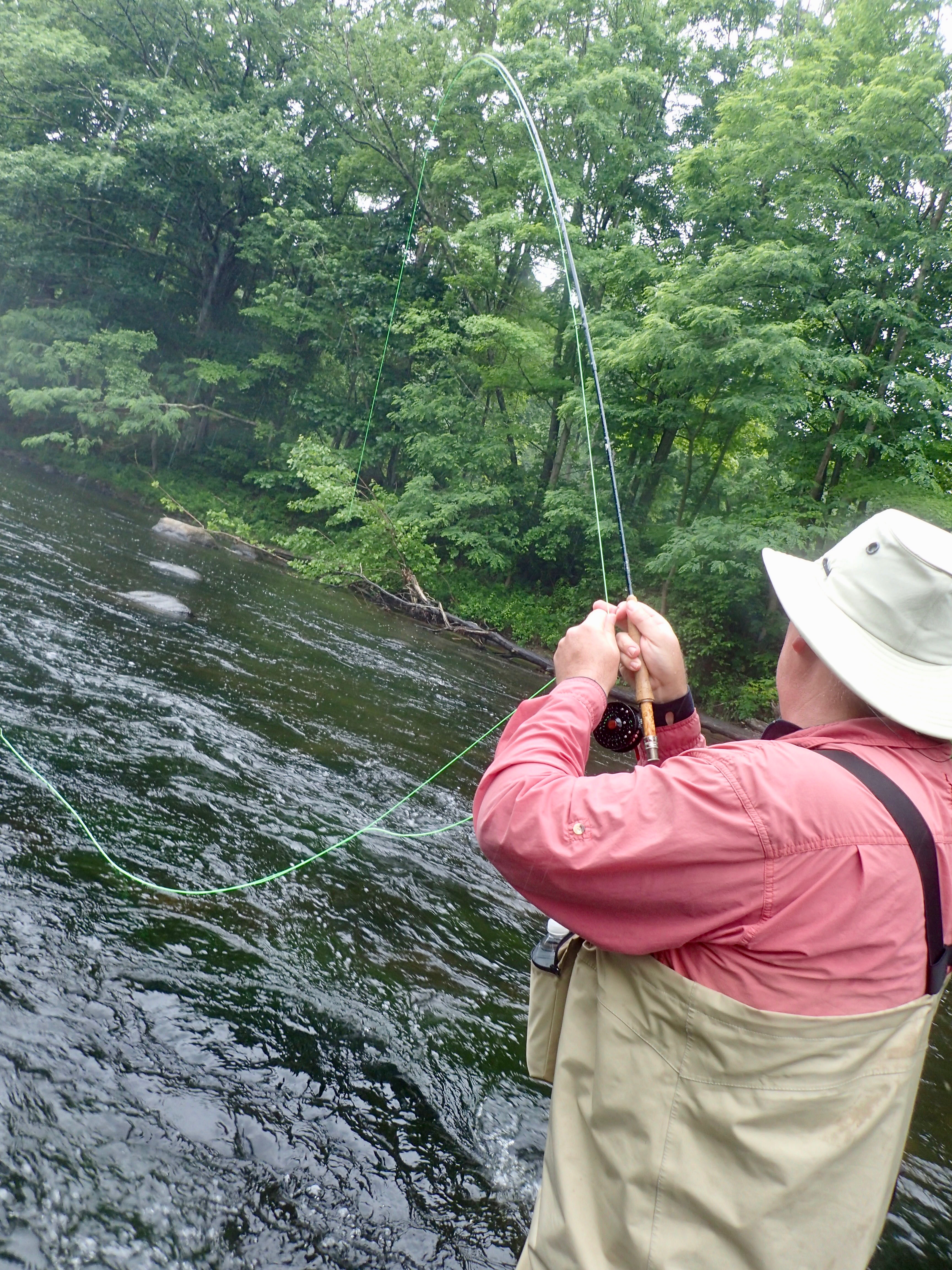
But, every day is different, and Tuesday serves as the proof. I guided Brian from 1pm to 5pm, and he basically slayed them. We did our streamside classroom — this was a wet fly lesson — then we got into the water and began catching trout. The run we fished in the PTMA had a few risers, but nothing really consistent. Still, he got two in the hoop before we moved on to the lower river.

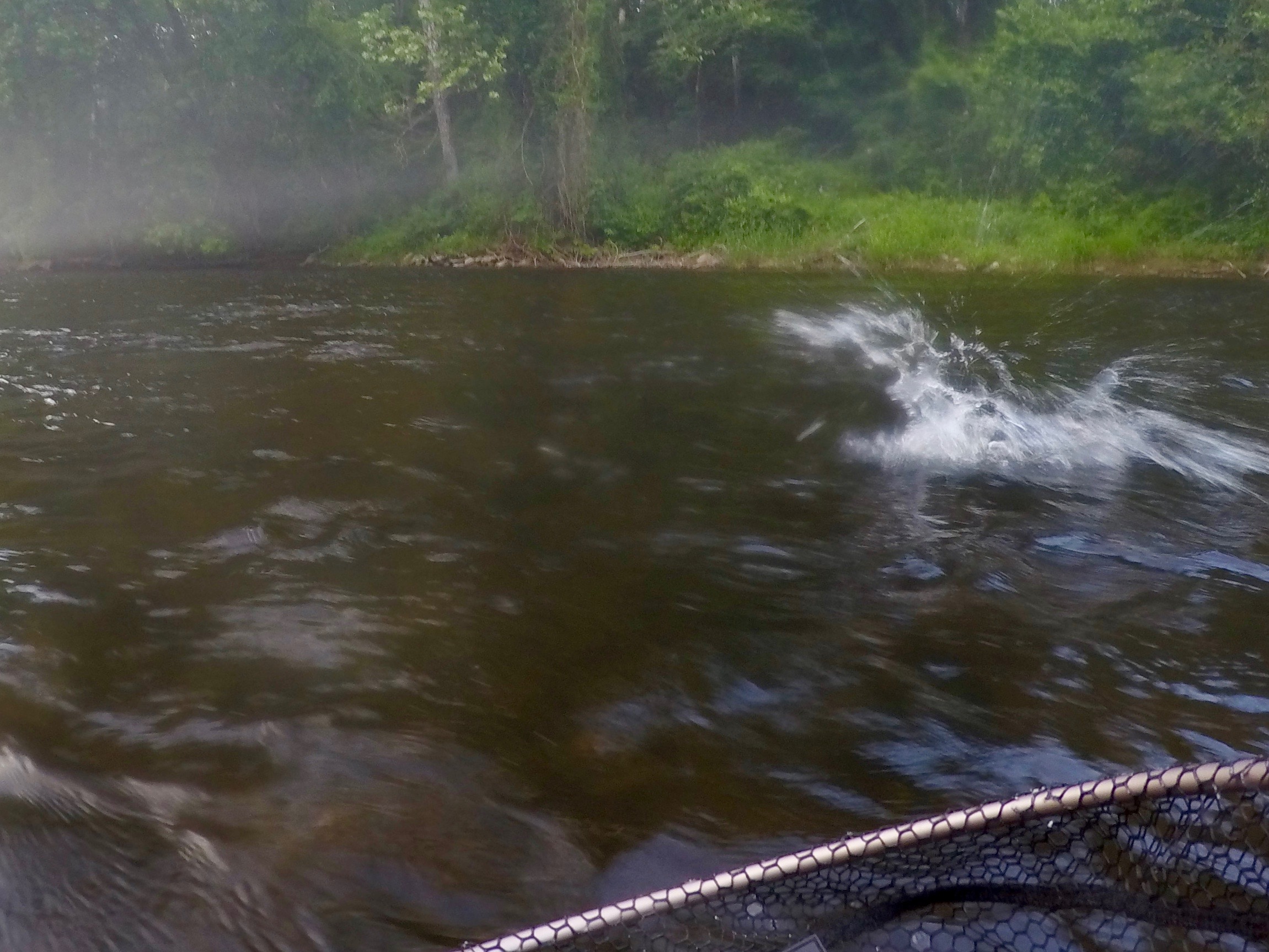
The pool we fished was a dream scenario for a wet fly lesson. You instruct the client; the client listens and executes, and the trout reward his efforts by jumping on with gusto. I don’t know how many trout we caught, but they smashed every fly on our team of three (sz 14 Squirrel and Ginger, sz 14 tan LF Diving Caddis, sz 12 BHSHPT multiple times. The rainbows offered tremendous sport; several of them performed cartwheels and aerials that would do any steelhead proud. Brian did a fantastic job of casting, mending, presenting, and covering water. Yet another Dangerous Wet Fly Machine has been created!
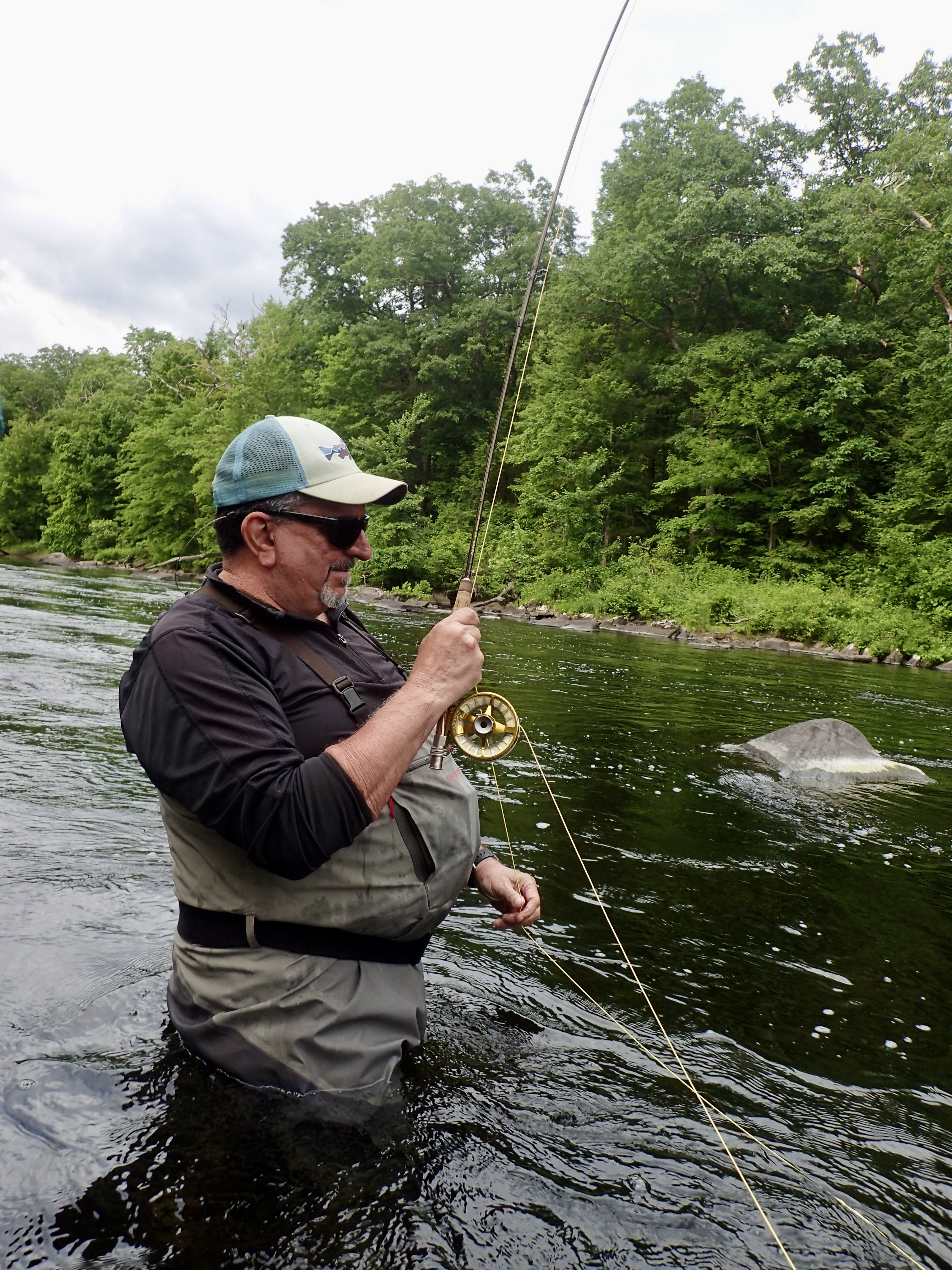
Hook. Play. Land. Repeat. Brian crushed them, and I was particularly impressed with how fast he landed his fish. Get ’em in, get ’em off — that’s the way to do it when you’re playing the catch-and-release game. Well done, Brian!

After our lesson, I was feeling ambivalent about fishing, but I had plans to meet “Summer on the Farmington” film director Matthew Vinick, so I headed up to the PTMA. I found him in a snotty boulder field, and while my plan was to start by swinging wets, there was no one(!) in one of the most popular dry fly pools on the river. So I jumped on that.

Within 15 minutes, there were five other anglers in the run. Funny thing! We all managed to share the water (and we were all significantly closer together than I was to the Monday Night Curser) without anyone getting upset.

Even though I was the first in the pool, I made the wrong choice of real estate. Has this ever happened to you? You pick your water and the trout are rising above you, and below you, but not in front of you. I did catch a few fish on The Usual sz 16 and the Magic Fly size 16, but when the gentleman below me left around 7:45 pm, I eagerly moved into his slot. And that was the right call, because there were far more active feeders in that area. The trout were taking sulphur emergers and the occasional straggling sulphur dun, and on this night it was just like the early June Farmington River dry fly playbook said it would be: match the hatch in size and color, make a good drift over a feeding lane, and the trout will eat the fly. I have no idea how many eats I had, but it was a lot.

At 8:15 I switched over to a sz 16 Light Cahill Catskills style dry, and it took about 10 minutes of fading light for the trout to want to eat that fly. By 8:40 I had upped to a size 12, same fly, and it was a fish on every cast until I could no longer see the fly and the frenzy began to wane. I went 10 casts without a take, then called it.

I couldn’t remember the last time I left the river so happy.

Farmington River Report 5/30/23, or: Gary LaFontaine, you magnificent bastard, I read your book!

Fans of the movie Patton will instantly get the reference. In this case, I’m not talking about military literature, but rather LaFontaine’s fly fishing masterwork Caddisflies, which I have been studying the last couple months with renewed vigor. We’ll get to that in a moment.

I fished last night for less than two hours, but it was almost non-stop, spectacular wet fly action from start to finish. The mark was a section of the lower river, running at 328cfs and about 60 degrees. Hatch activity was at best moderate. Observed: Vitreus size 12, Sulphur size 14-16, midges, and tan caddis size 14-16. Rise activity was minimal. I fished a three fly team of a Magic Fly (heavy hook) size 14 top dropper, a LaFontaine Diving Caddis tan variant size 14 middle dropper, and a tailed Partridge and Light Cahill size 14 on point. My first three fish took one of each. From about 7:15-8:30, I have no idea how many trout I hooked. It was one of those nights where if I made three drifts without a tug, I wondered if maybe it was over. (The the answer was always no, it isn’t.) Here is the magic of the evening: this was the first time I fished the Diving Caddis, and of the over two dozen trout I landed, the vast majority came on the caddis.

Also noteworthy: there were very few visible rises, and not a ton of bugs. But clearly, there was a significant feeding event taking place subsurface — and the featured entree was egg-laying tan caddis.

The idea behind the Diving Caddis is to emulate a female egg layer, encased in a silvery bubble of air. This specific pattern is not in Caddisflies, but obviously the trout appreciated my creativity. My variant was tied with tan thread on a size 14 hook. Body was tan Lifecycle Caddis with a small gold wire rib. Underwing was brown partridge. Overwing 30 fibers of tan sparkle yarn. One turn brown rooster hackle tied hanging back to ward the bend.
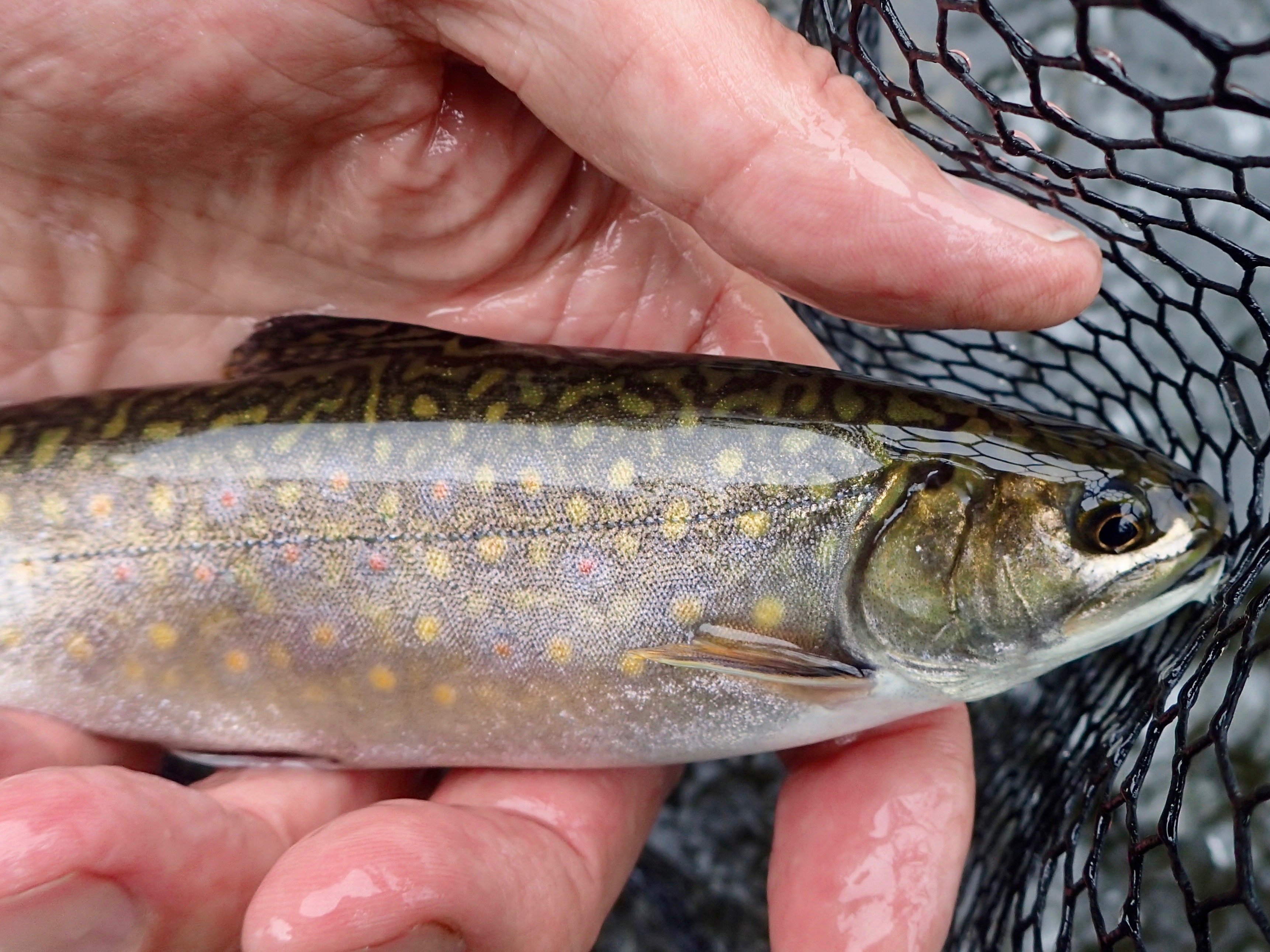
I had the Farmington hat trick. Most of the fish were stocked rainbows, but there was also a hefty stocked brook trout, along with a bonus 6″ wild brookie. I also had four wild browns, which was gratifying since this section of river no doubt got torched during last summer’s heat and drought. Love me some paddle pecs! Almost all of the takes came in swirling pocket water on the dead drift, although I did have a bunch on the dangle, too.

Farmington River Report 6/1/22: A wet fly lesson, then spectacular wet and dry fly action

I guided Dan yesterday from noon-4pm. Dan has attended several of my wet fly tying classes and seminars, and now it was time to put those lessons into practice. We began in the Permanent TMA; there was no visible hatch activity, but we managed a swing and a miss before we connected with a gorgeous wild brown on the top dropper, a Squirrel and Ginger, in some faster water. (The current flow, 175cfs, is on the bottom end of ideal for wet flies. You’ve got a lot of fish looking up, but unless there is something going on subsurface, you’ll find your best action in the faster water, riffles, dump-ins, and pockets.) Next up was a mark below the PTMA that’s usually good for a fish or two. Sure enough, Dan scored a nicely colored brook trout on the point fly, a Hackled March Brown. We finished at another mark upstream, but couldn’t find any trout willing to jump on. It was kind of a funky afternoon, with a cold front coming through the night before, rain showers, and very little bug activity. So Dan did well with two in the hoop — great job, Dan! You’re on your way.

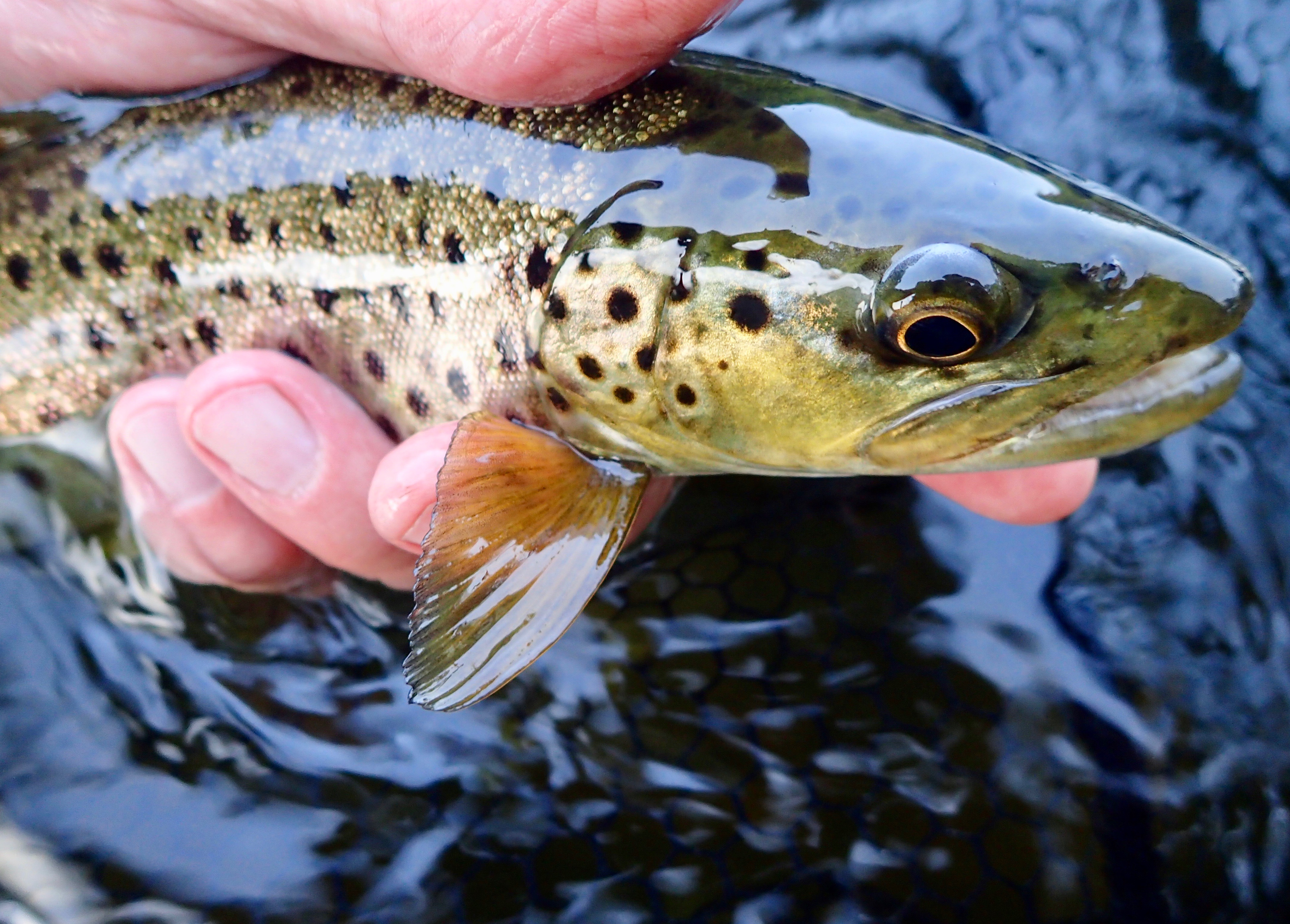
This gorgeous creature was Dan’s first Farmington River trout on a wet fly. There’s a certain sort of poetry in catching a brown that was never seen the inside of a hatchery tank or a stocking truck. What a jewel!

After our session, I decided to do a little experimenting. I was curious about the mark below the PTMA Dan and I hit earlier, so I started there with a team of three wet flies: Squirrel and Ginger on top, Partridge and Light Cahill middle, Hackled March Brown on point. This was about 4:30pm. It was slow. I managed a few bumps from smaller fish and two bigger brothers to net. When I left, creamy mayflies were just starting to show.

I headed a few miles downstream to walk a snotty run. It was just OK; I covered water, kept moving, and banged up a few fish. My wade brought me to an oddly-structured riffle that dumps into deeper water. It’s now about 5:30pm. Still no bugs in the air, but I began catching fish on wet flies in earnest. I wasn’t crazy good, but I was steadily connecting with fish with no bugs in the air and no visible risers. This is usually an indication that there is something good coming your way, namely a strong hatch. Now I could see creamy mayflies and sulphurs and an occasional March Brown. The surface began to simmer. I don’t often change flies on my wet fly team, but on a hunch I switched out the Hackled March Brown for a Pale Water Wingless, AKA The Magic Fly. The trout immediately demonstrated their approval.

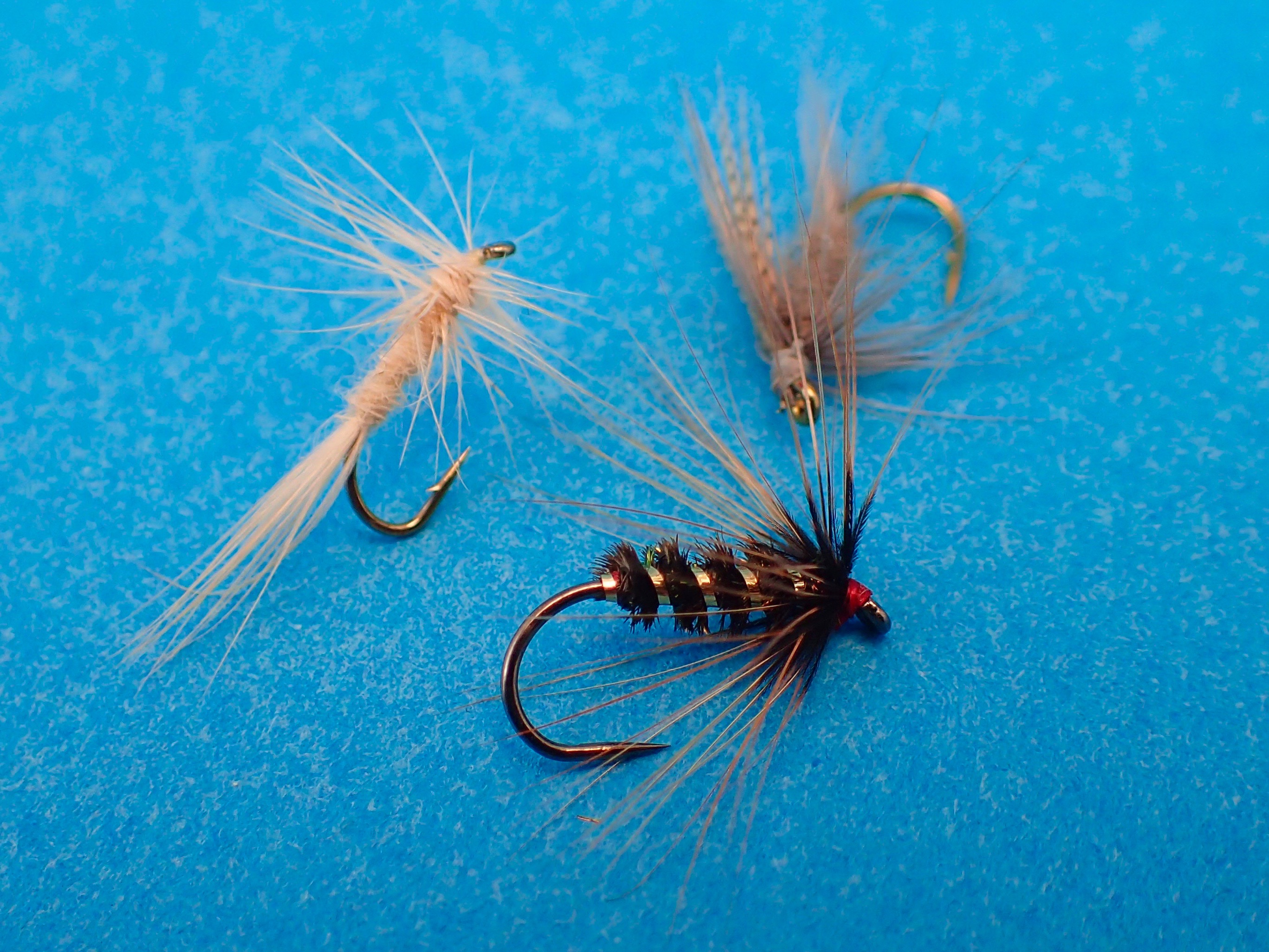
My Pale Watery Wingless variant, upper left. It’s a wet. It’s a dry. It’s the Magic Fly. Fish it and you’ll see why.

I have no idea how many fish I landed before 7:15. (There’s a lull in these evening hatches, and it usually comes in the 7pm-7:30 time frame. It lasts about a half hour, and then the party resumes.) What intrigued me the most was that while I was fishing in a steady rain, the wet fly takes near the surface remained unaffected by the barrage of droplets. I doubt that if I was dry fly fishing I’d have had the same success.

Once you see duns being snapped off the surface, it’s time to switch to dry. So I did. The rain stopped, the hatch came back with a vengeance, and the feeding frenzy began building exponentially to its crescendo. I fished a mix of Usuals, the Magic Fly, and Catskills-style Light Cahills. All three produced multiple fish. Around 8:15 I tied into an obstreperous trout that immediately went on the reel. The way it peeled line and cartwheeled subsurface made me certain that I’d foul hooked it. Nope. It was just a pig of rainbow, powerful, spirited, and worthy of honorary steelhead status.

Fish were rising everywhere. I had two or three that were working less than a rod’s length away. There were so many bugs and so many feeders that it became a challenge to focus on a single area or trout. (I recommend you find an active feeder, observe its rhythm, and target that fish. If you go shotgun during an event like this, you can get lost in frantic shuffle.)

All good things must come to an end, and since it was long past the time when I could see my fly, I began the wade back. Of course, I fished along the way. Thwack! One more glutton nailed the Light Cahill. I lost the trout to a popped 5x tippet, no doubt compromised by a toothy mouth of gill plate.

This was the kind of night that you dream about during those dark winter days. You relish them because they don’t come along too often. I wish I were going back tonight, but duty calls on the home front. But that doesn’t mean you can’t go fishing tonight.

In fact, I think you should.

Farmington River Report 6/13/21: Wet fly doldrums, then all dry fly hell breaks loose

I fished a different section of the lower river yesterday, from late afternoon into dark. The water was clear, cool, running at 460cfs — just about right. As is my my custom, I arrived rigged for wet fly, anticipating a typical very late spring pre-hatch wet fly bonanza. ‘Twas not to be. The early evening hatch never materialized. Well, it did if you count three sulphurs and four spotty rises in 90 minutes. But I was sorely disappointed with the lack of activity. I managed a measly four bumps, and only one of them resulted in a hookup. (Then again, the prime wet fly water in the run was occupied.)

At 7:30 I re-rigged for dry fly. It took a while for things to happen, but when they did, it was fast and furious. Observed: sulphurs size 16, tiny BWOs, Isonychia size 12, dark gray stoneflies size 12, and mats of midges. I focused on the yellow stuff, and threw Magic Flies, Usuals, and Catskills Light Cahills, all of which were eaten. Noteworthy: the world’s longest refusal (drifting over a gravel bank into a drop-off, and this guy rose and shadowed the fly for a good fifteen feet, nearly taking it several times before saying no); an epic 50-foot drift where I had three(!) different trout commit to the fly with a splashy take, none of which resulted in a hookset; and a comical take where a brown blasted the fly like it was going to hurt him, which, as it turns out, it did — in his haste to dine he fouled himself in his pectoral fin.

I was fishing in some fairly technical water, which I often prefer with dry fly because of its challenges. (We’re talking longer leaders, precision mends, and tricky drift management.) I didn’t connect as many times as I would have liked to, but I did hook fish from as far away as 45 feet and a close as a rod’s length. The frenzied feeding really didn’t begin until 8:30, and when I dragged myself away at 9:15, I’d just hooked a trout on a drift I couldn’t see.

A strange but pleasant evening. The first outing with the cane pole is always a treat.

This one’s worth repeating. There comes a stage late in the hatch where trout are feeding on both duns and spinners. Then, it transitions solely to spinners. You don’t need to stress about which stage they’re eating if you’re using a Catskills style dry like this Light Cahill. Trout will eagerly take it even when they’re on spinners. Every year, some of my biggest dry fly trout come on this pattern when the only feeding tell is the gentle, subtle spinner rise ring. Pro tip: you can upsize the fly so you can see it in the gloaming.

Farmington River Report 6/2/21: Hard wet fly times

I guided Larry yesterday and we fished from 2pm-6pm within the Permanent TMA. The river was a very manageable 500cfs, with good water clarity. Angler traffic was light, so we had our pick of pools. Unfortunately, hatch activity — and especially feeding activity near the surface — was also light, and we struggled to find fish that were willing to jump on. We fished three different marks and managed only one hookup. So I had to give Larry the speech that I hate to give. It goes something like this: “You’re not doing anything wrong. Those are fish-worthy drifts. If you do these same things on another day, you will be a wet-fly fishing catching machine.” Kudos to Larry for sticking with it and maintaining a positive attitude! I’m looking forward to getting that email from him where he tells me he hit it right and it all came together. It’s going to happen.

After our session, I ventured upriver to inspect the evening rise. It was a slow wet fly experience there as well (that should make you feel better, Larry!) as I could only manage one trout from 6:30-7:30pm. Hatch activity was solid, with midges, small caddis, and sulphurs, but again the surface activity was not where I would have liked it to be. I switched to dry flies at 7:30 and fooled fish on a mix of Magic Flies, Usuals, and Light Cahill Catskills dries. My two best fish came very late in the game during the spinner fall, both on the Light Cahill, both chunky mid-teens wild browns. A fine finish to a challenging day.

There comes a point in the battle where I wonder, “Is this one of those fat stocked rainbows, or a big wild brown?” No disrespect to the rainbows, but I am highly pleased when the answer is the second choice. Here’s the last fish of the evening. I saw him sipping spinners in some frog water along the opposite shore. Both of these last two browns were hefty, spirited, and refused to come quietly to net. You know you’ve got a decent fish when it sounds and heads for the deepest part of the run. See you soon, fellas.

Farmington River Report 5/25/21: Spectacular wet fly action

After my Instagram (stevecultonflyfishing) post the other day, I wanted to see for myself. So, following the advice of my rose bushes, I headed for the lower end of the Farmington River to fish the Light Cahill hatch.

The water has come down nicely — in fact, I’d call 445cfs just about right — and it’s still plenty cold. I started off at a favorite mark around 5:30pm, and worked my way down a series of snotty riffles and pockets. The action wasn’t quite what I expected, even though I stuck a half dozen trout. There just wasn’t nearly the hatch activity I’d expected, nor were there many fish feeding near the surface. I’d started out with a Squirrel and Ginger (sz 12) as top dropper, a Starling and Herl (sz 14) in the middle, and a Partridge and Light Cahill (sz 12) on point. After no hookups on the dark middle fly, I made two command decisions: replace the Starling and Herl with a Pale Watery Wingless (sz 12) and move to a new mark.

And those two choices made all the difference. I was in the water by 7pm, and for the next 90 minutes I took trout after trout. It was one of those I-have-no-idea-how-many-fish-I caught nights. What was most interesting to me was the difference a half mile makes. The new spot had more bugs and far more active feeders. The fish were mostly stocked rainbows (and a bonus big brook trout), but I did get a few wild browns in the mix, including a hefty 16″wild thing.

If you’ve taken a wet fly lesson with me, you’ve heard me say that when you hit it right, wet flies will make you look like a fly fishing wizard. I caught every riser I cast to, save for one. I caught them on all three flies. I caught them on the mended swing, the dead drift, the dangle, and the Leisenring Lift. Folks, I hit it right, and you can, too. Wet flies, people. Wet flies.

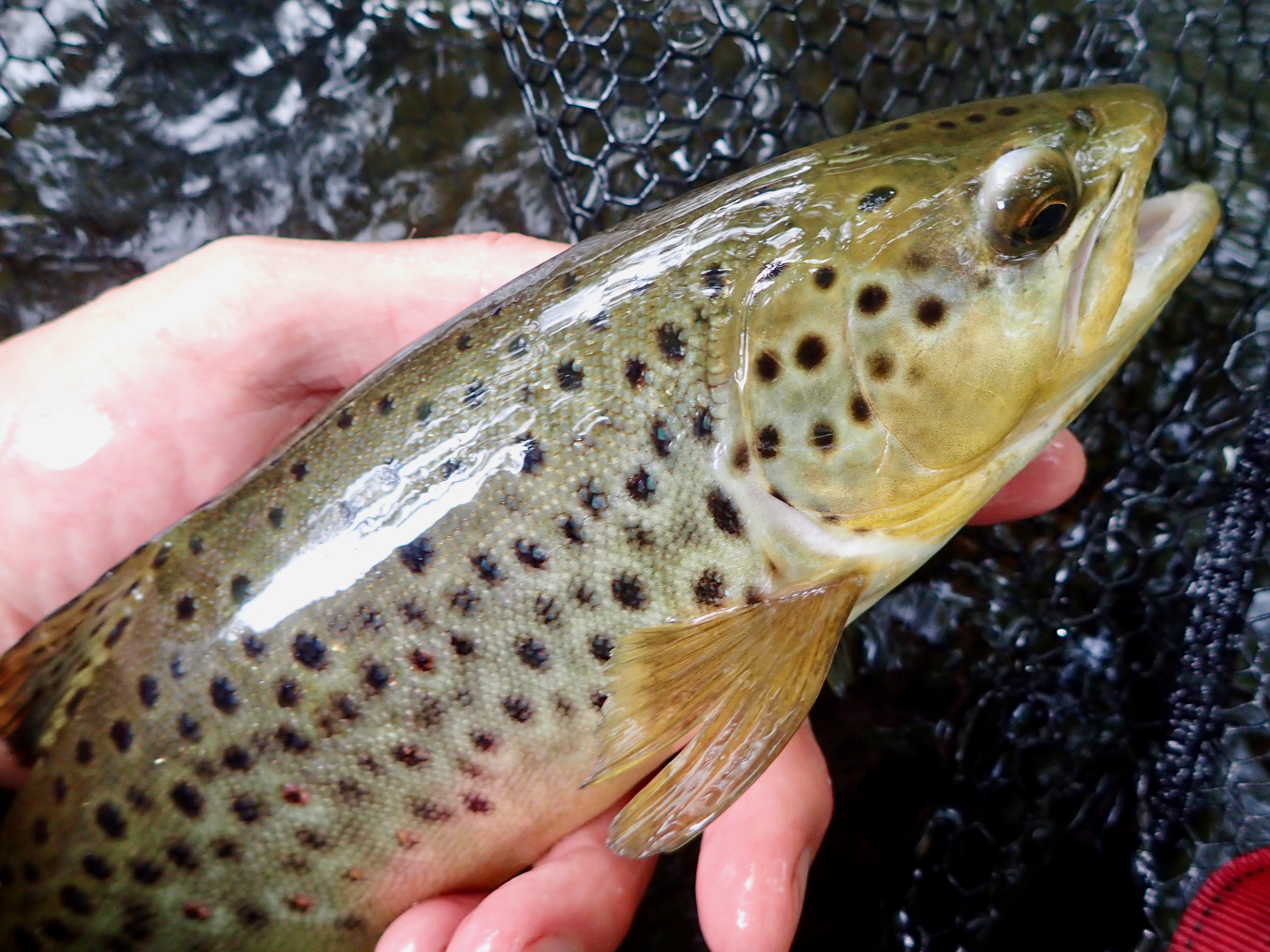
Lousy picture, nice fish. 16″ of wild Farmington brown taken on a size 12 Magic Fly on a dead drift. He was slashing at emergers at the wrinkled head of a pocket run. It took be a short while to figure out what I’d hooked — it was either one of those fat stocker rainbows or a chunky wild brown. I was glad it was Option B. This guy bulldogged and battled and generally behaved very poorly. I love him for that.

Farmington River Report 6/8/20: Our Lady of Blessed Magic Fly, or: spectacular sulphur wet and dry fly action

I fished last night from 5:45pm until 9:15pm, well past when I could no longer see my fly. I started out swinging and dead-drifting wets, sometimes prospecting, but mostly casting to active feeders. I had to work for my fish, but that was OK since some of them were larger wild browns. My rig was a size 12 Squirrel and Ginger top dropper, size 14 Partridge and Light Cahill middle dropper, and Light Cahill winged wet on point. All three patterns took fish. Hatch activity was a 7/10: caddis, sulphurs, Light Cahills, mobs of midges, and a few stray Isos. Around 7pm I switched out the winged Light Cahill for a size 14 Magic Fly after I saw a batch of larger sulphurs hatching. The fish opened their mouths in approval.

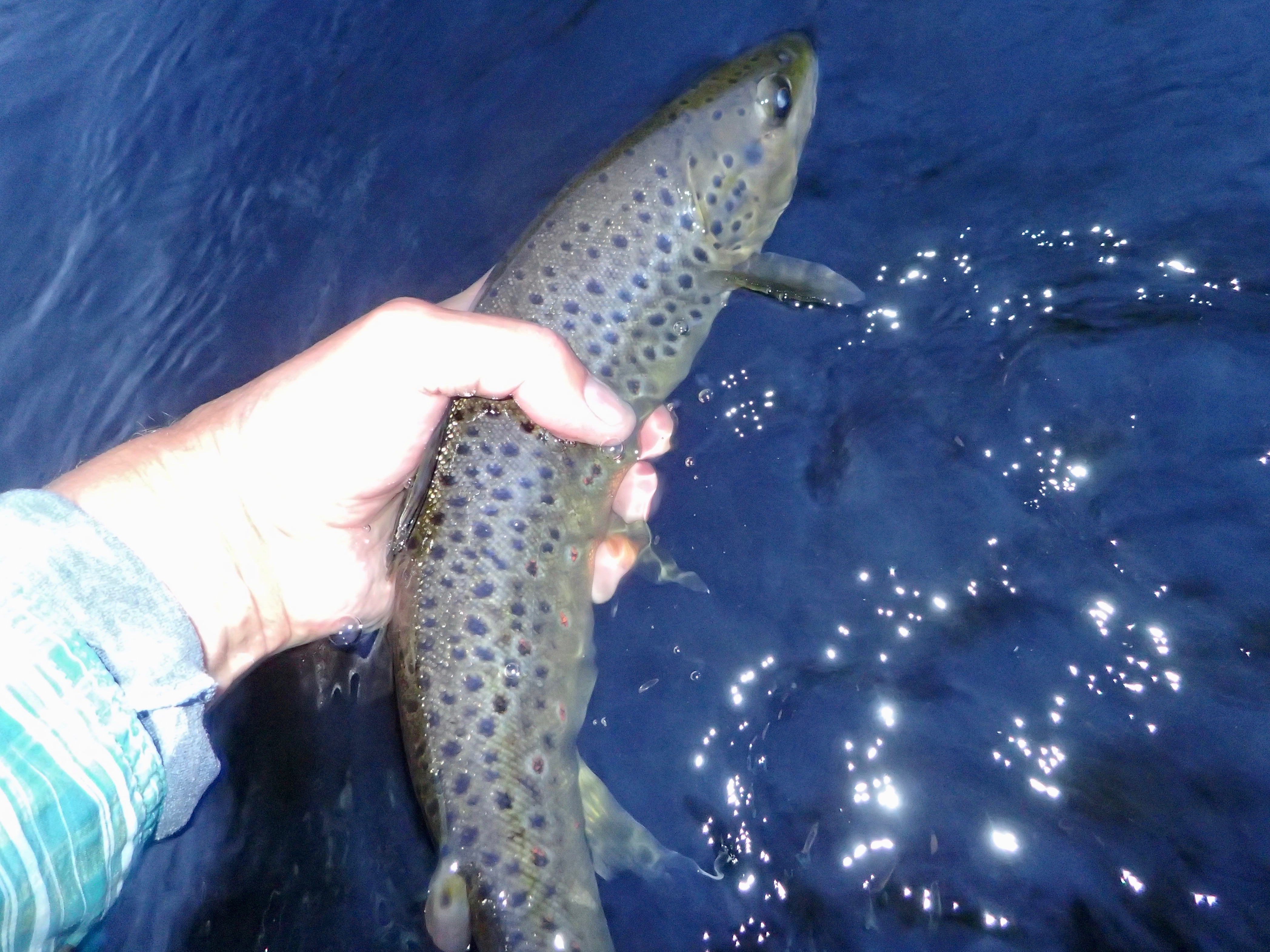
You can’t tell from the photo, but this is a high teens wild brown, taken on the Squirrel and Ginger. He was feeding in a narrow slot about a foot deep. The presentation was an oblique angle upstream cast, then dead drift. WHACK! (Editorial: I’m proud to say that on this website there are no photos of trout being thrust into camera lenses, angler arms fully extended. I know my readers are far too intelligent and sophisticated to put up with such shenanigans.)

OLYMPUS DIGITAL CAMERA

~

All the while, I was vastly outfishing the anglers around me. I mention this not as a brag point, but rather as a teaching point. Properly presented wet flies have been, and will continue to be, the best way to fool trout during the early stages of a sulphur hatch. Every other angler was fishing dry, which can work, provided you’ve got the right pattern and presentation. But when trout are on sulphur emergers, I’ll go with a team of wets every time.

However, there comes a time during every hatch where the trout begin want the topwater fly rather than the subsurface wet. So at 7:30pm I switched to surface presentations, mostly the Magic Fly (dusted with silica powder), a few drifts with creamy-colored The Usual, and finishing off with Catskills Light Cahills. Classic spectacular dry fly action: I took trout after trout until darkness enveloped me. By then I was gloriously alone. Well, not really. Just me, the trout, and about a million bugs.

Life is good with a cane rod on a sunny June evening on the Farmy. I thought it both poetic and proper that my first surface Magic Fly trout this year was a chunky mid-teens wild brown.

Farmington River Report 6/19/19: Spectacular hatches, wet, and dry fly action

Just when you thought it couldn’t get any better, it does: another off-the-charts evening session on the Farmington.

Cast three wet fly team. Hookup. Repeat. It was that kind of night. 

WetFlyTrout

I fished below the Permanent TMA from 6pm-9pm. When I arrived there were a few bugs (sulphurs sz 16, tiny creamy midges, caddis sz 16-18, and the first Isos I’ve seen) and even fewer rises, but that did not discourage me. Conditions were perfect, a magnificent collision of warm, humid air, cloud cover and water height. I tied up the same three fly wet team as yesterday: a Squirrel and Ginger top dropper, Magic Fly middle dropper, and Leisenring’s Pale Watery Dun Wingless on point. First cast, BANG, and it was virtually non-stop action for the next hour. Pow! Smack! It was an aquatic reenactment of a Batman episode. Such splashy, strong takes — these trout were obviously feeding with a vengeance.  Now, if you’ve taken my wet fly class or done a private lesson and the action has been — ahem — slow — you’ve heard me say that when the fish are feeding on emergers and you’re dialed into what they’re eating and how they’re eating it, wet flies can be the most lethal method. This was one of those times. A double-digit outing on wet flies alone.

How good is the Magic Fly? Twice last night I drifted it within a few inches of a natural. Both times the trout chose my fly.

OLYMPUS DIGITAL CAMERA~

The dry fly session now seems almost anticlimactic, mostly of my own doing. While the river was boiling around me, I was trying to entice some fish feeding in frog water from a disadvantageous position. (I was doing this on purpose as a personal challenge.)  Suffice to say the usual pattern unfolded: a lull between 7:00-7:30, building activity to 8:00pm, then at 8:30 the trout and bugs go bonkers. Every once in a while I’d treat myself to a fish feeding in the faster water. Magic Flies size 16 and Light Cahills size 14 served me well. Finally, just about when I could no longer see the fly, I made a couple lucky mends and got one of those impossible fish to take.

And so we ended on a high note.

Best fish of the night, a high teens wild hen. She clobbered the middle dropper, the Magic Fly, AKA Pale Watery wingless wet. I’ve made a big deal about fishing the Magic Fly as a dry, but do not underestimate its power as a traditional subsurface wet.

OLYMPUS DIGITAL CAMERA


Farmington River Report 6/17 & 6/18: You should be here. Now.

To say that the Farmington is fishing well would be an understatement. Three outings in the last two days, all of them highly productive. Here’s how it went down.

Monday 6/17/19 6pm-9pm: The 2019 debut of my beloved dad’s cane rod. I always forget how much you need to s-l-o-w d-o-w-n the casting stroke with that rod. Rhythm rediscovered, I quickly got lost in the lyrical motions. Fished below the Permanent TMA, and initial hatch and rise activity was about a 3 out of 10 (Sulphurs size 16, Light Cahills size 12-14, caddis size 16, creamy midges). Swung a single creamy wet for an hour and had two customers. The evening hatch on this river is so predictable: sometime between 6:30 and 7:30 there’s a window of null activity. It can last anywhere from 15 minutes to an hour. From 7:30 to just past 9pm, the river simmered with rises. I switched over to dries (size 16 Magic Fly, size 16 Usual, size 12-14 Light Cahill) and took trout after trout, mostly rainbows and brookies.

A whole lotta shakin’ going on, as the smoke from an EP Carillo New Wave Connecticut torpedo blends in nicely with the fog.

DCIM100GOPROG0013334.

~

Tuesday 6/18/19 11am-3pm: Andrew wanted to learn the ancient, traditional, devastating art of the swung wet fly. Soft hackles and three-fly team thus rendered, we hit two spots, one in the Permanent TMA and one below. Rain, fog, drizzle and downpour could not dampen our mood. Hatch activity was low in the first mark, but we nonetheless stuck several fish. The second spot was money, with several lanes of active feeders (the birds were busy, too) that kept us occupied for nearly two hours. We fished a Squirrel and Ginger top dropper, a Grey Watchet in the middle, and depending on water depth and speed, a SHBHPT, Old Blue Dun, or March Brown caddis on point. The fish found favor with every pattern, which is always gratifying. Andrew did a great job navigating some difficult water, mending across current seams, and waiting for the fish to hook itself. Time (wet) flies when you’re having fun.

How to spot a wet fly angler pre-evening hatch. Note bent rod and tight line. Frontal view would reveal a large smile. Good work, Andrew!

OLYMPUS DIGITAL CAMERA

~

Tuesday 6/18/19 4:15-5:45pm: My turn to play. Walked a 200 yard run in the Permanent TMA that I had not fished in a long time. OUTSTANDING sulphur hatch: duns in the air, birds working, sloppy splashes from trout gorging on emergers. In 90 minutes I stuck double digit trout, a mix of wild, stocked, and Survivor Strain browns with a bonus rainbow in the mix. This was a classic example of how effective the wet fly can be during a hatch. Thus sated, I headed home after taking a final victory puff on a My Father Le Bijou Torpedo.

I had action on the Squirrel and Ginger top dropper, Magic Fly middle dropper, and Leisenring’s Pale Watery Dun Wingless (pictured) on point. 

OLYMPUS DIGITAL CAMERA


Farmington River Report 6/20/18: Going out with a wet fly bang

The last day of spring 2018 was a memorable one for me. The evening wet fly bite was spectacular (where one loses count of fish). I had a Farmington River hat trick (brown, brookie, rainbow). And I landed a porcine high teens rainbow (after it snapped the tip of my cane rod mid-battle).

But let’s focus on the positive. I fished below the permanent TMA from 5:30pm- 9pm. Water was a perfect height and still plenty cold. The bug activity was an 8 out of 10. I had much to work with: midges, a few small (size 18) caddis, lots of size 16 sulphurs and size 14 Light Cahills, and some mongo mayflies (10-12) that were perhaps March Browns or Isos. I fished a three fly team until 7:30pm: Snipe and Yellow size 14 on top, size 16 Magic Fly in the middle, and a winged Light Cahill size 12 on point. All three flies produced. The conditions were perfect for wet flies: bugs, birds working, and a multitude of sloppy, splashy rise forms that went on for hours. I spent most of my time targeting active fish, and often the take came on the first cast. I even caught one dangling my line in the current below me as I walked to the shore to put on my jacket.

Then, disaster. The hit came suddenly and with ferocity. It felt like a decent enough fish, but once I got it in close I could see it was a big rainbow in the upper teens. Fat, spirited, and uncompromising in its belligerence. I didn’t even feel the rod tip snap; suddenly, it seemed, it was just broken. I cursed my luck (as it was). Fortunately, I had brought a second rod stream side: I waded out, re-rigged, and was back at it.

I finished the session throwing dries: Magic Flies, Usuals, and Light Cahills. The trout liked all three. As the gloaming lost its struggle against darkness, I walked back to the truck, unsure how to process the conflicting sensations of delight and regret.

At this size and coloration, most certainly not from the factory. You can’t see it here, but the dorsal side of these fish is dramatically dark. They almost look like chrome steelhead when you’re bringing them in.

OLYMPUS DIGITAL CAMERA

~

The culprit. The opening of my net is 17″; this little piggy exceeded that. So far, the best trout hit of the year. She took the Pale Watery wingless (Magic Fly), not the Cahill as I previously posted.

OLYMPUS DIGITAL CAMERA