Unless you’re a setback player, you’re very likely puzzled by the author’s intriguing choice of a headline. For you non-card-types, a smudge is a bid where you declare that you will not only make all four points, but also win every trick (when each player reveals a card they’re holding). Smudges are rare, and if you’re lucky to make one, you get five points.
So, if catching three different species of fish is a hat trick and four is a grand slam, what’s a five different species? Pentachamacallit? So smudge it is. And on my second day of fishing the Kootenai (pronounced KOOT-en-ee by the locals), I scored a smudge.
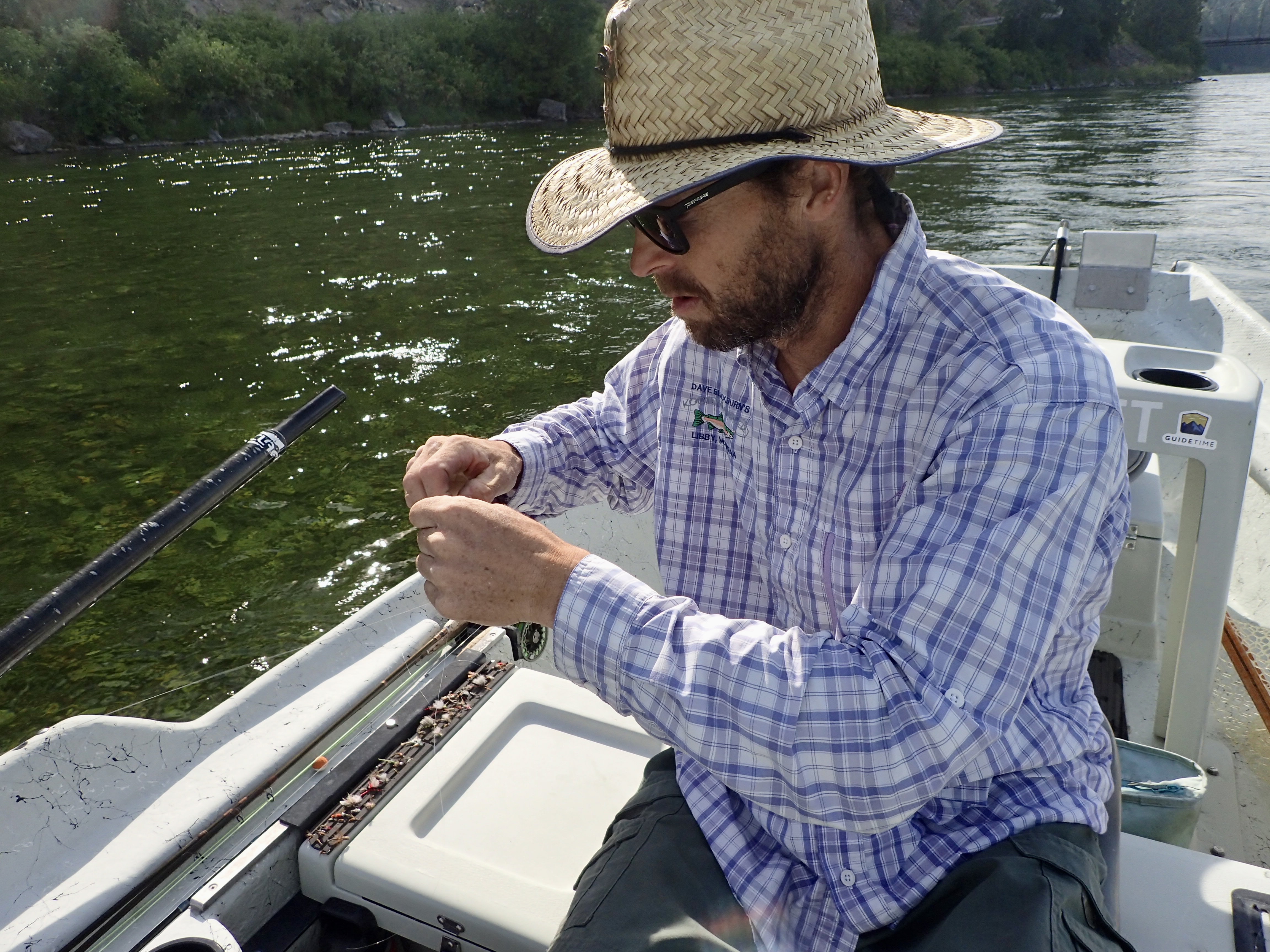
This was a day that I fished solo, under the capable guidance of my guide Jeff from Dave Blackburn’s Kootenai Angler. We floated a different section of river, starting below the town of Libby. While the river is still wide and overhead-deep in many areas, there’s a lot more gravelly structure, pocket water, and whitewater pools. I far preferred it over the section we’d fished the day before. We did a little bit of everything: wet flies, dry-dropper, nymphing, streamers. It turned out to be a smudge-tastic day.
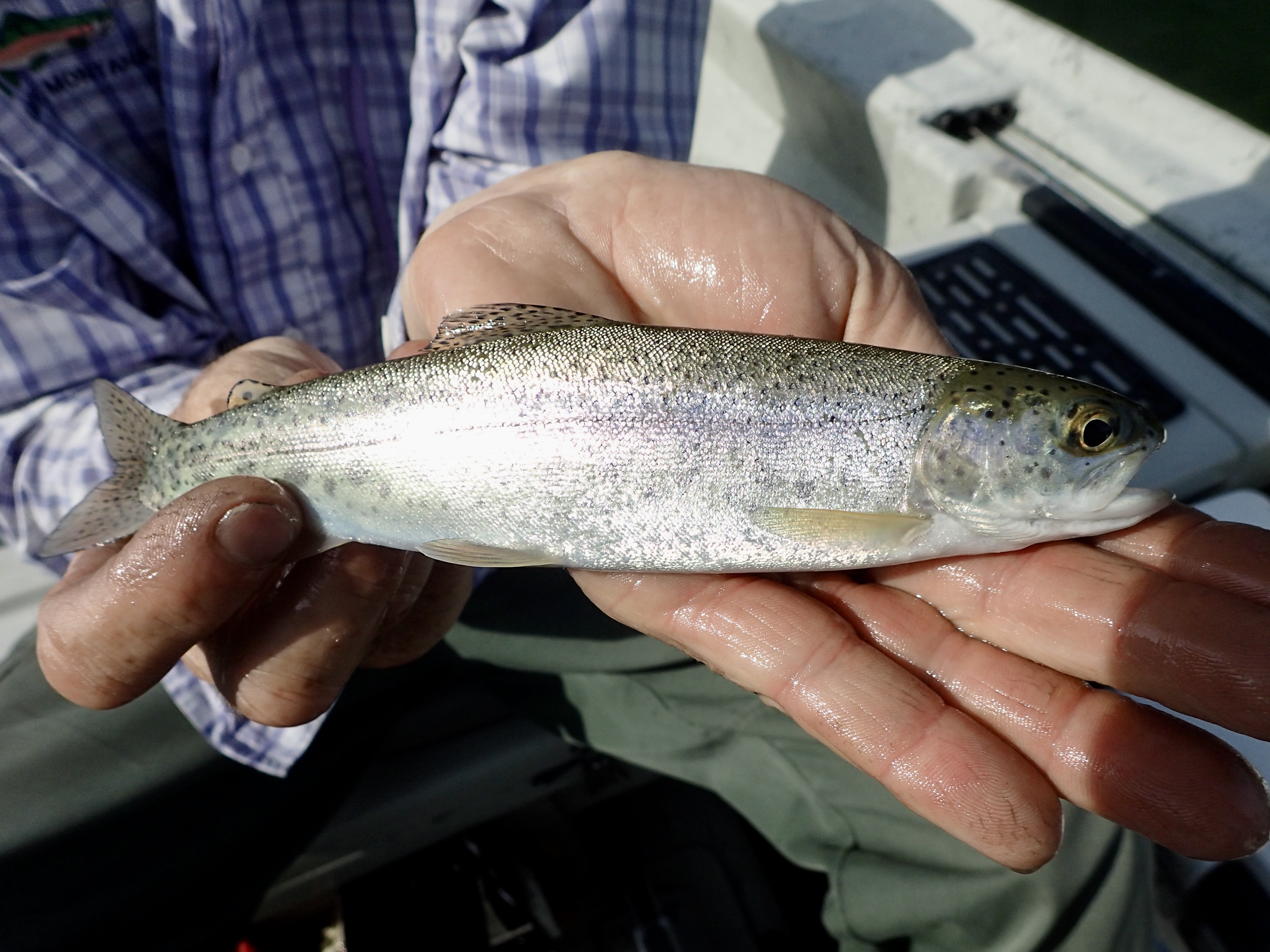
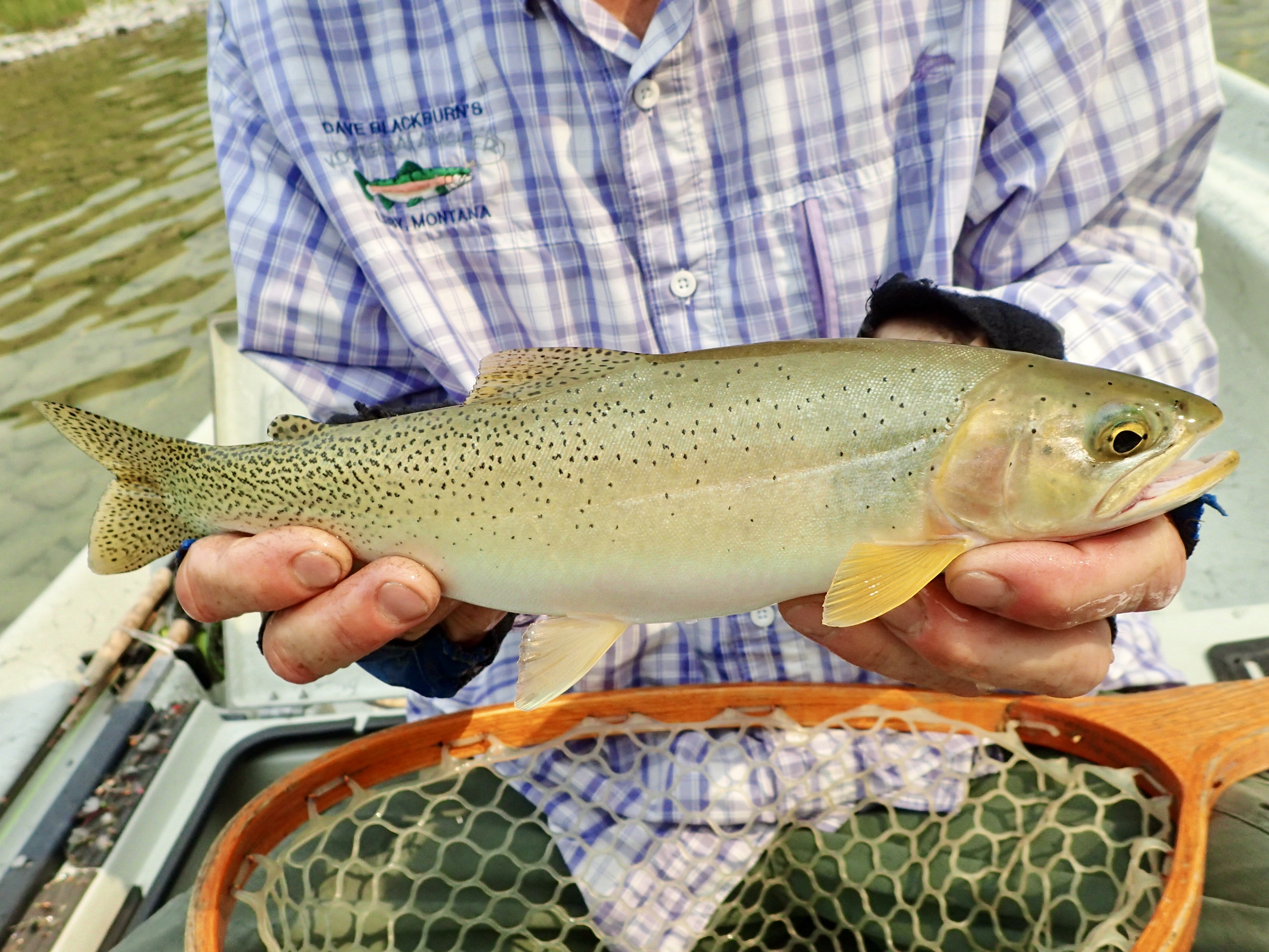
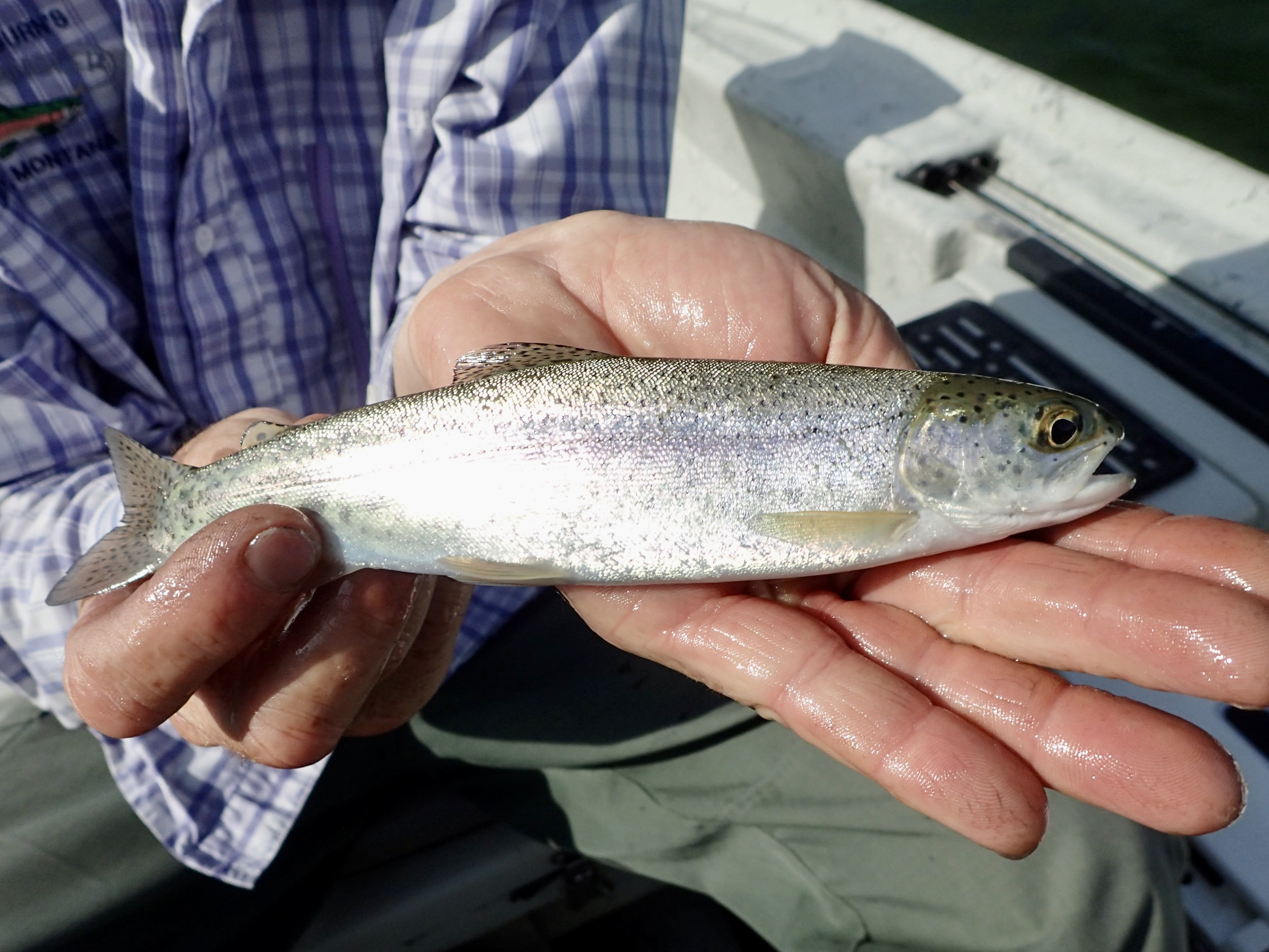
Let’s start with our new old buddy, the Kootenai Redband Rainbow trout. The ones I connected with — and they were plentiful — were generally under a foot long. Nonetheless, they were spunky and frantic when hooked, and I can’t even begin to describe their breathtakingly beautiful flanks adorned with delicate parr marks.It’s a sucker! It’s a bonefish! No, wait. It’s a northern whitefish, native to these parts. Despite their appearance, whitefish are a salmonid. Every one I hooked was taken on a nymph. This was the biggest one by far, and she gave me a good tussle. Two down.On this day, I hooked and landed my first cutthroat trout. Consider me a fan. Another native fish, these are beautifully colored and look like someone took a fine point black Sharpie to their sides as an exercise in minimalism. This fish was an epic eat. We were fishing western style, pounding the banks with a hopper-dropper, when we approached a grove of trees with overhanging branches that nearly touched the waterline. Naturally, the sweet spot of the run was beneath the branches. I made a cast, and began mending, dropping my rod tip nearly into the water so the floating line would clear the branches. Three…two…one…and whack! She ate the hopper right where we thought she’d be. That’s one take I wish I had on film.A few minutes later, I asked Jeff what that green thing in the water was. As we got closer, we could see it was a hopper going for a swim. We fished him out of the water and put him on the oar to dry off. We were going to use him for a science experiment, but before we could send him on his way, he decided to go for another swim. I haven’t seen many hoppers in the water, but this was proof that it does happen — and the way this thing was struggling, it’s not surprising that they get eaten. My fourth species was a pikeminnow. Sadly, no photo. But before you laugh at the noun “minnow,” you should know that they grow over two feet long! Mine was about 18″. Pikeminnow are a member of the dace family.If you look under the maxillary, you can see the reddish band that gives the cutthroat trout its name.Ooh. Ahh. Ohh. To complete the smudge, I offer you the cutbow. As its name suggests, it’s a cross between a rainbow trout and a cutthroat trout, with characteristics of each. I was fortunate to be able to tangle with a half dozen of these gorgeous creatures. Is it time to go back to Montana yet?
Years ago, when I first heard of the Kootenai River, my brain assumed that it was in Alaska. I mean, it sounds like it belongs in the 49th state, doesn’t it? Well, it’s in Montana, and the locals pronounce it “KOOT-en-ee,” not “nye.” So I was wrong on both counts.
Located in the extreme northwest corner of Montana, a ‘way up by Canada, the Kootenai is Montana’s largest tailwater fishery. This is a big, deep river with crystal clear waters that mask its depth; if you’re going to fish it effectively, you really need to be in a drift boat. When we first arrived at our cabin — located just a cast away from the back porch — I thought, “Maybe later I’ll just wade out to that deeper stretch along the opposite bank.” Wrong. The water would have been chest high just 20 feet from shore. Over the next tow days, we floated over pools that were well overhead deep, and you could still easily see the bottom.
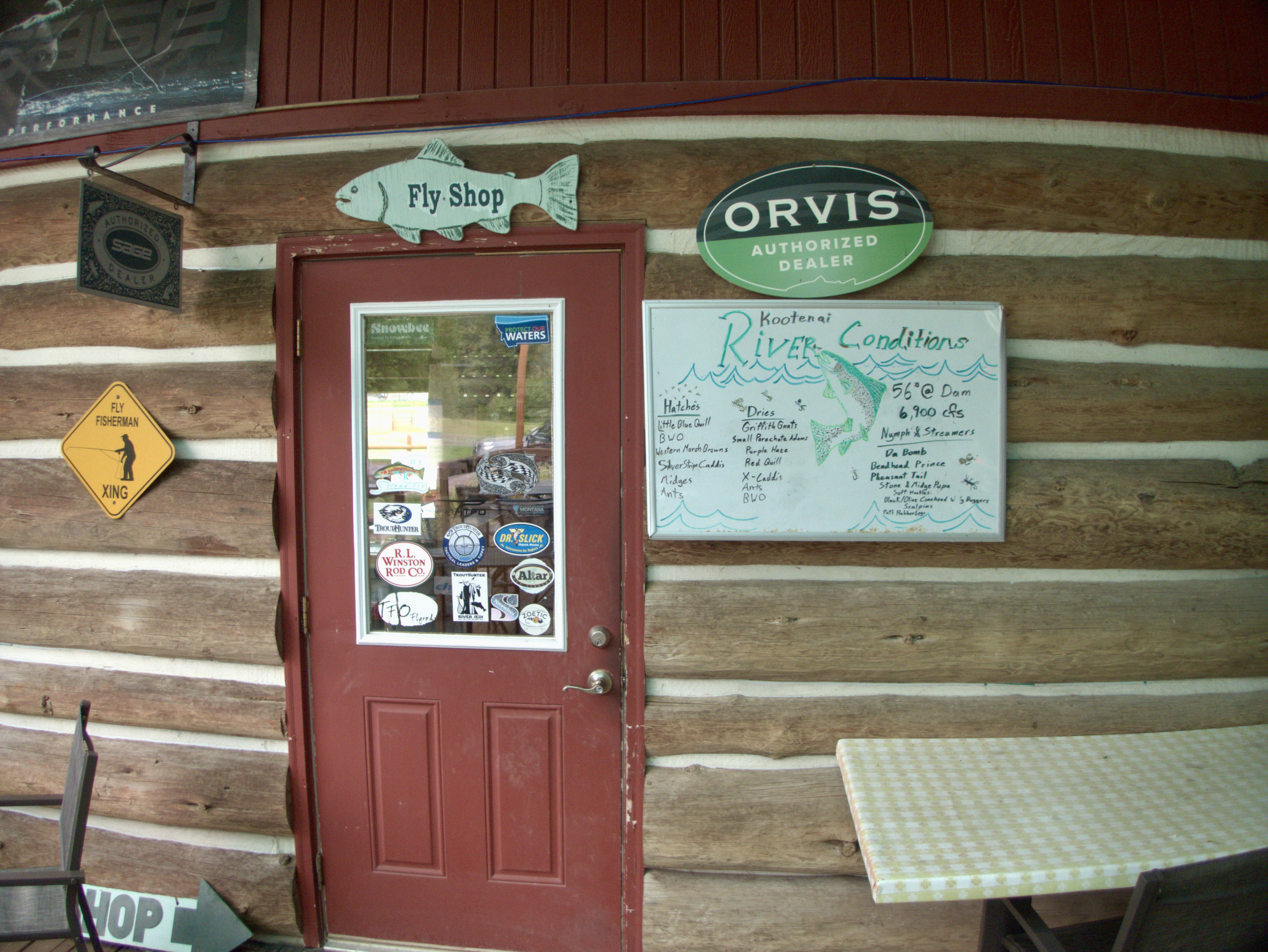
This was just a few paces from the back porch of our cabin. Libby, MT, is so far north that on August 1, this is the light at 9:30pm. You can see that the immediate shoreline is wadeable, but then it drops off in a hurry. The Koonetai is wider than the Housatonic in many places, and consistently far deeper. When you’re fishing the Kootenai, you focus on the transition areas between depth and shallow — the “change of color,” as my guide Jeff put it. I did some wet fly fishing, but mostly dry-dropper, with the dropper being another dry or small nymph.We stayed at the Kootenai Angler, run by Dave and Tammy Blackburn. There’s a fly shop on site, and full guide service available, which you’ll need. We rented their Betts Cabin, which was spacious and rustically elegant and wonderful. More than enough room for my me, my wife, and two sons. You can imagine how wide and deep the river must be for it to be flowing at 6,900cfs and still be low and clear!There’s also a restaurant on site. We ate there two nights, and I think my favorite part (besides the good food and incredibly reasonable prices) was being able to buy a bottle of wine, drink half of it, then bring it back the next night to polish it off. I’ll also go on record with this: Tammy Blackburn makes the best sandwiches I’ve ever had on a guided trip. They bring plenty of water, and with my stash of snacks (I’m a growing boy) I was well-fueled both days. The town of Libby is just a 15-20 minute drive, so you can get a breakfast sandwich or sit-down breakfast at a number of locations.The first day, we floated as a family in two boats; Karen and myself in one, the boys in the other. Neither Karen nor Gordon have done any real fly fishing, and both of them did a fantastic job with the learning curve — and yes, they both caught a good number of fish. The Kootenai is primarily a rainbow trout fishery, and they have the state’s only native strain on rainbows, the inland red band. While being out with the family and seeing everyone catch fish was a positive, I wasn’t thrilled with the water we floated over on the first day. Much of it was unremarkable, with flows that were in no rush to get to the ocean. But, I understand that is was good water for the beginners. I was also disappointed with the size of the fish on the first day. What you see here was typical of what we were getting into. Jeff explained that the feeder creeks had gotten too warm, and so much of the resident smaller fish had made their way into the bigger river in search of cold water relief.Then, there were the whitefish. Some consider them to be a trash fish, but they are part of the salmonid family. And it’s a new species for the fly-fishing tally sheet.Jeff Kalwara was my guide for two days. He did an excellent job teaching Karen, managing her rigs, releasing fish, and just being an all-around swell guy. Jeff and I went out solo the next day, but you’ll have to wait to read about that adventure…and more fish…and bigger fish.A guide’s work is never done. This is Jay, who guided Cam and Gordo. When we left Libby at 9am, he was busy in the shop replenishing his stock of guide flies. He also did a commendable job with Gordo, who really hasn’t fly fished proper before this. Well done, gentlemen!






 currentseams.com