It was about this time every year that Ken Abrames would post a reminder on his Striper Moon forum. The forum is long gone, but the sentiment and action statement lives on! Ken’s September Night is by far my favorite finger mullet fly, and you can tie it longer as the mullet get bigger and fatter. I’ve tied this with a ginger marabou collar, and the bass said yes. Here’s a good link with tying instruction from yours truly so you too can tie the September Night.
This might be the sexiest baitfish fly-without-eyes around.
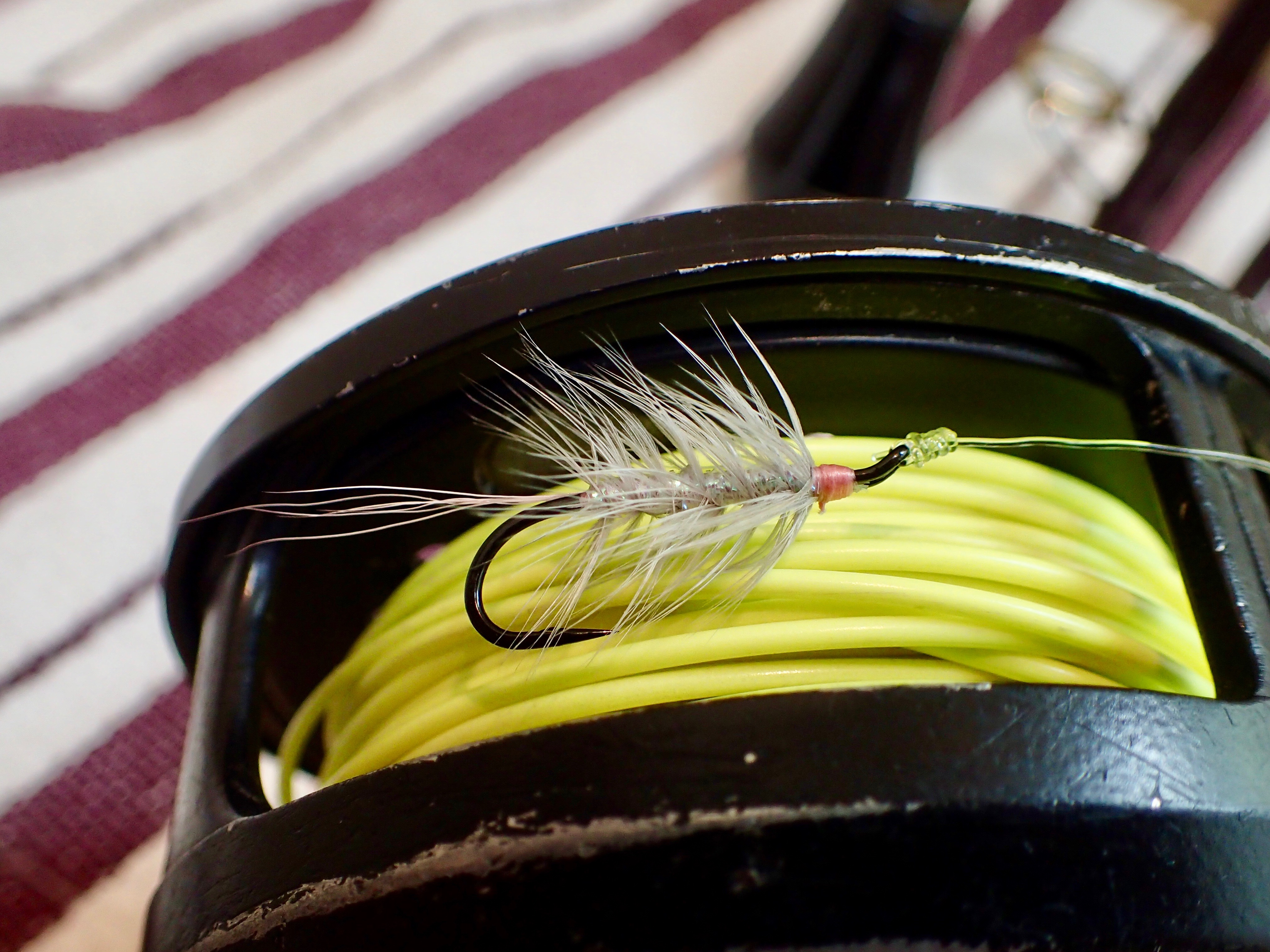
I can’t remember specifically when I came up with the Grass Shrimp Solution, but it was a long time ago, maybe decades. I do remember wanting to create a fast, simple-to-tie, impressionistic soft hackle that would mimic this tiny bait in size, color, and profile. Years later, this fly continues to be a favorite of other anglers who have discovered its deadly effectiveness. It’s one of my favorites, too.
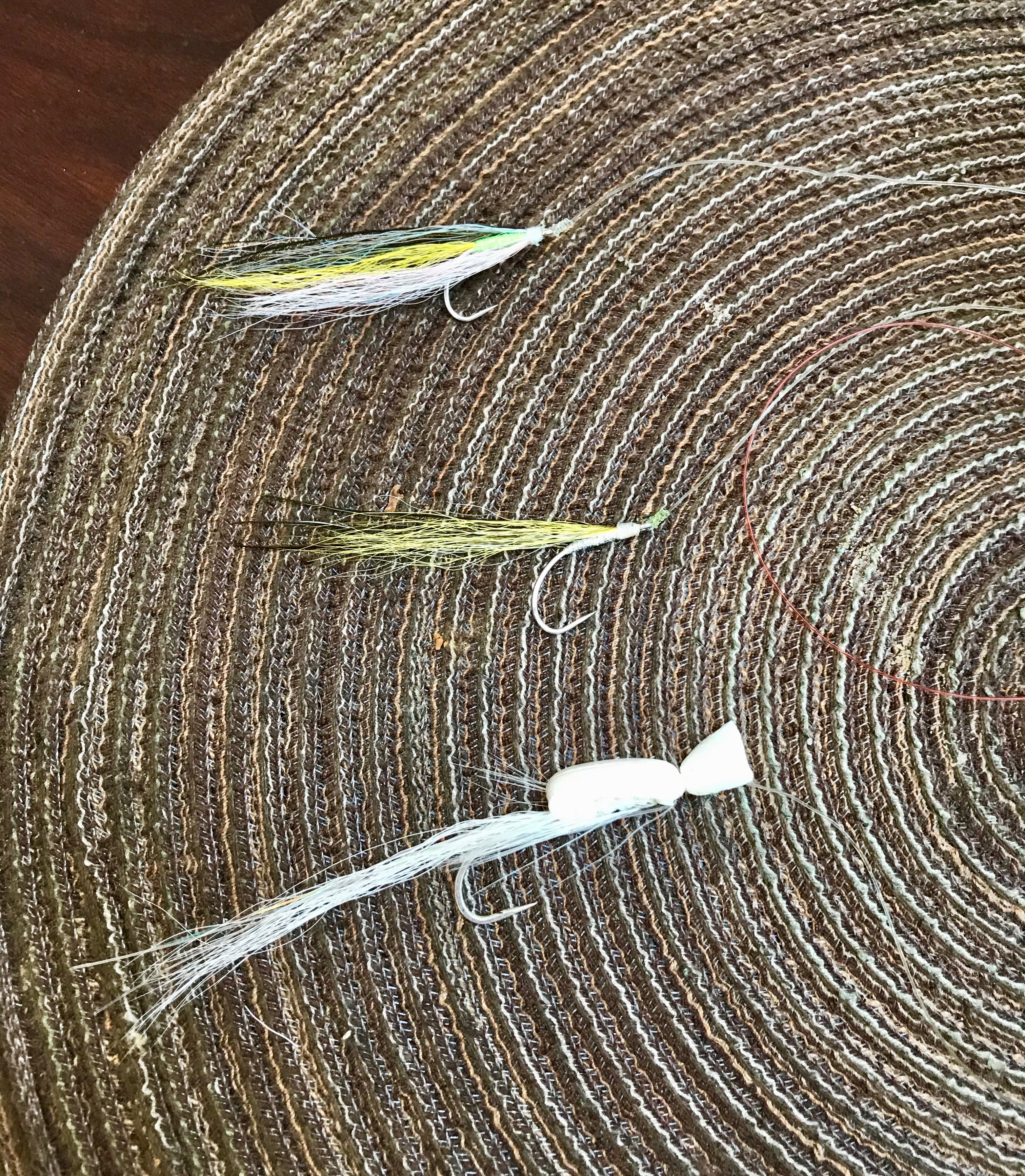
In case you’ve missed it over the years, or are new to currentseams, here’s a crash course on the pattern. The Grass Shrimp Solution was first published in 2015 in my American Angler article “Soft Hackles for Striped Bass.”It was featured in On The Water’s “Guide Flies” Column. I frequently fish this pattern in estuaries when stripers are selectively feeding on small food items. Here’s an article that covers how to do that. This piece discusses the concepts behind the pattern’s bite triggers. Those four articles ought to keep you busy for while, after which, I would guess, you’ll be heading to your tying table — and then, to the closest tidal marsh or flat.
Back from a weekend trip to the Windy City. I was able to write up a storm in my down time, and today’s a day for other projects. While I was away, this came in the mailbox, and I thought I would share my answer with the group.
Q: Steve, I currently only have an Air Flo intertmediate line …but I want to fish a 2 or 3 fly set up (with) an Orange Ruthless in the marsh …how would you set that up? A: The dropper rig (leader/tippet) portion of the setup would remain the same. You can read about dropper rigs for stripers here. (Note that the tag length in the diagram is probably too short; I’d recommend 6-8″ for the tags.) The elephant in the room is the intermediate line. Since it’s a sinking line, you cannot mend it. And mending is at the core of traditional presentations with a three fly team . (Here’s a good article on the shortcomings of intermediate lines.) Using an intermediate line doesn’t mean that you’re doomed to failure; it just means that you’re going to have limited control over your presentation. Once the current grabs the line, the flies will move at an unnatural speed. But there’s a village idiot in every pool (or marsh, as it were). If you’re fishing the setup on the dangle, in the current straight below you, the intermediate line will not hurt your cause. I’m simply excited that you want to fish the Orange Ruthless, and that you want to try fishing droppers! Good luck, and let us know how you do.
A nice double caught by someone who took my class at the Fly Fishing Show a few years back. He used a floating line, a three fly team, and some small, marshy bait fly patterns. I believe that’s a Grass Shrimp Solution in the mouth on the right.
Many thanks to the men and women of the Hammonasset Chapter TU for being such gracious hosts. They’re a passionate group of fly fishers, and we had fun before, during, and after the presentation. This group understands that a fed presenter is a happy presenter, and a very hoppy IPA was an added bonus. We talked about Fly Fishing CT’s Small Streams, and right about now is prime time for thin blue lines. We could use some rain, though.
On Tuesday night I fished a top secret location in LIS with surfcaster extraordinaire Toby Lapinski. We thought we might be in for a treat when Toby connected on one of his first casts with a metal lip plug — decent fish, 15 pounds — but sadly, ’twas not to be. Toby had three more hits, converting one, and I had a nice swipe from a decent fish, but no tug or pull. It was a gorgeous night for fishing, with a favorable wind, but there was precious little bait and no schools of fish.
So it goes…
I’d eat this…this is Ken’s Sure Thing, a three-feather flatwing about 8-9″, a fine choice to swing over a reef in the fading moonlight on a crisp fall night.
I’m way late on the draw here, but there’s still a lot of September left. Ken Abrames’ September Night is by far my favorite finger mullet fly, and you can tie it longer as the mullet get bigger and fatter. I have received confirmed, reliable reports that at least one RI salt pond is loaded with mullet, and that school bass have been harassing (if not enjoying) them. Here’s a good link with tying instruction from yours truly so you too can tie the September Night.
If you think this fly looks good on the vise, wait until you add some water and current. I also tie a variation with a ginger marabou collar. The stripers approve.
I recently fished 6 nights on Block Island, and this once vibrant shore fishery continues to struggle. I checked my records and found one night in 2018 when I landed 12 stripers; this year I managed 10 stripers in 6 nights with 2 skunkings, which ain’t exactly lighting it up. Once again, the key to success was finding a pattern and hammering away. I spent the first two nights trying to find a pattern, which meant bouncing around the Island, fishing different marks at different tide stages. I had a good moon in terms of darkness, but the tide heights were crappy, which didn’t help. Once I found bass, I returned to that mark at a similar tide stage the next night, although I still had to put in my time to get a couple fish. We left early this year because the fishing was lousy and we had a rain day we could fill with packing. Here’s to better days and a return to glory for this sacred fishing ground.
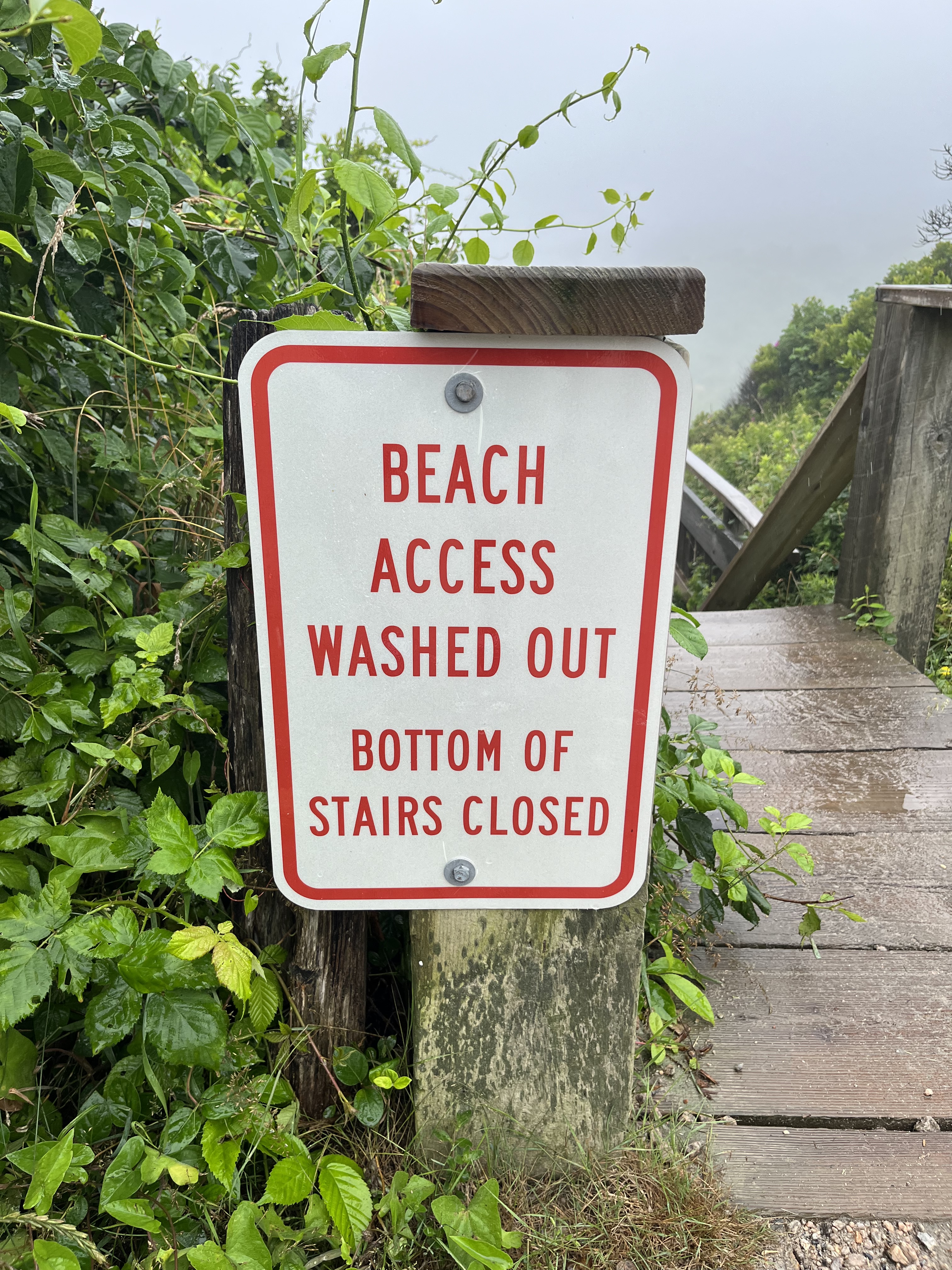
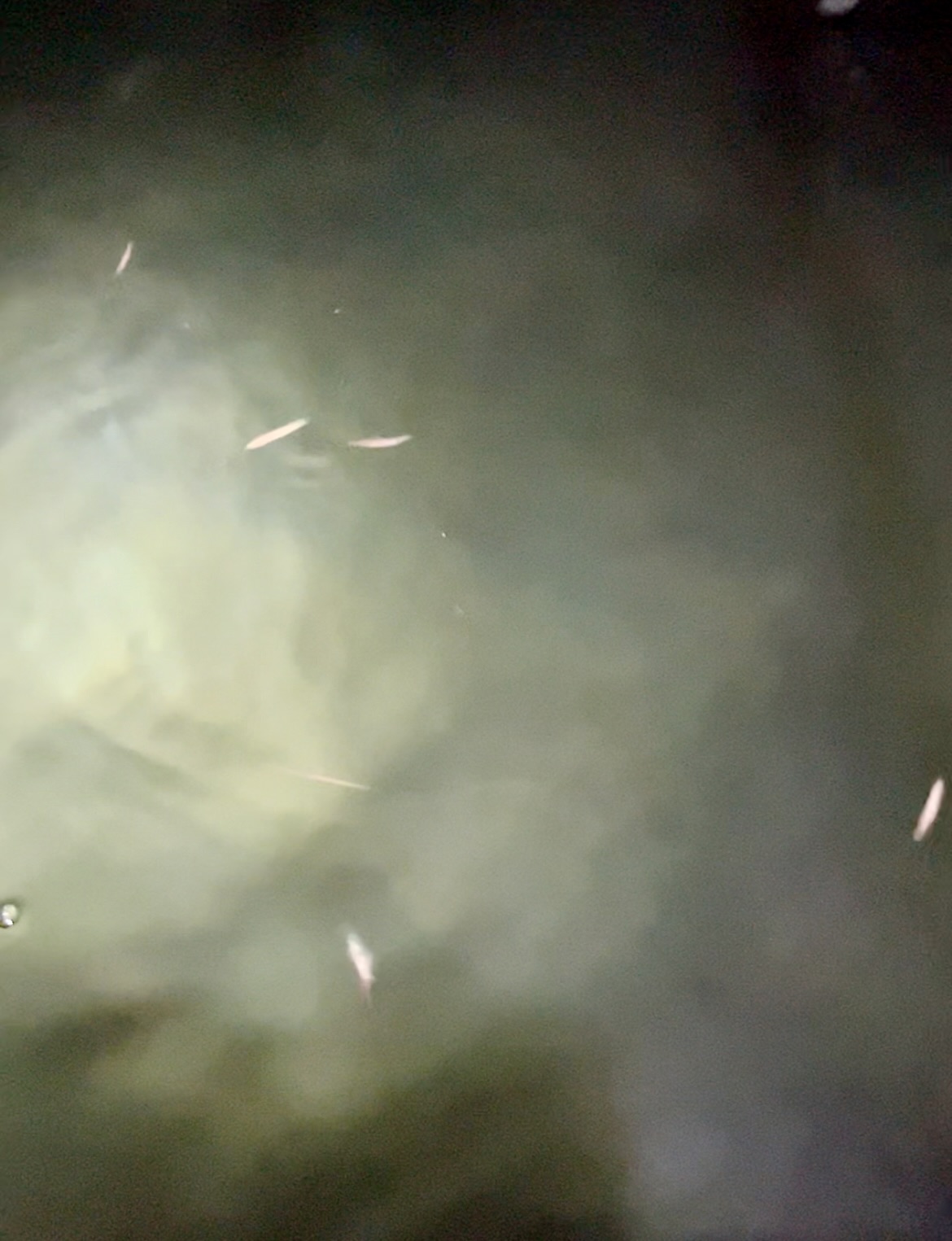
On the first day, I met — wow, I am so bad at remembering names, so please forgive me if I get it wrong — currentseams reader Caleb(?) sight fishing on Crescent Beach. He told me that the week before, he’d had a fantastic day surfcasting at a popular old school mark. He went back the next day, same tide, same conditions, and it was disaster bad. So goes it on Block. Fish here, fish there, then no fish anywhere. The new inshore paradigm seems to be no schools cruising through, but rather a rogue, random bass. (Insert heavy sigh here.) The sight fishing in the day was generally crappy; I had several days where I saw no bass at all, which is dreadful for early July.That’ll save me a walk, although I did do the stairs one afternoon for exercise. The weather was generally crappy, with dense fog, high humidity, and a blustery S-SSW wind in the 10-20 mph range, which all but eliminated the south and southwest sides of the Island for the fly rod. Even with my 2H surf cannon, I wasn’t into it, especially for ultra slow fishing. I did fish multiple parts of the Island, but I could only find one specific mark that consistently held the possibility of fish on a certain tide. Even then, that tide was historically the worse of the two, so it was a surprise to me that that was this year’s pattern. Some old favorite, reliable marks failed to produce fish, which was discouraging. I want my old BI back!One night, at the witching hour of midnight, I ventured out onto a top-secret flat within the Great Salt Pond. Wind was an issue, but I had a moving tide in my favor. I followed my dark-of-the-moon protocol of fan casting and moving a few steps to systematically cover water, but after a while I recognized the futility of it all and headed in. I will typically turn on the light to see what creatures are stirring, and I was treated to a swarm of baby squid, about 1/2 to an inch long, hundreds of them, buzzing around and through my headlamp light cone. Sadly, no diners had assembled. This is a still from a video I shot.One of my ten bass in six nights. The good news was two slot fish in the mix. The bad news was nothing smaller than 24″, so there were precious few stripers in the 3-5 year-old classes represented. That would fall into line with the miserable recruitment stats from 2020 and on. While the action was less than I’d like, I did get reacquainted with the truculent nature of Block Island stripers. Aside from snook and tarpon, I don’t know another fish that hits a fly harder than a Block Island striped bass. Powerful, crushing eats, and then, once they realize they’re hooked, a bullish, line-taking run. I had several fish work circles around me and/or run along the trough by the shoreline. Simply tremendous sport.
As I suspected, writing the book is has become a major time sink. Not that I’m necessarily complaining — I really enjoy writing about fly fishing — but I’d rather be doing it than writing about it.
So, the fishing has suffered a bit, and my mid-to-late spring grass shrimp outings are a perfect case study. Normally by this time of year I’ve been out multiple times. Last night was my first, and I may not get out for it again until next year. I picked a meh night for it. The swarm was probably a 3 out of 10, and there wasn’t much on it. I fished my usual three-fly team (last night’s lineup: Grass Shrimp Solution top dropper, Orange Ruthless clam worm middle dropper, Micro Gurgler on point). I fished a modified swing and dangle. I had to work over the course of 90 minutes to hook one shad and two bass, and those fish came in a bite window of 30 minutes. But I was happy to be there, the cigar was swell, and I felt like I spent part of an evening with a dear old friend.
Some nights, you get fish on all three flies. Other nights, they want one thing only, and last night it was the Micro Gurgler.
Anyone can luck into a big fish. Way back when, when I was just starting out, I wanted no part of that. I wanted to be able to consistently catch big stripers.
If you want to catch big bass — and make it repeatable — you don’t need a casting lesson. You don’t need to be able to reach 90 feet. You don’t need the latest in intermediate line technology. You don’t need a huge monstrosity that looks more like a plug than a fly.
You need to study. And ask questions. Why would there be a big striped bass where I’m fishing? Is there current, cover, and food? Is it pre-spawn? Is it migration time? Is the bait spawning (and therefore gathering in large numbers)? Is it dark, so the fish feels comfortable coming in close? What’s the barometer doing? Which way is the wind blowing? What’s the tide, and how is it moving? These are all part of the equation.
Then, you need the right fly. Something that looks like the bait, or what the bait should be at this time and place. Does the fly look alive and like something good to eat, even when at rest?
Don’t forget presentation. You need to learn that, too. Big fish are lazy, and frequently unwilling to chase. How can you present the fly in a way that makes it easy for the striper to eat?
Last but not least, you need to put in your time. There is no substitute for time on the water. You can do all of the above, check all the boxes, and still blank. (Ask me how I know.) Nevermind, I’ll just tell you. Last year, I fished the mark I fished last week six times and had only two tiny bass nibbles and no bass to hand for my efforts. But every year is different, and this is what I found on a greased line swing with an 11″ Bombardier flatwing in March of 2024:
Miss Piggy went 25 pounds and taped 39 inches. This was one of the best fights I’ve ever had with a bass, and I hope to write about it sometime soon. I am humbled and grateful for the chance to hook, land, and release this fish. I’ve been doing this for years, folks, and I was so pumped with adrenaline that my hand was shaking as I took this photo.
As I mentioned last week, I’m doing things a little differently this year with my classes at The Fly Fishing Show in Marlborough. Rather than leading a striper fly tying-centric class, I’ve decided to turn it into the closest thing we can get to an actual lesson in the salt! I’m really excited about the change, and I think everyone attending the class will get a lot more out of it. So, instead of spending a few hours on a salt marsh or estuary, we’ll gather in a cozy meeting room and learn all about tying and fishing presentation flies for striped bass. If you’ve ever wanted to fish with me, but have been unable to do so, this will be a great opportunity to get some quality instruction.
What are presentation flies? They are flies that rely on specific materials — mostly natural — and specific construction — mostly sparse — to create the illusion of life. Presentation flies are highly impressionistic. They look alive and like something good to eat, even when at rest. Most of all, you don’t need to strip them in, ad nauseum, to get stripers to eat them. In this class, I’ll talk about materials and construction and will demo at least one pattern.
There’s a time and place for this rig, and for flies so sparse you can read the newspaper though them. Regiter for my class, Beyond Cast & Strip — Presentation Flies for Stripers, and we’ll talk about it.
So, how and where do you fish such patterns? I’m glad you asked, because that’s the next part of the class. I’ll show you how to build a saltwater team of three flies; we’ll discuss different bait and feeding scenarios; we’ll talk about the different kinds of water where presentation flies shine; and of course, we’ll dive into presentation — you know, that thing you do when you’re not treating your fly rod like a glorified spinning rod.
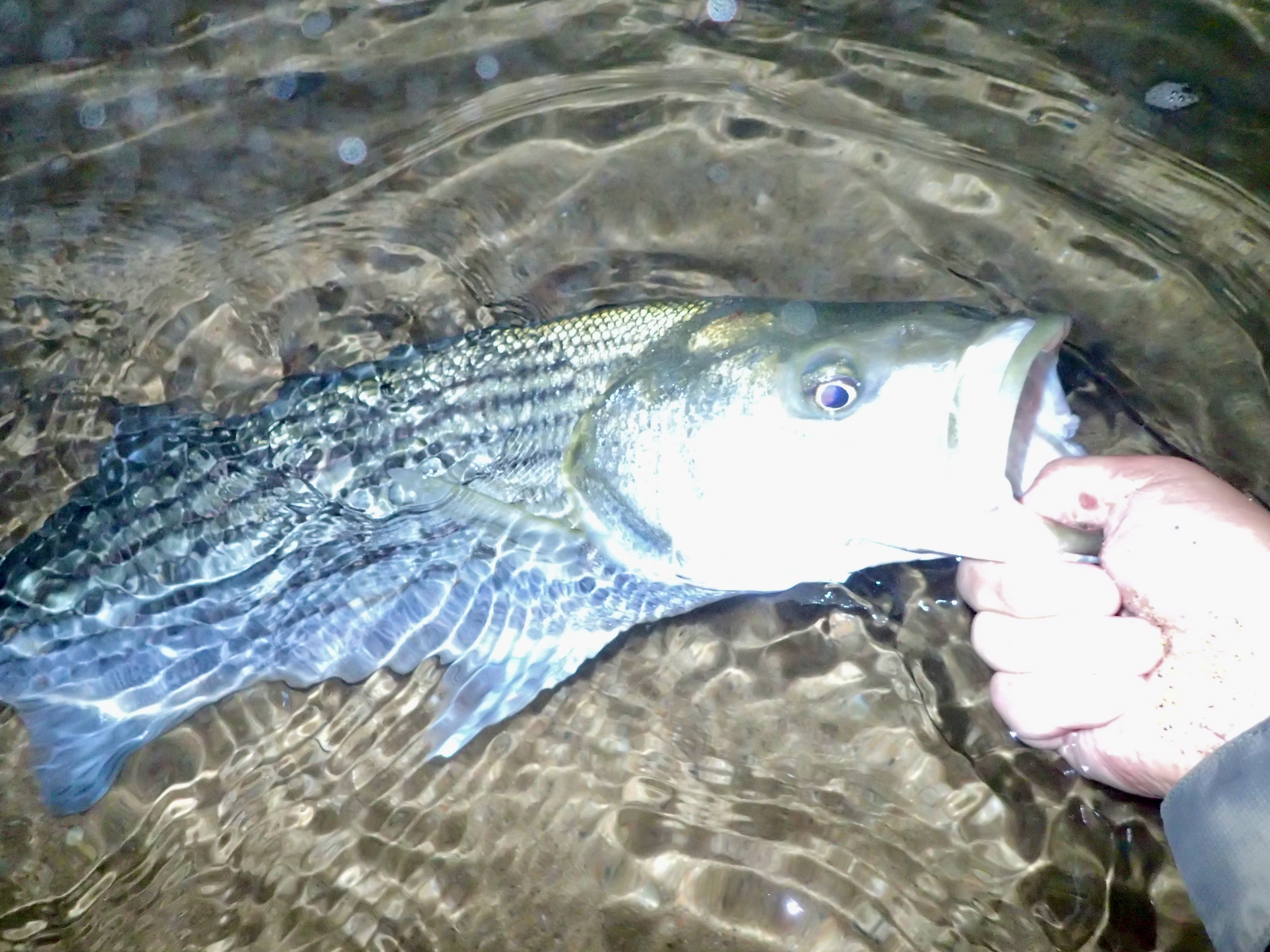
This bass was caught on a fly with no weight, no eyes (you can see it floating on the surface) and from cast to hookup, not a single strip was attempted. Come learn how traditional salmonid tactics like the greased line swing can work wonders for you.
If you want to catch more striped bass, and do it in ways that are under-appreciated and under-utilized, but powerfully effective, this class is for you.
Jeff took this class last year. Here’s what he’s been doing this year! Photo by Jeff Carson.
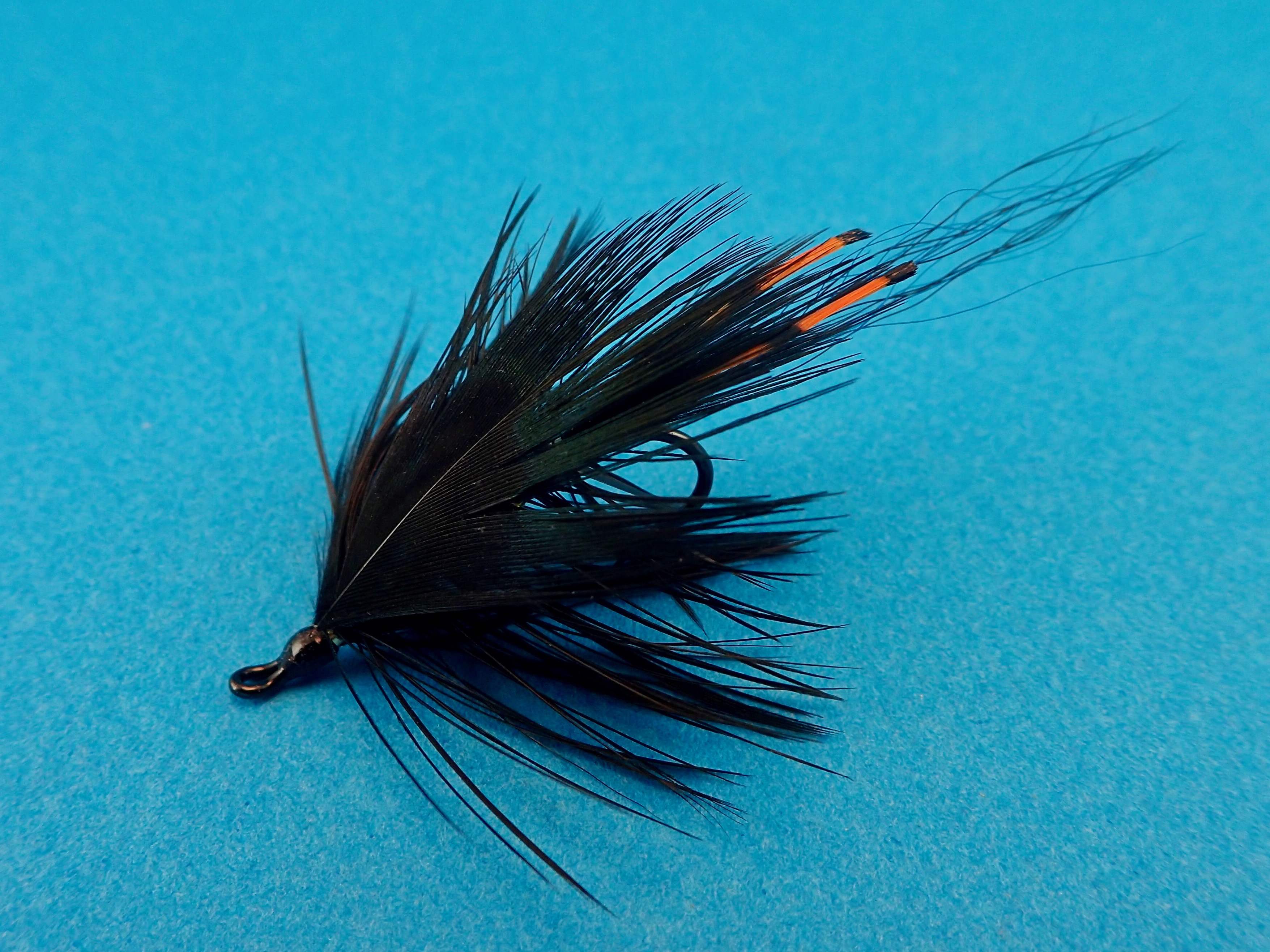
If you’ll pardon the wordplay, I offer relief to those who are already weary of the crass holiday commercialism that seems to start earlier each year. Here are three favorite patterns that feature basic black. Give yourself the gift of tight lines, and tie one on.
The Bombardier Flatwing. Treat yourself to an explosion when you swing this big flatwing in the wee hours of a chilly April very early morning.
The Bruiser Big Eelie. Unlike the unis of the New Zealand All Blacks rugby side, this lethal sand eel sports some blurple. Perfect for getting into a scrum with some stripers on a moonless night.








 currentseams.com