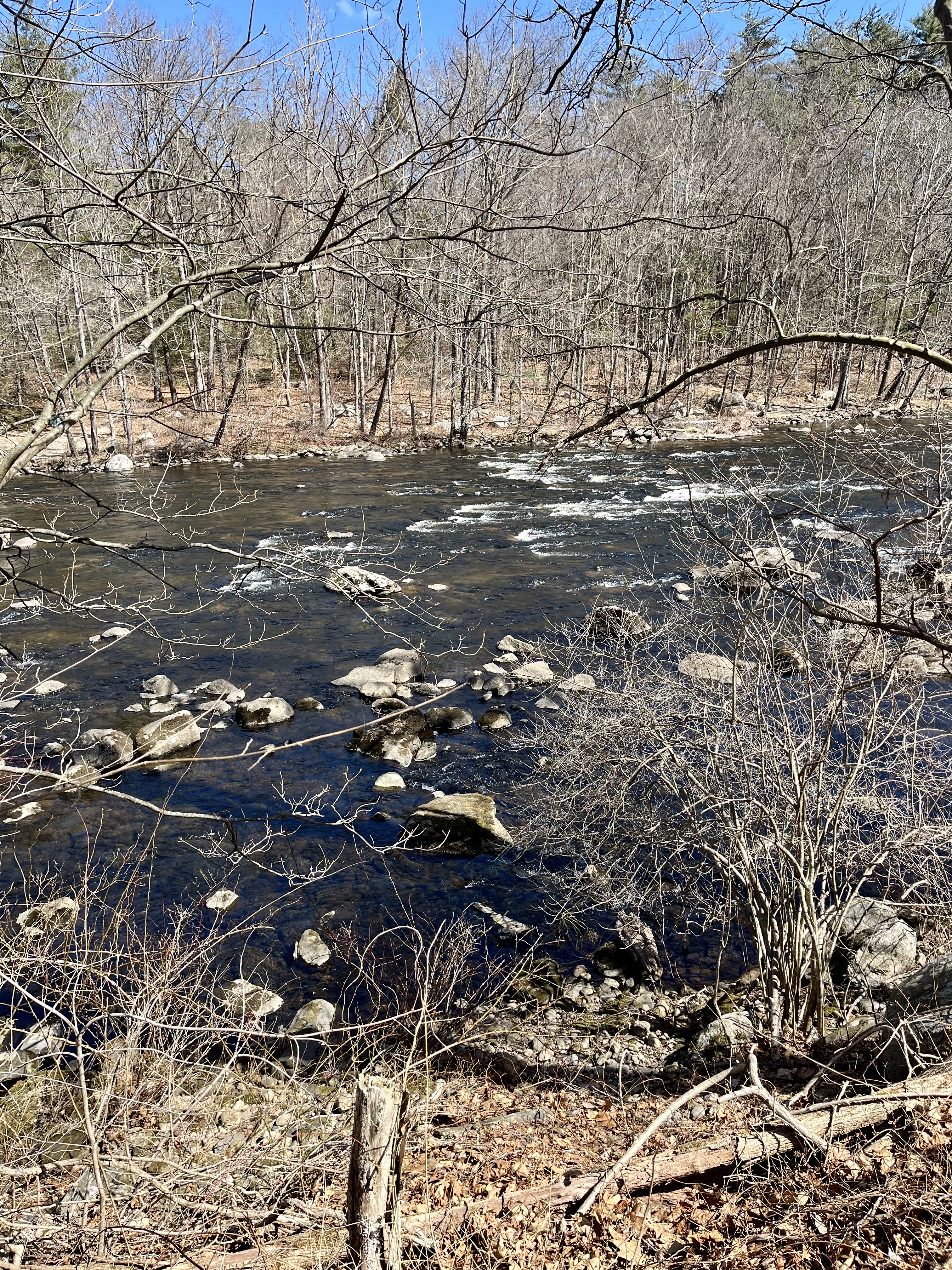
My first hybrid tea rose, Peace, bloomed this week. That means that our creamy and yellow mayfly friends are beginning on the lower river. The waters are down to an excellent 465cfs in Unionville. I’d hop on it, but I am crashing my final draft deadline of June 1. Please wish me luck, and I hope you get out this weekend…or even today.
Peace, baby. It’s a good color to signify the arrival of Sulphurs.
Who knows why the trout aren’t eating your Hendrickson fly? The Shadow Hatch knows. Shadow hatches are so named because they are concurrent with — and less glamorous than — the hatch you think the trout are eating. In the case of the Hendricksons, the shadow hatches are likely to be tan caddis and BWOs, although in early afternoon, the tan caddis are the likely culprits. This phenomenon manifested last week during my lone outing. I was fishing a team of three flies: Hare’s Lug and Plover (caddis) top dropper, with two Hendricksons below. Hendricksons were in the air and there were rising trout. Yet all of my fish came on the Hare’s Lug and Plover. This is the strongest argument for fishing a team of three: droppers are always the fastest way to find out what the fish want.
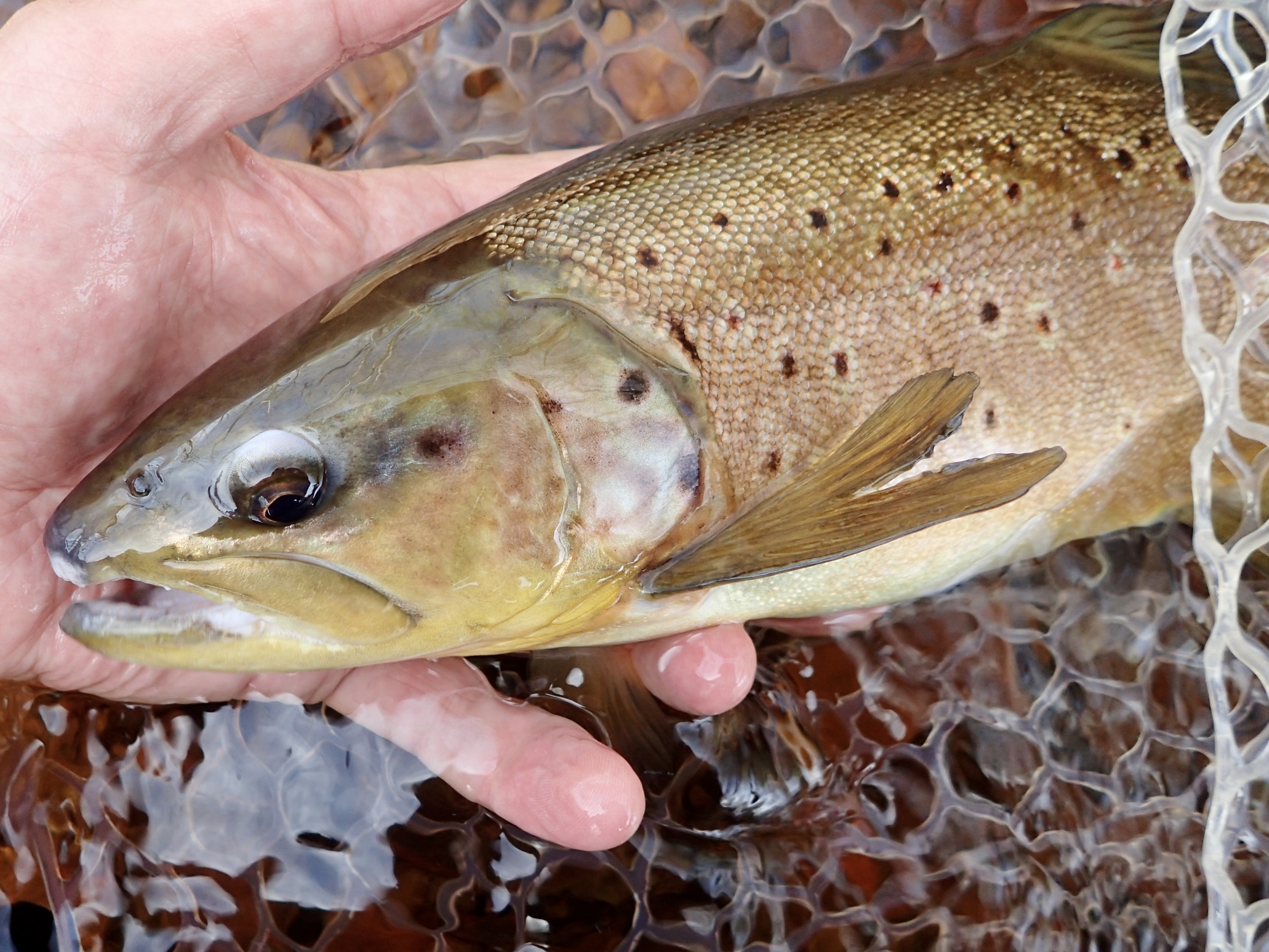
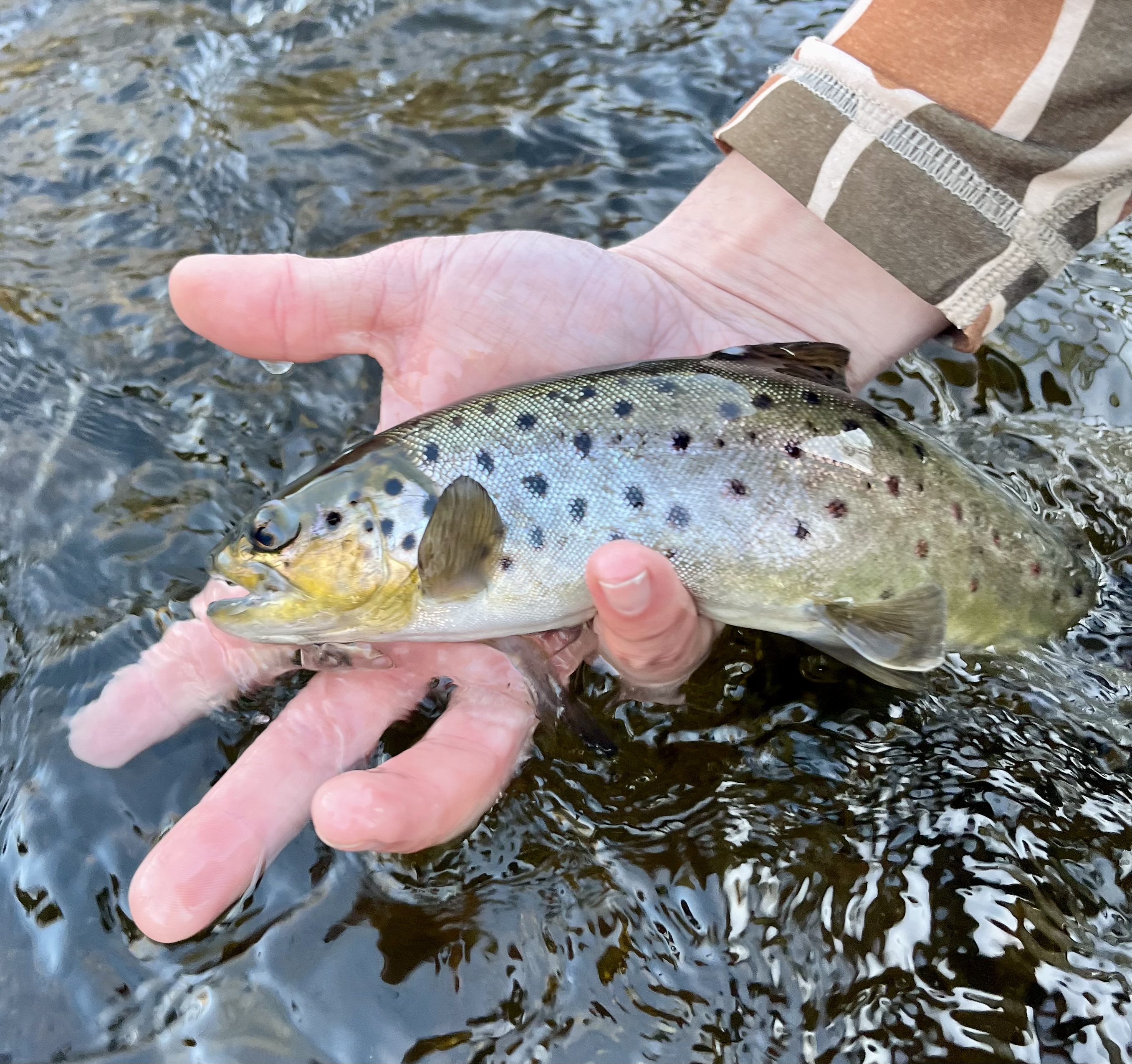
This magnificent brown might not have eaten had I not given it the choice of a caddis. You can get a better view of the fish’s weight and size on my Instagram @stevecultonflyfishing — and while you’re at it, please follow me there.
I managed about 3 hours of fishing last Tuesday, and it was a disappointing. True, I got my first few trout of the year on a swung wet fly. True, the weather was pretty darn nice. True, I rather enjoyed my Ashton VSG torpedo. But the bite and the Hendrickson hatch were disappointing. I’d give the hatch a 4/10 and the bite a 2/10. There just weren’t than many fish rising, and when they did, it was for an all too brief 30-minute window.
Some of the details: I fished with guide extraordinaire Steve Hogan for about an hour. He fished nymphs, I fished wets. He stuck several fish. I didn’t get a touch. We fished in the lower STMA. Water temp was low 50s, good medium-low flow. After Steve left, my action picked up, but again, only for a brief window. I then went to a mark a quarter-mile upstream and fished a 150-yard section with a team of wets, again without a touch. Normally, I would have expected at least a half-dozen fish. I heard from others who fished in the Canton area that it was similarly underwhelming.
I just wrote the section in the book about ID-ing an Atlantic salmon smolt. They’re often confused with small wild browns, but once you learn the specific markers, you won’t ever again mistake a salar for a trutta.
I’m going to try to get out again this week, then continue pounding away on my keyboard. The book is nearing the completed draft home stretch, but not quite there. Still gotta round that clubhouse turn.
We all could use a good Hendrickson hatch, and now we don’t have to wait. Well, you might have to get to the river early enough to secure a spot, and then wait for the bugs to pop — usually early afternoon — but the hatch is on and moving upriver. I guided James and his daughter Charlotte last Friday on the lower river, and the hatch was just getting started. With favorable air temps forecast for the entire week, now’s the time to jump on it. it should be on in the PTMA this week.
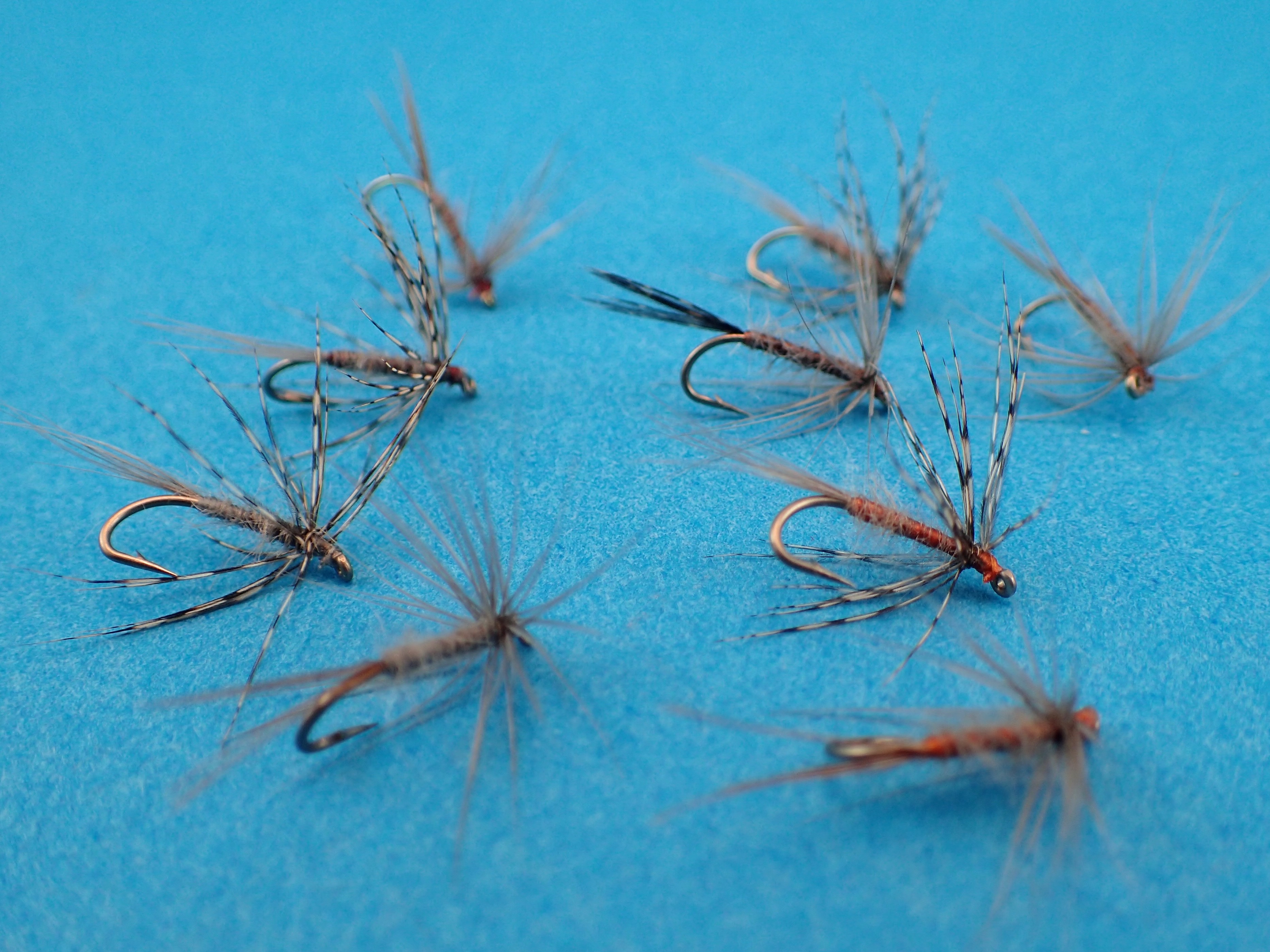
Pick an active feeder during the first phase of the Hendrickson hatch, place one of these soft-hackled Hendricksons over its lie, then hang on.
Hendricksons are one of the mayflies that will be featured in my book. They’ll be part of a general chapter on mayflies (caddisflies, stoneflies, midges, and other food sources are the other four categories) which then breaks down into some of the more popular/important specific hatches. The intent is not create an in-depth, Latin-heavy, scientific bug-biology geek white paper; rather, it’s to give you meaningful, useful information. The better you understand the hatch, the more fish you’ll catch.
Happy Monday. It’s finally not stupid cold and snowing/raining. And yet, here I am, sitting in my lonely writer’s garret, writing this, then back to writing the book. Sunshine beckons. On the other hand, writing about fishing as a job doesn’t suck.
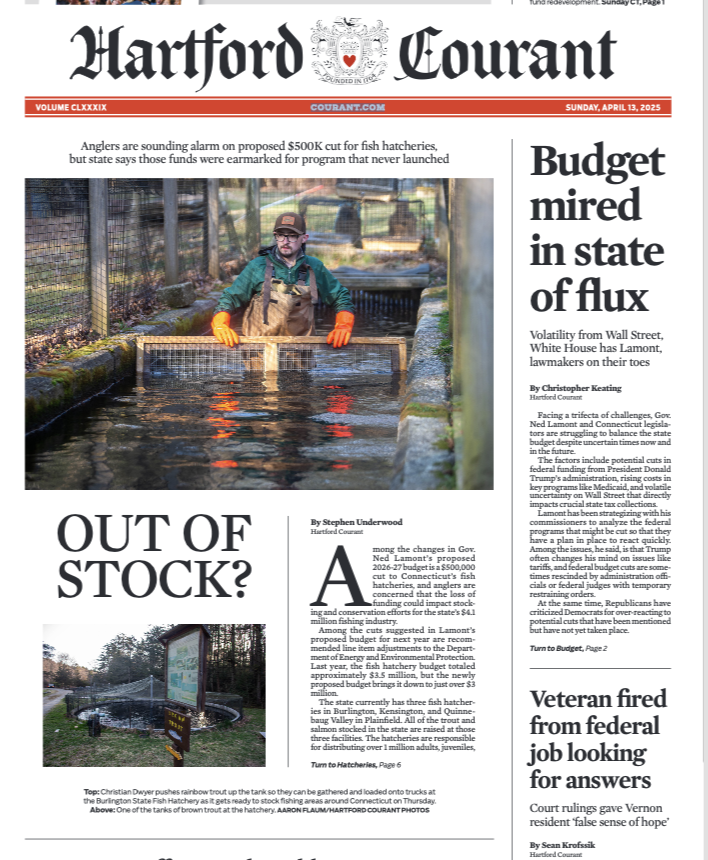
If you read yesterday’s Courant, you saw the front-page article about the propose hatchery budget cuts. Yours truly is quoted often.
I’m getting toward the home stretch in the book writing. I alternate days when I think I’m in good shape with those when I project abject terror. Ok, that’s a little strong, but I’ll be happy when I’m finally done. I’m still loving what I’ve written so far, and that counts for something.
I will be getting out to the river this week to do a little more location scouting, and then hopefully an hour or so of fishing. Won’t that be wondrous? Can you believe that I have not caught a trout yet this year?
If you’re thinking about taking a lesson with me, please wait until June. I’m doing only one this month, which is unheard of for me, and I may be doing only one in May, also unheard of.
I’ve said it before, but I appreciate everyone’s patience as I throw my energies into the book. Since it’s almost Hendrickson time, here’s one from the archives for all you soft-hackled fly lovers: The Best Hendrickson Soft Hackles and Wet Flies.
In case you haven’t heard, veteran Farmington River guide Antoine Bissieux was just named the 2025 Orvis-Endorsed Fly Fishing Guide of the Year! In addition to being an exceptional guide, Antoine is also a friend and a contributor to the Farmington River book. You’ll get to see a few of his favorite fly patterns, and his wisdom will be sprinkled throughout the text. Congratulations, Antoine. We’re all tremendously excited for you.
From a photo shoot for the book this past August, Antoine patiently scans the water looking for a rise or the signs of a lurking trout. I’m grateful to have the opportunity to draw from Antoine’s knowledge and experience. When we’re out doing these shoots, I’m not only working — I’m also engaging in professional development: watching, learning, and just enjoying being on the river talented anglers like Antoine.
Speaking of anglers who know what they’re doing, I spent Wednesday afternoon on the river shooting Torrey Collins from UpCountry Sportfishing. We had a slow day; a cold front came through the night before, which was strike one. Bug activity was light (strike two) but we did see midges, early stones, and some olives. Torrey was Euronymphing, and we hit the lower end of the PTMA, and then two marks below it. It was a few stocker rainbows until Torrey connected with an archetype wild Farmington brown, a handsome buck in the upper teens. What was eye-opening to me was where Torrey caught him. I’d never fished there before, but I’ve driven past it hundreds of time without giving it a second thought. The more I write this book, the more I learn about the river — and the more you’re going to learn when you read it.
Torrey working the water, expertly covering every seam and hole in the pool. While I’ve fished in far colder temperatures, this was the coldest I’ve been on the river in a very long time. While the bite never really got going, we did our best and I got some excellent shots. Thank you, Torrey!
I spent a good chunk of last Thursday banging around the lower Farmington with Farmington River guide Steve Hogan. (Steve grew up in the area, and knows that section way better than I do.) To say we covered a lot of ground would be an understatement — Steve’s device said we walked 20,000 steps, which, for those of you keeping score at home, translates to over 8 miles.
Exhibit A. So many pockets to pick, so little time.
But the point isn’t that we got some exercise. The point is, man, there is so much incredible water between Collinsville and Unionville! That I’ve fished so little of it boggles my mind. The wet fly possibilities are virtually endless. Yes, you have to walk to get to much of it. Yes, a good percentage of it will be tough wading. Yes, sometimes there’s bushwhacking involved. Yes, there will likely be many spin/bait anglers. And yes, that area can get very trout-unfriendly by mid-June. But I’m licking my chops at the thought of going back and fishing some of the marks that, incredibly, I had never seen before last week.
Virgin water for me. A challenging walk and wade for sure, but I’ll bet it would just be you and the trout!
I spent last Wednesday afternoon with Dave, who wanted to explore the river and learn how to swing streamers and wets, and give his trout spey rod some action. We hit several marks within the PTMA, both to fish and investigate. While the weather was gorgeous (mid 60s and sunny), the water was still very cold (below 40 degrees in New Hartford). That’s a little chilly to expect significant action on the swung fly. Still, we managed a couple touches, and Dave did a fantastic job casting and managing his drifts. In another time and situation, he’s going to be a dangerous trout-catching machine.
I don’t usually talk about specific pools, but when we hiked into the Boneyard — the gate is still closed — the advantages of the two-handed rod became glaringly evident. Especially if you’re swinging a streamer. Dave was making effortless 60-75 foot casts — well, semi-effortless — and reaching spots most single hand casters would struggle with. Food for thought if you’re considering the 2H rod.
Ed releasing a lovely wild brown his buddy nymphed up. The size of the fins and the fish’s skinny I-made-it-through-winter body told me that it has been in the river for a very long time.
After our session, I went to do some scouting for the book, and I ran into Ed and Drew from the Avon Orvis store. They were nymphing with a couple friends below the PTMA, and having some success. To illustrate how a cold front can squash the bite, I went back the next day to do more recon, and hit the marks where they were getting into fish. Not. A. Touch. The overnight cold front and gale-force winds clearly had the trout in a dour mood.
Still, the fishing is starting to pick up. And it will only be getting better as we get into April. Fish ’em if ya got ’em!
I gave Joe a wet fly lesson last week — a little early to expect action on a swung fly, but that’s when we had a window. The rain held off, and we enjoyed having vast stretches of the river all to ourselves. The bite was predictably slow, but Joe did a great job with his presentations. I have the highest confidence that he will be a deadly wet fly machine this spring once the Hendricksons begin to pop. Sadly, I saw very little bug activity — not even some courtesy winter stones — only a couple lonely midges.
How Pipeline Pool got its name. I’m working hard on researching accurate information on river access, including parking. Of course, each of you is ultimately responsible for where you park and fish. Pipeline is one of those places where there is plenty of easy access and parking.
The next day, I spent a few hours on river recon for the book — it was blustery and cold and we even had a few sun snow showers to add to the wintry ambiance. But today, it’s warm, and it looks like a decent week to get out and fish. I’ve got more recon time scheduled tomorrow, and hopefully I’ll be able to play a little hooky and wet a line. The river got blasted by that rain last Wednesday/Thursday, but has dropped nicely. What’s more, the state has stocked the Farmington (and a lot of other rivers) — not within the PTMA, but from Hogback Dam down to Whittemore; below the 219 bridge down through Canton; and from Collinsville dam down to Unionville. Enjoy the fresh fish while they last.
Happy Monday. I suppose I am one of the lucky ones who doesn’t view Mondays as a collective negative. Such is the fortune of working for yourself at a job you love. (Of course, the money stinks, but that’s a different story.)
I’ve learned that at this moment, we’re in a holding pattern with the hatcheries budget thing. DEEP was surprised to see this manifest, and for now it’s just a line item on a proposed budget. When I hear that it’s time to take meaningful action, I’ll let you know, and what your action should be.
Many thanks to the Yale Fishing Club for hosting me last Thursday. We tied some soft hackles, and at some delicious New Haven-style apizza. While I loved the white clam pie, the potato and bacon was on another level of wonderfulness.
Now that’s a bird’s eye view! Many thanks to filmmaker extraordinaire Matthew Vinick for lending his time and fine drone photography skills.
I did manage a couple hours of fishing during last week’s research/photo outing. Total blank. But I’m not surprised, given that fact that there was an active snow melt which was dumping gallons of icy cold water into the system. And today, we have more winter-like temperatures. Thankfully, those are supposed to go away soon.