I love show season. For me, the front half of January is almost like the buildup to Christmas. And then, suddenly, it’s here. But in the case of the Fly Fishing Show, you have multiple days to enjoy things. It’s rarely, if ever, an emotional letdown. And in the case of this year, it was perfectly excellent.
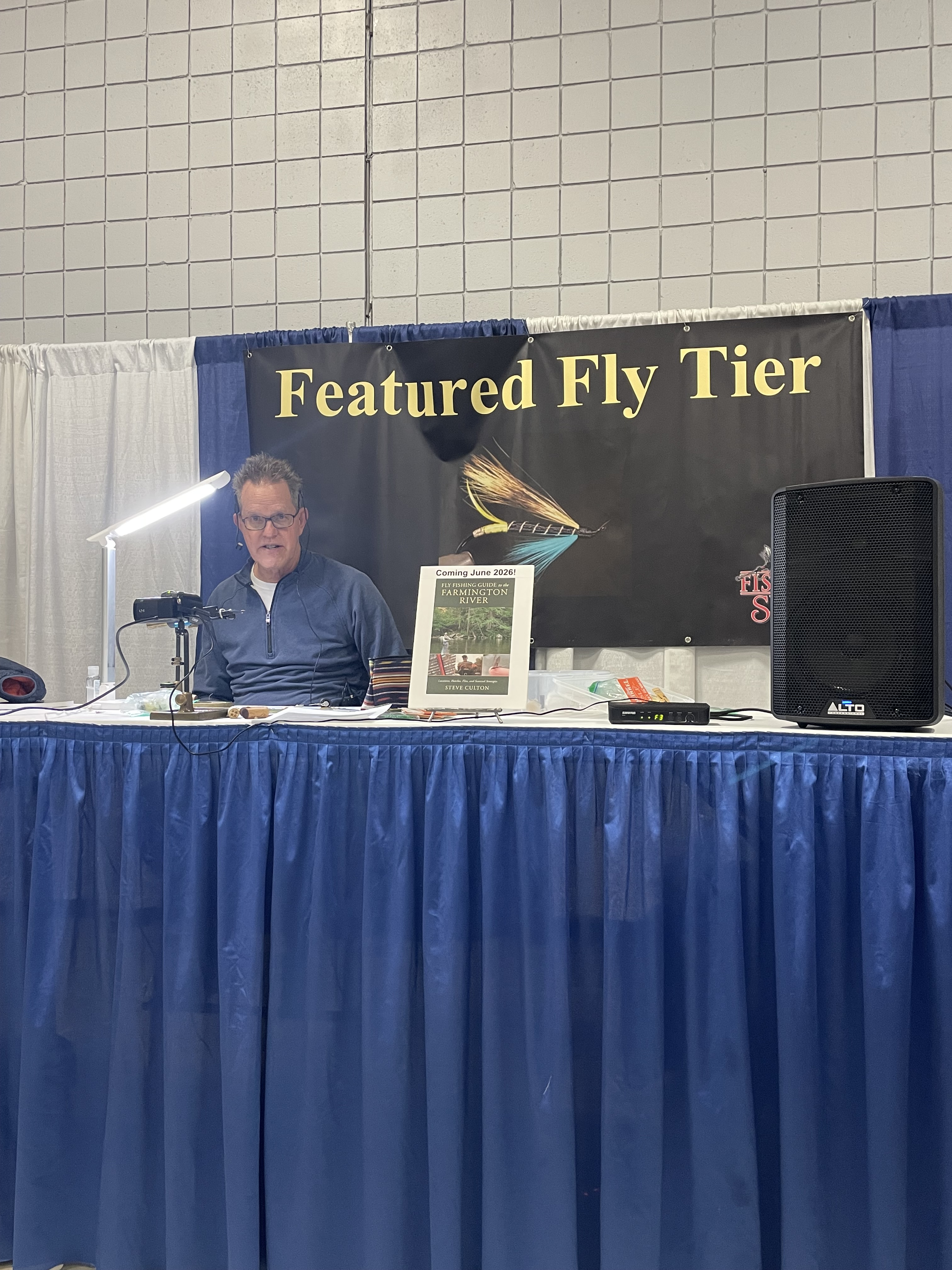
For starters, I was busy. Like talk here, then race down to there, get a bite to eat and say some hellos, and then setup and be Featured Tier, then zip back up there for a Seminar, and suddenly it’s 5:45pm busy. But it’s an extremely satisfying busy, especially so at this show. For my Friday noon Farmington River talk, I had standing room only, with people spilling out into the hall. Wow! More SRO at my Subsurface Caddis Lifestages tying demo. Then 35-40 people at my 4:30pm Seminar, which is a tough time slot to draw just a couple dozen. Double wow! If you were one of the people who showed up, thank you again. And if you’re one of the people who show up to my talks every year — I know who you are — I’m truly both humbled and grateful for your support.
Yeah. You know that guy. I had two Featured Tier gigs, and I had a blast tying and teaching and talking.
I was so busy, in fact, that I got to spend far less time walking Tyer’s Row and socializing and meeting and greeting and — dare I say it — shopping. But, you make time.
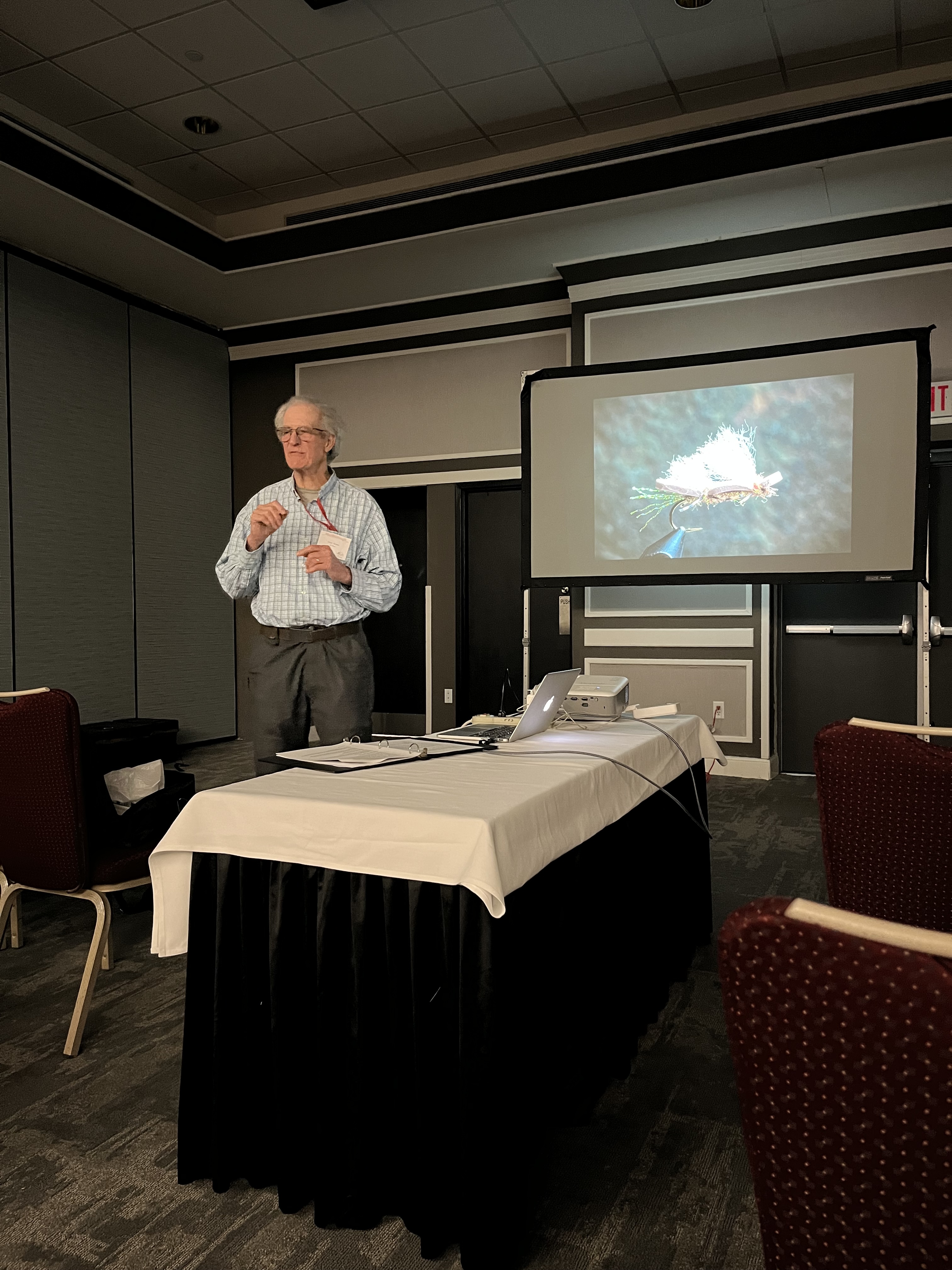
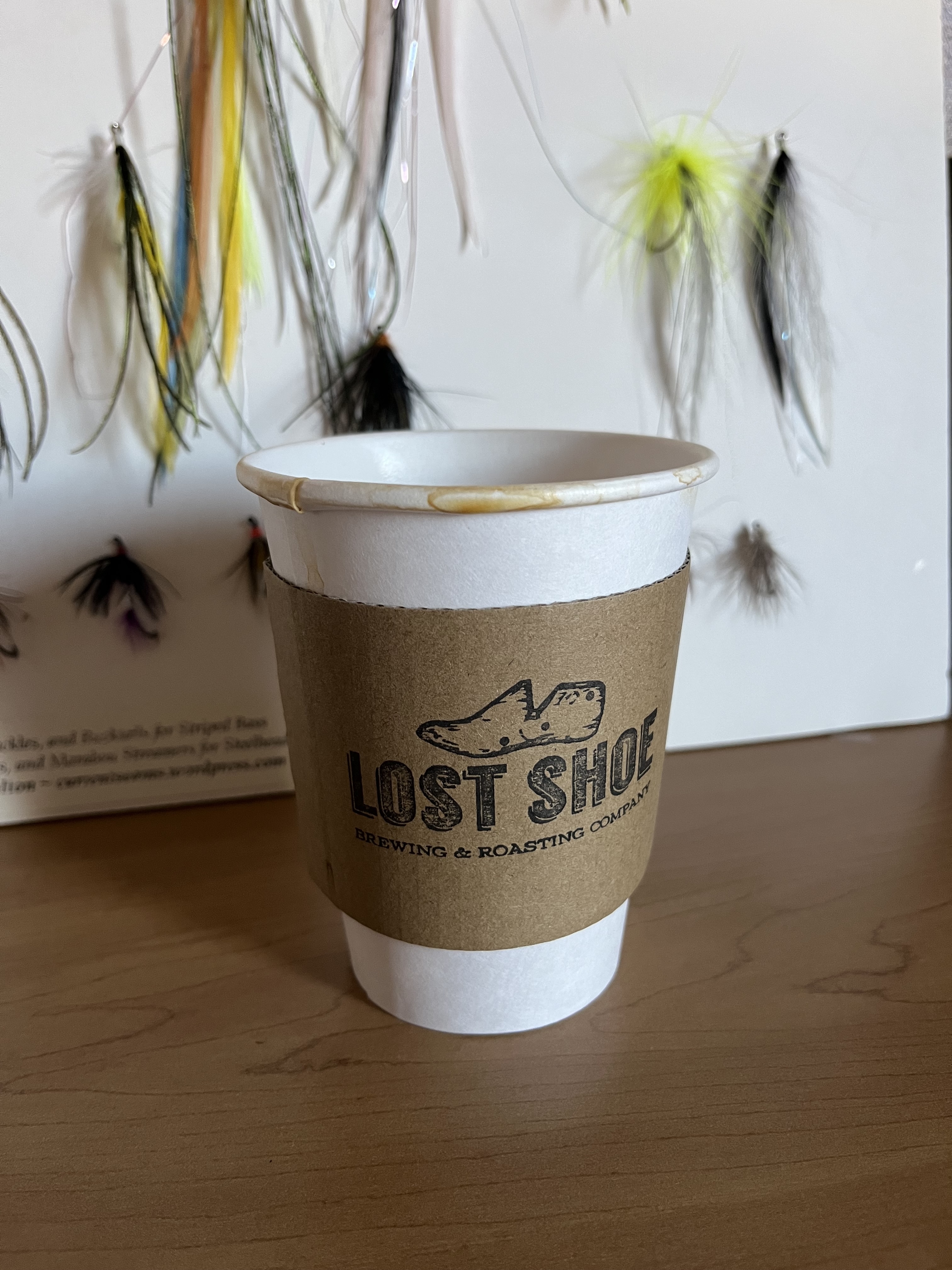
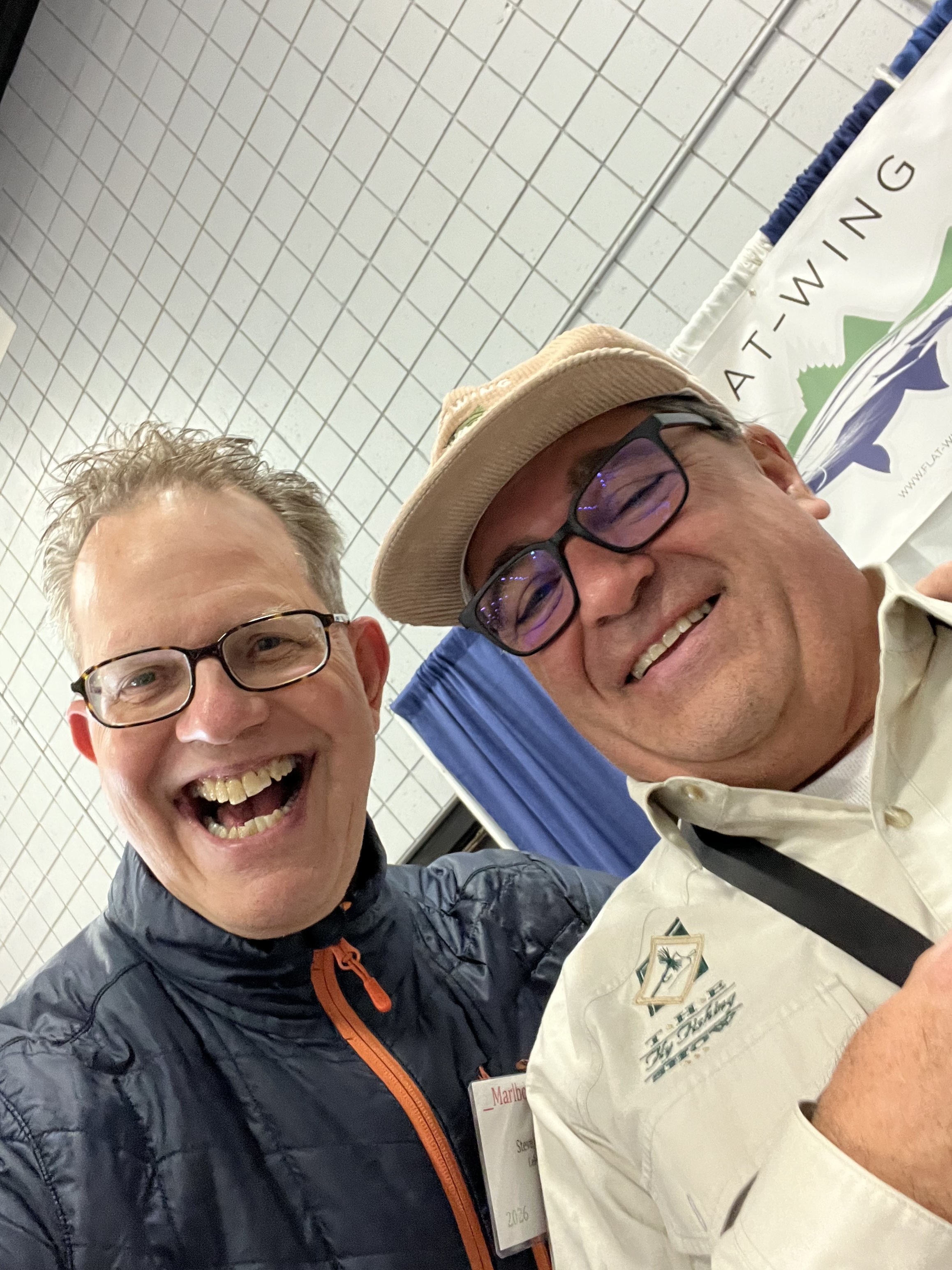
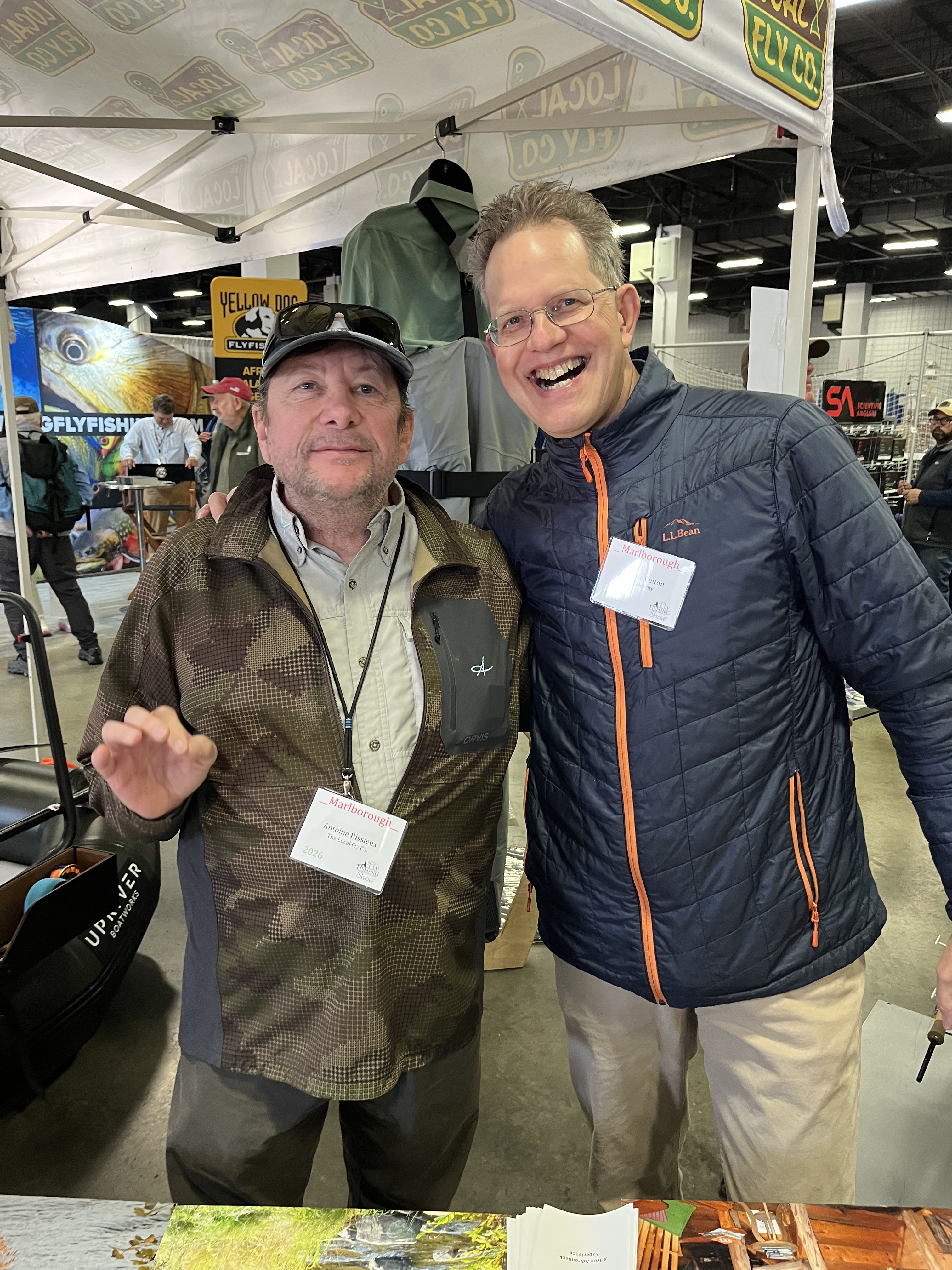
One thing I did get around to was meeting Tom Ames and attending his excellent presentation on modern hatch-matching. Ames’ original Hatch Guide to New England Streams was an invaluable reference material for the Farmington River book. He recently published an undated second edition.Don’t know where I’d be without my pour-over coffee. Oh, wait, I do — I’d be stuck with dreadful hotel coffee. Lost Shoe also makes beer, and I walked away with a four-pack of their double IPA for enjoyment at a later date. Lost Shoe is about 10 minutes away from the show. How convenient!The “Most Hysterical Moment of the Show” award goes to the gentleman who, while I was sitting at Joe Cordeiro’s booth (Joe was off doing a class), mistook me for Joe. When Joe’s assistant told him that I wasn’t Joe, the guy says, “Well, you two look exactly alike!” I mean, you can’t make this stuff up. Cue the laugh track!It was cool to see so many familiar, local faces, among them pal Antoine Bissiuex who was there with The Local Fly Company. I can’t thank Antoine enough for all his help with the book. I think you’re going to really enjoy his contributions, his insights, and experiences.
The 2024 International Fly Tying Symposium has come and gone, leaving in its wake many fond memories, new tying swag, and new acquaintances made. The event runs from Saturday to Sunday; Saturday is typically the busy day, with crowds dwindling by Sunday afternoon (it’s hard to compete with the NFL). If you’ve never been, you should, because it’s a tremendous opportunity to watch some of the best tyers in the world in action. You can meet them, watch them, talk to them, ask questions — I do all of that when I take a break and walk the room. There are private classes where you can receive personalized instruction. There are seminars that are included in the price of your ticket. And four times a day, featured fly tyers who tie and present to a small audience.
On Saturday night there’s a banquet, and everyone who attends gets a goody bag of fly tying swag. Thread, tools, materials…it’s all good stuff. Post-dinner, I hosted a little wine party attended by several luminaries in the fly tying world. Properly hydrated, Sunday went off without a hitch. Here’s some of the weekend in photos. Check out my Instagram @stevecultonflyfishing for more, soon.
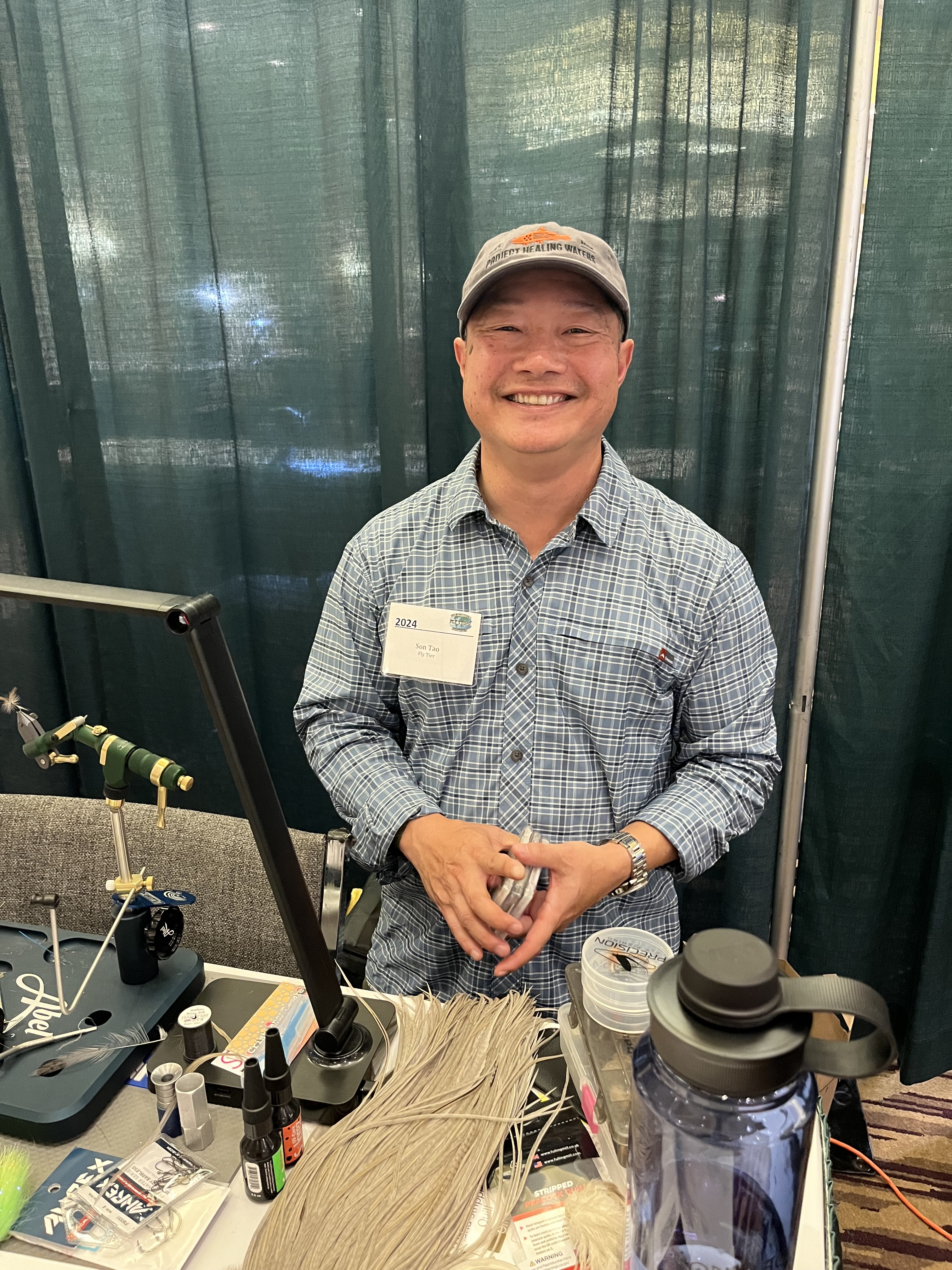
The first thing I did Saturday morning was put on my fanboy hat and go meet Jeff Blood. Jeff’s the originator of the Blood Dot Egg, my favorite steelhead egg pattern. Jeff was warm and welcoming and it was invaluable to be able to discuss steelheading and Lake Erie trib fly fishing with him. Jeff gave me some braid we use to tie the White Death Zonker, another favorite pattern of his. Later, I returned to my tying station to find two dozen Blood Dots and another package of White Death braid on my chair. Wow! Thank you, Jeff! I’ve also wanted to meet Son Tao since I read about his Caddis Emerger pattern in Pat Dorsey’s book Favorite Flies for Colorado. I shared a table with Bob Lindquist, Delaware River guide extraordinaire (and contributing photographer for my upcoming Farmington River book). Son was one table down the aisle, so it was easy to chat. He is one heckuva skilled tier. Also a shout out to David White who sat at the table next to me. Great to meet you!Not too shabby company! I was so honored to be included in this roster. This was my first time as Featured Tier in the Symposium, and my session was very well attended. If you were in the group, thank you for participating. Thank you also to everyone who stopped by my table to watch and ask questions and talk fly fishing. Tying LaFontaine’s Diving Caddis. Thanks, Phil, for the wonderful photos. It’s hard to believe that I’d never met Bob Clouser before this weekend. Bob was FFT just before me, so that seemed like a natural time to say hello. Whether you’re a presenter like me, a vendor, or an attendee, Bob’s kind nature is typical of the overwhelmingly positive energy you’ll get from everyone at the show. You’re with your tribe. People want to talk to you. So…you’re coming next year. Right? Or to the Marlborough and Edison Fly Fishing Shows in January. Right?
Last week, I reached my first manuscript milestone, which included 50% of the text, maps, and a couple dozen photos with captions. Off it went to the publisher, and here I sit with a satisfied smile on my face. So, this seems like a good time to give you a detailed update on the work.
Let’s start here: I’m really excited about what I’ve written so far. I don’t do anything halfway, so it’s particularly gratifying to be able to work on a project that I’m so passionate about. I think I’ve found a nice balance between dispensing facts, being conversational, and mixing in both anecdotes and even a little humor.
In terms of content, the template of Fly Fishing Guide to the Farmington River will generally reflect the other books in the Stackpole line of “Fly Fishing Guide To…” books. In my book, you’ll get a little history of the river; general information about the trout that live there; maps of the STMA that point out pools and major parking areas; descriptions of the major pools and the river in general; and outlines of the most productive fishing methods.
After reading the book, you’ll know that tying a big Isonychia soft hackle on point in August and swinging it through snotty pocket water is a very good idea.
But the truly useful part of the book will be the sections on hatches, seasonal conditions, and fly patterns. My goal for the work is that you’ll be able to read it and have a pretty good idea of where you should fish on December 2, with which method, and what flies to tie on. The book will feature over a dozen local patterns that are proven producers.
Even if you think you know the river, I guarantee there will be lots of information that will be new and useful to you. I’ve been fishing this river since the 1970s, I’m writing the damn thing — and I cannot tell you how much I’ve learned while writing this book.
A book like this cannot be written by one person without the help from others. I’ve been fortunate enough to be able to get input from guides and local experts; their knowledge, experience, and wisdom has been invaluable. My final deadline is June 1, 2025. My hope is that next year at this time, we’ll have a book ready for you to read!
Thank you so much for continuing to follow currentseams during this busy time. I’ll try to get you caught up a bit this month on other happenings. Up next, in this order: the IFTS redux, western PA steelhead, and SR steelhead reports. Also, the Fly Fishing Show in January. I’ll be at Marlborough and Edison.


 currentseams.com