Captain John McMurray (NY), to whom I gave high marks as I listened to the chaos of the webinar, has put together a wonderful synopsis of Tuesday’s meeting. John had the advantage (or as some wags might suggest, disadvantage) of being there, witnessing, and participating in the entire process. This is a must-read, folks. You can find it here.
In the meantime, if you fish for stripers in Rhode Island, please send an email to RI commissioner Jason McNamee asking to reconsider voting in favor of the 28″-35″ slot limit. Ask for your comment to be entered into the public record. They’re meeting on it this Monday! I’d like to see a roll call of everyone who sends an email in the comments section.
It wasn’t as bad as I’d feared. It wasn’t as good as I’d hoped. Welcome to the wonderful world of the Atlantic States Marine Fisheries Commission winter meetings. Yesterday’s focus was on discussing and formalizing each state’s Conservation Equivalency proposals. Almost 24 hours later, here are three big takeaways.
Settle in for a cup of tea. This might take a while.
The ASMFC is structurally and procedurally bloated. An efficient organization this is not. The webinar was audio only, so it made a helter-skelter meeting like this one even more challenging to follow. At times it was like watching a Bergman film — you try your best to keep up but you’re never really sure what’s going on. And I’m not the only one who saw it that way — the chairman of the meeting described it, and I’ll quote, as “chaotic.” Maybe it’s just as well that the meeting wasn’t video broadcast — surely you could lump the ASMFC Winter 2020 CE decisions along with laws and sausages as things you should never see being made.
~
My reaction to some states’ CE proposals can best be summed up by Otto, who so eloquently stated: “Disappointed!!!” (That includes you, Rhode Island.)
Beware of rogue states within the ASMFC. North Korea, Iran, Syria, Sudan, and…New Jersey? Let’s not forget Maryland, who along with New Jersey have some rather — ahem — creative ideas on how to best conserve and restore our rapidly dwindling stocks of striped bass. Remember in “A Fish Called Wanda,” when Wanda reminds Otto that the central message of Buddhism is not “Every man for himself?” Someone should point out to Maryland and New Jersey that the ASMFC mission is not, “Kill as many striped bass as you can under the cloak of conservation.” Nope, those emperors don’t have new clothes. They’re wearing the same crappy, poorly camouflaged outfits they’ve been sporting for years. Kudos to those who saw through their charades, like…
~
Some ASMFC Commissioners get it. If a state’s CE proposal fails to achieve target results, that state should be held accountable, right? High fives to those commissioners who called out certain CE proposals, effectively telling those states to behave and eat its broccoli. Apologies in advance to those I missed, but here are a few of the people who fought the good fight yesterday: Justin Davis (CT). Capt. John McMurray (NY). Ritchie White (NH). Pat Keliher (ME). Again, these are only a few of the people I could positively identify. A very sincere thank you to all of you who are trying to save our stripers. If you’re reading this, why not take a few minutes to send them an email of thanks and support. You can find that list here.
Is anybody there? Does anybody care? Some commissioners clearly do.Especially those who understand that killing this fish now doesn’t bode well for the future.
I couldn’t believe my eyes when I pulled into Maneeley’s parking lot at 11:30am. A full house, with overflow parking! Saturday’s CFFA Expo was very well-attended — I think I heard close to 300 people –well done, everyone!
Great to see old friend Andy Manchester holding court at his booth near the main entrance. In case you don’t know, Andy is the man to see for used/reconditioned/rebuilt/custom cane and glass fly rods. I have several examples of his work, and I love every one of those sticks.
~
Old reel swag at Andy’s table. There’s something about a decades-old reel, burnished by time and wear, that romances a cane rod and conjures up grainy images of Lee Wulff and Curt Gowdy.
~
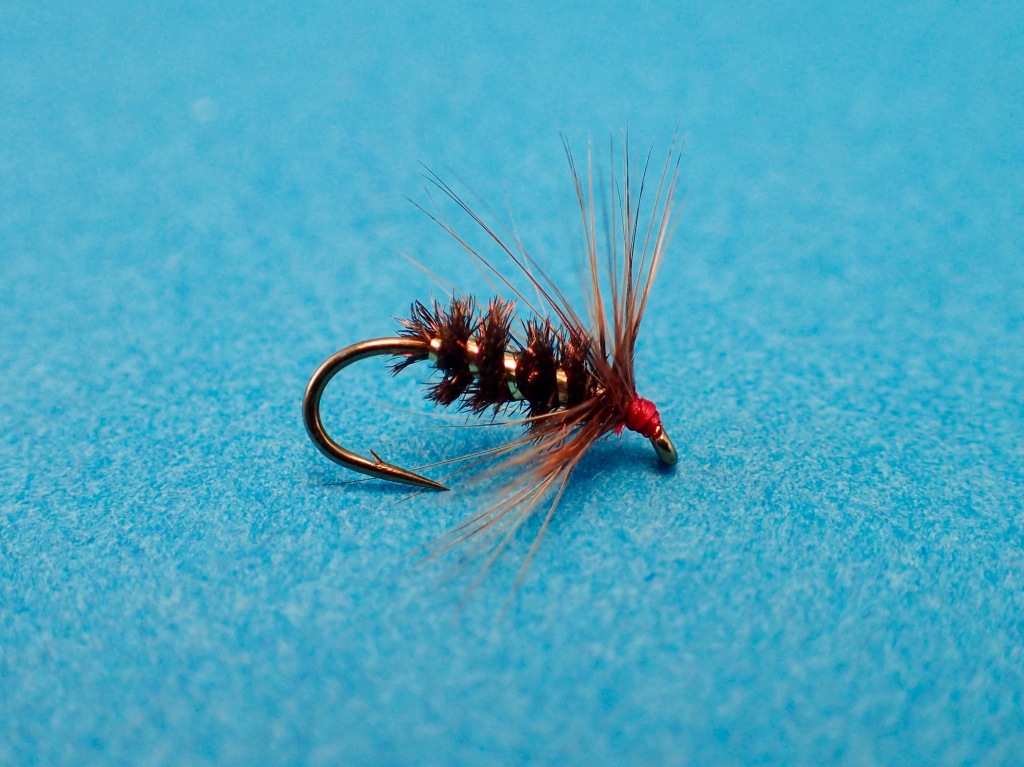
This look like something a rooting striper might take? I sure thought so. Many thanks to Captain Mark Dysinger of Flyosophy Charters who gifted me this fly. What a buggy crabby shrimpy morsel. I got a couple flats in mind for this one…
~
Last but not least, thank you to everyone who came to see my 1pm presentation, Lost Secrets of Legendary Anglers. A strong turnout (including several currentseamsers — thanks for the support!) and another excellent post-talk Q&A.
I had some excellent Q&A sessions about wet fly fishing at the Marlborough and Edison Fly Fishing shows (great job, people!) and I wanted to share some of what we discussed with you.
Q: What knot do you use when you build your wet fly team leader? A: I’ve been using a triple surgeon’s knot for years. It’s easy for me to tie, and it’s reliable — I don’t think I’ve ever had one fail. People also asked about the blood knot, and the answer is: use the knot you feel most confident about/is easiest for you to tie.
Q: Do you use tippet rings when you build your wet fly team leader? A: I don’t, mostly because I don’t see a need. The perceived need is that it would be easier to replace a dropper tag (rather than build a new leader) with a tippet ring and it’s hard to argue with that. This is a “what works best for you?” situation. I don’t use tippet rings because I rarely change flies on my leader system, and even when I do I’ve learned how to reattach a fly using a minimum of tag material. Speaking of attaching flies, here’s a nifty tutorial from my buddy Tim Flagler on the Davy Knot, which uses very little material.
Q: You say to pause before you set the hook. Aren’t you afraid the fish will spit the fly? A: No. I quote from The Book of Syl: “With the soft-hackled fly, the trout throws caution to the wind, because he’s not afraid to move under the water, and speeds to the fly with urgency.” The fish has made the decision to eat. He’s said “yes” to the fly. With an immediate hookset, you’re saying “no” to the fish. By pausing — asking, “Are you still there?” before you set the hook — you’re ensuring that the fish will turn away with the fly in his mouth, having neatly hooked himself.
This massive hen blasted the fly, an old English pattern called a Hackled March Brown. She hit so hard she ripped the line out of my hands. There was no need for me to set the hook.
Q: Is fishing wet flies a secondary tactic, or do you ever go to the river intending to fish wet flies? A: I frequently go to the river with the sole intent of fishing wet flies. In fact, I’d say wet flies account for the vast majority of my trout fishing — and catching — between late April and mid-summer.
Ask currentseamser Greg about how good the pre-hatch fishing can be with wet flies!
Q: You talked about using wet flies to catch trout feeding on emergers. Is there a point during the hatch, such as when you see duns on the surface, that you’ll switch to dry flies? A: What a great question! The answer is yes. If I am pounding up fish on wet flies and suddenly my hookups stop — but the river is still boiling with feeding fish — that’s my cue that they’ve either stopped eating what I’m throwing or may now be feeding on the surface. If I see the duns getting taken, and my wets aren’t catching, that is compelling evidence to switch to a dry fly. This scenario frequently plays out during the Hendrickson hatch. It’s wet fly gangbusters up until about 3pm, then suddenly the hookups slow to a crawl. Changing over to a dry usually solves the problem.
I hope that helps, and if you have questions, please don’t hesitate to ask.
“The best little fly fishing show in New England” returns! Don’t miss the CFFA Expo this Saturday, February 1, 9am-3pm at Maneeley’s, 65 Rye St. in South Windsor, CT. Due to a coaching commitment I won’t be on Tyers’ Row, but I will be presenting “Lost Secrets of Legendary Anglers” at 1pm. Last year’s presentation was SRO, so be there or be square!
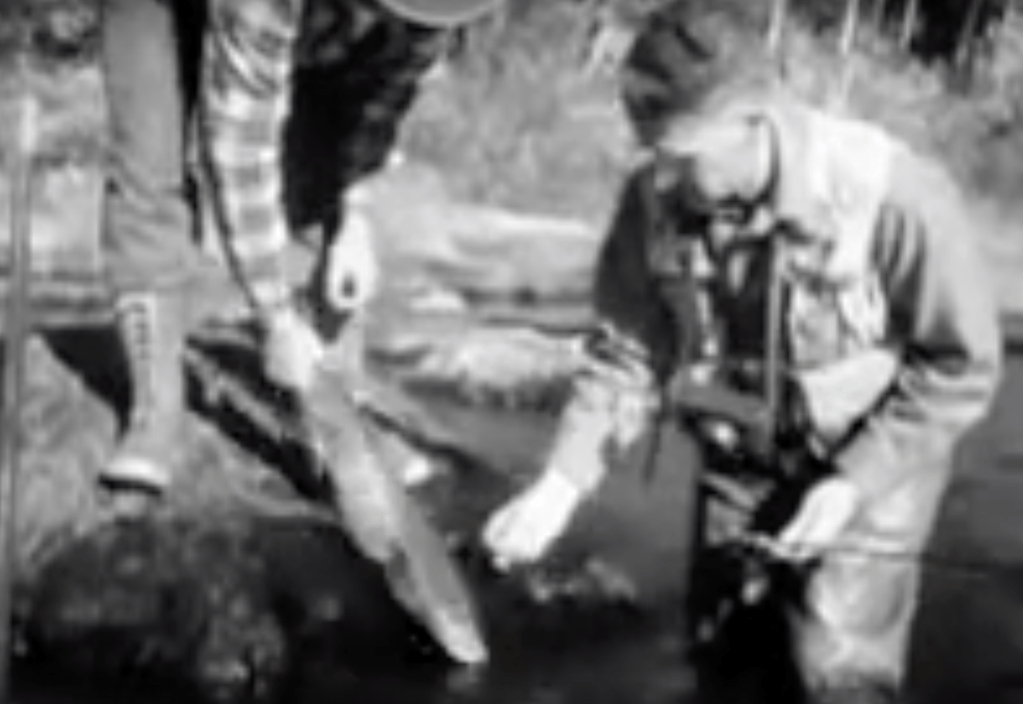
Have you ever wondered which rod Lee Wulff would use in this situation? What does Ken Abrames do before every cast? Where does Joe Humphreys think the most productive spot is on any river? These questions and many more will be answered in LSOLA. Culled from literature and personal interviews, this presentation covers 15 proven tactics and strategies used by master anglers, past and present, to catch more fish. Here’s a shot of the esteemed Mr. Wulff gettin’ it done.
Another year, another Fly Fishing Show — or two — but we’ve already covered Marlborough, and so we shift our focus to last weekend’s festivities in Edison, NJ. I was there Friday only. Since my Wet Flies 101 Seminar was at 4:30, I had the entire day to walk the floor and socialize. Here’s a little photo journal.
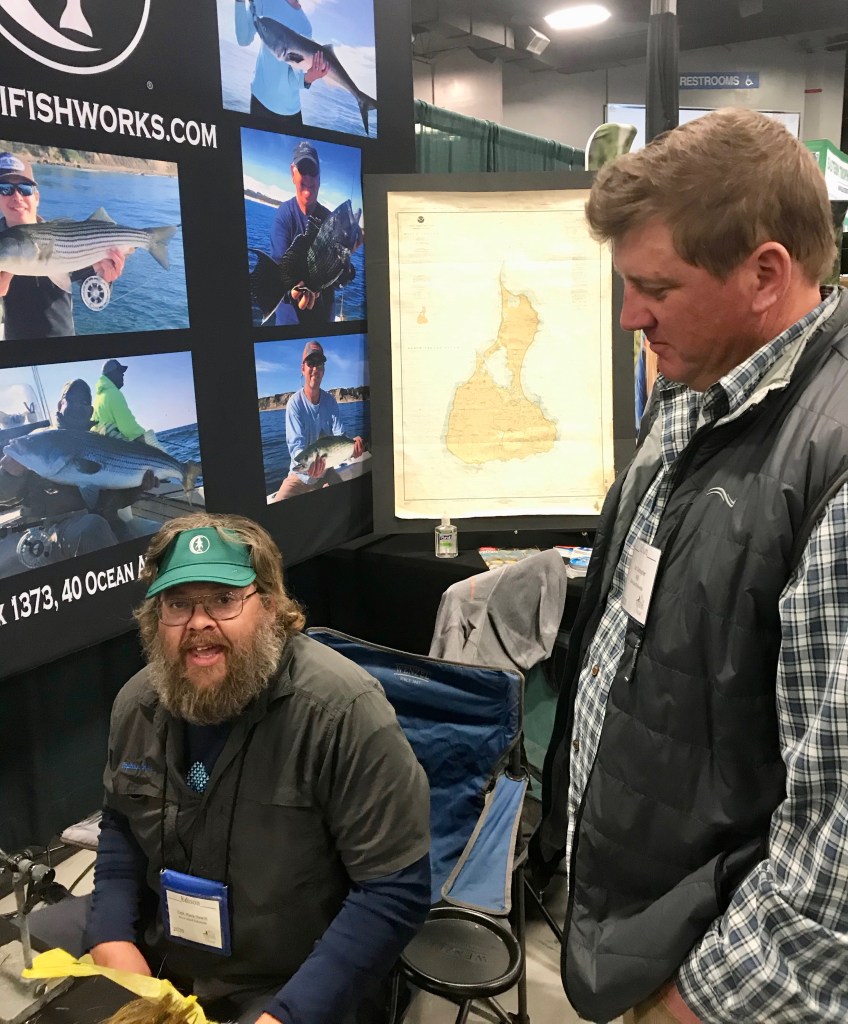
The beard is back! Captains Hank and Chris holding court at the Block Island Fishworks booth. This is the place I visit when I want to get pounded unmercifully for wearing a “Celebrity” badge — or to talk BI stripers. Thanks, guys, for lending me a chair to take a load off.
~
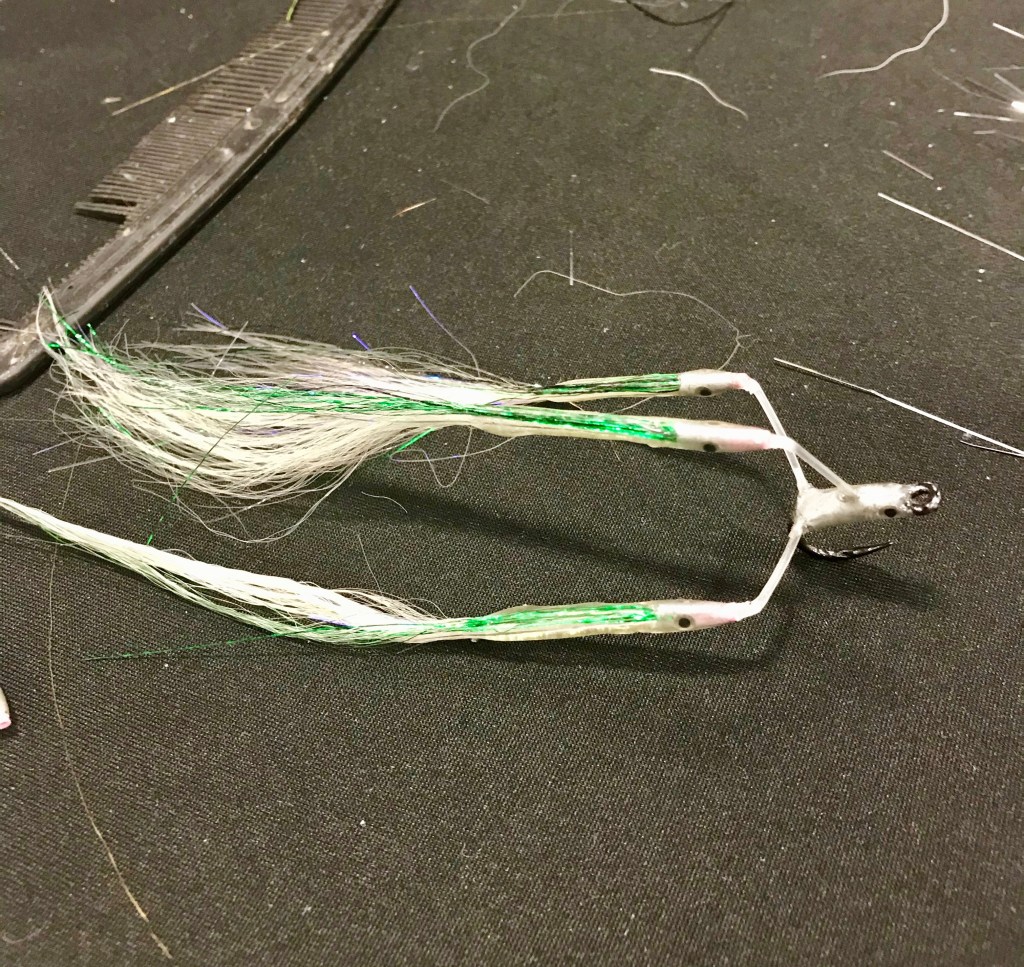
Here’s an interesting concept: Hank’s sand eel fly umbrella rig. Four flies, but only one hook on the front fly. I think the joints are 100# mono. Hank’s intent is a protein payoff for a larger bass. He says he’s tested it, and reports success!
~
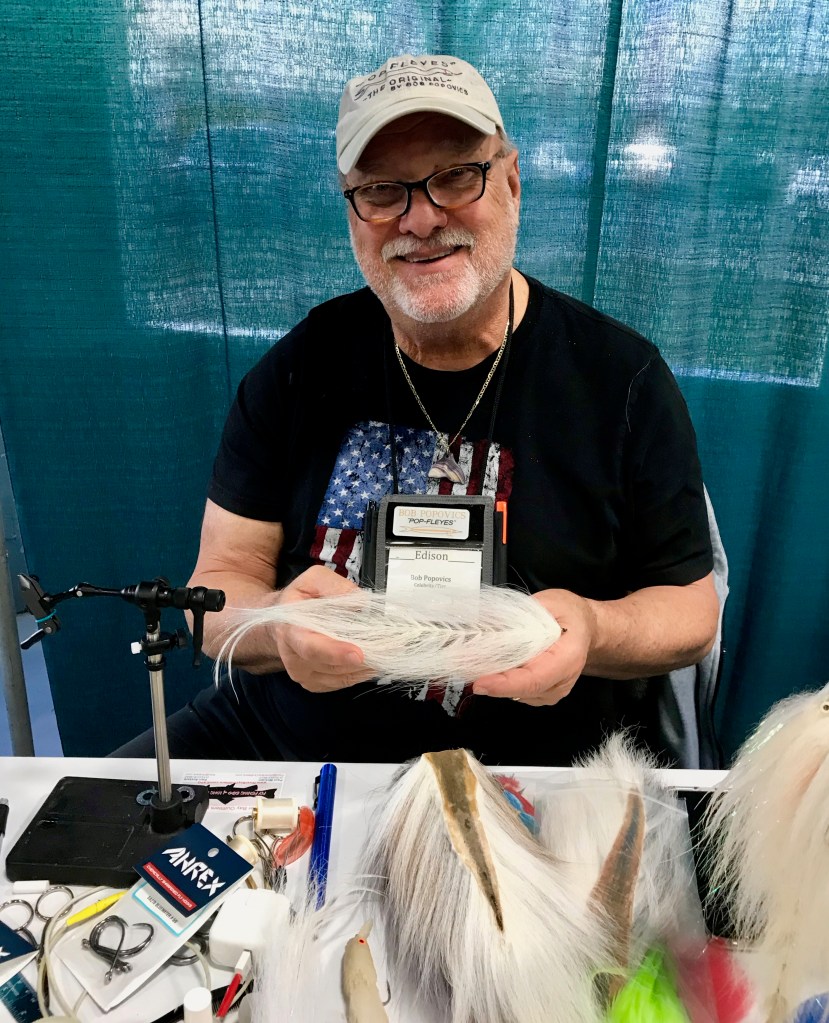
Sticking with the saltwater theme, here’s friend Bob Pop showing off one of his Beast Fleyes. There always seems to be a crowd around his tying station, as Bob is generous with his time and smile. We got a chance to discuss one of our shared interests: growing roses.
~
The best consistent source for flatwing saddles continues to be the Keough Hackle booth. There are hundreds of saddles to pick through in dozens of colors, so be prepared to invest the better part of an hour if you’re particular (as I am) about your saddles. Nothing for me this year, as I continue my quest for the perfect red grizzly saddle.
~
Flatwing tyer extraordinaire Joe Cordeiro discusses the finer points of one of his designs with fellow currentseamser Michael Silfen. Just before this photo was taken, Joe was showing me a lovely lavender saddle he scored from Keough.
~
Here’s the latest I have on the Pearsall’s Gossamer Silk replacement: the company is called Morus Silk, and they’re attempting to duplicate the Pearsall’s colors with this new line. The spool appears to be the same small size as the original silk. I picked this sample up from Mike Hogue of Badger Creek Fly Tying. I haven’t used it yet (lots of August Whites in that spool) but I’ll letcha know how she goes.
~
Almost last but not least, Wet Flies 101. It’s a little daunting going up against the legendary Joe Humphreys — in the next room, no less — but I had a spirited crowd, and we had a most excellent time talking about wet flies. The post-talk Q&A was one of the best I’ve ever experienced, both from a quality questions and a duration standpoint (we closed the show down!). I’ll talk about some of those questions in a future post.
Arrive noonish or a little before. Walk the floor, make the rounds, say hello. You can always text me if you’re looking for me — you can find my number here. I’m going to try to catch parts of a few presentations before my Seminar, which is 4:30pm in the Catch Room, Wet Flies 101. Of course, I’ll see you there. Right?
Three busy days at Marlborough and I’m a tired but very happy angler. I think I had more fun at this show than any other. Five gigs, lots of hobnobbing, and a little buying. Here’s what went down.
I try to go to as many presentations as possible, and unfortunately I didn’t get to half of the ones I planned on. Here’s George Daniel doing his Streamers 2.0 presentation. If you’ve never seen him speak, you’re in for a treat.
~
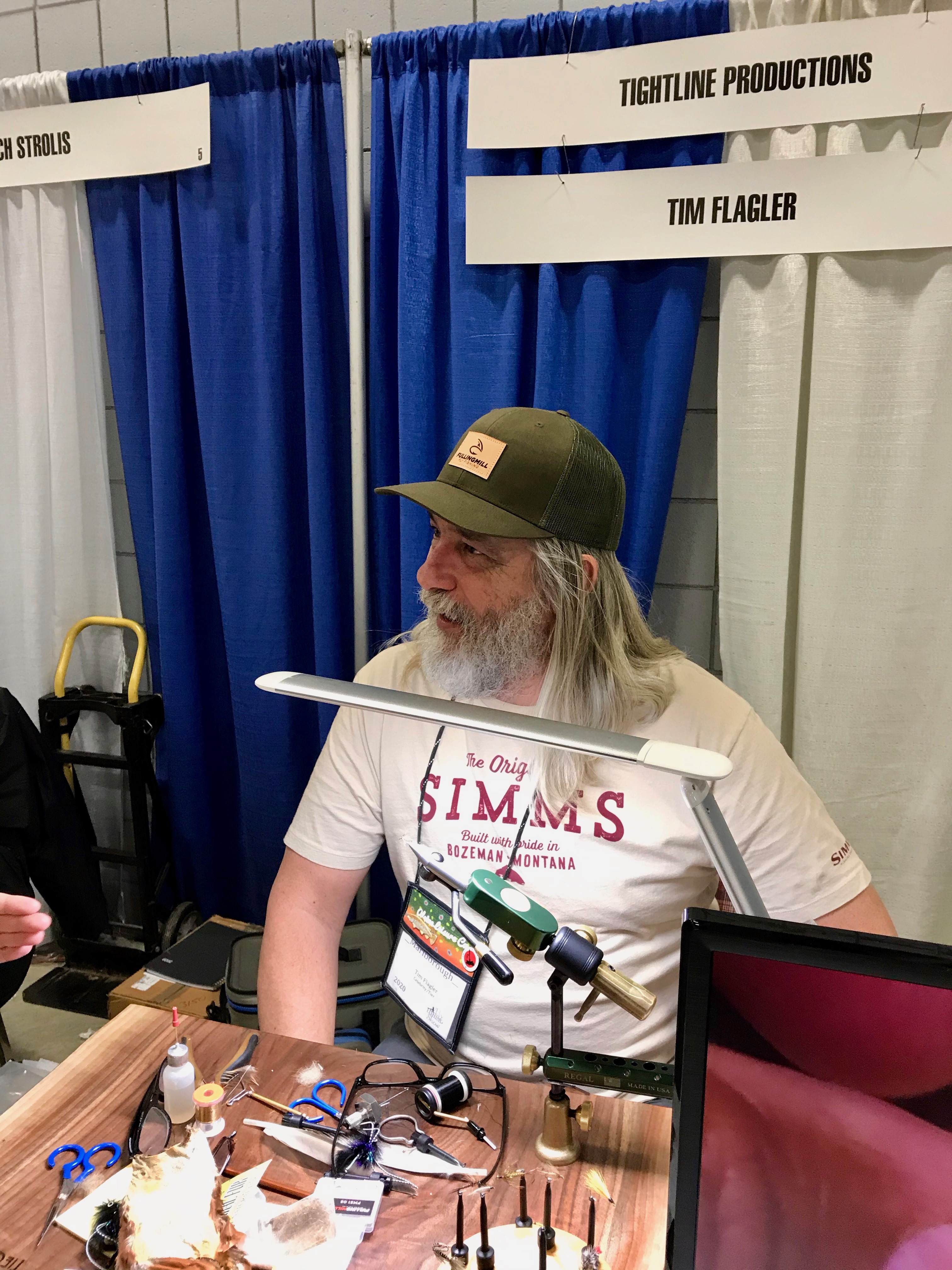
Fly Tyer’s Row is a always a wise use of time. Not only do I get to catch up with old friends (and make new ones) I also find inspiration and ideas. Top to bottom: salmon fly tier extraordinaire Lisa Weiner (thanks for the casting help!); saltwater whiz Captain Ray Stachelek of Cast A Fly Charters; maker of wonderful fly tying videos Tim Flagler of Tightline Productions.
~
Between socializing and gigs, I managed a little shopping time. The Keough booth had their usual massive selection of potential flatwing saddles (plan on spending the better part of an hour scouring the bins). If you’re a wet fly and soft hackle freak like me, the Badger Creek booth is a must. Saturday’s score included a full jackdaw skin, some woodcock wings, and that prized winging material, lemon wood duck. Owner/operator Mike Hogue told me that another company bought the rights to Pearsalls and their dying process, and is now offering tying silks. As you can see, we’re all a little excited about it.
~
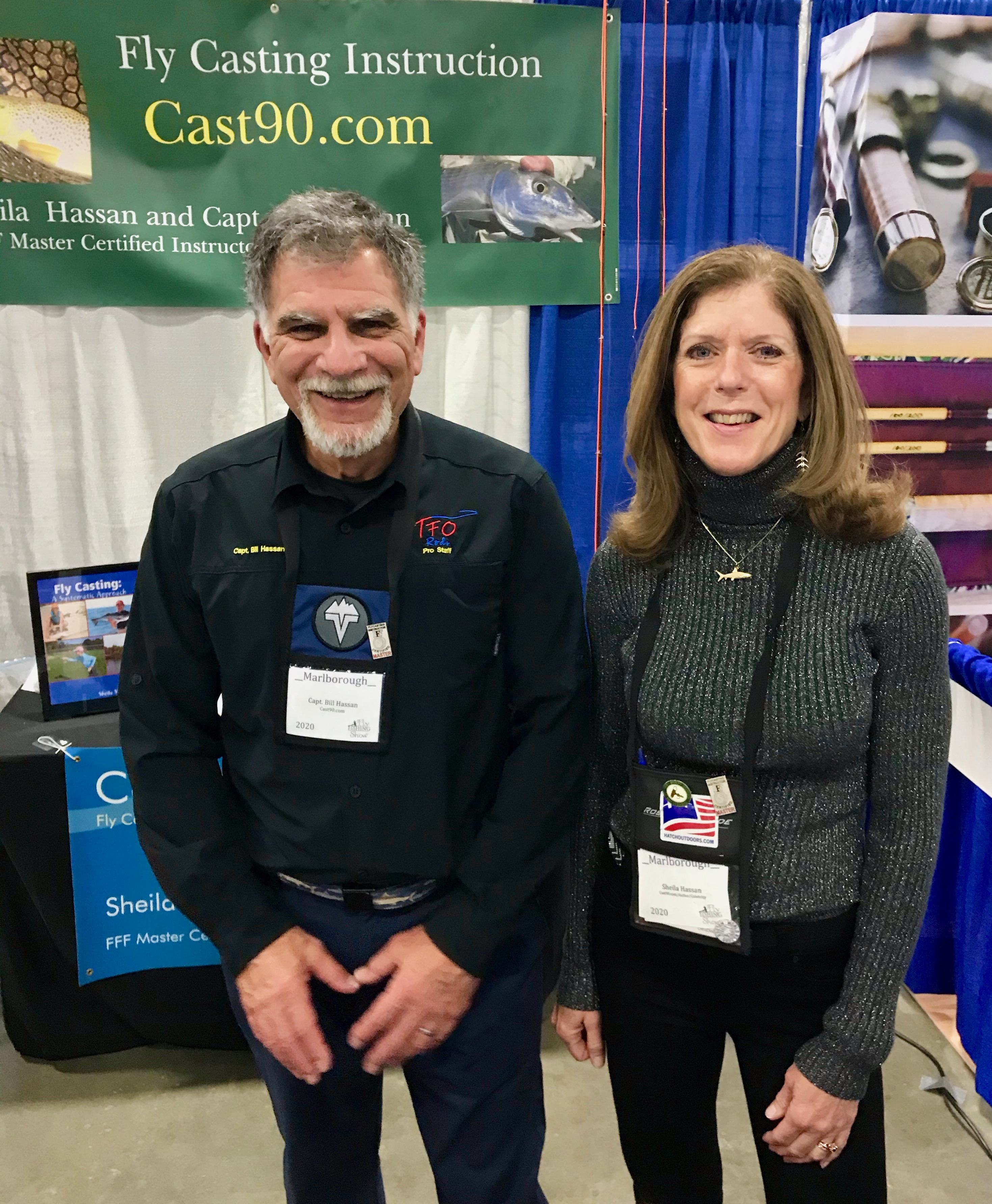
You are now at maximum expert casting density. Bill and Sheila Hassan are both gifted casters and really nice people. Always a pleasure paying them a visit. I didn’t get a chance to take photos at the Bear’s Den or Saltwater Edge booths, but likewise on the visit energy.
~
Hanging with the boys at the author’s booth. From left: Ed Engle, your humble scribe, George Daniel, and Jason Randall. Check out my Instagram feed (stevecultonflyfishing) for a silly outtake!
~
Hey, I know that guy. Last but not least: thank you to everyone who took the time to see me speak, took my class, stopped to say hello, or just wanted to chat about fly fishing. I couldn’t do any of this without you. Thanks also to Chuck, Janet and Ben Furimsky for letting me be a part of their show. See you in Edison, NJ Friday, January 24, 4:30pm in the Catch Room for my Wet Flies 101 seminar.
I’ll be giving you the story on the Marlborough Fly Fishing Show soon, but right now let’s talk about Landon Mayer, author of The Hunt for Giant Trout (book review here.)
From the UpCountry website: “Landon Mayer, maybe the top sight fishing trophy trout guide in the country, is doing a FREE presentation on catching trophy trout. It’s open to the public and will take place at the upcoming FRAA 7pm meeting this month on Wednesday, Jan 22nd at the Farmington Senior Center in Unionville (321 New Britain Ave, Unionville, CT 06085). His latest/4th book is “The Hunt for Giant Trout”, and there will be copies of it for sale at the meeting and you can get them autographed. All are welcome to attend, and what you will learn is 100% relevant to the Farmington River as Landon spends most of his time fishing pressured tailwater fisheries in Colorado targetting above average trout. He has also ventured out East to fish Great Lakes tributaries for giant fall Lake Run Browns & Steelhead, and he has fished central PA for trout too. There will be plenty of opportunity for Q&A with Landon at this event.”
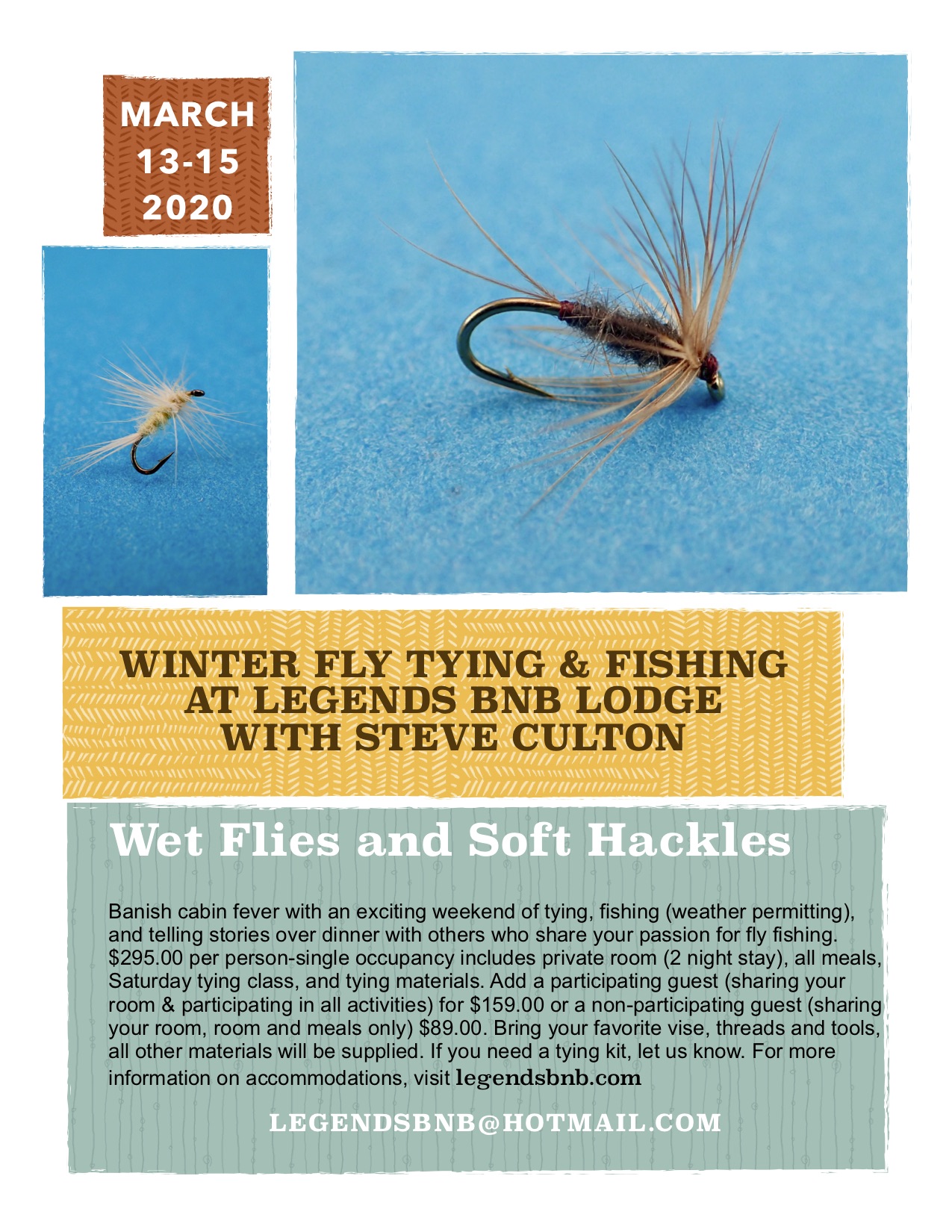
It was my bad, folks, as the original date conflicted with the state hockey tournament. New dates for theWet Flies and Soft Hackles weekend at Legends BNB on the Farmington are March 13-15. I’ll be there on Saturday March 14 to lead a day-long tying class and wet fly seminar. You get to stay at an amazing lodge on the banks of the Farmington and, weather permitting, get out and do a little fishing. Please note, you cannot book through me — you need to contact Legends directly. Last year’s event was a blast — hope to see you there!













 currentseams.com