I say again: the new normal is flood or drought (and both of them suck)

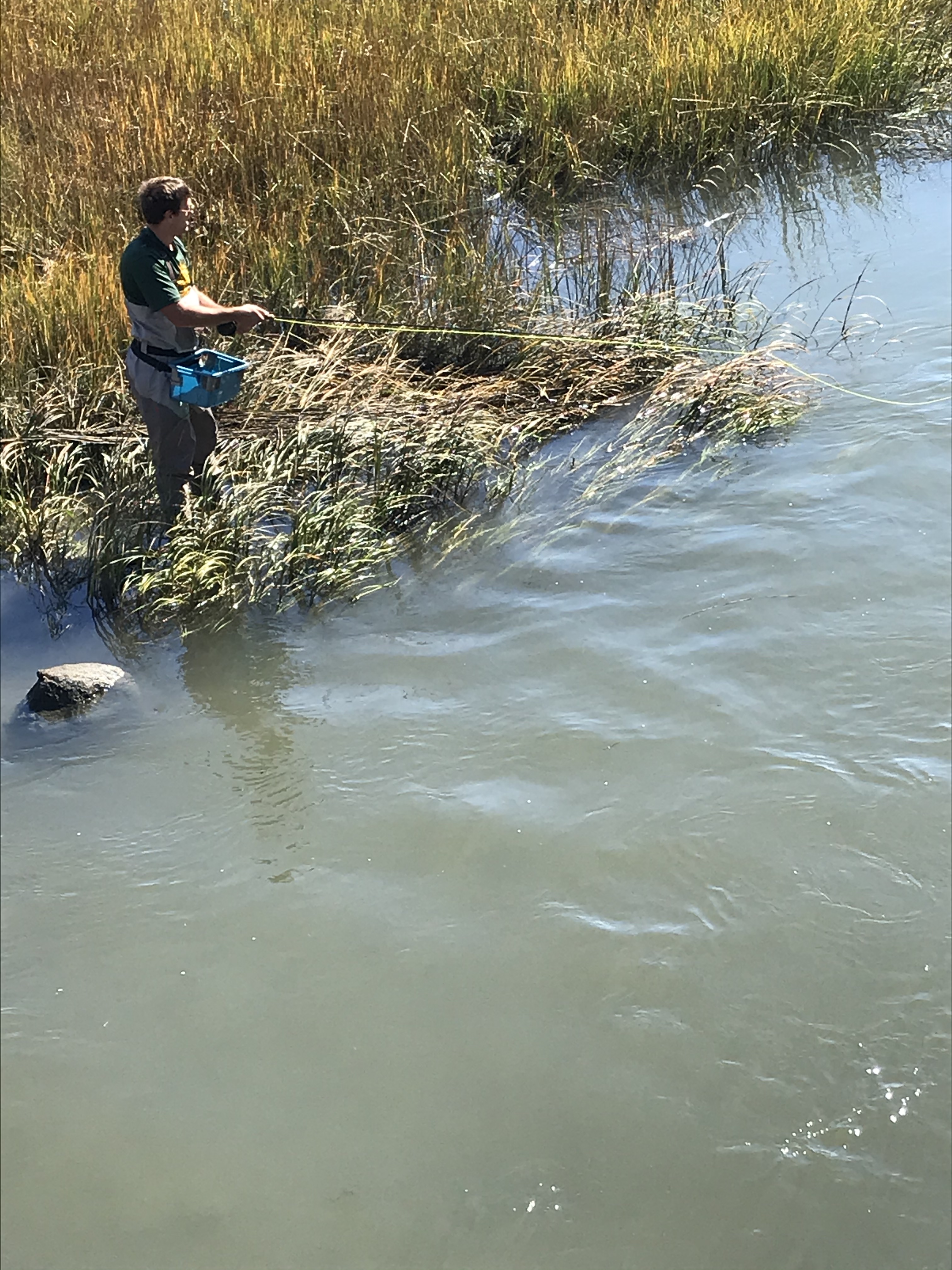
I had planned on some serious smallmouth expeditions this week, but Mother Nature and the new normal — extreme weather — have put the kibosh on that. Last year it was drought, heat, and low water. This year, it’s torrential downpours and flooded rivers. This is now the sixth rainiest July on record, and here’s the kicker: we’re not even halfway through the month. (Anyone who doesn’t think we are experiencing climate change should note that of those six rainiest Julys on record, three of them have happened since 2001.) Some of you have inquired about wet fly guide trips, but I’d like to see the Farmington come down below 500cfs before we plan. Hang in there folks. Tie some flies, fish the salt or small streams, and sooner or later it will stop raining….for months…and we’ll be in another drought.

Last year at this time, the Housatonic was medium low. (This is about 100cfs below historical normal.) We were in the beginning of the drought, and while manageable, the flow never got consistency higher than this for the duration.
Yikes! What a difference a year makes. Twenty times the amount of water, and I’ll consider us fortunate if it comes down to 1K some time next week. I generally favor high water over low water, but this episode makes one reconsider that position.

Ray Bondorew’s Marabou Sand Eel

In his classic Stripers and Streamers, Ray Bondorew serves up an unimpeachable truth: fly tyers tend to overcomplicate things. Nowhere is this more true than in striper fly tying, where realism is king. Sand eels, also known as sand lances, are pretty basic — slender body, pointed snout, lighter on the bottom, darker on the top. Yet, as Ray observed, “Many sand eel patterns have been devised over the years, and many seem to involve much work to copy such a slender, simple bait. Complex bodies with Mylar tubing, Corsair, and epoxy have evolved. Several patterns require tandem hooks.” He doesn’t mention my pet peeve: eyes, which do a fantastic job of catching anglers. But I digress. I’ll let the man continue.

“I have always thought,” Ray said, “that there must be a way to formulate a simple, quickly tied, and effective pattern, especially for sand eels less than four inches long.” So Ray went forth and prospered at the vise. Ray’s Marabou Sand Eel is another favorite of mine, along with Ken Abrames’ Eelie, for imitating small sand eels, three inches long or less. Like Ken, Ray has some very specific thoughts on how best to tie this pattern.

“The trick here,” he says, “is to use as little marabou as possible.” Any thicker than a paper match width is, as Ray calls it, “overdressed.” Wet your fingertips and run them along the length of the completed fly to see if you’ve achieved your goal. Those who channel their inner sparse, impressionistic fly artist shall be rewarded with fat, cantankerous stripers.

Ray’s Marabou Sand Eel. Thread: Light green monocord. Hook: Eagle Claw 254 size 1 or 1/0. Body: Pearl braid. Tail: Several wisps of long white marabou over which are tied two strands pearl Flashabou and a few wisps of olive marabou. Wing: A few wisps of olive marabou topped by 2-3 strands of peacock herl.

Tying notes: As with Ken Abrames’ Eelie, I use the Eagle Claw 253 or other light, wide gap hook. No monocord for me, so I use Olive UNI 6/0. Leave a 3″ tag of thread near the hook bend; use this tag to bind down the wing. (Ray says if you choose to go the non-bound wing route, the pattern makes a fine silverside fly.) The pearl flash should extend beyond the wing by 1/2″. Use high quality marabou quills, and keep it sparse. What’s pictured here is as heavily dressed as I go.

If you tie Ray’s Marabou Sand Eel and it looks too thin, you probably tied it right.

Ken Abrames’ Eelie: the sand eel pattern where thin is in

Many of you know that Ken Abrames’ Big Eelie is my favorite sand eel fly. I use it primarily when the bait is at least 3″ long, or when I’m fishing an open beach or need a sand eel searching pattern. Oh, did I mention that it’s my favorite fly for Block Island? But smaller bait requires a smaller fly. Enter Ken’s Eelie, little brother to the Big one. The Eelie is basically a Big Eelie minus a saddle and the soft hackle. I rarely tie the Eelie longer than 4″; 3″ seems just about right. I love this fly as part of a three fly team; that’s how I most often fish it. Like the Big Eelie, the Eelie lends itself to all manner of color variations (try white, chartreuse, and olive, with a chartreuse body).

The Eelie is an exercise in sparse construction (some bucktail and a few hackles), simplicity (it’s a fast, easy tie), and impressionism (no eyes). The key to the Eelie is its thinness. I’ll quote Ken from Striper Moon: “The secret of tying effective sand eel flies is how thin you make them. Sometimes, an eighth of an inch thick is too heavily dressed.” You’ve been so advised by the master himself.

Ken Abrames’ Eelie. Hook: Eagle Claw 254 sz 2-1/0. Tail: White bucktail, then a white saddle, then pearl flashabou, then a yellow saddle, then an olive saddle. Body: Pearl mylar tubing. Wing: None

Tying notes: Ken’s original recipe is listed above. I make a few changes when I tie the Eelie. For years, I’ve been using the Eagle Claw 253 1/0 and some smaller hooks from brands like Gamakatsu; the key is to find hooks that are short shank, wide gap, light and strong. I match thread color to body color (here I used UNI 6/0 white). Instead of tubing, I use pearl braid for the body. Follow Ken’s instructions for thinness, and you’ll make the bass — and yourself — very happy.

For sand eel flies like the Eelie, thin is always in.

Happy Independence Day (with some bonus fireworks)

Happy Birthday to the United States of America. I hope you’re have a safe and fun Fourth of July; maybe you’re getting together with family, or perhaps you’re out on the water. To help you celebrate, here’s bonus from the archives: the Olive Fireworm Big Eelie variant. This is my traditional 4th of July favorite sand eel pattern. Tie some up, and let the fireworks begin!

Boom. Ooh. Ahh. Ohh.

“Low & Slow: Summer River Smallmouth” in the July 2021 issue of The Fisherman

Last summer was challenging time to fish for smallmouth: we had the double whammy of heat and severe drought. In “Low & Slow: Summer River Smallmouth,” I talk about some of the strategies, tactics, and flies I used to find success in those truly tough conditions. You can read the article in the current (July 2021) New England issue of The Fisherman magazine.

Re-stocking the summer striper box

I received so many comments and emails about my recent post on my striper fly box that I thought it deserved a follow-up. Having taken to the vise, my next step was to fill in the blanks. The box is sand eel-heavy, and that’s by design since I like to fish summer marks where sand eels are the primary forage.

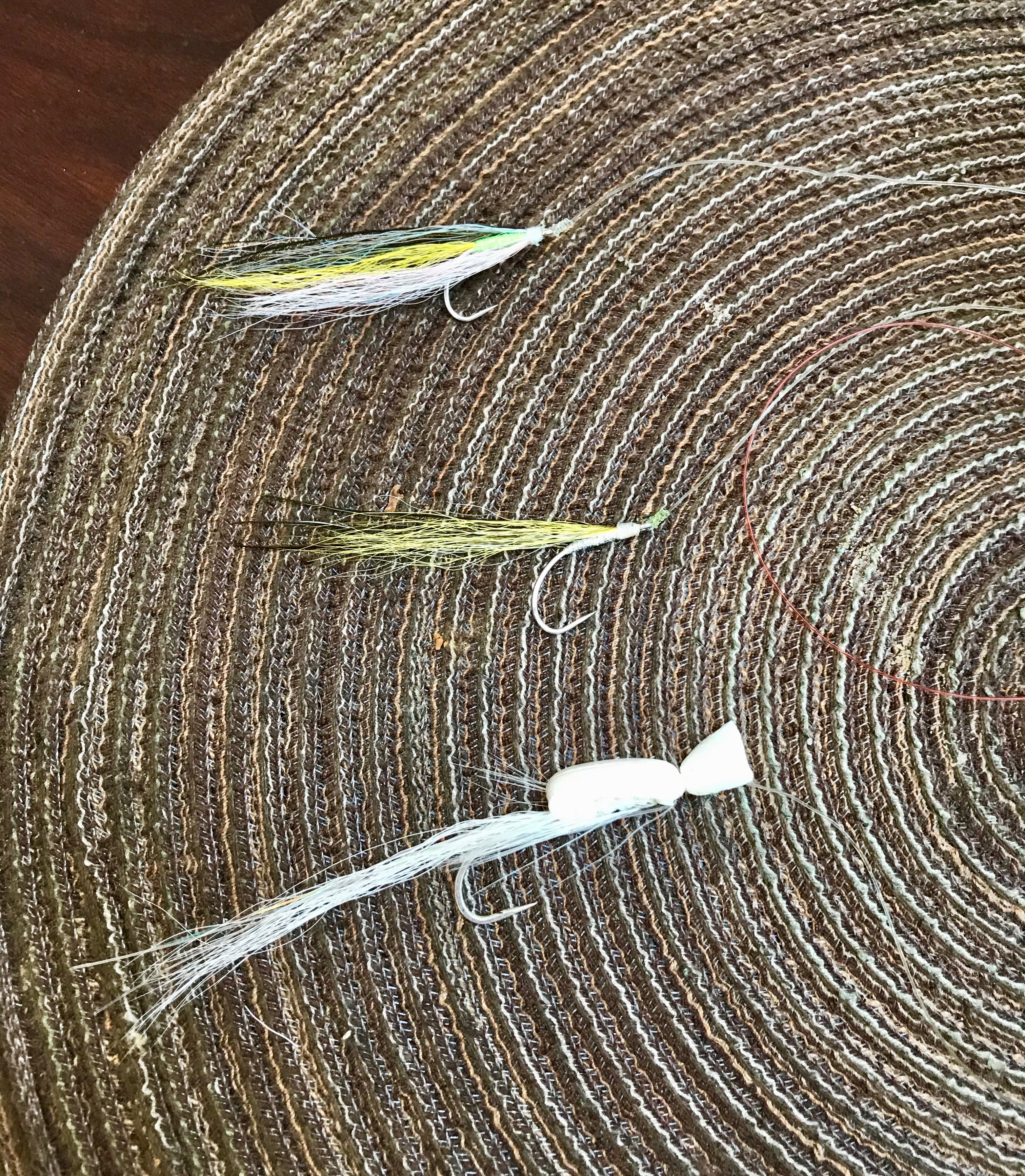
I populated the third row with small stuff like clam worms, shrimp, and mostly small baitfish and sand eels. The second row gets all sand eels, from left to right: Eelies and Eelie variants, Ray’s Marabou Sand Eel, and the Golden Knight bucktail. Those flies are all 2 1/2″-3″ long. The big-eye hooks were gifted to me by some friends in Europe; I’m not sure of the name or size, but they look strong, have a wide gap, and are very light.
To the main event! Big Eelies get top billing since they are my workhorse (and favorite) pattern. The original is far left, followed be all kinds of variants: Olive Fireworm, Crazy Menhaden, a couple as yet un-named, L&L, Bruiser. (You can find recipes for most of these on my site.) Spares will go on the right side, along with squid and some experiments I’ll be test driving this summer and fall.

Reorganizing and replenishing the striper box

I’ve been meaning to do this for a good, long time. I started by taking out every fly from the left side of my box — this is the working side that gets the most use. I returned a few of the smaller bugs to the lower slots, but the others, mostly sand eels, got straightened out (flies tend to get gershtunkled after years of non-use) under a running hot water bath, followed by a hang drying on corks, and then finally laid out on a sheet of paper. From there I took inventory to see which patterns needed replacing and replenishing. So, right now I’m in the middle of a massive sand eel tying blitz. And did I mention squid? Golly, I ‘ve got to tie a few more of those. And then my experiments! I’m going to be playing around with some Gurgling Sand Eel variants this summer. To the vise! To the water!

Smallmouth Report 6/24/21: Not warmed up yet

I fished a mark on the Hous last night from 7pm to 9pm, and it was very, very slow. By the time I reached the water, there’d already been a strong caddis hatch (mottled light tan, size 16) and there were sulphur spinners in the water. A few smaller trout and smallmouth were eating bugs, but I they were in some deeper water, way out of casting range. The flow was medium and lightly stained; the water really hasn’t warmed up yet and I find the smallie fishing goes better when it does. Bugs I fished were the TeQueeley, Gurgler, Mini D&D, Wiggly, and Countermeasure. Well, I did try some nymphing, but I don’t think I got deep enough. I had a hysterical swipe at the indicator from a little fish as I was preparing to cast, but mostly I practiced presenting and conducting experiments. (I have a lot of experimenting to do this summer, and I’ll let you know at some point how it goes.)

It wasn’t until 8:30 that I connected with my first smallie, a respectable 10″ fish. Right at dark I started pounding the shallows with the Countermeasure, and I was rewarded with my first good smallmouth of the year. But that was it, leaving me alone on the river with the bugs and my cigar.

Not too shabby, just about two pounds, and a worthy opponent on a five-weight. I have only the utmost respect for the power and doggedness of these creatures. They just don’t want to come to net.

Put it in the book! (Surfcasting Around the Block)

I’m pleased to say that I’ve completed and submitted my chapter to Dennis Zambrotta’s followup to Surfcasting Around The Block. I like what I wrote. Dennis likes what I wrote. I’m hoping you will, too. You’ll have questions, of course, like when’s the book coming out (don’t know) and can you tell us what you wrote about (nope, you’ll have to wait, but it’s a really good story). Speaking of writing about stripers, I just finished a piece for Surfcaster’s Journal magazine. It’s something I wrote a very long time ago, revisited, re-wrote (about 10 times), polished up, and now you’ll finally get to read it. It’s another good one (he said modestly). Now, if I can only find some time to fish…

Here it is: a map that shows all my secret Block Island fishing spots.

Housatonic Mini-Report 6/17/21, or: I went smallmouth fishing and ended up catching a bazillion trout

Forgive the brevity, but here’s what happened. I fished from 5:30pm-9:15pm. I started way far below the TMA in search of smallmouth. I managed one on a Gurgler, and a rather large fallfish on a wet fly. The river was lightly stained and running at a normal 575cfs. Water temp was upper 60s. After 90 minutes, I was unimpressed with this mark, so I headed up to the TMA. A massive caddis hatch had occurred, and size 16 tan caddis blanketed the rocks along the shore and swirled everywhere. They were soon joined by a strong showing of sulphurs and Cahills. I managed a stout smallie on a streamer, but the sight of trout eagerly snapping at emergers had me switching to wet fly in a hurry. First cast, bang, and it was all fantastic action until dark. I made the switch to dries around 8pm, and for a half hour it was a trout on every cast. They were greedily feeding just like they do during a Hendrickson emergence, mouths open, launching at the fly. It slowed a bit until I called it at dark, 9:15, but I was still catching on Light Cahill Catskills dries and Usuals. A few rainbows in the mix but mostly browns. With elevated water temps, I used 4x tippet so I could get the fish in fast. All of them looked very healthy. Hopefully they will find the thermal refuges before the water gets too warm.

One of many customers, all of which have been eating well. Spectacular dry fly action!