Robert Smith on tying North Country spiders

Since we’re in fly-tying mode, I wanted to share this. It’s written by Robert Smith, a new friend and fellow aficionado of the soft-hackled fly.

“As some of you will may know, I am a descendant of a famous North Country angler/author. And this simple quirk of fate has in many respects dictated my views in regards to tying the patterns. (Best not mention number of hackle wraps!)

But for the most part, it is the beauty of the materials we use in dressing spiders that has always driven me. I revel in using hackles from antique and obscure sources from the likes of Fieldfare, Owl and Wren. Each hackle has its own individual quality, both from a tying point of view and an aesthetic point of view. As you change individual hackles, the individual barb count changes, and as a result your tying technique changes to compliment these barb counts. (One of the reason why I don’t prescribe to the two turns of hackle mantra!) On some of the denser hackles I strip on side off, on others I wrap with a full hackle. Stripping one side of the hackle allows me more control of the barb count and also produces a neater fly, providing you strip the leading edge of course!

The subtle colouration and shading found in many of the birds we use in dressing spiders is to me at times breath-taking. Simple things such as a Magpie tail or Starling skin, shimmer and radiate an amazing spectrum of colours. Others such as the brown speckle of a Partridge hackle, just seems born to compliment orange silk and bright gold wire! Last year, a friend sent me a Lapwing that he picked up from the field. I was stunned at the beauty of the plumage when I opened the Tupperware box, so much so, that even now utilising its hackles within a simple fly has become a reverential act. The bird and plumage was beautiful, and to my mind, it is only right that the fly I fashion matches this. For me, there is something spiritual about using a fly constructed in some part, from materials obtained from the very landscape that surrounds me.

Though dubbings are often rather overlooked when discussing spiders, I love using old standards such as Fox ear and yes Water-rat. Though modern synthetics have their place, and we have to give Davy Wotton a big thank you in regards to the quality of modern synthetic dubbings. Nothing beats natural dubbings. Years ago after buying a collection of tying materials, I came across an old dried small tin of Crawshaw’s Red Spinner dye, the same used in the dressing of Edmonds & Lee’s March Brown. I’m not afraid to admit that I had tears rolling down my face, as mixed up enough to dye a rabbit skin so I could follow the original tying recipe. And even more so when the fly landed a 12” brownie from the same pool illustrated in their book.

Though the techniques involved in dressing spiders is somewhat simple compared to the complexity of other fly types. They are nevertheless, in many ways harder to master. Simply put, when dressing spiders, you have nowhere to hide! Each wrap of silk has to be deliberate and precise, because a poorly placed wrap of silk has a habit of becoming obvious on a finished fly. The hackle fibres that slant backwards because the first binding wrap of silk is crouching in and collapsing the desired umbrella spread. Peacock herl heads that show tying silk in front. All these things are easy to avoid, but surprisingly often go un-noticed until we hold up the finished fly.

Unlike other fly types, tradition dictates that I can’t even hide my deficiencies under a bulky fur coat of dubbing. Because I’ve taken the words of Pritt, Edmonds & Lee, Leisenring and Hidy to heart, and cover my silks with only a sparse misting of dubbing.
To sum up, there is a quiet confidence exhibited in a well tied spider or soft-hackled fly. They don’t need to scream out with the use of modern materials or convoluted tying techniques. They simply need to be dressed neatly and proportionally, and with a sympathetic understanding of the materials involved.”

One of Robert’s lovely ties, the Black Snipe, No. 62 from Pritt’s book.

rsmithblacksnipe

The Partridge Family

Surely any aficionado of the soft-hackled fly knows the value of the partridge. Although James Leisenring committed the act of understatement when he said, “The English or Hungarian partridge provides the flytier with some valuable gray and brown speckled feathers.” Some? There are enough glorious feathers on a full partridge skin to keep you in soft hackles for decades. I know, because I just bought my second skin. I still have the first one, purchased a decade ago, and it still has many seasons of flies left in it.

Forget the packaged bags of partridge feathers. Then listen to Dave Hughes, who said, “I cannot urge you strongly enough to purchase an entire skin, wings and all.” This one came from UpCountry Sportfishing. I like to buy hackle in person so I can eyeball the skin. And of course, it’s a good idea to support your local fly shop.

partridgeskin1

~

I use feathers from all over the skin — for saltwater flies, too — but the hackles I value most are the silver-grey and brownish feathers that line the neck, shoulders, and back. These are the feathers that are used in the North-Country spiders and dozens of other traditional patterns. The closer you go to the neck of the bird, the smaller the feathers. Look for a skin that is densely packed with these smaller feathers.

OLYMPUS DIGITAL CAMERA

~

A hook, a partridge feather, and some thread. Simple, buggy spiders like these have been fooling fish for centuries.

Partridge and Light Cahills

Pennsylvania, meet Pulaski (by way of Yorkshire)

It’s cold in Pulaski, but even on the most miserable days there seems to be a midge hatch. I’ve decided that small flies in natural colors are underutilized on the Salmon River. And so, buoyed by last week’s success with the Snipe and Purple, I took to the tying bench.

Here are four classic soft hackles adapted for steelhead: Pheasant Tail, Leisenring’s Black Gnat, Starling and Herl, and a midge-like rendering of Leisenring’s Iron Blue Nymph. Three of them use the Orvis 1641, a 1x short, 2x strong wet fly hook. They’re a size 12, so they’ll effectively fish as a 14. The other hook is a size 12 Daiichi 1120, likewise 1x short/2x strong. Some of the original patterns called for tinsel; I substituted small diameter wire.

Now all we need is a hatch and some feeders.

Steelhead soft hackles, clockwise from upper left: Pheasant Tail, Black Gnat, Starling and Herl, Iron Blue Midge. 

OLYMPUS DIGITAL CAMERA

~

Pheasant Tail
Hook: Daiichi 1120 size 12
Thread: Brown 8/0
Tail/Abdomen: Pheasant tail fibers
Rib: Small copper wire
Thorax: Peacock herl
Hackle: Brown hen
~
Black Gnat
Hook: Orvis 1641 size 12
Thread: Pearsall’s Gossamer Silk, claret
Body: 3 fibers from a jackdaw secondary wing
Rib: Small red wire
Hackle: Iridescent purple from a starling shoulder
~
Starling and Herl
Hook: Orvis 1641 size 12
Thread: Pearsall’s Gossamer Silk, claret
Body: Peacock herl
Rib: Small gold wire
Hackle: Starling
~
Iron Blue Midge
Hook: Orvis 1641 size 12
Thread: Pearsall’s Gossamer Silk, claret
Body: Mole fur spun on silk
Rib: Small silver wire
Hackle: Light blue dun hen

James Leisenring’s favorite wet flies

I’m embarrassed to say that it took me 55 years to buy a copy of the American fly fishing classic The Art of Tying the Wet Fly.

But now, I have it. This week I tied up James Leisenring’s favorite dozen wet fly dressings for a client. Here are three of them, lovingly rendered against the yellowed pages of an old book many anglers have never read — but should.

Like so many effective patterns, these flies wouldn’t get a second look in a fly shop’s bins. There are no hot spots, bead heads, or new-fangled UV resins. But Leisenring — and his contemporaries — knew the power of natural materials and simplicity. I’m thinking the Old Blue Dun is going to get into my three-fly team Hendrickson rotation this spring.

Leisenring Wets


Soft-Hackled Bead Head Pheasant Tail

Consider the humble Pheasant Tail. Basic brown. Unpretentious. Traditional. Looks like nothing specific and a lot of things in general. Add a bead head — copper, if you please, which feels more understated than gold. But let’s not stop there. Let’s give our fly the breath of life. A soft hackle will do. Webby brown hen that pulses and moves and whispers to the fish, “I’m alive.”

If you told me I had to choose one fly to fish for trout for the rest of my life, it would be a soft-hackled bead head Pheasant Tail.  You can fish it like a nymph, fish it like a wet, or do both. All on the same drift. Woo-hoo!

~
Hook: Orvis 62KC size 8-12 (steelhead), 2x strong/2x short scud size 10-20 (trout)
Thread: Brown 6/0 or 8/0
Bead: Copper, sized to hook
Tail/Abdomen: Pheasant tail
Rib: Small copper wire
Thorax: Peacock herl
Hackle: Soft brown hen
When I first tried to catch a steelhead with a fly that used all-natural materials and drab colors, I chose this pattern. Mission accomplished, and now it’s a staple.
~
The Soft-Hackled Bead Head Pheasant Tail Rogues’ Gallery:
Late winter Farmington brown, size 18.
3-10-14 Brown

The Squirrel and Ginger Caddis Emerger tying video

When it comes to soft-hackles, feathers get all the juice. That’s perfectly understandable. But certain furs – like fox squirrel – make excellent hackling material. The results are often deliciously buggy.

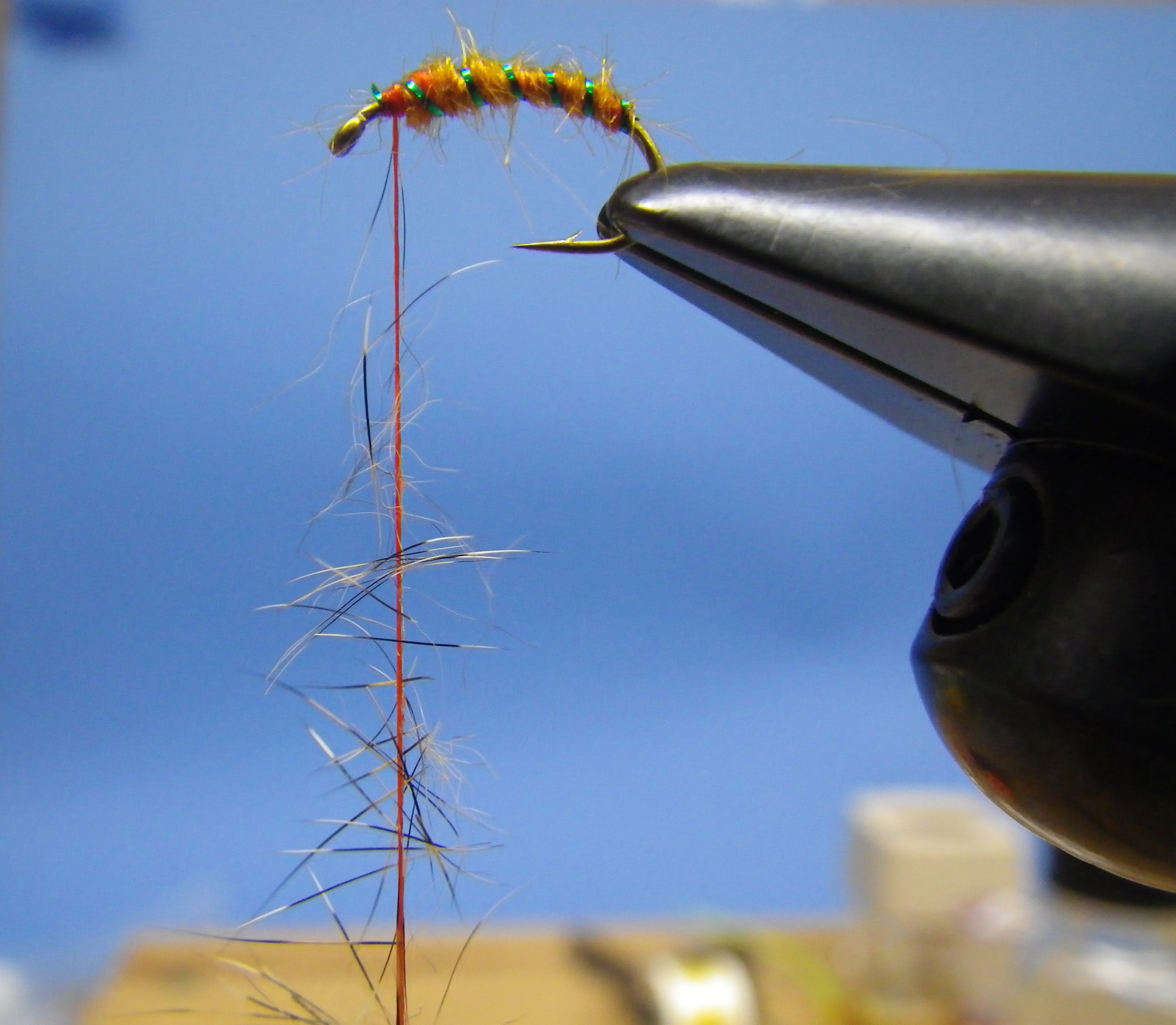
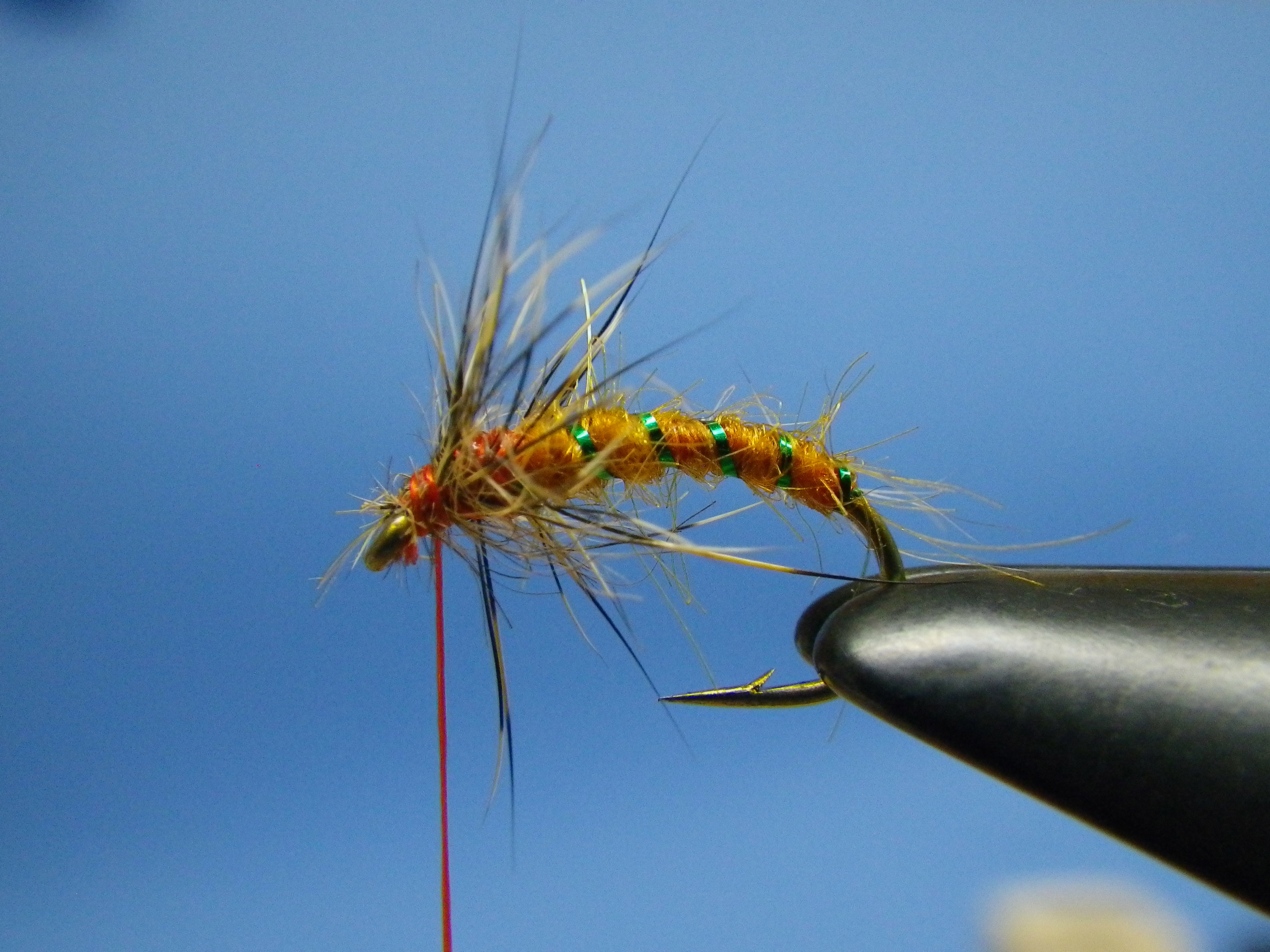
Such is the case with the Squirrel and Ginger caddis emerger. This humble creation is something I made up a few summers ago. I took the Ginger Caddis Larva fuzzy nymph and swapped out the standard wet fly hook for a scud hook. Added a flashy rib. And replaced the rabbit fur thorax with a hackle of fox squirrel.

The first time I fished this fly was on a brilliant July day that was devoid of hatch activity or rising fish. The sun was high, the air was steamy, and felt a little foolish for making the drive to the Farmington. Until I started hooking fish after fish on this little caddis emerger. It was the middle fly in a team of three, and the trout stated in no uncertain terms that this was their favorite.

The Squirrel and Ginger is a fine introduction to fur-hackled flies. It is fairly easy to tie. Best of all, it’s a wet fly you can have confidence in.

Hook: TMC 2457 (2x strong, 2x wide, 2x short scud) size 12
Thread: Orange or hot orange
Body: Ginger Angora goat
Rib: Green Krystal flash
Hackle: Fox squirrel fur
~

The Squirrel and Ginger Rogues’ Gallery

7/8/13, Farmington River

Brown Buck 7:8:13

4/24/13, Farmington River

Bigbrown hen

7/31/13, wild brown, Farmington River

WIld Farmy Brown 7:13

4/29/15, 17″ holdover brown, Farmington River

Fat Farmy Hen 4:15

10/8/19, 20″ holdover brown, Housatonic River

OLYMPUS DIGITAL CAMERA


How to built a wet fly leader for a team of three flies

One of the most frequent questions I get is, “How do you build a wet fly leader?” This material originally appeared in my article “Wet Fly 101: Take the ancient and traditional path to subsurface success” (American Angler Nov/Dec 2013) but I wanted to give it its own place here on currentseams.

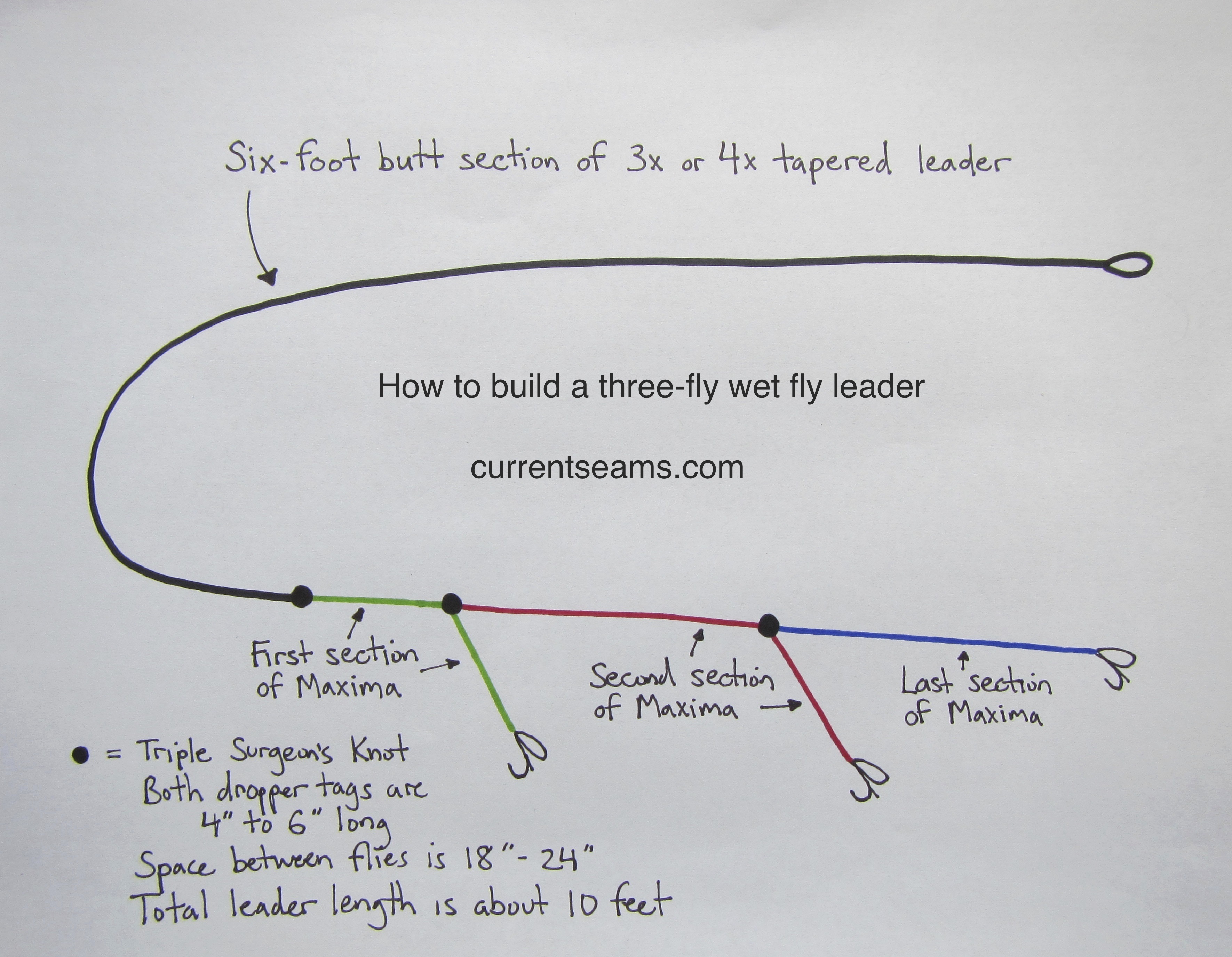
At first glance, building a multi-fly dropper rig looks complicated. But basically, you’re just tying three triple surgeon’s knots. You’ll need a 9-foot, 3x or 4x tapered leader for the butt section, and some 4 or 6-pound Maxima (I prefer Chameleon [AUTHOR’S NOTE: I used UltraGreen four-pound in 2014 and it worked just as well as Chameleon]) for the droppers. I’ve tried a lot of different leader materials, and Maxima is by far the best because of its stiffness. I use the 4-pound in lower, clearer flows. 

Wet Fly Three FLy team

Here’s a pdf of the diagram: Three-fly wet fly leader

Step 1: Cut off the bottom three feet of the tapered leader. Discard this bottom section.

Step 2: Knots are not worthy of your trust. Wet every knot before you pull it tight, and test every knot by giving it a good tug. The heat of battle with a trophy trout is a bad time to discover you tied a substandard knot.

Step 3: Tie just over a foot of Maxima to the tapered leader with a triple surgeon’s knot. The bottom of this section will form the first dropper. Trim both tag ends.

Step 4: The ideal length between wet flies is somewhere between 18 and 24 inches; I prefer my dropper tags between 4 and 6 inches. If you’re going to build a dropper rig with the flies 24 inches apart and the tags 6 inches long, you’ll need a 30-inch section (24 + 6 = 30) of Maxima for the next step.

Step 5: Take the first, shorter section of Maxima (the one you tied to the tapered leader) and hold it 6 inches from the end. This will be your first dropper. Join the 30-inch section to the shorter section at this point with a triple surgeon’s knot.

Step 6: Trim the excess of the second section above the knot (the part you trim is on the butt side of the leader). You should now have a dropper tag about 6 inches long, pointing away from the butt, and about 30 inches of Maxima below it.

Step 7: You’re in the home stretch. This is basically a repeat of step 5. Grab the second section of Maxima 6 inches from the end, and join another 30-inch section of Maxima to it with a triple surgeon’s knot. As with Step 6, trim the excess above the knot.

Step 8: You should now have a rig that looks like the one the diagram: two shorter tags, to which you’ll tie dropper flies, and a longer end section, to which you will tie the point fly.

~

Good things happen when you give the trout a choice.

20

Partridge and Light Cahill soft-hackle

Some more production tying last night at currentseams HQ. Partridge and Light Cahill soft-hackles. So simple. And so effective during an emergence of the creamy mayflies we get on late spring evenings on the Farmington. A size 12 or 14 will do nicely. Hold on, now. Trout get reckless during this hatch.

When I started tying wet flies, I made two full rows of Partridge and (insert Pearsall’s Gossamer Silk color here) in my box. Later, on a whim, I bought some Uni Light Cahill thread and tied up a few of these soft-hackles. They sat unused for at least one season. I don’t remember the exact circumstance, but I do know that the first time I fished this fly, I cleaned up. I still have one of those original Partridge and Light Cahills; I fished it last spring, caught a trout on it, then retired it. It barely had any hackle left, but it still worked.

Such is the power of the impressionistic soft-hackle.

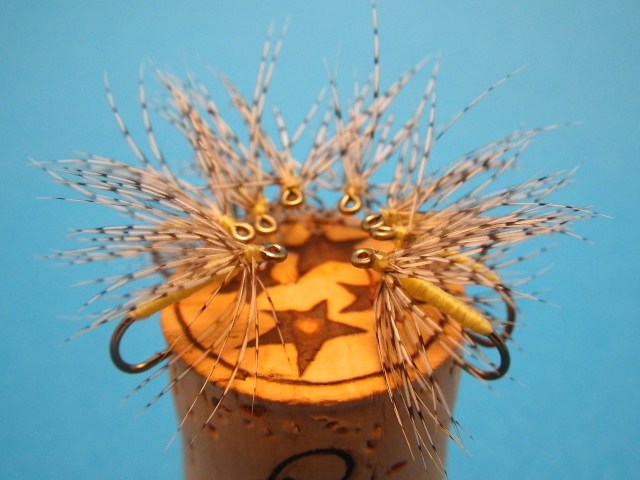
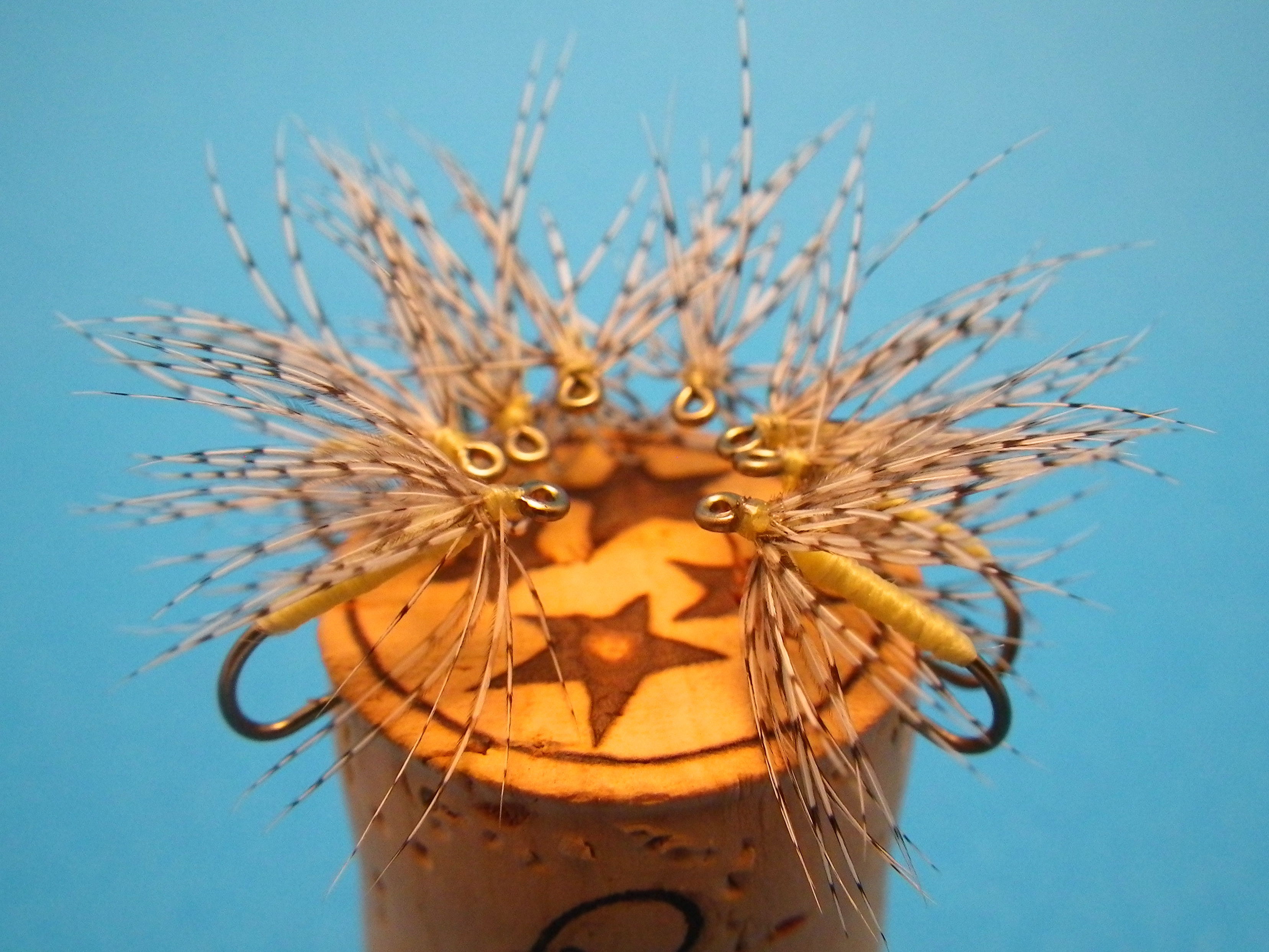
Filling corks with Partridge and Light Cahill soft-hackles. These are tied on a 1x strong, 1x long size 14 hook.

Partridge and Light Cahills

Filling some corks with soft-hackled flies

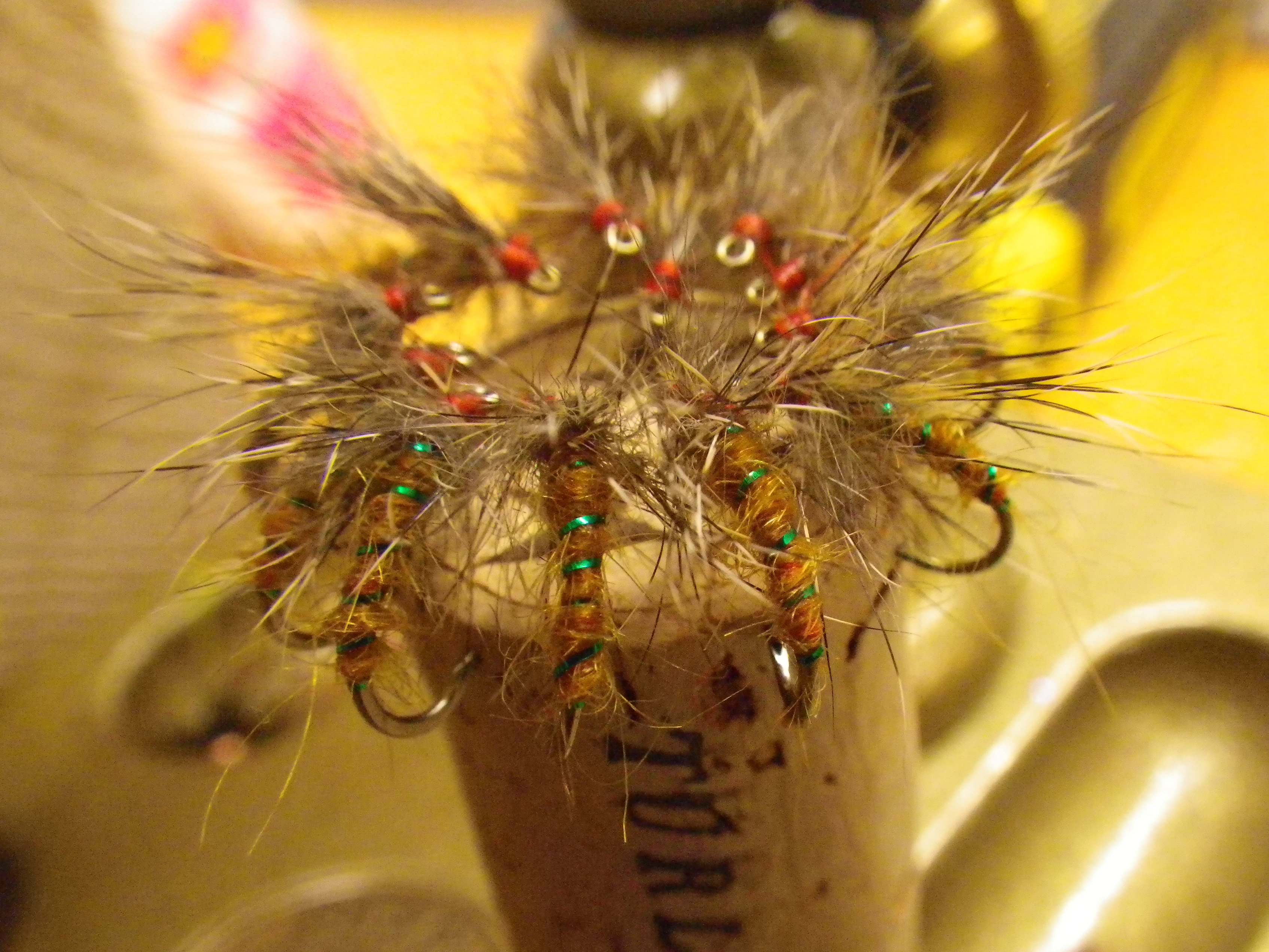
A little production tying here at currentseams HQ — as much as I can be said to be a production tyer, which is very little. But stocks need replenishing for personal use, guide trips, and maybe a few to sell here and there. First up was the Squirrel and Ginger, my favorite caddis emerger from April through mid-summer.

You drink the wine. You save the cork. You stick a dozen wet flies into it. You win twice.

Squirrel and Ginger cork

~

People tend to use far too much fur to hackle the Squirrel and Ginger. Think sparse. Think less is more. Like this. Dust the thread with fur. Your next step is to form a dubbing loop, then wind the hackle, stroking the fibers toward the bend of the hook.

Fur hackle dubbing loop prep

~

The same fly, ready to whip finish. Note (again) the imperfect head. Guess what? Trout don’t care about neatness. In fact, I think they like messy wet flies. Yeah, I’ll clip away that schmutz under the eye, but this fly is basically good to go.

S&G ready to finish

Currentseams Q& A: Tying the bead head soft-hackled Pheasant Tail

Q: Can you give me the recipe for your BHSHPT nymph?

A: You betcha. As a point of procedure, it is not “mine.” People have been tying this fly for generations. I’m just another in a long line who discovered the magnetic mojo of adding webby brown hen to the mix. I’ve really got to do a video of this pattern.

The bead head soft-hackled Pheasant Tail:

7a34cc32_vbattach314446

Hook: Size 8-16 1x short 2x strong scud
Thread: Tan or brown 6/0 or 8/0
Head: Copper brass or tungsten bead to size 
Tail/body: 6 (less as the hook gets smaller) pheasant tail fibers
Rib: Fine copper wire counterwrapped over body
Thorax: Peacock herl
Hackle: Soft brown hen

Tying notes: Old faithful, old reliable. Over the years. this fly has accounted for a significant percentage of the trout I’ve caught. Tying should be fairly intuitive. Lately, I’ve taken to tying in the hackle after I wind the peacock herl thorax. A few stray hackle fibers here and there on a nymph looks lovely to a trout. Once I get down to an 18 or 20 on this fly, I dispense entirely with the peacock herl. I also will use only three pheasant tail fibers on an 18 or 20.