The best wet fly dropper material continues to be old reliable: Maxima Ultragreen

Part of my wet fly lessons includes leader construction. As we’re building a team of three flies, I tell students that the single best material I’ve found for dropper rigs is 4-lb. Maxima Ultragreen. In fact, I tell them, it’s the only stuff I use. But every once in a while, I try to cheat the process and make the tag with some other stuff, thinking it will be OK. And it usually isn’t.

The most recent incident came last week when I tied a simple two-fly wet fly team for smallmouth. I lazily decided to attach a piece of Maxima Ultragreen to the end of the tapered 3x leader. A few casts into my fishing, the non-Maxima tag section was already tangling. What do you know? I re-rigged the leader with Maxima Ultragreen 4lb for the dropper tag and point fly, and suddenly all was right with the world.

The one, the only. Accept no subsitutes.

How much do I love and use this stuff? I buy it in the One Shot spool size, which gets you 280 yards of glorious green dropper goodness. I just wrap 30 yards of it around a smaller spool, and it fits easily into my pack or on my tippet holder. It’s so true: confidence catches fish.
Extra! Extra! Read all about Terrestrials!

Holy mixed metaphors, Batman! Or would that be idioms? Either way, I wanted to talk about terrestrials today, specifically wet or sunken flies.

It’s prime terrestrial season in these parts. Hoppers, Stimulators, beetles, crickets, ants, flying ants — they’re all fair game. I believe most anglers think of terrestrials as dry flies, and that’s not surprising. Watching a trout stomp a hopper or sip an ant from the surface is one of the big bonuses of summer fishing. Terrestrials also make great floaters for dry-dropper combos, whether it’s a single wet or nymph dropped off a hook bend, or a classic three-fly rig like the hopper-copper-dropper. I like to wander the Farmington’s riffles, runs, and glides on a breezy summer afternoon and prospect with a terrestrial dry and dropper.

But sometimes, I’ll do my terrestrial fishing subsurface. Consider this: what happens to all those hapless land insects that fall into the river? They struggle, and some get eaten. I think most don’t — get eaten — at least not on the surface. All that unconsumed biomass eventually sinks, and becomes a new item on the subsurface menu. Drowned bugs are easier to eat, and require less risk for the trout to dine. Winner: you.

Was a big golden stone. Now, it’s a hapless hopper.

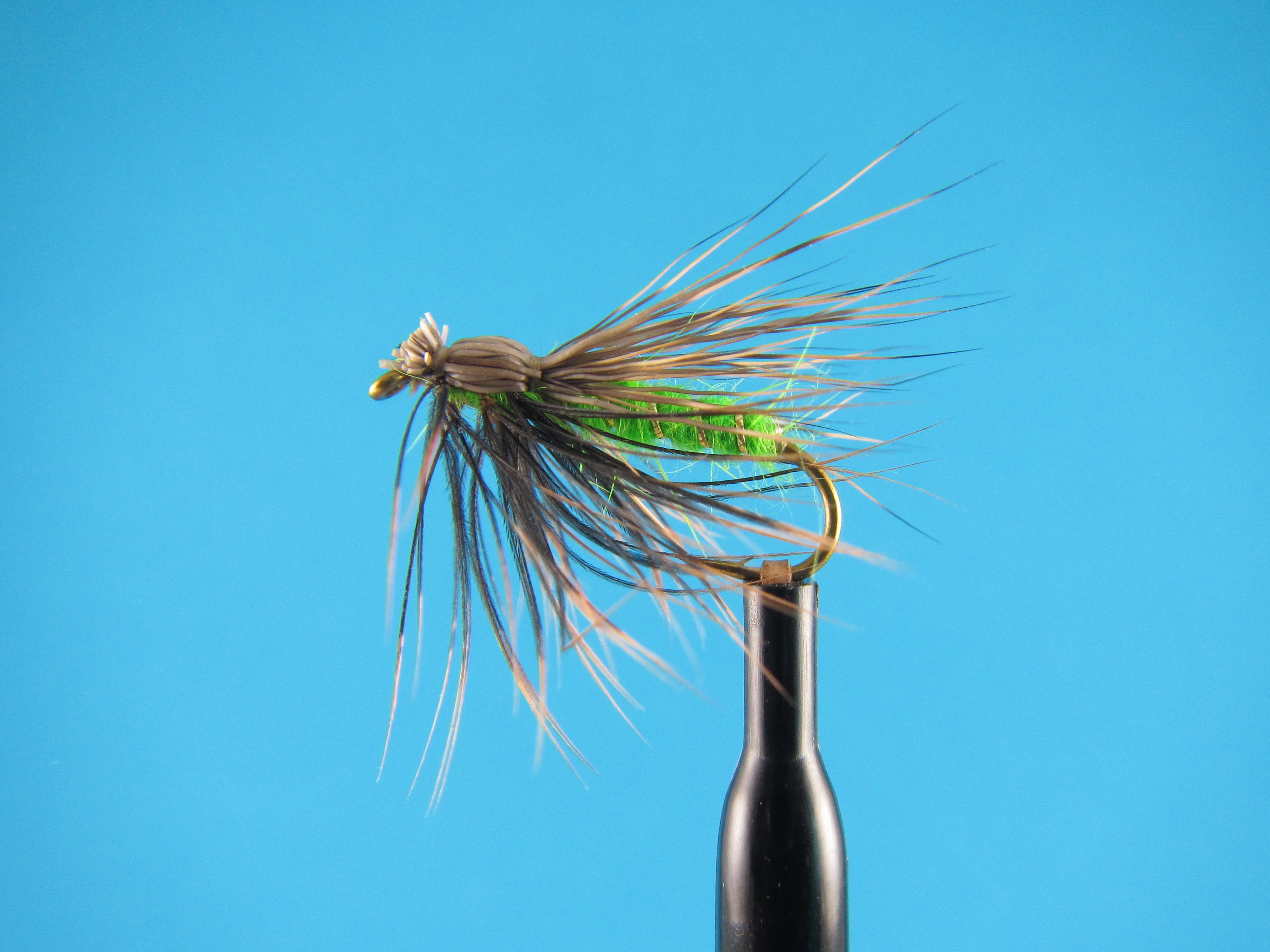
Here are a couple wet flies to get you started on your summer terrestrial wetstravaganza. The Drowned Ant is an old favorite, not too hard to tie, and can be completed with very easy-to get materials. It’s been one of my most consistent producers since I created it. If you’re a fan of the oddball and obscure, try the Hopper Hammerdown, which is based on a steelhead stonefly by Dave Hall. The hits are electric.

Just make sure you have plenty of 4lb. Maxima Ultragreen.

Steve Culton’s Iso Soft Hackle featured in On The Water’s “Guide Flies” column

What’s this? Two posts in one week? Yessir, campers! As promised, we are trying to return to a regular posting schedule on currentseams.com. I want to thank everyone for their patience and loyalty over the past year. Let’s get to it.

The Iso Soft Hackle is a wet fly I prototyped several years ago. Then, I test it on the river for months or years to prove its worthiness before I pass it along to you. This is an outstanding pattern (he said, modestly). The past two summers, it has accounted for some of my biggest trout taken on wet flies. It’s easy to tie, and the materials are readily available. Here’s the fly and the recipe as outlined by Tony Lolli in his outstanding Guide Flies column from On The Water. So what are you waiting for? Get to the vise. It’s Iso time!

A jpeg and pdf for your viewing pleasure.

“Matching the Hatch with Wet Flies” tying menu from Marlborough 1/17/25

This is the tying menu for my Featured Tier presentation at the Marlborough Fly Fishing Show, Friday, January 17, 2025. PDF format. Thanks for watching!

Matching The Hatch with Wet Flies

“Matching The Hatch With Wet Flies.” That’s the title of my Featured Tier demo this Sunday at 11:45am at the International Fly Tying Symposium in Somerset, NJ. As I prepare for the demo, I had a few thoughts I wanted to share.

When you’re fishing wet flies, matching the hatch doesn’t matter — until it does. And then, you’d best be prepared. What I mean is, there will be times when fish will eat a wet fly simply because it looks alive and like something good to eat. The bug that wet fly is supposed to represent may not be hatching at that moment. It may be entirely out of season. It may be the wrong color or size. But nonetheless, it gets stomped.

However, the more you fish with a team of three wet flies, the more you will encounter situations where the trout will only have what’s hatching, presented in the water column exactly where they are feeding on the naturals. They may pick out one fly on the three fly team to the ruthless exclusion of the other flies. That’s when matching the hatch pays dividends. You’ll be the person leaving the pool, trailed by other anglers who will want to know, “What fly were you using?”

So: know your hatch windows. Understand what food is most likely to be in the water. Understand how those bugs behave. Specific patterns aren’t as important as matching size, color, and profile. Give the trout a choice. They will always tell you when you get it right.

See you this weekend!

LaFontaine’s Diving Caddis is a good choice for a late afternoon-into evening pattern — because that’s when the trout are most likely to be seeing egg-laying female caddisflies. One memorable evening, I landed two dozen trout in two hours — sixteen on the Diving Caddis.

From the Archives: The best soft hackles and wet flies for the Hendrickson hatch

Yeah, baby, it’s getting to be about that time. OK, maybe not for a couple more weeks. We’ll see what Ma Nature has in mind as far as warmth and rain are concerned. But indeed it is coming. And right now is the perfect time for you to stock the box with your favorite Hendrickson patterns.

If you’re not fishing under the Hendrickson hatch with wet flies, you’re missing out. In fact, you’re missing out on some of the best trout-on-the-fly action of the year. Tie these up, place them over a rise, and hold on. Oh. And be prepared to clip one or two flies off your three-fly team. Such are the travails of the angler getting doubles and triples!

The Best Soft Hackles and Wet Flies for Fishing the Hendrickson Hatch.

Mssr. H awaits your pleasure…

From the Archives: A Wet Fly Hen Hackle Primer

On the surface, you may be unthrilled (rather than enthralled) by this topic. But I think it’s worth your time, especially if you tie soft hackles. I get a lot of questions about hen hackle types, and this article covers the subject nicely.

A Wet Fly Hen Hackle Primer.

There’s something very satisfying about finding a top-shelf hen cape. While the price of both has gone up, you still occasionally see these in deep discount fly shop and show bins..

From the archives: How to build a wet fly leader for a team of three flies

This old post tells you everything you need to know about building a team of three for wet flies. Well, almost everything. Looking back at the directions and diagram, I see how my leader formula has evolved. For starters, the tags should be a minimum of 6″, not 4″-6″. Certainly that old 4-6″ length works, but for me, the current sweet spot is probably more like 6″-7″. Next, the spacing between flies should be 24″-30″, not 18″-24″. My current thinking is that 18″ is too close. My current leaders are probably closer to the flies being 30″ apart, which I believe allows you to cover more water and achieve great depth. I almost always use a 3x tapered leader section for the butt. And no, I don’t use tippet rings.

Here’s the link to the post.

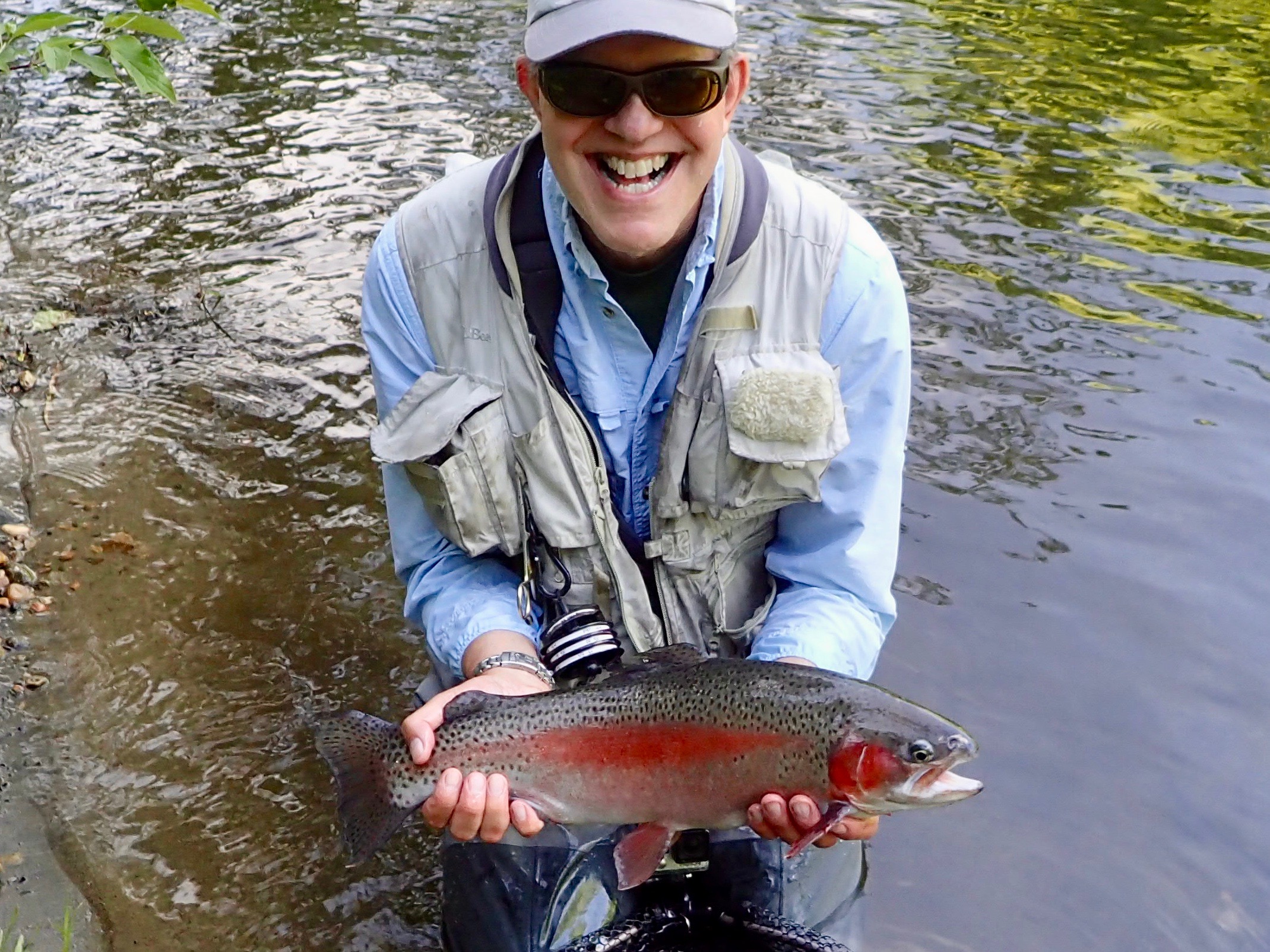
She of the many pounds and bright pink band who fell for one of the flies on a three fly team.

Gill Candy soft hackle for panfish

I finally got around to sending out flies for the 1,000 Followers contest. One of the winners requested some size 10 soft hackles for bluegills, crappie, and bass. I did a little digging of the “Best soft hackles for panfish” type — and the overwhelming favorite soft hackles for panfish were simple, traditional old favorites like the Partridge and (insert silk color here.) But I found another pattern that I’d never heard of that tickled my fancy: the Gill Candy. It’s basically a Partridge and Chartreuse with a gold tag and a dubbed thorax. So I took to the vise. And here it is. Betcha steelhead would like it, too.

The Gill Candy. Hook: size 10 TMC 3769. Thread: Black. Tag: Gold tinsel. Body: Chartreuse floss. Thorax: Chartreuse Ice Dub. Hackle: Partridge.

Why crickets are such a great trout fly, Or: The nematomorph worm made me do it.

This is the time of year when I notice that black crickets are particularly active. I hear them singing in my garage when I empty the recycling, and when I’m coming home from a late striper jaunt. It’s usually the time of year where I say to myself, “I gotta fish more cricket flies.” The savvy small stream angler will do boffo box office with crickets this time of year, not to mention on standard-issue trout streams.

Turns out that crickets in the water isn’t always an accident. I read this fascinating piece about parasites in the July 2022 National Geographic. Because of nature’s perfect design, some parasites find their next host by influencing their current host. The nematomorph worm is a prime example. From the article: (nematomorph worms) “mature inside crickets but then need to get to water to mate. So they influence the crickets’ brains, driving the insects to jump into streams, where they become an important food source for trout.”

So the next time you tie up a cricket pattern, think about that unseen little parasite component that helps the bug find the water.

The Hopper Hammerdown rendered in all black, tied size 10-14, makes a nifty wet/damp black cricket pattern. You can find the recipe here.