We continue “Wild Trout/Small Stream Week” on currentseams with a deep dive into the archives. Stalking Wild Trout on Connecticut’s Small Streams was one of the first articles I wrote for myself. That is, not for a specific publisher or editor, but for my own personal use. Although it’s nearly 20 years old, and some of the information is out of date, the piece remains worthy. And I’m guessing that many of you newer subscribers have yet to see it. In case you missed the link above, you can find the article here.
To give you an update: I never did catch Gus. But I did catch and release a few of his relations. Sadly, the pool Gus lived in disappeared not long after I wrote the article. Small streams are highly susceptible to change during high water events.
Anglers wielding cameras have killed more small stream wild trout — intentionally or not — in the last 10 years than in the previous 100. You can blame it on the convenience and portability of digital devices. You can blame it on social media. You can blame it on anglers. Or narcissism. Or all of the above.
Whatever the root cause, I still see far too many images on social media of mishandled wild trout. Fish being held in dry hands. Fish thrashing around in landing nets, airborne, nowhere near the water. Fish photographed laying on grass, twigs, leaves, rocks, and other substrate no wild trout that’s going to be released should ever touch.
Let’s assume for a moment that I’m not talking about you. You’ve visited keepfishwet.org. You know the drill for ensuring more favorable catch and release outcomes. I applaud you. And now, I’d like to ask you a small favor.
Stop taking so many pictures of wild trout.
We all agree: wild trout are beautiful. The delicate parr marks, breathtaking halos, and butter-yellow hues of wild browns. The intricate, Faberge Egg-like designs and vivid colors on wild char. They’re all a wonder, and a marvel to look at. But do we need to see a photo of 2…4….6…and more… wild fish from your most recent small stream outing? The answer, I believe, is no.
So next time you’re on your favorite brook, take the Wild Trout One Photo Challenge: You photograph one fish, and one fish only. That’s it. All the others go quickly back into the stream, and you get bonus points if those non-photo subjects never leave the water. Think of how many wild fish you’re not subjecting to additional stress. It’s a win for you. It’s a win for the next angler. And most of all, it’s a win for the fish. Remember, the stocking truck isn’t coming back to replace what wild fish we kill, accidental or not.
I truly thank you for your consideration.
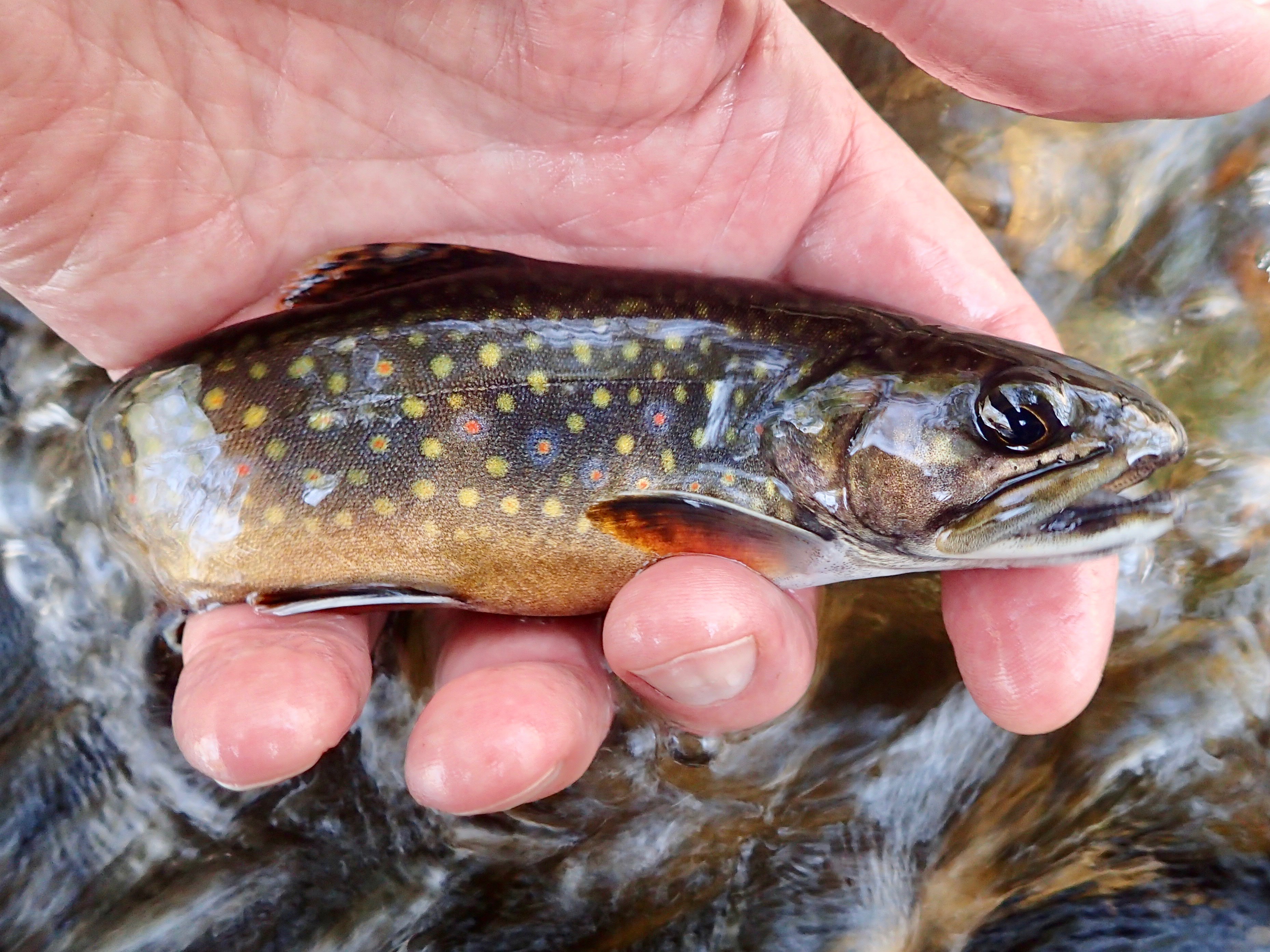
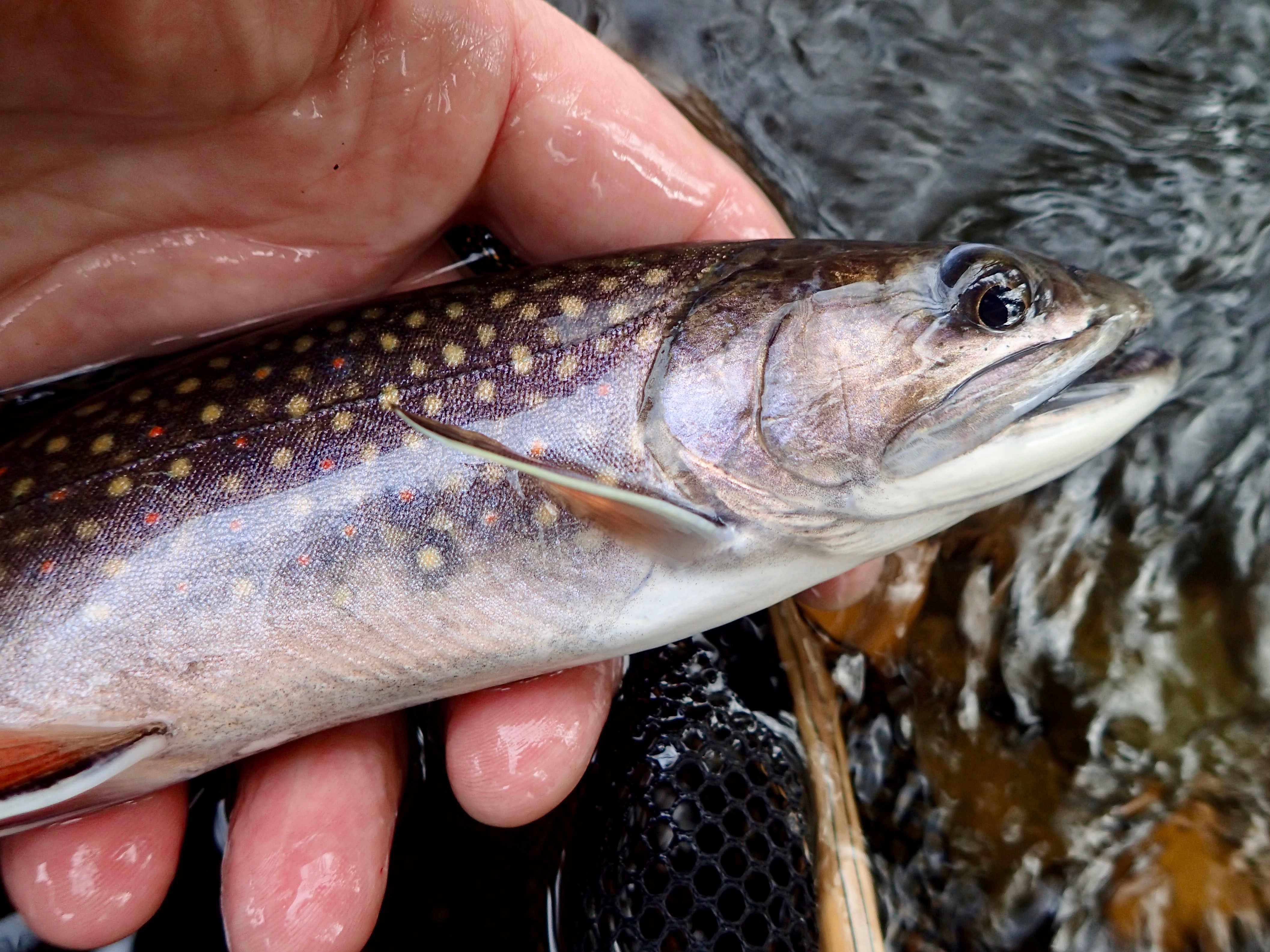
I don’t know how many wild brookies I landed on this day, but I do know that this was the only one I photographed. 1-2-3-lift-shoot, then back into the water. Less isn’t always more, but it usually is when it comes to small streams and wild trout.
If you love and value wild fish — especially native fish — you have a responsibility to preserve and protect the resource. Yes, fishing is a blood sport. Yes, no matter how careful we are, some of what we catch may perish. But there are ways to dramatically minimize loss. And there are certainly ways to ensure the next angler has the opportunity to enjoy the stream as much as you.
So, I’m declaring this “Wild Trout/Small Stream Week” on currentseams.com. As you know, small stream fishing is an experience that is sacred to me. My goal this week is to educate and inform as much as possible. And this wonderful essay by a Pennsylvania angler named “Fly Tier Mike” is a good place to start. In The Responsibilites of Chasing Wild Trout, Mike outlines four best practices for those who fish for wild trout on small streams: Proper wading techniques (staying off of redds); proper fish handling; minimizing damage while taking photos/videos; and the pitfalls of social media that can lead to over-pressuring a stream.
Anyone who fishes for wild trout should read it, if only as a refresher. Thanks for your consideration.
I was gratified and encouraged to see someone else taking a stand for small streams and wild trout. Way to go, Mike!
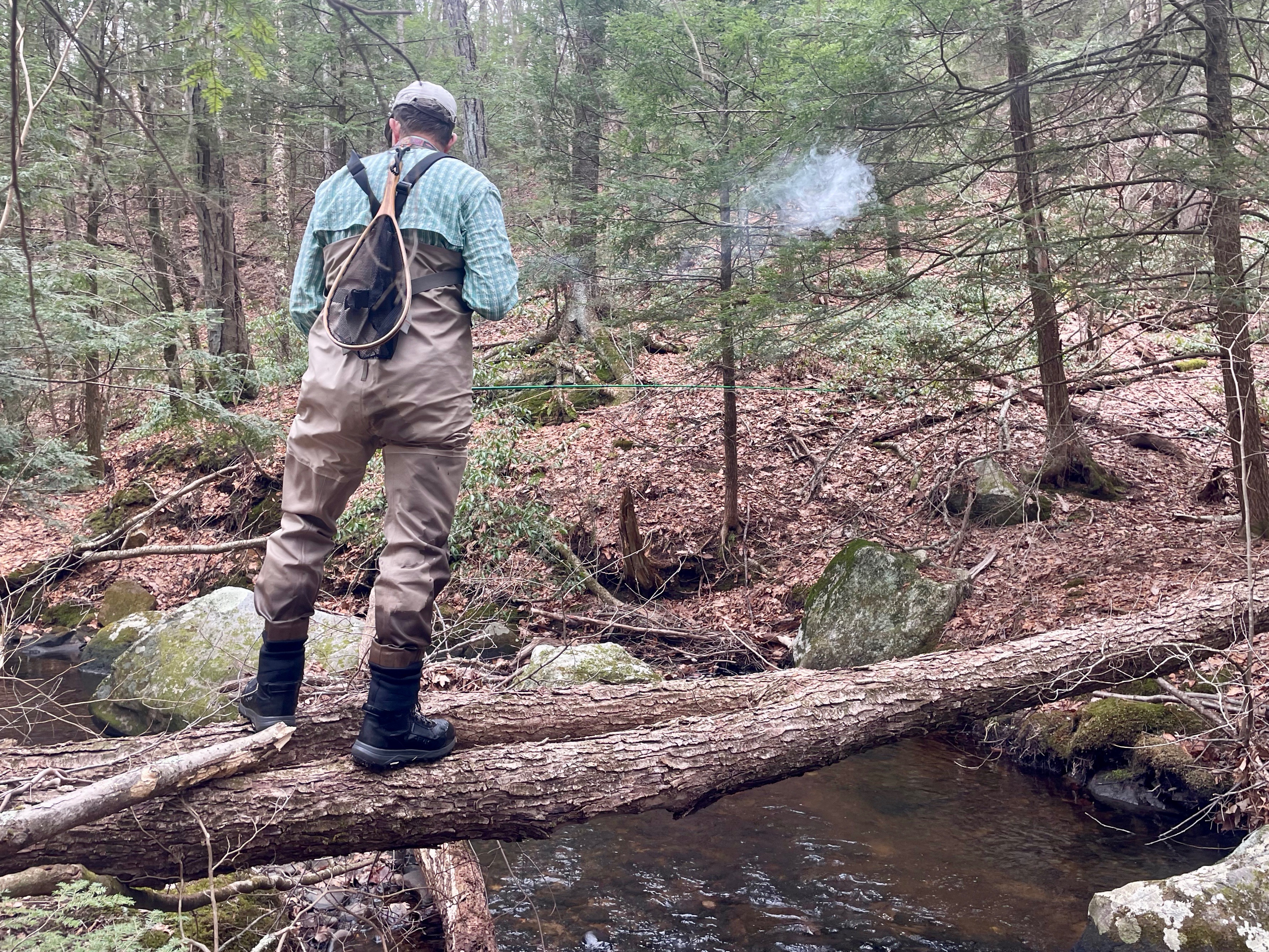
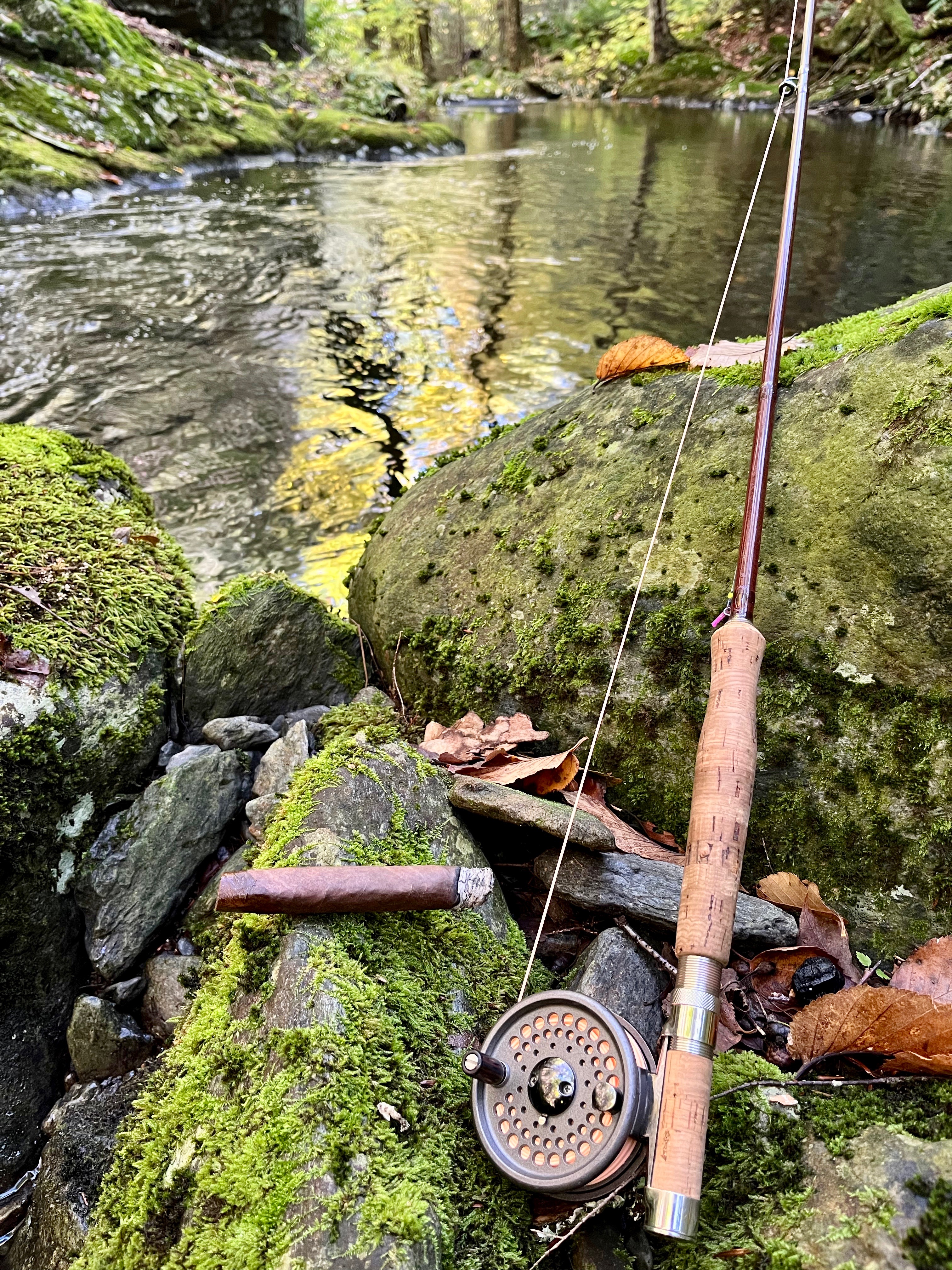
Having not gone fishing for weeks, I sought the cure for my ills in a small stream outing this past Wednesday. I was going to visit an old favorite, but instead I decided check out a new section of stream that I’d never fished before. So, armed with my camera and pack and rod and cigar, I had at it. While the fishing was great, the catching was non-existent. So thought you might be interested in how I approached some of the water.
Let’s start here. Why was the fishing so poor? It could have been any or all of these: a cold front approaching; far cooler temperatures than the previous week; trout not yet spread out in the system; complete lack of hatch activity or visible feeding; low, clear, spooky water; or just nobody home. (Sometimes when I ‘m fishing new water for the first time, I’ll stand up and make dramatic movements in an attempt to spook fish I might have missed. In two hours, I rousted only one 3″ char.)
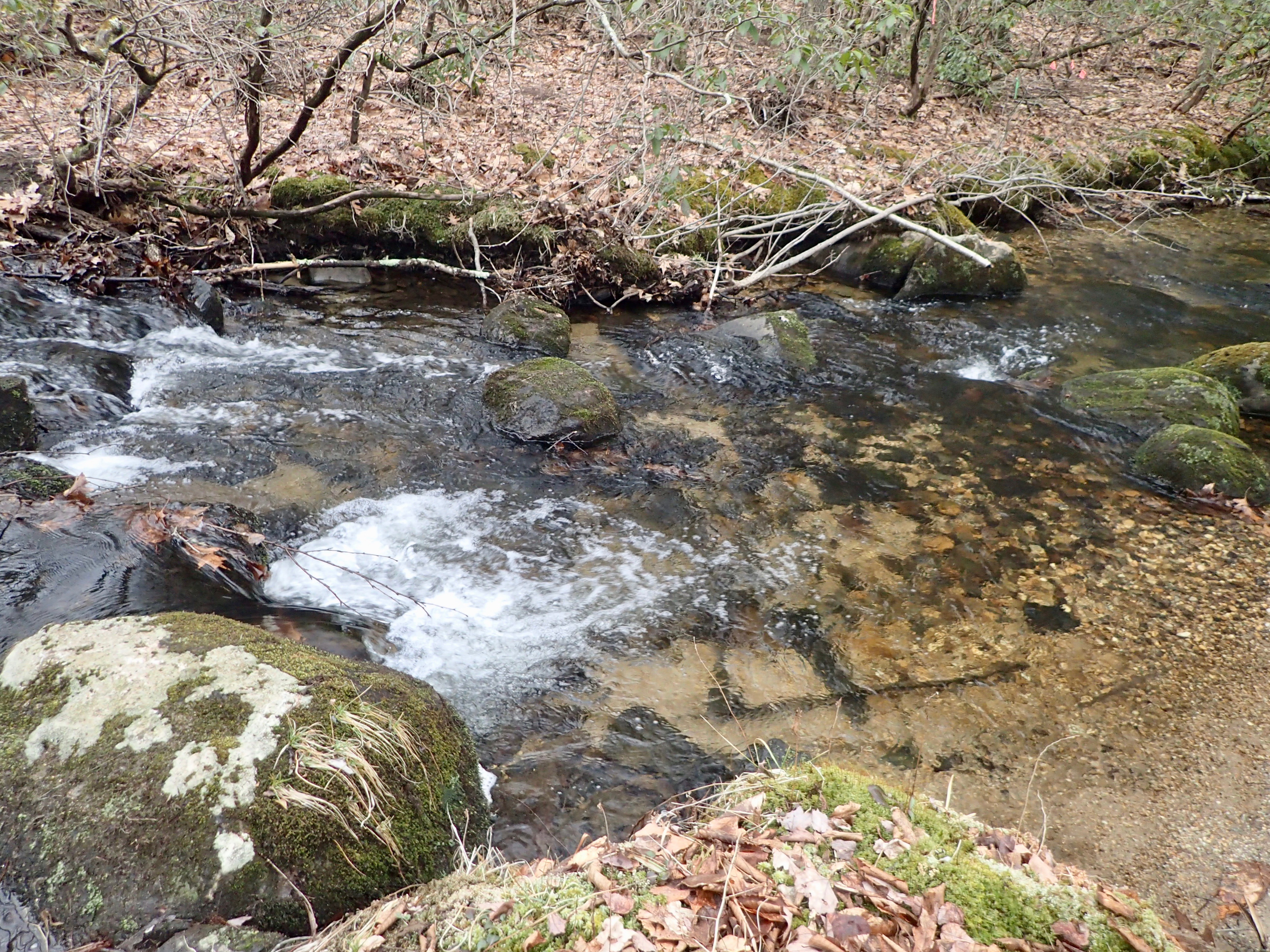
Exhibit A: the long flat pool. This brook had earth banks, so it was essential to walk very slowly and softly near the water. Always assume that stealth is critical. Also, stay out of the water! I began on my knees along the bank in the upper left side of the photo, drifting my flies (dry/nymph dropper, almost never a bad idea for searching) through the wrinkled water to the right of the rock with the large flat face. Looks can be deceiving; the water depth to the right of the rock was over a foot, plenty deep for char to hide out. Having blanked there, I crawled up behind the large rock and had at the main current seam. Still, nothing. Note the cut banks on the left side of the photo; I pounded those and was stunned that I got no love. Perhaps next time. I purposefully fished this pool from an upstream position, as I didn’t want to spook any fish with a fly line landing on the water. Presenting downstream means that any fish will always see your fly first.Exhibit B: the small, wrinkled plunge. This pool is immediately below the previous pool, and I had high hopes for it. To start, many times in low, clear flows, fish will be far more willing to show themselves in moving, wrinkled water, and especially whitewater. (Insert “You Lose” game show buzzer sound here.) Once again, not a touch. I didn’t fish from this position, which could easily spook any wary char; rather, I fished it from just above, again on my knees and using only bow casts to deliver the flies. Late April sounds about right for a return, or perhaps before if we get a good rainfall and the river is up and lightly stained. One thing’s for sure: it’s a very pretty stream.
As a creature of habit, I lovingly cling to my routines. So I was as surprised as anyone when I decided to not go small stream fishing on New Year’s Eve. Logic trumped tradition; by delaying a few days, the water would be a little warmer and hopefully any residual ice would be long gone. On the drive up, we did see some sheltered woodland streams where mini-glaciers abounded. But when we (myself and surfcaster extraordinaire Toby Lapinski) arrived at the stream we were relieved to see that frozen water was almost non-existent.
The water was barely into the high side of medium, which is just about right for winter fishing, and the brook was running clear and cold. Overcast skies didn’t hurt, nor did temperatures in the low 40s. Toby started out bottom bouncing and jigging, while I went the dry/dropper route. The action far exceeded our expectations. As you can imagine, going deep won the day, but I had enough action on both the dry and dropper that I kept them on for hours. (If reading this is getting you fired up for small streams, I have a presentation tonight in Danbury, The Eastern Brook Trout; later this month, you can see me present Finding Small Stream Nirvana at the Marlborough Fly Fishing Show, and a week later in Edison.)
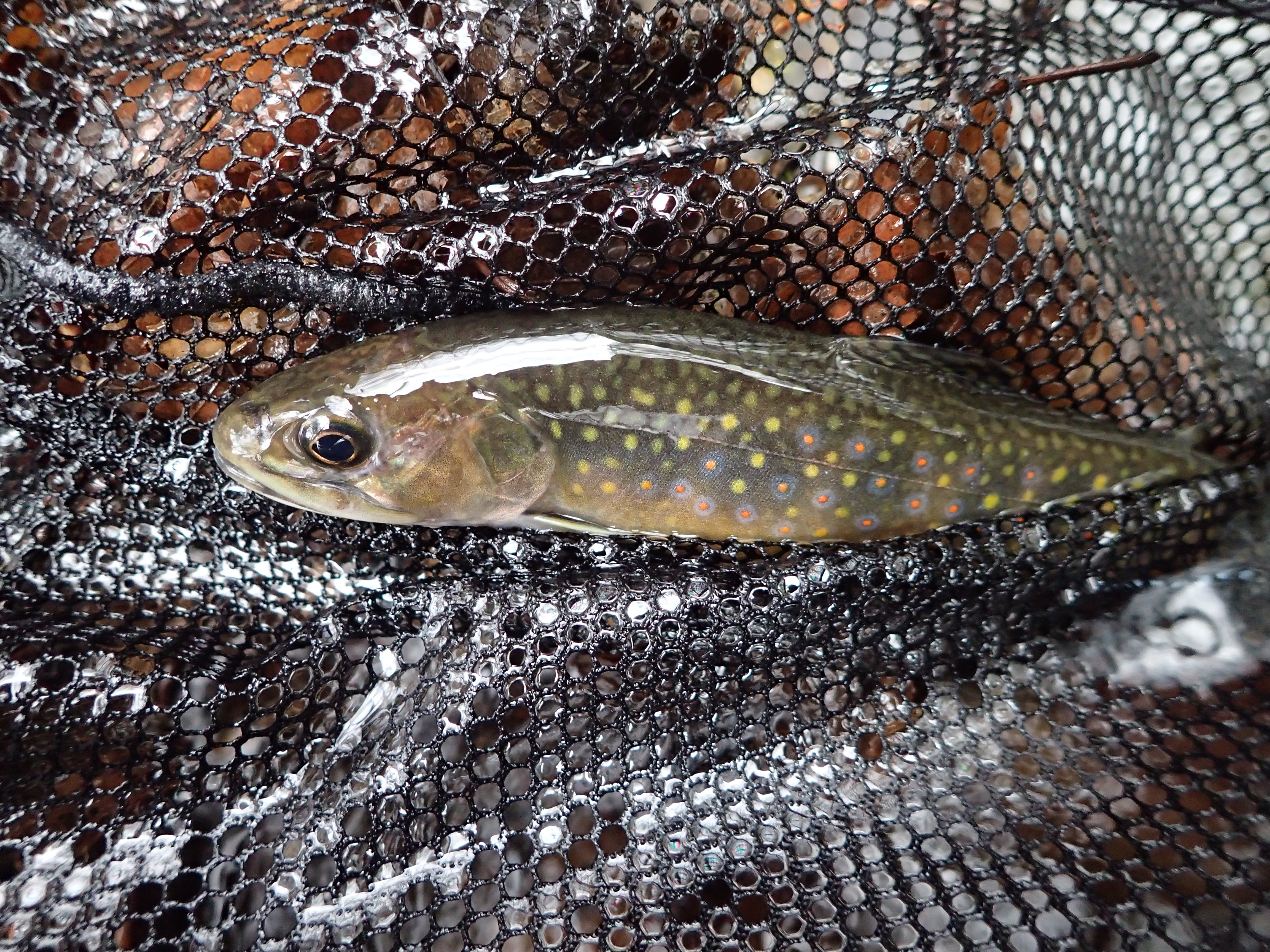
The first fish of any year is noteworthy, even more so when it’s a stunning display of nature’s paint box. Taken on a size 14 Improved Sofa Pillow.When I was a kid, I ruefully wondered why tropical fish had all the cool colors. Cut to 55 years later when I now know better. Since fish like this aren’t ever getting replaced by the stocking truck, it bears repeating: barbless hooks only; keep photos to a minimum (I landed dozens and took shots of only three); make sure your hands are wet; keep fish in the water in your net until ready to shoot; never expose fish to air for more than a few seconds; and never lay a fish down on rocks/gravel/leaves/grass. Thank you. (Photo by Toby Lapinski)Small stream fly fishing for native trout may be fly fishing in its purest form. (Photo by Toby Lapinski)Halo, I love you (again). Besides pulchritude, this fish is noteworthy because its thinness indicates a spawned out fish — and therefore a redd may be nearby. It’s a good idea to limit walking within the stream bed from mid fall to mid spring; the last thing anyone wants to do is tread on a redd and make all those future brookies dead. (Yes, I know it.) (Photo by Toby Lapinski)
The spawn is taking place on some northeastern wild brook trout streams. I recently fished a brook on consecutive Thursdays, and the changes over the course of a week were dramatic. Seven days ago, there were only a few leaves in the water and no visible signs of spawning activity. A week later, the brook was congested with foliage and several redds were apparent. I spotted a large hen on one, and a few active fish on another.
In case you don’t know, a redd is a spawning bed. The fish select an area with enough water and current and the right size gravel, then clear the area of debris and other sediment before depositing eggs and spreading milt. (This is why spawning and post-spawn fish often present with scraped bellies and frayed fins.) Redds are fairly easy to spot; they look like light colored patches contrasting against much darker substrate. On a small stream, redds may be anywhere from a couple of square feet in area to significantly larger. A distinct light colored patch with fish darting about on the bottom nearby is a sure sign that you’ve discovered a redd.
Every small stream angler should know how to identify a redd, or spawning bed. Here’s a classic, can’t-miss-it redd: A dramatically lighter patch of gravelly stream bottom surrounded by darker substrate. There were a few fish milling about, but they scattered when I stood up to take this photo.
Maintaining the integrity of redds and protecting spawning fish is vital to the future of any wild trout stream. The stocking truck is not coming to replenish what humans destroy! Here’s what to do if you see a redd: First, leave it and the fish that are near it alone. Don’t try to catch spawning fish. Let nature take its course. Next, make a mental note of the location. Chances are that the fish have been using the general area to spawn for dozens or hundreds or thousands of generations. Finally, stay out of the water near the redd for the remainder of the fall, winter, and early spring. If you crush the eggs or the developing fry, that would be bad.
Besides, it’s pretty cool to simply sit on a rock and watch the beginnings of the next generation of Salvelinus fontinalis.
I hit a hidden gem last week that takes about 2 1/2 hours to get to. That may seem like a lot of effort — you’ll get no argument from me — but it’s usually worth it. And on this day, it was.
Over the years, this brook has seen its ups and downs. I’ve been moderately disappointed by it my last few outings, especially by the size and number of the fish. But you get what you get, and the fact that it still has native char, like it has for thousands of years, is a true blessing. So: I won the weather lottery. A warm, sunny, gorgeous, Indian summer day. After the rains, the water level was spot-on perfect, running cold and clear. In terms of numbers, the fishing was off the charts. I landed dozens (despite my best attempts not to, in order to reduce stress) and pricked dozens more. No beasties in the mix — you like to get a couple in the 9″+ class — but I did dredge up a few 7-8-inchers in the deeper pools. The brookies were everywhere. I started with a dry/dropper, which was moderately successful, but when I switched to subsurface (a tungsten bead head nymph/worm thingy) I couldn’t keep the char off the fly. What a wonderful day to be out in the woods.
This was typical of the size of fish I was landing. I also had dozens of smaller char attack the fly, the vast majority of which did not result in a hookup. I’ve mentioned this before, but I’ll repeat: please try to limit the number of fish you photograph. The less time they spend out of the water, the better their chances for survival. It goes without saying that you’re wetting your hands and using barbless hooks, right? What precious gems, our beloved Fontinalis. Life is mighty good when you’re taking a shot like this one. Another word of caution: we’re getting close to the spawn, so be on the lookout for redds. They’re fairly easy to spot, usually a lighter patch of gravel beside darker surroundings. If you notice a redd, make it your policy to stay out of the water, period. And of course, be a good sport and leave any fish on or near a redd alone to do their thing. Remember, the stocking truck isn’t coming back to replace what gets wiped out. Thank you for your consideration. 🙂
This is a very late report from last week. After a hot, dry, droughty summer like the one we experienced in 2022, I like to head to a few small streams to get a handle on how the natives fared. This trip was last Friday, well before this week’s much-needed soaking. As I suspected, the water level on this brook was on the low side of low. Much of it was unfishable. But there was plenty of good news.
The water temperature was bracing and cold, certainly colder than it ever was this summer, but this brook has many places for the char to go to escape the summer heat, even in low water. I saw dozens and dozens of fish, many of which looked to be young of year. I also found a few pods of bigger brook trout — nothing really huge, but in the 7-8″+ class. On an outing like this, I do get to do some fishing, but a lot of it is more inspection-oriented, with the intent of spooking fish. Often, with the water so low, the natives want nothing to do with the sight of you or your rod waving around. I got no interest of the dry fly, and pricked two with a weighted jig-type fly.
Then, yesterday after the rains, I visited a different stream. What a bounty! But you’ll have to wait a couple days for that report…
At a normal level, the flow should be covering the rocks you see center photo. This pool is usually good for a couple of hungry swipes; on this day it was a barren brookie wastleland. A reminder as we get near spawning time: be on the lookout for redds. Consider not wading into brooks at all. Redds are pretty easy to spot; usually a lighter area a foot or two in diameter against a darker gravel bed.
As we bid farewell to March and say hello to April, I’d like to personally thank the CT DEEP for eliminating the closed season trout fishing rule. The old reg made it illegal to fish for wild trout in non-WTMA streams from March 1 though Opening Day. Enough with that nonsense! And let’s go fishing.
Since I had no previous experience fishing the day’s mark this time of year, I was curious about might be happening. As I mentioned in my last post, this not winter/not spring netherworld can be a tricky period. My random conditions drawing got me a low-side-of-medium, crystal clear flow; a mix of sun and clouds; and temperatures that struggle to get into the low 40s. I did see a few stray midges, but nothing that could be considered a proper hatch.
Spring must be close. Always a comforting sight, the skunk cabbage are popping everywhere, a clue that warmer days will soon be upon us.
The method was bushy dry/tiny bead head nymph dropper and the jigged micro streamer/nymph. If it was a deeper plunge, I did the latter. Everything else got the dry/dropper. I was pleased to find a wild char in a mark that has disappointed me no end. It’s really fishy, with plenty of cover and a big boulder that borders a deeper slot. The fish hit the dropper, but there was no hook set. Much farther upstream , I also had some repeated swipes at the dry, but again no hook set. Tug-tug-tug!!! Someone in a roiling plunge really wanted the jiggy thingy, and — stop me if you’ve heard this one before — there was, again, a failure to seal the deal.
I wish I could tell you that it turned on at some point, but those three touches were all I could manage. I wasn’t surprised, but I was disappointed. I suspect further research will need to be conducted this month.
But that’s not where the story ends.
I decided to drive to another mark, the place where I caught Alan last month. (Yes, I’m weird enough that I name fish. Sometimes I name them after real people, like Alan. Other times they’re just fictional , like Gus in this story.) I wasn’t sure if I was hoping for a Hail Mary or just didn’t want to end the session. I drifted the dry dropper through some deeper plunges and runs, then walked upstream.
And there it was. The place where I’d caught Alan. I spent a few minutes observing its wonderfulness. It’s at the head of a longer run. There’s a good, small cut bank with an overhanging tree that will one day fall into the brook. A deep cut runs parallel to the cut bank, and it’s evident why this a prime mark for an alpha fish: cover, current, and the head of the cafeteria line.
This time it took only one cast. The dry vanished from the surface, and when I raised the rod tip I could see that the nymph had been the target. It was a good brookie, and I immediately assumed it was Alan. Into the net, camera readied, shot taken, release completed.
It wasn’t until I got home and saw the photos that I realized that this wasn’t Alan. Wonderful thing, unique spotting! I’ve dubbed this guy “Alan’s Brother.” It all makes sense now. When I was taking this shot, I was thinking that I’d over-estimated Alan’s size. This was certainly an exceptional char for this size brook, but I remembered Alan being bigger. So, it’s good news all around: there’s more than one big old brookie in this town. I hope they made lots of whoopee last fall.
Last week, I went exploring on X Brook. It wasn’t a great day for fishing small streams; windy, cold front, brilliant sunshine and no canopy. Until recently, X Brook was completely off my radar. Access isn’t easy; you’ve got to do a bit of walking, and it’s surrounded by fairly dense woods and bushes. I thought you’d like to hear how I went about reconning some new water.
First, I hiked through the woods, heading upstream, taking care not to walk with heavy footfalls, and never getting close enough to the water to spook any fish. I made mental notes of potentially fishy areas, like long, glassy pools, and plunges. I wanted to be prepared for them for when I worked the brook downstream.
I kept the fly selection simple. We’re into the netherworld of not spring, not winter, so fish could be hanging out in cold water lies (think maximum depth in any given brook) as well as snottier runs and plunges. A bushy dry with a beadhead nymph dropper would cover two sections of water on any given drift. I also had a tungsten beadhead attractor nymphy/streamery thing to jig in the plunges. I felt like that had me covered for whatever water I encountered. I switched rigs up a few times, but the answer was always the same — no one home, or no one interested.
I was bitterly disappointed that no tug was forthcoming along this shadow line. I mean, c’mon! Really?
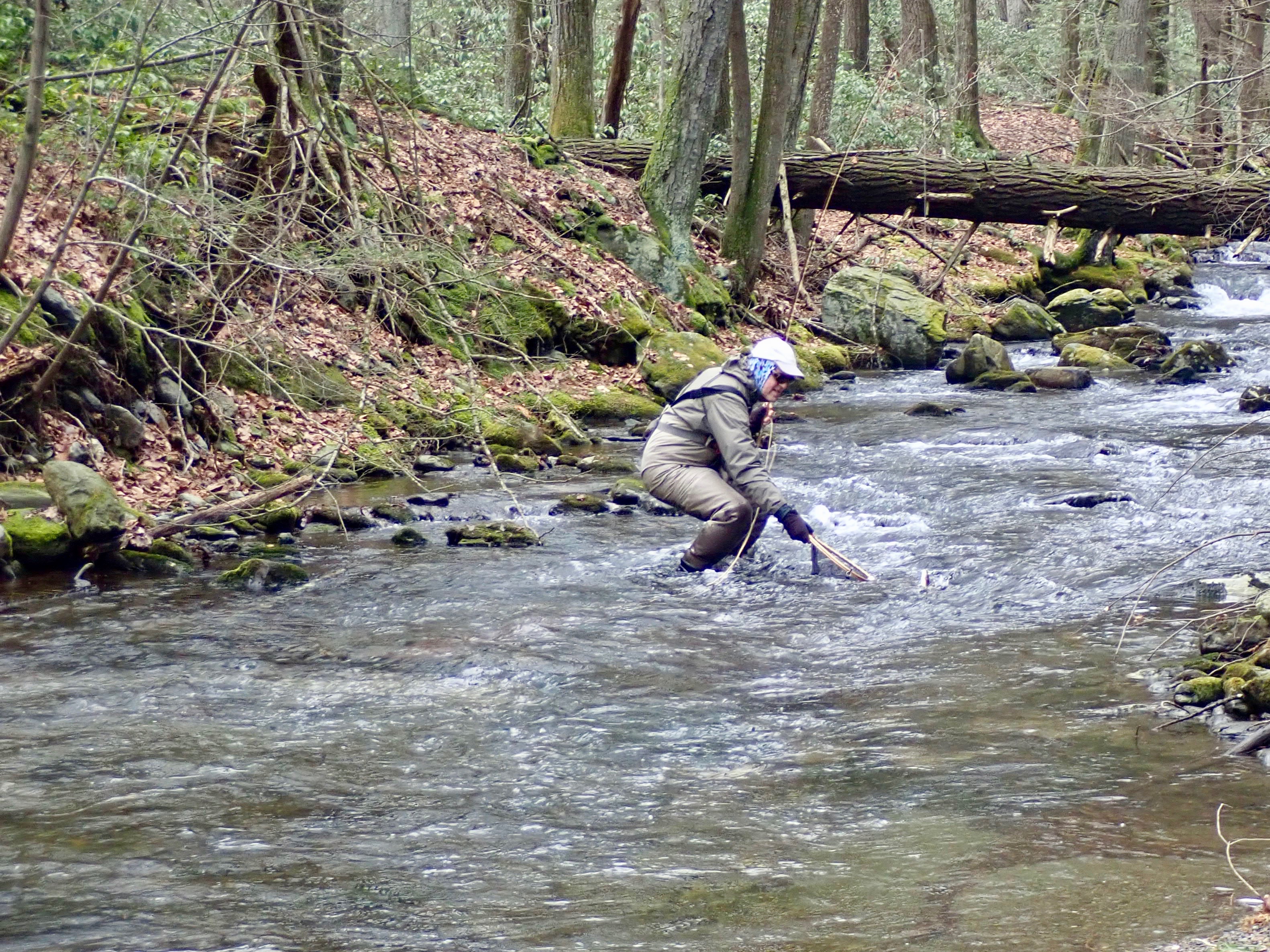
One of the things I like to do when I get no hits in a pool or run is see if I missed anything. What I mean is, if there’s a particularly sexy bit of water, and I blank, I like to find out if there were any fish. I start by standing up and making myself large in full view of anything that may be hiding. Sometimes I’ll wave a stick through the water to try to and spook fish. It’s a good idea to take great care when wading in a small stream, especially from fall through mid-spring — you don’t want to disturb any redds or crush unhatched eggs. I was a little surprised (not to mention bummed) that I didn’t see a single darting shadow in any of the runs I disturbed.
Finally, there was a decision to be made: is this stream worthy of another visit? In this case, I think it is. There is enough structure, flow and potential canopy. What’s more, I only explored a small section. It may very well be that where I was is more of a late spring/summer/fall environment, and that the best winter water is elsewhere.








 currentseams.com