Critical Kensington Hatchery Vote April 1 — No Foolin’

The deadline for the Appropriations Sub-Committee addressing the DEEP budget which includes Kensington Hatchery is this Wednesday April 1st. If any of the committee members represent your town, you are encouraged to phone or email them directly, even if you have already submitted testimony to the entire committee. Please see the link below for Sub-Committee members and phone or email them if you live in a town they represent. The hatchery must survive this step in the process if it is to remain alive. Ask your friends in these towns to also contact their reps.

Here is a link to the list and contact information on flyaddict: http://www.flyaddict.com/forums/showthread.php?10694-Critical-Hatchery-vote-scheduled-for-next-week

A little help, please?

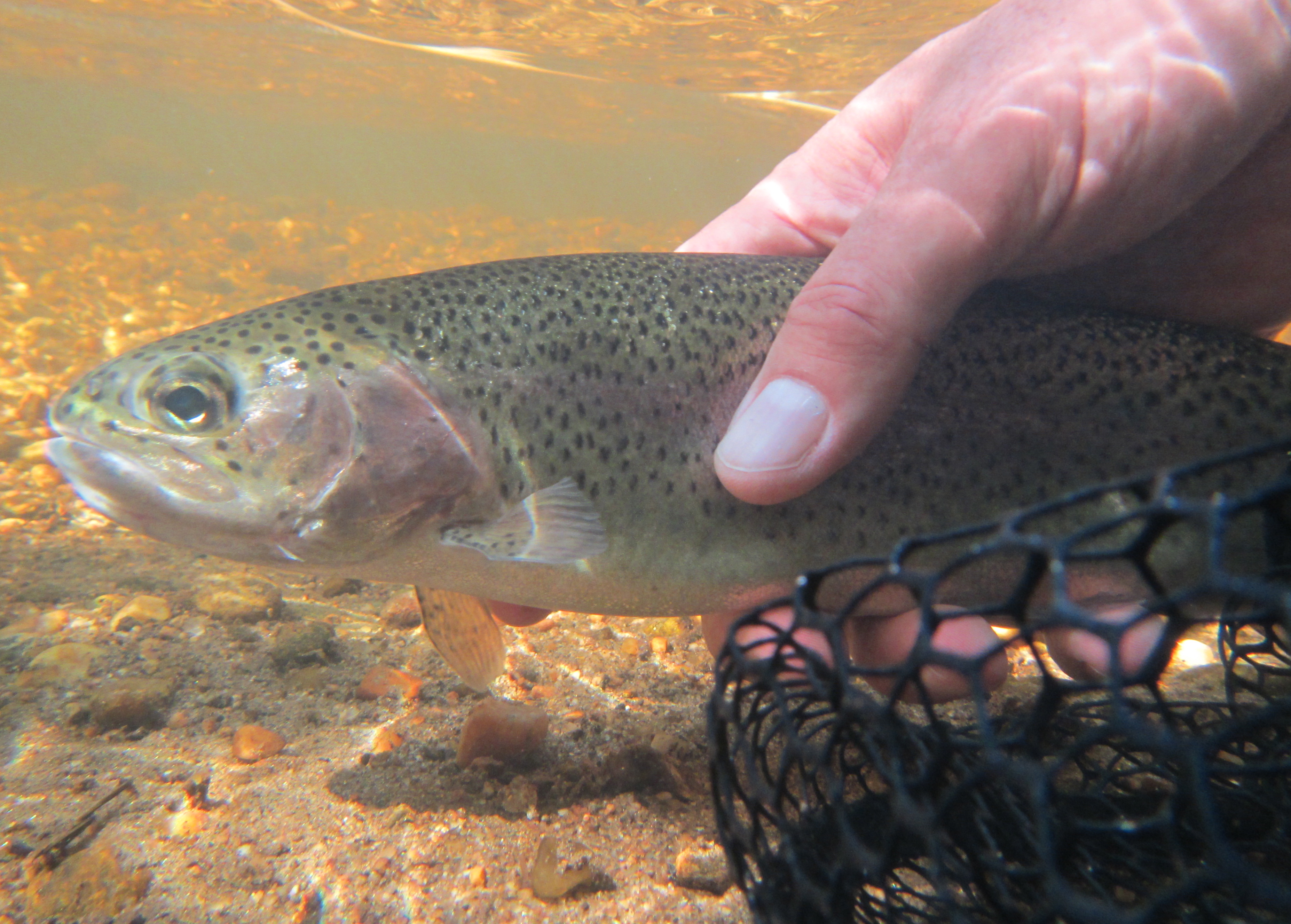
Rainbow Release

Ken Abrames Catches a Big One (a Currentseams exclusive)

The striper grandmaster talks about setting the hook, playing big fish, the effects of pressure, and fear.

Ken Abrames is one of the most revered names in saltwater fly fishing. He is the creator of the modern flatwing streamer, presentation-style flies that can imitate everything from clamworms to menhaden. His books Striper Moon and A Perfect Fish belong on the shelves of anyone who is an aficionado of traditional New England striped bass fly tying and fishing methods. Besides being a world-class angler, Ken is also a rod designer, author, poet, and artist.

I have the good fortune to be able to talk fishing with Ken on a regular basis. He is funny, candid, a good storyteller, and highly experienced. Here is an excerpt from one of our conversations.

Ken Quonny

Currentseams: I remember you once telling me the story of how your father taught you, “You gotta set the hook.”

Ken: I was a little kid, eight or nine years old. We were fishing off Poppasquash Point in Bristol (RI). There were a lot of fish in those days, and very few fishermen. It was a hazy day in May. We were fishing with plugs. I was reeling and popping, and all of a sudden a big fish exploded on my plug. It was like someone had thrown a Volkswagen in the water. And the fish started running like crazy, the rod was bent over, and the reel was screaming. It was like heaven. And the fish just ran and ran and ran – and then he turned to the right and the plug popped out. It was devastating to me. So I started to reel in, and my father looked over at me and said, “You gotta set the hook.”

Currentseams: (laughter)

Ken: It’s so hard to set the hook when a fish is screaming off line. People think they’re hooked up. But the fact of the matter is, you need to set the hook. And if you don’t, as soon as he makes his first turn, it’s over.

Currentseams: That is exactly what happened to me this spring. I had a big striper blow up on a flatwing and I didn’t set the hook. So if you don’t get a good initial hookset, you have nothing to lose by trying to reset during that first run.

Ken: That’s right.

Currentseams: When you first started teaching me, you drilled into me, as a fundamental part of fly fishing for stripers, the practice of hitting that fish multiple times.

Ken: If you hit him three times, sometimes you still lose him. If you hit him four times, sometimes you lose him. If you hit him five times, you won’t lose him.

Currentseams: Tell us what you mean by “hit him.”

Ken: You grab your line, and you punch him. And then you punch him. Even though you think everything is going to come apart, you want to punch him, and punch him, and punch him. You’ve got to hit him at least five times with a very, very sharp hook. And if you have a dull hook, it doesn’t matter how many times you hit him. Because you’re not going to catch him. (laughs)

Currentseams: Talk about a sharp hook being the single most important thing in fishing.

Ken: Well, it is the single most important thing. Because all those things you hear – the fish struck short, the fish were playing, there’s too much bait in the water, those little taps are small fish – those are just excuses people make up because they don’t understand why they’re not hooking up. And the only thing that is necessary is a needle sharp hook. Once you have that, once you feel the pressure of the fish, the hook has already started in.

Currentseams: You’ve also used the phrase, “sticky sharp.”

Ken: Think of the inside of a striper’s mouth as your fingernail. You take a hook and you run it across the back of your thumbnail. If it doesn’t stick in, or stick to your nail like a piece of scotch tape, it’s not sticky sharp. And the same thing will happen inside a fish’s mouth. A hook that isn’t sticky sharp will slide right out.

Currentseams: Let’s talk about those little taps.

Ken: When you feel that little tap, that’s a fish. He just sucked in your fly. If you’re used to casting and retrieving, like with a spinning rod, you expect a big yank. But the fact of the matter is that it is often just a tiny little touch, or even just a change in pressure. And to be aware of that is one of the most important things you can learn. You have to develop it as a skill.

Currentseams: If you’re taking a simple cast-and-retrieve approach to fly fishing, when you feel those little blip hits, and miss the fish, are you just simply pulling the fly out of the fish’s mouth?

Ken: Yep. You are. Fish don’t make mistakes.

Currentseams: Fighting a 30-pound bass is different from fighting a 10-pound bass. Let’s talk about that.

Ken: The first thing is to not be afraid that you’re going to lose the fish. The other thing is to not try to stop him when he runs. Say you’re a sprinter, and you’re running the 100-yard dash. What’s the first thing your body does when the race is over?

Currentseams: You’re exhausted, you hunch over, go limp…

Ken: That’s what the fish does, too. At that moment when the fish reaches the end of his run, that fish is exhausted. Now I know this is true because I have caught so many fish in my life, it’s ridiculous. When I fished commercially for stripers, I would hook a fish, and he would run, and I would run my boat right after him. At the end of the run, the fish would come up near the surface on his side. He was exhausted. It would only take about three minutes. Didn’t make any difference if he was thirty pounds or fifty pounds. You understand?

Currentseams: Yes.

Ken: OK, so now a guy hooks a big fish, it runs like hell, and he wants to stop the fish. And he puts pressure on the fish, and he thinks he’s going to turn it. That’s ridiculous. Take the pressure off the fish and it will stop (laughs knowingly). You have to learn this. Fish don’t read books about what they’re supposed to do and not do. They do all kinds of things besides what I’m saying. When the fish stops running, you reel in nice and steady, keeping the pressure the same, and the fish will come in like a dog on a leash. It’s like you hypnotize him with that steady pressure. If he wants to run again, back off the handle and let him.

Currentseams: Some anglers overplay stripers.

Ken: They don’t put any pressure on the fish because they’re afraid something bad is going to happen. Fear is the deciding factor. As long as you’re afraid, you’re not going to learn anything, and you’re going to make the same mistakes over and over again.

Currentseams: So some things that help you be less afraid are sharp hooks and, would you say, strong leader?

Ken: Oh, absolutely. Throw away all these ideas about fish seeing leaders and all that crap. Some people think I’m speaking heresy, but it’s not heresy. It’s the truth.

Currentseams: I haven’t used anything other than thirty, twenty-five, and twenty-pound Worldwide Sportsman mono for years now.

Ken: Of course. If you’re worried about leaders, you’re going to have a built-in handicap. You’re going to catch a hell of a lot more stripers on thirty pound than you are on eight.

Currentseams: I’ve found very few situations where I felt my leader color or size was the reason I wasn’t catching.

Ken: The leader isn’t an invisible connection. It leads the fly. You’ve got to match the size of the leader to your fly so it will swim right. You want the fly to be presented in a certain way. The leader is about the mechanics of presentation, not invisibility. You know that mono you’re using? That’s the original mono. The first one that was ever made. Do you get it?

Currentseams: I think so.

Ken: They haven’t improved it. But they’ve found millions of ways to sell other different kinds.

Currentseams: Do you keep your drag ratcheted down tight?

Ken: I use my hands. My hands are my drag. I don’t want anything between me and the fish. I just keep my drag tight enough so that the reel doesn’t over spin.

Currentseams: Too many anglers let stripers take them into their backing. I’ve only gone backing with three or four stripers in my life.

Ken: This is a true story. And it was witnessed by two people. I was fishing off Watch Hill in a boat for false albacore with a seven-weight rod and a fifteen pound leader. I hooked a fish, let him run, then held him and held him until the leader popped. So I said, oh, okay. I tied on another fly. Then I caught forty-two albacore. And not one of them got into my backing. Not one. Because I knew exactly how hard to push.

Currentseams: That’s impressive.

Ken: I kept ten of them, and told people they were good to eat – even though everyone says they’re not – and I lied, because I wanted to find out if they were good to eat. Everyone was disappointed (laughs).

Currentseams: (laughter)

Ken: I don’t care about the rules, and about what everybody else does. I always want to find out for myself. I also caught a couple of false albacore that day on my spinning rod. Know what I caught them on?

Currentseams: No, tell me.

Ken: Plastic crawfish with blue claws (laughs).

Currentseams: I have this theory…

Ken: I have no theories. I’m just talking about experience.

Currentseams: …the more line or backing that’s out, the more things can go wrong.

Ken: Well, yeah. The only thing you want to do is break the fish’s spirit.

Currentseams: What about swinging your bent rod from horizon to horizon to keep the fish off balance? I’ve done that with steelhead, and sometimes stripers.

Ken: You can absolutely change the direction of a fish by moving your rod. If you put your rod down close to the water, you let the line cushion your leader. You can change a fish’s direction by backing right off the pressure. If the fish runs downstream, you can dump line into the current, and let it get below the fish. Then all of a sudden the fish feels the pull from downstream, and he’ll start swimming up, dragging that line right behind him. I’ve done that hundreds of times.

Currentseams: That seems counterintuitive: if you take the pressure off the fish, you’ll lose the fish.

Ken: The line in the water will keep it tight.

Currentseams: I get it now, but I worry when a fish runs downstream, then makes an abrupt turn and speeds upstream.

Ken: A fish running upstream means somehow the drag of the line got below him. The fish always goes against the pull. Mmm-hmm.

Currentseams: What are some of the bigger stripers you’ve caught on a fly rod?

Ken: Oh God…I’ve caught a lot of big fish. A lot of people have caught a lot of really big fish on flatwings, because they really are a big fish fly. And they’re castable, and they can imitate anything.

Currentseams: Are there any kind of basic strategies for targeting big fish?

Ken: Well yeah, there are, but you have to learn those things over time. And you can’t be listening to other people.

Currentseams: How about how to fight a big fish?

Ken: You fight the fish from the first guide closest to the reel. The rest of the rod is not important. That angle from that guide is the most power you’re going to get. And you use the rod to dampen that power – if you raise the rod, it lessens the drag and reduces the pressure. Reason can’t fish. You fight the fish with your gut – you don’t play it from your head. Most people have fear in their gut. And fear always comes from an idea.

Currentseams: I still have a certain amount of fear with any big fish, but it doesn’t inhibit me. Since I started resetting the hook like you taught me, I have not lost a striper over 28”.

Ken: Yep.

Currentseams: Sometimes people say to me, “Well, how do you know you haven’t lost one over 28?”

Ken: (laughs) I know what a big one feels like.

Currentseams: Yeah.

Ken: And that’s the truth. Some people just refuse to give up their reason. Everything has to have a cause and an effect. The fact of the matter is that the future is unwritten. You can’t get there by figuring out the past. It’s always now.

The state of the Farmington River and other shocking news

In case you didn’t know (and if you’ll pardon the inflamatory headline) the Farmington River has lots of trout. Lots of big trout. And lots of wild trout. All good news if you like to fish the Farmington.

We know this because every September, the MDC draws down the flow of the dam and electroshocks the river. The electroshocking has two purposes: trout census, and gathering broodstock for future generations, aka Farmington River Survivor Strain. (For more on Survivor Strain, see my article in the Spring 2014 issue of The Drake.)

I didn’t attend, but the DEEP delivered their state of the river address to the FRAA a few weeks ago. Here’s their story in numbers:

“Winter Fly Fishing on the Farmington River” in the current issue of MAFFG

The latest article from yours truly, this is a basic primer on winter fishing on the Farmington River. You can read it in the February 2015 issue of the Mid Atlantic Fly Fishing Guide, available free in many fly shops from Connecticut to North Carolina.

Free to you. Such a deal.

MAFFG 2:15

Salmon Fishing for Striped Bass

Salmon Fishing for Striped Bass first appeared in the October 2014 issue of Mid Atlantic Fly Fishing Guide. Many thanks to them for allowing me to share it on currentseams.

Most striper fly anglers have never heard of A.H.E. Wood or the book Greased Line Fishing For Salmon. That’s a pity, because Wood’s greased line swing is one of the most elegant, pleasing – not to mention effective – ways to fish for striped bass in current.

Wood fished for Atlantic salmon in Scotland over a hundred years ago. Greased Line Fishing for Salmon, a technical how-to based on his extensive letters and notes, was first published in the 1930s. It was re-issued in 1982 by Frank Amato Publications with “[and steelhead] “ added to its title. While the writing style is a bit moldy, the content will transform the way you fish for stripers. You may never approach an estuary or a breachway the same way again.

The greased line and the fly rod.

Before the advent of the modern floating line, anglers were compelled to use lanolin dressings (grease) to keep their silk lines on the surface. Why grease the line? A floating line allowed them to mend. Mending meant they could harness the power of the current, rather than have the current dictate the fly’s path. As Wood wrote, “The basic idea is to use the line as a float for, and controlling agent of the fly; to suspend the fly just beneath the surface of the water, and to control its path in such a way that it swims…entirely free from the pull on the line.” It is a concept, Wood observed, “entirely opposed to that of the normal sunk fly procedure.” If you fish for stripers but don’t use a floating line, here is your chance to break free from the shackles of the sinking line – and use your fly rod as a fly rod, rather than a glorified spinning rod.

You can perform the greased line swing with a standard-issue nine-foot rod. But a longer rod makes mending a delight instead of a chore. And mending is at the heart of the greased line presentation.

Open wide. That’s about all this fifteen-pound Block Island striper had to do to eat my sand eel fly.

Mouth

Why greased line swing?

Like their salmonid cousins, striped bass love current. They will take up feeding positions, holding on station, moving no more than a few lateral inches while they dine. Often, the stripers will not chase a stripped fly. Why would they? The current is conveniently delivering their food. All they have to do is rise to meet each morsel with an open mouth. Those morsels can range in size from minutia like crab larva, to inch-long grass shrimp, to more substantial fare like mullet, menhaden and herring.

And therein lies the genius of the greased line swing. Regardless of the size of your fly, you are sending it on a pathway to a hungry striper’s mouth. She doesn’t have to work hard to eat. What’s more, during much of its drift, the fly is presented broadside to the fish. This gives the predator a full profile of what’s for dinner, rather than a fleeting glimpse of a tail or head.

 Presentation flies like these Crazy Menhaden flatwings are an excellent choice for the greased line swing.

Crazies

Performing a simple greased line swing.

Use the greased line swing in tidal rivers, breachways, sand bar rips – any place stripers hold in current to ambush bait. Make a cross-current cast with your floating line. The moment the line hits the water, begin throwing a series of upstream mends. Be sure to mend the entire fly line, from the rod tip to the line/leader junction; half a mend is no mend. While you are mending, the fly will be travelling downstream at the natural speed of the current, while appearing to slowly swim toward the shore behind you. When the fly is nearly two-thirds of the way down and across from your position, stop mending, and hold the line so the fly can complete its journey with a wet fly swing. Keep the fly in the current below you for a few moments, then retrieve and cast again.

Obviously, if you see signs of an actively feeding fish, be sure to present your fly over its feeding lane. The greased line swing is also an excellent searching tactic. “Backing up a pool,” another traditional presentation method, involves working a stretch of water by moving upstream. Backing up a pool with the greased line swing allows you to cover a tremendous amount of water.

To execute the greased line swing, cast cross-current and throw a series of upstream mends (A-C); hold the line so the fly makes a wet fly swing (D); at the end of the swing, retrieve and re-cast (E).

Culton_Greasedline_Currentseams

Hooking stripers on the greased line swing.

The take of a big striper on a greased line swing is sublime. Rather than the blunt force hit with a stripped fly, the angler initially feels only a presence – a mere building of pressure. This is the striper acquiring its target, flaring its gills to suck the fly into its mouth. You might be tempted to set the hook at this point; but that would be a mistake. You’ll pull the fly right out of the striper’s mouth. Instead, let the bass hook itself. It is feeding with confidence, and does not yet sense that it has been deceived. Simply hold the line, and let the bass come tight as it turns away with the fly in its mouth. All this happens in a matter of seconds, or less. The hook point (of course, you constantly check your hooks to make sure they’re sticky sharp) will find purchase in the corner of the striper’s mouth, just like your father taught you it should.

When you present on the greased line swing, the stripers you catch will be neatly hooked in the corner of the mouth every time.

Culton_Greasedline_2

You may be thinking, “But I like the way that big hit on the strip feels!” Not to worry. The adrenaline rush you crave is coming.

Now, the striper realizes that this baitfish bites back. The water erupts as the fish’s primal reflexes of fight and flight kick in. This is where you set the hook. Point your rod directly at the fish, hold the line tight to the rod handle, and thrust rearward with conviction. I cannot emphasize enough the importance of a solid hook set. If you’re fishing with a strong leader – mine is always twenty, twenty-five, or thirty-pound nylon, substantial enough for any inshore striper I’m likely to encounter – you can dictate terms to the fish. From this point, the striper will be fighting a losing battle.

And you’ll have Arthur Wood to thank.

Dear Angler: Did you know you were a terrorist?

This is an excerpt from a letter to the editor of The Courant, Saturday, January 17, 2015. The author is referencing a story the paper ran on ice fishing:

“Selective human empathy, such as humans for their pets, is a fundamental shortcoming to evolving a sustainable civilization. To the victims of slaughter or pleasure sports, whether fishermen, hunters or ISIS, there is no difference. Classic reaction: A fish with feelings? Ha.”

I’m not sure where to begin here. We’ll start with the glass house metaphor. Let’s give the writer the benefit of the doubt and assume he doesn’t eat meat or own a single leather item.

The assertion that a civilization that keeps some animals for pets and eats others is retarding its evolution is patently absurd. Dogs have been domesticated for over 10,000 years. How much longer have humans have been eating animal flesh, and where would we be on the evolutionary calendar today if we were all vegans?

We could move on to politically incorrect sexism next. “Fishermen?” Not “anglers?” That’s a fairly substantial liberal thought spectrum faux pas. If you have a dick and you fish, you’re bad person. Female anglers, apparently, are exempt from such judgement. (April Vokey will no doubt be relieved.)

The “fish have/do not have feelings” argument is ultimately a cul-de-sac. I could offer up such pearls as, “What would be a trout’s reaction if you played Tchaikovsky’s ‘1812 Overture’ for it?” “Are bigger fish evil because they prey on smaller fish — and do those smaller fish feel bad when they get eaten?” Or even, “If a fish has the capacity to feel, why doesn’t it swim toward you when it is hooked rather than away?” No one is going to convince me that fish are anything other than rather primitive animals, and I’m not likely to convert the other side.

But equating me with ISIS because I fish?

That kind of thinking makes fish look intelligent.

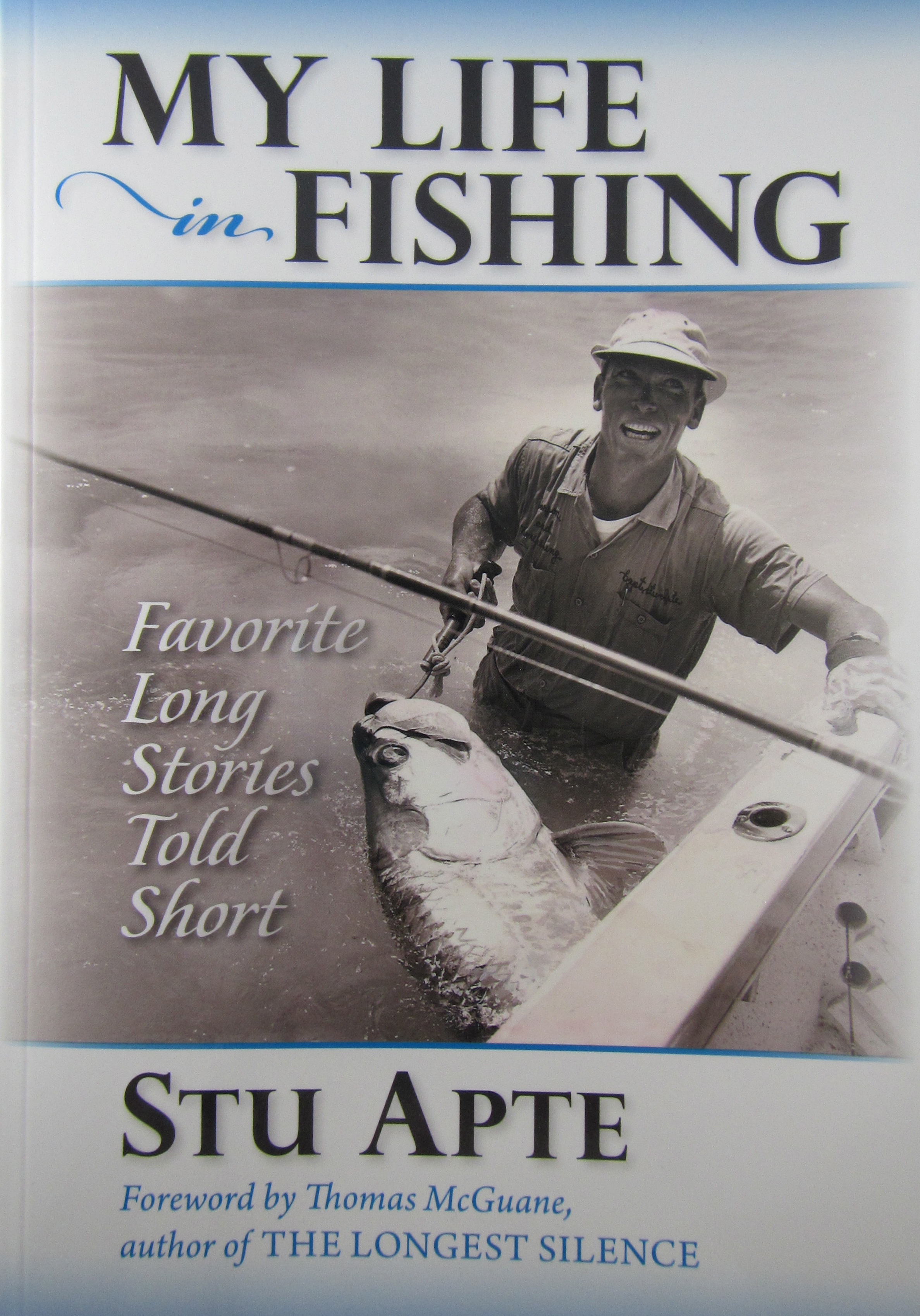
Book Review: My Life In Fishing by Stu Apte

IMG_2680

My Life In Fishing by Stu Apte, Stonefly Press, ISBN: 9781939226709, $29.95

There are giants who walk among us. Technically, they are human. But upon further examination, they reveal themselves to be of a different order.

For proof, I submit Stu Apte. Stu has done things that you and I never will. He was a fighter jet pilot in the Korean War, and then a pilot for the legendary Pan Am airline. He drank mojitos with Hemingway, guided U.S. Presidents, was fishing buddies with the last player to hit .400, fished with luminaries in the world of angling like Joe Brooks and Curt Gowdy, and became the sharpie’s sharpie of big game saltwater fly fishing. Oh. He also held, or still holds, over six dozen IGFA world records.

My Life in Fishing is subtitled “Favorite Long Stories Told Short,” and the resulting format shines under the author’s charming, often humble recollection of his experiences. Apte is a simple writer, yet his stories held me captive over several evenings. This is the kind of book that I love: it’s really an expansive how-to manual (among my favorites: when fighting a big fish, to play him long is to play him wrong) disguised as a collection of personal anecdotes.

Apte cut his angling teeth in south Florida, so the book is saltwater-heavy, especially snook, tarpon, bonefish, sailfish, and permit. But there are chapters on stripers, trout, Atlantic salmon, and many more species.

The cover photo is representative of the book’s photography: simple, evocative shots on both color and black & white film that transport you back to an era when the tarpon were in thick and anglers didn’t look like they dressed out of a catalog. There is a homeyness and an honesty to the shots that is lacking in so much modern angling imagery, and the keen observer will note the absence of photos of anglers with elbows locked straight out, thrusting their catch into the camera lens.

Quibbles? Only one. The exclamation point is overused in this book! Some passages read like a text!

Thanks for writing this, Stu. My Life in Fishing makes me wish it was fifty years ago, and I could call you up and book a tarpon trip. But if you’re ever up in Connecticut, give me a ring. The guide trip’s on me.

Wet Fly 101: Take the ancient and traditional path to subsurface success

“Wet Fly 101” — an introduction to wet fly fishing for trout — first appeared in the Nov/Dec 2013 issue of American Angler.  I am including the original art for the diagrams that accompanied the text, and most of the photos. Many thanks to American Angler for publishing the article, and for their continued enthusiasm about wet flies and soft-hackles.

Wet Fly 101: Take the ancient and traditional path to subsurface success

by Steve Culton

Wet flies have been fooling trout for centuries. The fish aren’t getting any smarter, a simple truth that is reinforced every time I take a trout on a soft-hackled fly. Once the king of American fly-fishing methods, the wet fly fell out of favor decades ago. But today, a growing number of anglers are discovering what a dedicated few have known for years: the best match for a hatch is often a wet fly.

The what and why of the wet fly.

Basically, wet fly fishing is an attempt to duplicate subsurface insect life. While many mayfly nymphs emerge and fly cheerfully away, many more never escape their shucks. Wings get wet. Cripples drown. Spinners that don’t get eaten eventually sink. Caddis pupae rise to the surface to emerge; many adults swim to the bottom to lay eggs. Unfortunate terrestrials fall in and become easy meals. That’s an impressive biomass.

Trout know all this, in a programmed-by-nature way. Trout need to eat to live, and they are opportunistic feeders. They see things underwater – particularly food – to which humans are oblivious. The wet fly capitalizes on these factors. As James Leisenring, one of the godfathers of American wet fly fishing, stated, all you need to do is fish your fly “so that it becomes deadly at the point where the trout is most likely to take his food…” The vast majority of the time, that’s subsurface.

The four basic wet fly styles.

Wet flies tend to be highly impressionistic. Many look like nothing in particular, but rather a lot of things in general. In his book Wet Flies, Dave Hughes divides them into four groups: soft-hackles (or “spiders”), wingless wets (sometimes called “flymphs”), winged wets, and fuzzy nymphs. Those four are a good place to start.

Soft-hackles are sparse creations: thin bodies with a soft-hackled feather wrapped at the head. Popular hackling choices include Hungarian partridge, grouse, hen, and starling. By varying the size of the hook and the color of the body and the hackle, you can match just about any hatch.

February Red Soft-Hackle

FebRedPPT

The outstanding feature of the wingless wet is its spikey, air bubble-trapping fur body. Hen hackle, typically 3-4 turns, surrounds the front third of the fly. Wingless wets can be fished deep or in the film like a dry.

March Brown Wingless Wet

March Brown Wingless

The hero of the winged wet is – drum roll – its wing. Winging material varies from natural wood duck fibers to vibrantly colored quill. Likewise, winged wets run the gamut from hatch-specific patterns like the Light Cahill to gaudy attractors like the classic Bergman-style wets.

Dark Hendrickson Winged Wet

Dark Hendrickson

Fuzzy nymphs are buggy creations that bridge the gap between a nymph and an emerger (think Hare’s Ear meets The Usual). They are often underweighted with wire that is smaller than the diameter of the hook wire. Fuzzy nymphs cover much of the water column; they work whether you’re dead drifting them near the bottom or letting them swing up near the surface.

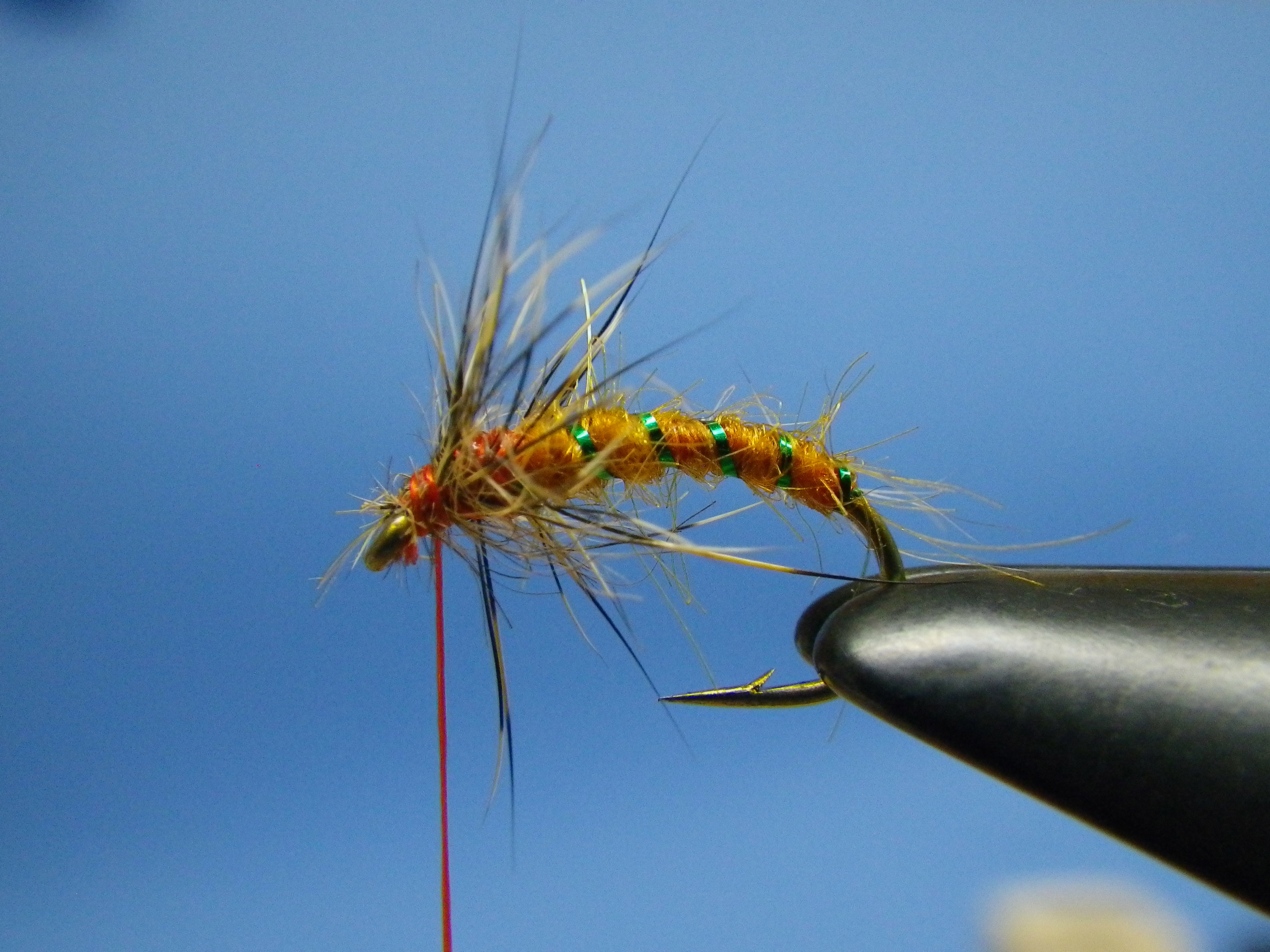
Ginger Caddis Fuzzy Nymph

IMGP2363

While each of the four styles is unique, they all share a common trait: they look – and behave – differently when submerged than they do dry. Sylvester Nemes, another giant of the wet fly, wrote, “Any sunk artificial fly, to be good, must transform itself in the water into something alive, something suggestive and moving, something that looks good to eat.” Wet flies excel at that task.

In the tradition: a team of three wets.

The classic method involves using more than one fly. Back in the day, anglers would sometimes fish a half-dozen or more flies. For our purposes, three will do: a top dropper, a middle dropper, and the point fly. The flies are not connected to each other by their hook bends; rather, they swim freely on short tags. Multiple flies intimidate many people, but the advantages far outweigh the specter of tangle perdition.

Obviously, three flies give you more opportunities per cast to hook up. But the biggest reason it tips the odds in your favor is that it gives the trout a choice. Different sizes. Different colors. Different species. Different life stages. Different depths. Droppers are the quickest way to find out what the fish want. They won’t be bashful about letting you know. You’ll have days where the trout will choose one fly at the ruthless exclusion of all others. When you’re not sure what will be hatching, you can hedge your bets by covering three possibilities. Certain of what’s in the water? Try three life stages, like a fuzzy nymph, an emerger, and something spinner-like.

Beyond probability and biology, fishing a team of wets imparts a sense of wonder. Hooking a trout is like opening a present: you don’t know which fly the fish has taken until you get it in close. What’s more, wet fly fishing connects you with the traditions of our sport. It is poetic to catch a trout on a fly pattern that is hundreds of years old.

How to build a three-fly wet fly team. At first glance, building a multi-fly dropper rig looks complicated. But basically, you’re just tying three triple surgeon’s knots. You’ll need a 9-foot, 3x or 4x tapered leader for the butt section, and some 4 or 6-pound Maxima (I prefer Chameleon [AUTHOR’S NOTE: I used UltraGreen four-pound in 2014 and it worked just as well as Chameleon]) for the droppers. I’ve tried a lot of different leader materials, and Maxima is by far the best because of its stiffness. I use the 4-pound in lower, clearer flows. 

Wet Fly Three FLy team

Step 1: Cut off the bottom three feet of the tapered leader. Discard this bottom section.

Step 2: Knots are not worthy of your trust. Wet every knot before you pull it tight, and test every knot by giving it a good tug. The heat of battle with a trophy trout is a bad time to discover you tied a substandard knot.

Step 3: Tie just over a foot of Maxima to the tapered leader with a triple surgeon’s knot. The bottom of this section will form the first dropper. Trim both tag ends.

Step 4: The ideal length between wet flies is somewhere between 18 and 24 inches; I prefer my dropper tags between 4 and 6 inches. If you’re going to build a dropper rig with the flies 24 inches apart and the tags 6 inches long, you’ll need a 30-inch section (24 + 6 = 30) of Maxima for the next step.

Step 5: Take the first, shorter section of Maxima (the one you tied to the tapered leader) and hold it 6 inches from the end. This will be your first dropper. Join the 30-inch section to the shorter section at this point with a triple surgeon’s knot.

Step 6: Trim the excess of the second section above the knot (the part you trim is on the butt side of the leader). You should now have a dropper tag about 6 inches long, pointing away from the butt, and about 30 inches of Maxima below it.

Step 7: You’re in the home stretch. This is basically a repeat of step 5. Grab the second section of Maxima 6 inches from the end, and join another 30-inch section of Maxima to it with a triple surgeon’s knot. As with Step 6, trim the excess above the knot.

Step 8: You should now have a rig that looks like the one the diagram: two shorter tags, to which you’ll tie dropper flies, and a longer end section, to which you will tie the point fly.

Which fly goes where?

There are many theories on what works best; I’m just going to give you my take on positioning. The largest or heaviest fly goes on point. It makes your team of wets easier to cast, and it gives you the option of using an underweighted or bead head wet that suggests a nymph. On a dead drift presentation, the point fly will be the deepest fly. Point position is also where I’ll place an attractor fly, like an Alexandra or a Woolly Worm.

The top dropper is almost always a soft-hackle or other emerger-like fly. This fly will always be closest to the surface. It’s rarely a bad choice to make your top dropper the size and color of what’s hatching.

The middle fly is a bit of a wild card. I want it to be something that’s likely to be in the water – for example, in the summer, a Drowned Ant. If I have a caddis pupa on point and a caddis emerger on top, I might mix things up and put a soft-hackled Pheasant Tail in the middle (give the trout a choice). Most of all, I want it to be a fly in which I have complete confidence. With a little experimentation, you’ll soon find what works best for you.

Learn to recognize classic wet fly water.

If you enjoy solitude, you’re going to love wet fly fishing. The water you’re targeting will be sections of river that most anglers ignore. The Hendrickson hatch is a crowd magnet on my home water, the Farmington River. But I usually have my pick of spots because everyone else is jockeying for a place in the named pools. Ignore water with mirror-like surfaces and languid flows. Rather, fish your wets in the transition water above them. Look for what I call the snotty water: pockets, riffles knee-high or deeper, and runs with a broken surface – any water moving at a brisk walking pace. Look for bottom structure. Look for current seams around rocks and logjams. With wet flies, where you fish is often as important as how you fish.

Don’t be afraid to move around. One of the biggest mistakes I see beginning wet fly anglers make is flogging the same water over and over without a strike (remember Einstein’s definition of insanity?). Unless trout are visibly feeding, or I know for certain they might become active at any moment, I won’t give a spot more than a dozen casts. Sometimes taking a few steps up or downstream makes the difference. While it is true that you can sometimes goad a trout into striking, your primary quarry is the aggressive fish. You’ll be surprised how many trout will offer at your first cast.

But there are other reasons to actively wade and fish. When you walk the length of a run, you get to know it on a more intimate level. Where are the submerged pockets? Where is the sunken debris? What is the structure like behind that boulder? It is intel like this that will make you a better angler.

A 20-inch brown that liked the looks of a Hackled March Brown, an old English pattern.

Wetflymouth 1

Basic wet fly presentations.

You can make wet fly fishing as complicated or easy as you like. Since this is Wet Fly 101, we’ll stick to three presentations. Use a floating line you can mend (a longer rod makes that easier, too). I find fast-action rod blanks contrary to the true nature of the wet fly. Think of the slower bamboo rods of days long past. Two things to avoid: high line speed/ultra-tight loops, and dumpy, pile-like casts. Both are recipes for tangles.

By all means, seek out and target rising trout. It’s almost never a bad idea to drift a wet fly past the nose of an actively feeding fish. Look for splashy rise forms where you don’t see the trout’s head. More often than not, they’re taking emergers just below the surface. Match the hatch, present your wets like the naturals, and the trout will make you look like a savant.

The Upstream Dead Drift. This presentation gives you the advantage of the fish not being able to see you, and the flies being delivered to them in a natural manner. The key is line management. Immediately after making your cast, your line will form slack loops in the uneven current as it floats downstream. Gather in this slack as it forms. Take care not to strip the line faster than the current – this is a dead drift. Watch the tip of your fly line like a hawk. If it stalls, you’ve got a customer. Set the hook.

Short-Line Deep. Another upstream presentation, much like short-line nymphing, that is ideal for presenting flies in deeper holding water. Again, you have the advantage of being out of the trout’s line of sight. This is where a longer rod shines. I have a rod’s length or less line out when I present this way. Make an upstream cast, and immediately raise your rod tip to ensure the fly line is off the water. Match the track of the flies with your rod as they drift downstream. You’ll know when you have a fish – your leader will come tight and thrum with energy. Set the hook. If the water is particularly fast or deep, I’ll sometimes fix a BB shot to the leader just above the knot that forms the middle dropper. While untraditional, I assure you the trout don’t care.

Downstream Mended Swing and Dangle. Plenty of days, I’m feeling lazy. I’m content to walk a stretch of river, cast, throw a few mends, then let the currents take my flies where they will. It is a peaceful, organic, relaxing way to fish. It also works like the dickens. Make a quartering cast downstream. Throw a series of upstream mends to slow the swing of your fly. Absent a strike, let the flies swing down below you. Let them dangle in the current. Your soft hackles and spikey bodies will move even while at rest, tantalizing trout. Because your flies will have planed up near the surface, you may see a strike before you feel it. Don’t set the hook! The biggest mistake beginners make while fishing on the swing or the dangle is striking too soon. They take the fly right out of the fish’s mouth. When you see the swirl of the take or feel the tug, wait a moment. Ask yourself, “Are you still there?” Then, lift your rod tip, and the trout will be, having neatly hooked itself in the corner of its mouth.

A Simple Mended Swing: This basic wet fly presentation is an ideal way to cover water and find aggressive fish. Make a quartering downstream cast (A). Throw a series of upstream mends to slow the speed of the flies as they swing down and across (B). At the end of the drift, leave the flies suspended in the current (C). This is called the dangle. Be ready for explosive strikes.

WetMendedSwing

For those interested in an advanced degree in wet fly, I recommend Dave Hughes’ Wet Flies and Sylvester Nemes’ The Soft-Hackled Fly. But for now, class is dismissed. Head for your favorite stream. And catch some trout the way your great-great-great-grandfather did.

“Soft-Hackles for Winter Steelhead” in the current issue of American Angler

Calling all steelhead fanatics and soft-hackle aficionados: this article, appearing in the Jan/Feb 2015 issue of American Angler, is right up your alley. It features six of my favorite winter steelhead soft-hackles, including detailed photos, pattern recipes, and a little story about each fly. Also included is my winter steelhead indicator setup.

IMG_2645

I have several more articles in the pipeline for American Angler this year. Stay tuned.

Also, I just finished a piece for the Mid Atlantic Fly Fishing Guide on fly fishing the Farmington River in winter. That should appear in the next issue, out in early 2015.

Fly Fishing for Striped Bass on Lighter Tackle, or: A Good Night For The Five-Weight

This article originally appeared in the July 2013 issue of the Mid Atlantic Fly Fishing Guide under the title “A Good Night For The Five-Weight.” Many thanks to MAFFG for allowing me to share it here. Those of you who are familiar with how I fly fish for stripers know that I often fish like other people don’t — or won’t. Fewer things get my adrenaline pumping stronger than the thought of using my five-weight to present a ten inch-long herring flatwing to striped bass that might be best measured in pounds.

When I tell people I like to fish for stripers with a five-weight rod, I get a lot of strange looks. Some of their comments are even more pointed.

“Oh, your poor rod!”

“Doesn’t that void your warranty?”

“You’re only stressing the fish and adding to the mortality rate.”

I can’t say I blame them. Ours is the culture of the nine-weight rod for stripers, and deviations from that norm are looked at with jaundiced eyes. Their reactions stem from fear – and the unknown. I know, because when I first thought about using my five-weight for stripers, I was terrified that I would break my rod. And that I wouldn’t have the first clue about how to play and land a big striper on such tackle. As it turns out, our 32nd President was right. The only thing I had to fear was fear itself.

All five-weights are not created equal.

Before you head out, make sure you’re using the right tool for the job. My striper five-weight is a nine-foot, fast-action blank, flexible in the tip and stiff in the butt. It is a beautiful beast of a five-weight. I can upline the rod, and easily cast larger flies up to 12 inches long – as well as dropper rigs of three flies. The stout butt section gives me the power to battle bigger bass (I’ve taken fish up to 33 inches) and turn them, even in swift moon-tide currents. I never feel under-gunned, and my only complaint with the rod is that it doesn’t have a fighting butt. Many rod makers put fighting butts on their six-weight models, so you may want to look into one of those.

You could use a lower weight rod – I know an angler in Rhode Island who loves his three-weight for stripers – or a slower action stick if that’s your preference. Many things are possible with unconventional tackle for the adventurous angler. And it’s not limited to striped bass. Do an internet search for the short film, “Salar, The Leaper” to see Lee Wulff land a 12-pound Atlantic salmon on a 6-foot, 1 ¾-ounce midge rod.

Don’t be afraid to upline.

If you’re going to catch stripers on lighter tackle, you’re going to have to break a few rules. One of them involves uplining, also known as overlining. When you upline, you use a line weight that is greater than the one specified for the rod. This is often the source of great consternation among purists on internet forums, but have no fear: the casting police have no real power over you. Besides, stripers don’t care what line you use with what rod.

Why upline? In two words: Comfort. Necessity. I use a line that allows me to effortlessly load the rod with one false cast, and to overcome the air resistance of a large flatwing or dropper rig of three flies. The line that mates perfectly with my rod and slower casting style is a nine-weight, weight forward integrated shooting taper. The head length is 37.5 feet, and it sports a hefty weight of 375 grains.

As an angler who puts a premium on presentation, my preference is for floating lines. But you should use whatever kind of line works best for you. If you can, it’s a good idea to try different lines with your rod before you buy. When you find the one that makes your rod sing, you’ll know it.

When I upline my five-weight, even long flies like this 11-inch Herr Blue flatwing are easy to cast.

IMG_0316

The beauty of a good reel and a stout leader.

School bass in the 12 to 20 inch range are terrific fun on a five-weight rod, especially in current. You can easily hand-strip those fish in. However, once you get into keeper-size territory (28 inches in my home state of Connecticut), you’ll appreciate having a reel with a reliable drag. That’s because you fight those bigger fish with the butt of the rod and the reel – not the tip.

That’s where a strong leader system comes into play. My typical leader is 7 ½ feet of 30-pound monofilament – more than enough to handle any striper I’m likely to hook from the shore. If you consider striped bass to be a precious resource, you want to make sure you don’t overplay the fish. Once you hook a striper, the combination of a 30-pound leader and your reel puts you squarely in charge of the situation.

Fighting bigger bass on lighter tackle.

Many anglers wax poetic about how a powerful striper took them into their backing. It makes for good storytelling, but I’d rather not have the fish take that much line. I like to ratchet the drag down tight, especially when I’m fishing with my five-weight. In fact, I’ve never seen my backing with that rod, even on chubby, well-fed bass up to 15 pounds.

Here’s a typical fight scenario. I’m presenting a big flatwing on the greased line swing. Suddenly, I feel a build of pressure – the bass taking the fly into its mouth – then the water erupts as the fish turns and realizes it is hooked. I can tell it’s a bass over 28 inches from the size of the boil and the power of the initial thrashing. I come tight to the fish by quickly reeling in the slack from my shooting basket, or letting the fish take the line through my fingers.

At that point, the striper may begin its first run. But sometimes there’s a quick grace period where the bass will sulk in the current. I use that time to my advantage by re-setting the hook. I point the rod and line straight at the fish, and, with my arms outstretched, give one or two hard thrusts straight back toward my gut (now you see why I like 30-pound test). That fish is now well hooked. From this point on, she’ll be fighting a losing battle.

There’s another good reason for re-setting the hook. Stripers have tough, rubbery mouths. Many years ago, I lost several substantial fish due to poor hook sets. Since I added this simple arrow to my quiver, I have not lost a single fish over 28 inches.

Once I’ve re-set the hook, I’ll play the fish with my rod held somewhere between a 30 and 45-degree angle. Remember, on lighter tackle your power comes from the bottom one-third of your rod. You want to feel the fight not at the rod tip, but down in your hands. There is absolutely no loss of sport with this technique. A good fish in current will put a tremendous bend in your five-weight. The battles are exhilarating, and will test your tactical know-how as well as your physical abilities.

If the bass is holding in the current, I’ll start to reel. When the fish wants to run, I’ll let her, because she’s not going very far with that tight drag. What’s more, her runs will burn a tremendous amount of oxygen, tiring her out and making her easier to land. Most of the bigger stripers I’ve caught are good for a couple long runs, maybe another shorter one once I bring the fish into the shallows. But by then, the fish is beaten, and my goal is to get the striper to hand, remove the fly, and send her off on her merry way.

This keeper striper fell for the charms of a Rock Island flatwing, fished on a greased line swing.

IMG_0255

Those who practice catch-and-release – and I’m one of them – have a responsibility to land the fish as quickly as possible, regardless of tackle. I’ve seen plenty of anglers with traditional striper rods overplay sub-legal bass to the point of near death. If it’s taking you more than a few seconds to revive a striper you’ve just fought on lighter tackle, you need to work on getting that fish to hand quicker. A.H.E. Wood wrote that he expected his rod to earn its keep. Do likewise. Don’t be afraid to push your five-weight. It’s a lot stronger than you think.

When and where to use lighter tackle for stripers.

Of course, you can fish your five-weight any time you like. But there are certain places where lighter tackle shines, like sheltered estuaries and salt marshes; back bays; salt ponds; and harbors. For me, the determining factors are: How far do I need to cast? Do I have limited room behind me? What’s the wind doing? Are waves an issue? It helps to look at these not as independent variables, but rather in conjunction with one another.

For example, if the wind is blowing at 15 knots in my face, I might still take the five-weight if I’m heading to a well-lit dock where the bass will literally be right at my feet. If my destination is a wide river mouth where I will be making casts well over 50 feet, I’ll be taking my big two-hander instead. Same call if my plans include the outside of a breachway or a beachfront with surf over three feet. Fishing is supposed to be fun, and fishing with the wrong tackle for the conditions is a sure path toward a miserable outing.

If you upline your rod with a weight-forward shooting taper, you can still cast a fair distance with just a little line in the air. This makes your five-weight a great choice for fishing in areas loaded with obstructions. One of my favorite spots for the five-weight is dock that is cluttered with overhead wires, light poles, and assorted wooden structures. There’s no room to get off a big back cast – but it’s not an issue because I can load my rod with less than thirty feet of line. Similarly, I fish a breachway between two salt ponds where a standard back cast would hit the rock seawall directly behind me. My setup allows me to easily get my fly out where it needs to be.

Consider bringing a landing net if you’ll be fishing off a dock. School bass under 18 inches are easy to heft out of the water. A twelve pounder, not so much. Some docks are several feet above the waterline, especially on an ebb tide. A landing net will make life easier for you – and your fish.

Sheltered estuaries like this one coursing through a marsh are ideal places for lighter tackle.

IMG_0336

Tripping the light fantastic.

The best way to learn the nuances of any fly fishing setup is to go out and fish with it. Nothing beats time on the water. Start with smaller school bass until you get your sea legs. In time, you’ll have the confidence to take on stripers you never dreamed were possible on lighter tackle. And the time will come when you’ll land a bass that will be measured in pounds, not inches.

That’s when a good night for the five-weight becomes a great one.