Late Friday Happenings & Other Big Deals

Hot on the heels of the International Fly Tying Symposium, I went to fish Lake Erie tribs for a couple days. I plan and writing about both, just not today as soon I’m heading up to Pulaski with Number One Son Bill for more steelheading. Then it’s Thanksgiving. So, I’m busy, and I’m sure you’re busy, too. Rather than write a half-assed report on the Symposium and the Erie trip, I’m going to wait until I can do them justice.

Here’s what I can tell you: my first deadline for the Farmington River book is December 1. I’m going to take a wee break from writing then, and I’m hoping to be able to give you some better (and more) content here, if only for a short time. I’ll also have a Salmon River report for you. Plus, I have my Fly Fishing Show Marlborough schedule for January 17-19 — Edison to come soon as well.

I’ll give you all an early Thanksgiving shout-out: I’m very thankful for everyone’s patience as I write the book, and I’m grateful that so many of you have told me how much you enjoy Currentseams. So, thank you all!
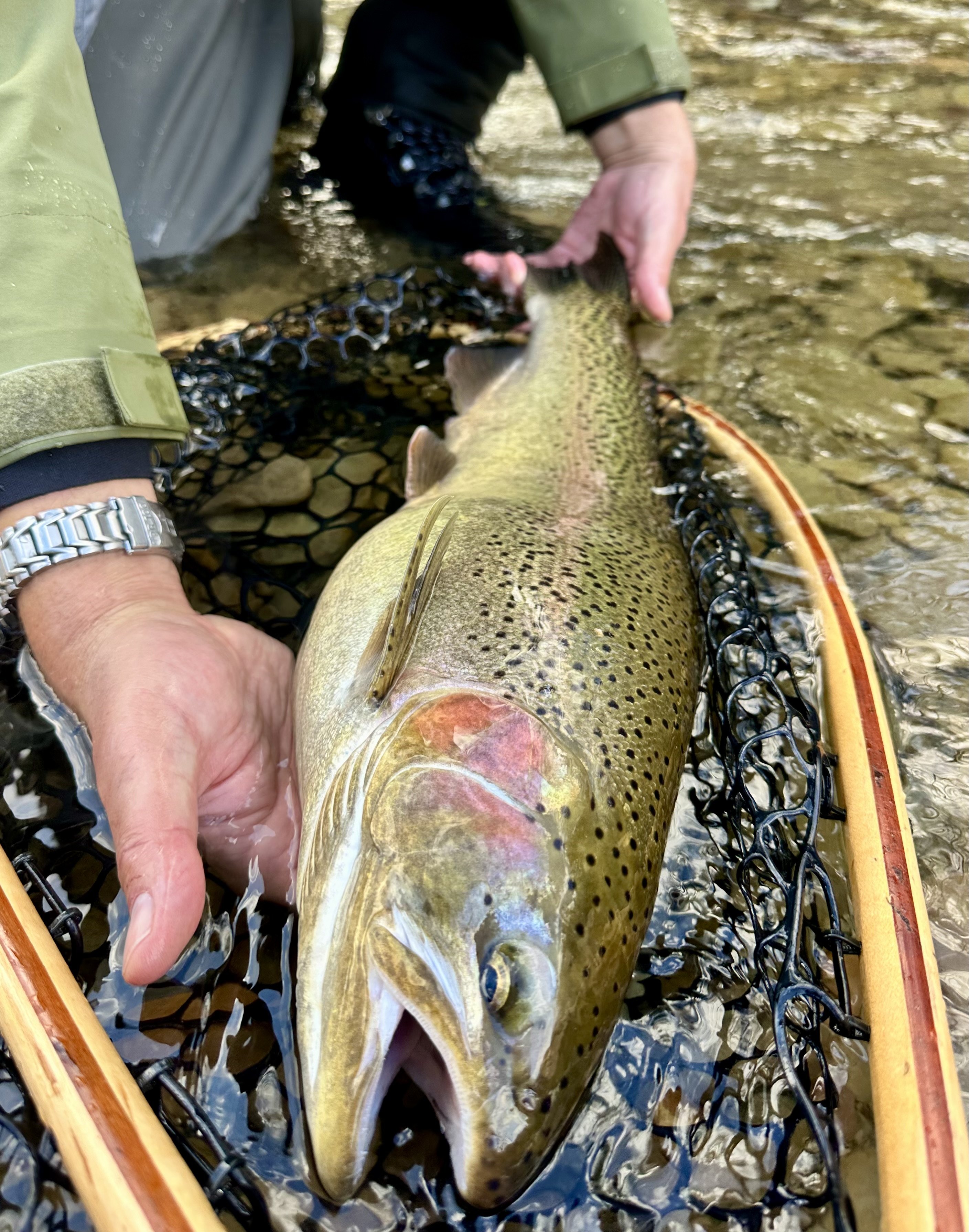
All work and no play etc., so I played hooky for a few days this week, and I’m going to do it again in short order. Here’s a fine, fat, egg-laden hen from Wednesday.

Matching The Hatch with Wet Flies

“Matching The Hatch With Wet Flies.” That’s the title of my Featured Tier demo this Sunday at 11:45am at the International Fly Tying Symposium in Somerset, NJ. As I prepare for the demo, I had a few thoughts I wanted to share.

When you’re fishing wet flies, matching the hatch doesn’t matter — until it does. And then, you’d best be prepared. What I mean is, there will be times when fish will eat a wet fly simply because it looks alive and like something good to eat. The bug that wet fly is supposed to represent may not be hatching at that moment. It may be entirely out of season. It may be the wrong color or size. But nonetheless, it gets stomped.

However, the more you fish with a team of three wet flies, the more you will encounter situations where the trout will only have what’s hatching, presented in the water column exactly where they are feeding on the naturals. They may pick out one fly on the three fly team to the ruthless exclusion of the other flies. That’s when matching the hatch pays dividends. You’ll be the person leaving the pool, trailed by other anglers who will want to know, “What fly were you using?”

So: know your hatch windows. Understand what food is most likely to be in the water. Understand how those bugs behave. Specific patterns aren’t as important as matching size, color, and profile. Give the trout a choice. They will always tell you when you get it right.

See you this weekend!

LaFontaine’s Diving Caddis is a good choice for a late afternoon-into evening pattern — because that’s when the trout are most likely to be seeing egg-laying female caddisflies. One memorable evening, I landed two dozen trout in two hours — sixteen on the Diving Caddis.

International Fly Tying Symposium next weekend, Nov 16-17, Somerset, NJ

Time flies when you’re writing a book, and I can’t believe we’re only one weekend away from the 2024 International Fly Tying Symposium. That’s right, next weekend, November 16-17 in Somerset, NJ. They will be vendors galore with all kinds of hard-to-find-stuff, along with some of the best fly tyers in the world. There are classes, seminars (free with admission) and featured fly tyers (like yours truly!) Check out the seminar schedule:

And the featured tier list! (Note the slot on Sunday at 11:45, which of course will be of particular interest and importance.)

I’m looking forward to seeing you there. Please come say hello!