Farmington River Report 7/16/15: It must be magic

I guided Jim yesterday afternoon into evening, and we started in some faster water in the permanent TMA with a little Wet Fly 101. While we found a few feeders, they were reluctant to jump on. So we headed up river to get situated for some topwater action during the evening rise.

A sulphur emergence of sorts. No editing legerdemain here; some funky macro setting on the camera did this. We had a nice assortment of bugs last night: Sulphurs (14-16), Summer Stenos (18-20), Isonychia (10-12), BWOs, (14, 18-20), and midges. However, the spinner fall was not what I had hoped for. Every day — or evening — is different. Cold again! Water temp in the permanent TMA was 58 degrees. Sulphur Emerger

~

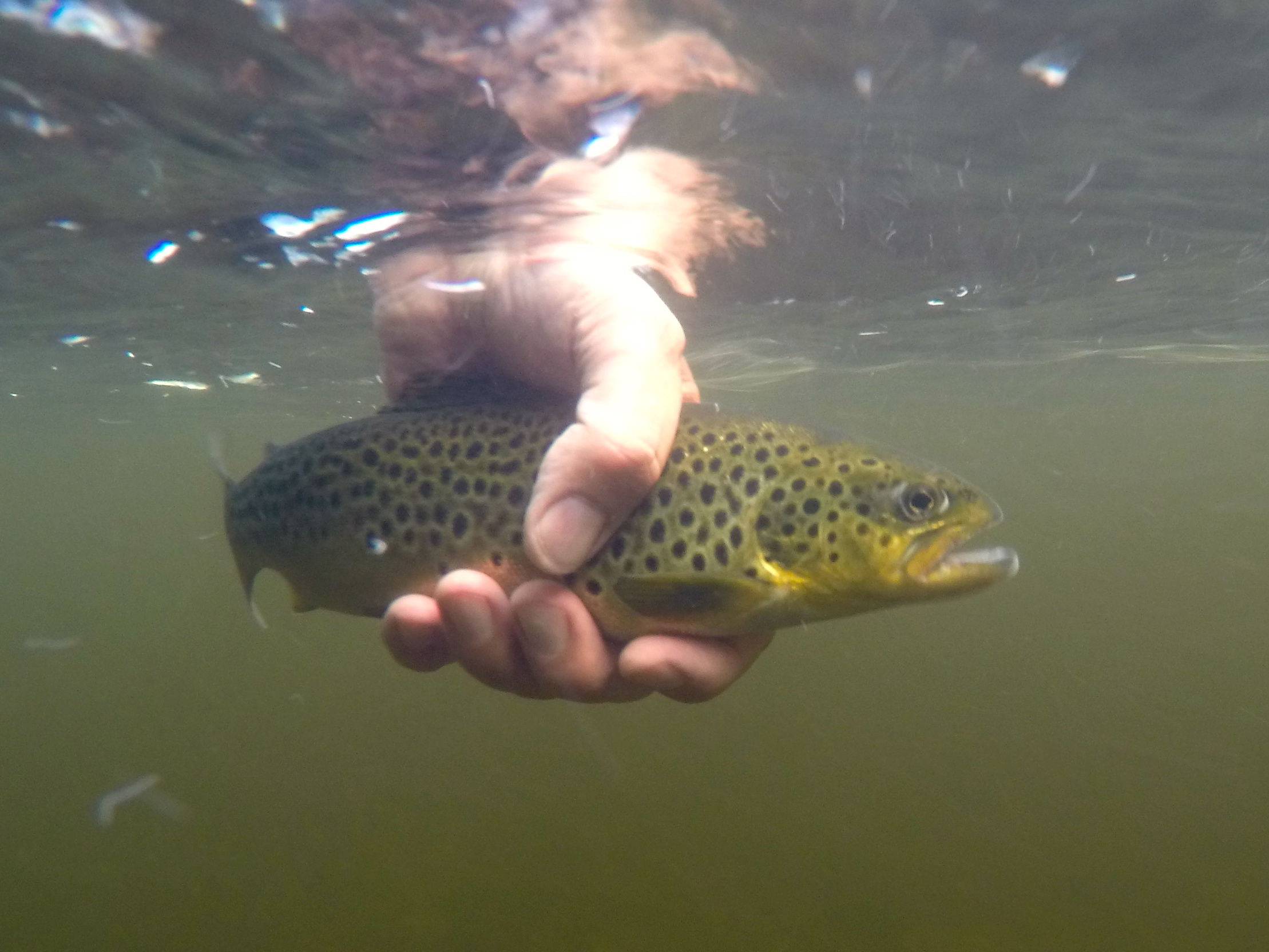
A nice brown that absolutely hammered Jim’s size 20 BWO Comparadun. Terrific hook set by Jim on this fish. Jim BWO Brown

~

Same fish, moments before release. Jim's brown release

~

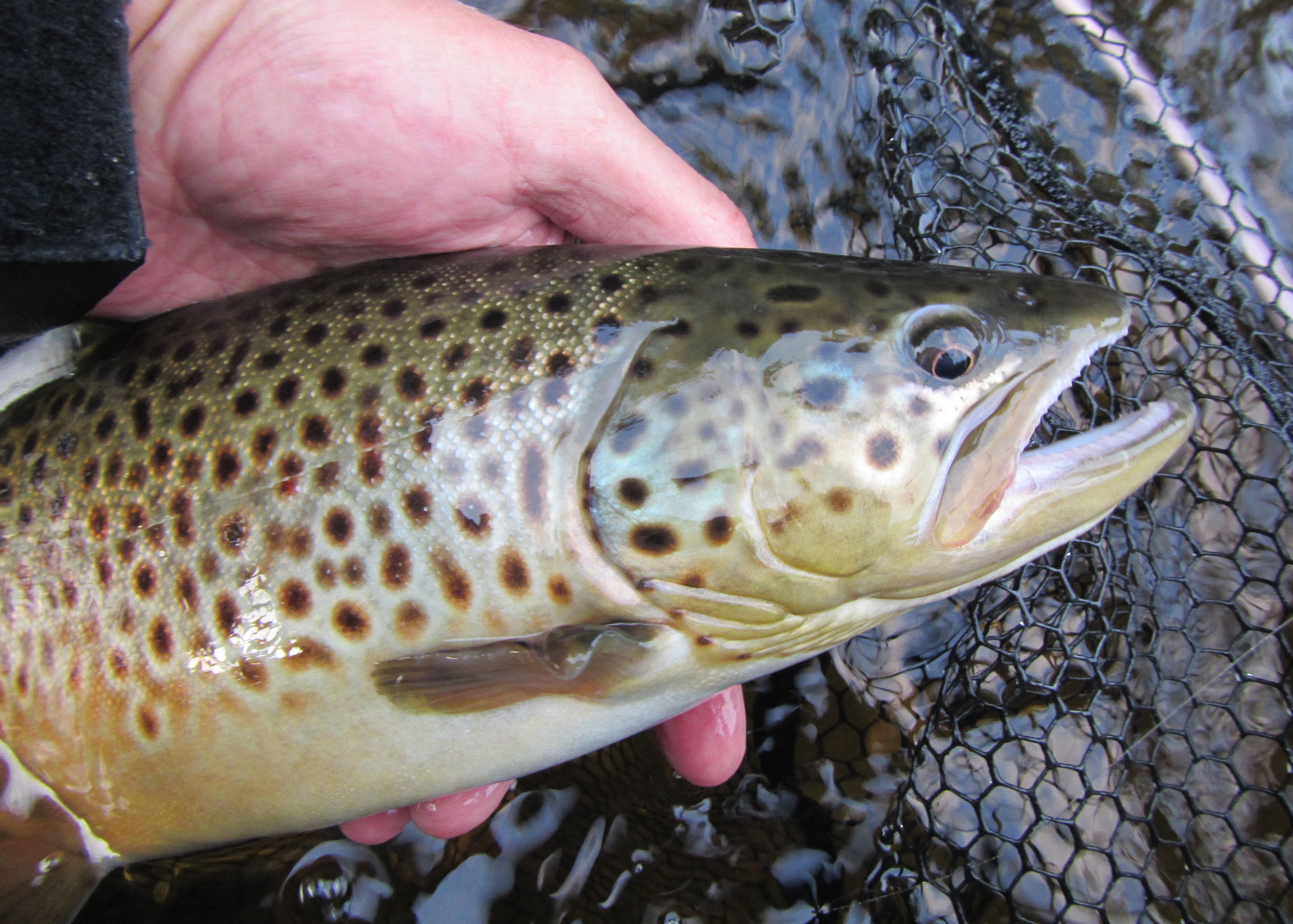
I waited until what I thought was the right moment during the hatch to introduce Jim to The Magic Fly. This is what happened on his second cast ever with that pattern. Another fat, beautiful wild Farmington brown to net. Jim did a great job, and was a pleasure to fish with.

Jim Magic Fly

~

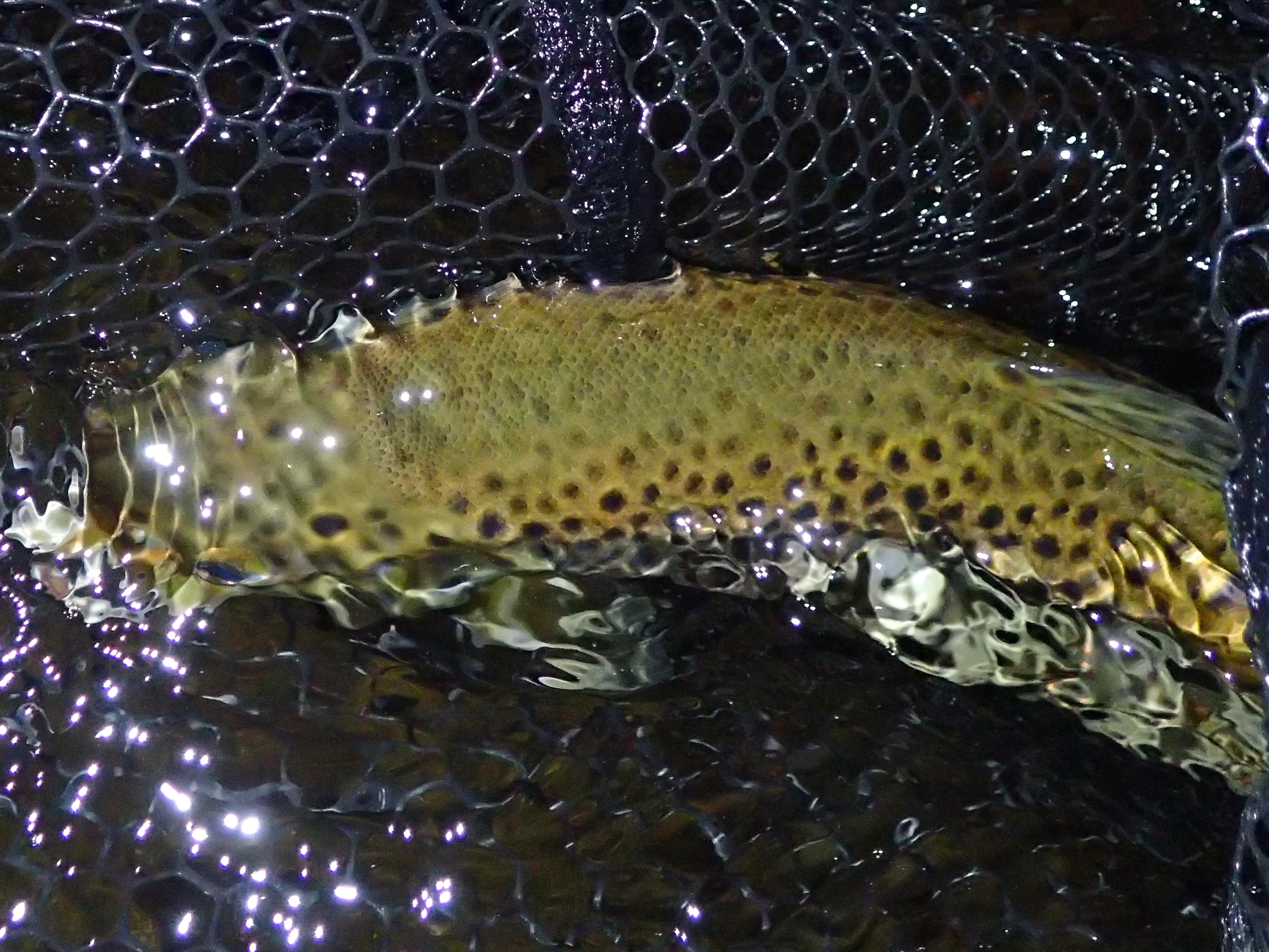
After Jim left, I banged around the river in the dark from 9:30 to almost 1:00am. While I had plenty of action — close to ten bumps — most of them were smaller fish, with no resulting hookups. Here’s a fifteen-inch brown who did stick. I like the play of water and flash along his flanks.

Monster Delaware brown on the Magic Fly

I received this from Keith A. last night:

Hi Steve,
Want you to know that I just caught a monster brown, at the Delaware river, on one of the flies that you tied for me. Size 18. My guess is 24+”.

Thanks,
Keith

No, Keith. Thank you. And well done!

In proper nomenclature, these would be Pale Watery wingless wet variants. I think, however, that Keith would cast his vote in favor of calling it The Magic Fly.

Magic Flies

Farmington River Report 6/14/15: Just like Summer Stenos

Mid-June on the Farmington means an annual pilgrimage to a popular dry fly pool with the Tonka Queen for the sulphur hatch. I figured the permanent TMA would be jammed — after all, it was a gorgeous weekend day, and the rains were coming — and unfortunately, I was right. The lot was mostly full when I pulled in. I almost bailed right there, but I figured it was worth a look-see. To my surprise, most of the anglers were concentrated in the middle section of the pool. Plenty of room at the head. So in I went.

I fished from 5pm until after it was too dark to see a size 12 Light Cahill Catskills dry. What a strange evening it was.

Sulphurs came off from the time I entered the water until roughly 7:30. It wasn’t a particularly strong hatch, but there were enough bugs to keep me and the trout entertained. I used both The Magic Fly (Pale Watery wingless) and the Usual, sizes 16-20, for the first three-and-a-half hours with mixed results. Oh, I induced a good dozen trout to rise and take — we’re talking some quality boils — but each time I lifted my rod, nothing.

Certainly there was a rust factor in play — first time out with the cane and a long (13 feet) leader — but this felt just like summer stenos, a hatch I love to hate. Present to feeding fish. Perfect drift. Rise. Take. Nothing.

Once dusk arrived, the mosquitoes came out in force. Absent traditional insect repellant, a Gispert Churchill filled in nicely.

Smoke and Bamboo

I did witness several refusals, and this got me thinking that it was possible the trout were feeding on something other than sulphur emergers: size 16-18 BWOs or size 16-18 black caddis. Other factors to consider: multiple rise forms (porpoising gently as for spinners), slashy/splashy rises, and open mouths with a tail kick).

Around 7:30 I finally connected with a nice wild brown on the Magic Fly. The next hour was a puzzling series of casts, mends, and even more swings and misses. As darkness fell, I switched over to the Light Cahill Catskills dry, first size 14, then size 12, and stuck a fish on each, the last when I couldn’t even see the fly.

An outing as frustrating as this one ultimately raises more questions in my mind than I care to mention, but here are a few. Are the fish simply missing the fly? Am I too slow on the hook set (and if I am, how come I hooked those bazillions of trout before tonight with the same speed hook set)? Are the fish committing to the take, then bailing at the last second? How come no one else was catching (over four hours of fishing, I saw six fish hooked, including my three)? What were the trout feeding on besides sulphurs (I suspect it was the black caddis)? How come I didn’t get a sniff on small (size 20 & 22) spinner patterns?

Folks, I guide, teach fly fishing and write articles on the subject, and I have to tell you that I don’t have all the answers. Thankfully. Because now I need to go back and do some more research.

A Sulphur Emergence in March

Would that it were so. But for now, I’ll have to be content with two dozen of the Magic Fly (Pale Watery wingless wet) sizes 16 through 20, waiting in the wings. June still seems like a long way off. But you can never have too many sulphur emergers — especially the Magic Fly. If you’re new to this pattern, you can find the recipe and a tying video on this site. You’ll be glad you did.

I’ll drink to a warm June evening when the sulphurs are coming off in numbers and the trout are getting stupid.

Magic Flies

I also see we’re getting near the 300 followers mark. Of course, once we reach it we’ll do another fly giveaway.

Coming soon: another trout streamer. Think out-of-the-box.

Tying the Magic Fly (Pale Watery wingless wet variant)

The Magic Fly (Pale Watery wingless wet variant)
Hook: 1x fine, size 16-20
Thread: Pearsall’s Gossamer silk, primrose yellow
Hackle: Light ginger hen
Tail: Light ginger hen hackle fibers
Body: Rabbit fur, color to match the natural

I will be the first to tell you that I don’t believe in magic flies – you know, flies that you tie on and you automatically start bailing fish. This pattern is the closest I’ve found to being the exception. The Sulphur hatch is notorious for producing stillborn flies and frustrated anglers. The same could be said of the summer stenos, which have left me muttering to myself and spitting oaths on numerous occasions. The first time I fished this fly, it was a classic June Sulphur night on the Farmington. I had a whole pool of trout at my command. They rose to the fly with such confidence that I couldn’t believe what was happening. It must be magic! I treat this fly with silica floatant (my favorite is Frog’s Fanny) and fish it like a dry, on a long leader on a dead drift. The soft hackles and spikey body create a must-eat-me-now illusion that turns trout stupid. Alter the size and color and you’ve got a fine match for dorotheas and stenos.

The Magic Fly is based on the old English Pale Watery wingless wet pattern.

If there is a downside to this fly, it’s that it is a victim of the materials that make it such a success. The wet fly hackle quickly absorbs water, sinking the fly deeper into the film. Sometimes this is a good thing. Most nights, though, I find the trout want the fly a little higher on the surface. Even repeated shakes in a floatant canister and a re-dusting of silica won’t keep the fly where it needs to be. So make sure you tie up a half dozen in each size. Speaking of size, of the trout aren’t taking the fly, try going down one size. Sometimes that makes all the difference.

~

The Magic Fly Rogues’ Gallery:

Brown PWWwet


~


High-teens long, fat Farmington brown taken 7/21/14 on a size 20 Magic Fly

Big Brown on Magic Fly