Forgive the brevity, but I’m up against it today. First: thank you EJTU for hosting me on Wednesday night. I presented Wet Flies 2.0, the turnout was excellent, and we had an engaging post-talk Q&A.
Gadzooks! Fishing twice in one week? It’s true. On Tuesday night I braved a snotty surf and 10mph wind with surfcaster extraordinaire Toby Lapinski. We fished a top secret rocky reef, and although the conditions seemed perfect for fall bassin’, we managed just one touch before we decided that it wasn’t happening. Yesterday, I headed to points far away to fish a thin blue line with #2 Son Cam. The water was painfully low, and leaves were a constant issue. The action was slow, but we had fun fooling wild brook trout on dry flies and deep jigs.
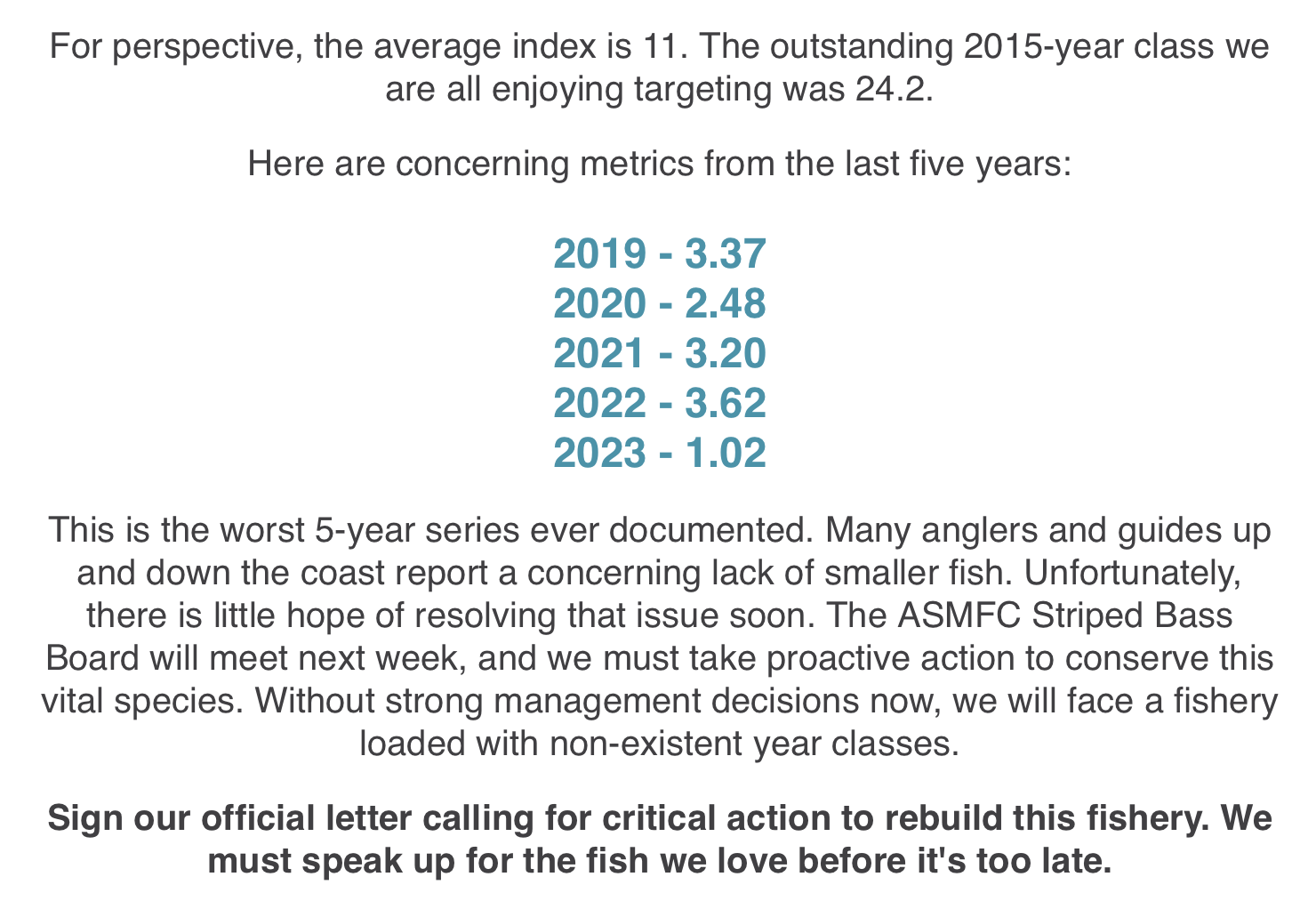
Finally, please take a minute out of your busy day to sign the ASGA letter to the ASMFC. Striped bass desperately need us to take action now. The following graphic on the Juvenile Abundance Index tells a dire story:
Greetings, fellow currentseamsers. I wish I could tell you that I’ve been out fishing, but alas, no. I’m nearing the home stretch for the first deadline for the Farmington River book, and that’s been my focus. I was visiting #2 son in Ohio over the weekend, took the train, and was able to bang out thousands of words. (I love writing on the train.) I’m really liking what I’ve written so far, and I think you will, too. I appreciate your loyalty and I’m looking forward to not only finishing the book, but getting back a normal posting schedule on currentseams.
On Thursday, October 3 (tomorrow) I’ll be speaking at the Bucks County (PA) Chapter of TU. If you’re in the Philadelphia area, come join the party. The topic is “The Little Things 2.0.”
Next week, October 9, I’ll be celebrating John Lennon’s birthday with an appearance at the East Jersey TU chapter in Rochelle Park, NJ. The meeting starts at 7:30, and I’ll be presenting “Wet Flies 2.0.” If you’re there, please say hello.
The Farmington River continues to run at a very low level. We need rain! The good news is that the water is plenty cold. Lower light will be your best time to fish.
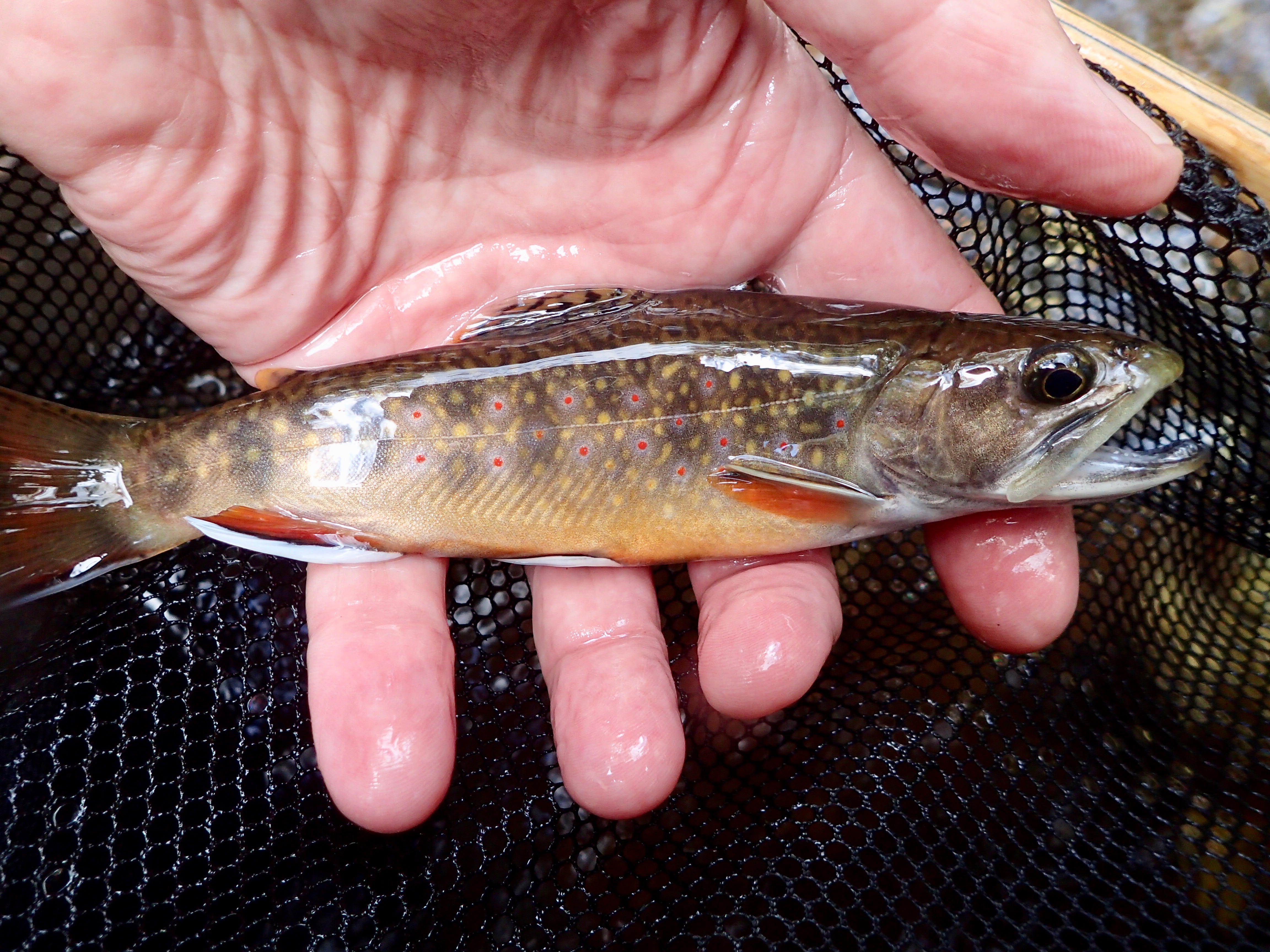
Love me some fall wild brookies. I crossed paths with this handsome char just about one year ago. Those fins! Those haloed spots! Those parr marks! Yeah, I’m a big fan.
Finally, it’s fall, which is a great time to be fishing wild brook trout streams. If you’re going to partake, please read this quick article from the archives, Three Small Stream/Wild Trout Best Practices.
On Wednesday night I spoke to the East Jersey Trout Unlimited group about wet flies — specifically, getting into wet fly fishing, with the program title being “Wet Flies 101.” What a great group, very involved audience, and a gratifying turnout. The passion this group has for fly fishing is very evident. I’m already looking forward to coming back, especially if I can start the evening off with a burger and an IPA at ReBar just a few minutes away.
During the post-presentation Q&A, I was asked a really good question. I didn’t like my answer, and it bothered me all the way home. I’d like to represent the question, and give what I think is a much better answer.
Q: You say when you’re swinging wets, you have to wait a few seconds before you set the hook or you’ll lose the fish. How come when you’re nymphing you need to set the hook right away? A: I don’t know if this is a definitive answer, but I can tell you my best calculated guess. When you’re swinging or dangling a wet fly downstream in current, you’re fishing a tight line. There’s tension present. And then, you have a moving fish applying force, and then quickly changing the direction of that force. My advice to clients is to feel the hit, ask the question, “Are you still there?” and then set the hook. Do that, and the fish essentially hooks itself. When you’re nymphing, the fish behaves differently. It doesn’t rise from the depths, then turn and swim a few feet back down to the bottom. It’s typically feeding on station, near the bottom, perhaps not moving much at all, or maybe just a few inches. It sees your nymph, opens its mouth, and eats the fly. It’s a far more passive transaction. Setting the hook forcefully downstream seals the deal before the trout can reject the fly (if it does that at all). When you’re nymphing, you can still catch fish without setting — we’ve all had instances when we’re not paying attention and we manage to hook and land the fish regardless — but setting the hook had and fast will certainly result in more trout to net.
Do this when nymphing — a downstream set with a low, hard sweep — and your catch rate will soar. Hooksets are free, so look for a reason to set the hook on every drift!

 currentseams.com