Unless you’re a setback player, you’re very likely puzzled by the author’s intriguing choice of a headline. For you non-card-types, a smudge is a bid where you declare that you will not only make all four points, but also win every trick (when each player reveals a card they’re holding). Smudges are rare, and if you’re lucky to make one, you get five points.
So, if catching three different species of fish is a hat trick and four is a grand slam, what’s a five different species? Pentachamacallit? So smudge it is. And on my second day of fishing the Kootenai (pronounced KOOT-en-ee by the locals), I scored a smudge.
This was a day that I fished solo, under the capable guidance of my guide Jeff from Dave Blackburn’s Kootenai Angler. We floated a different section of river, starting below the town of Libby. While the river is still wide and overhead-deep in many areas, there’s a lot more gravelly structure, pocket water, and whitewater pools. I far preferred it over the section we’d fished the day before. We did a little bit of everything: wet flies, dry-dropper, nymphing, streamers. It turned out to be a smudge-tastic day.
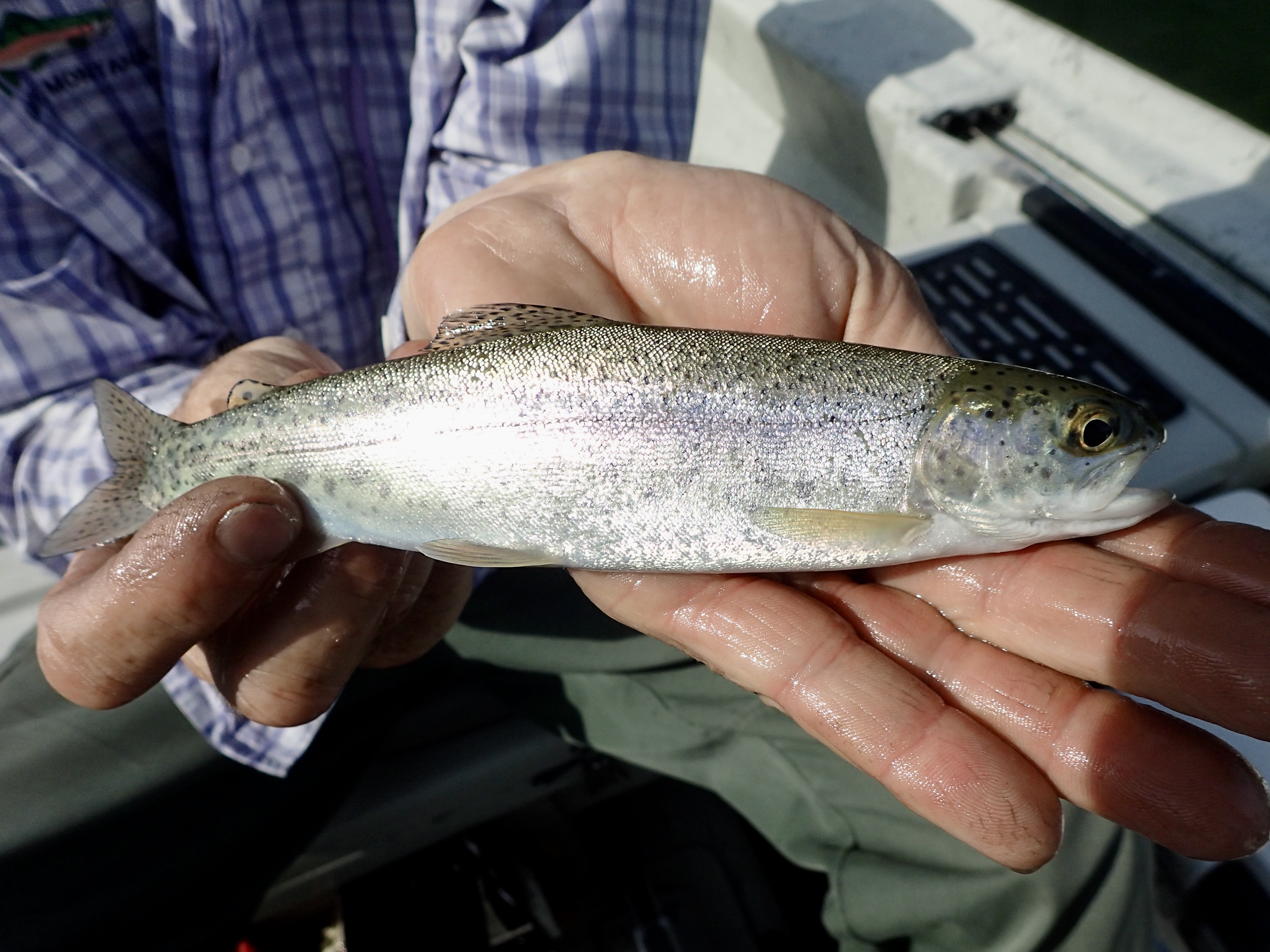
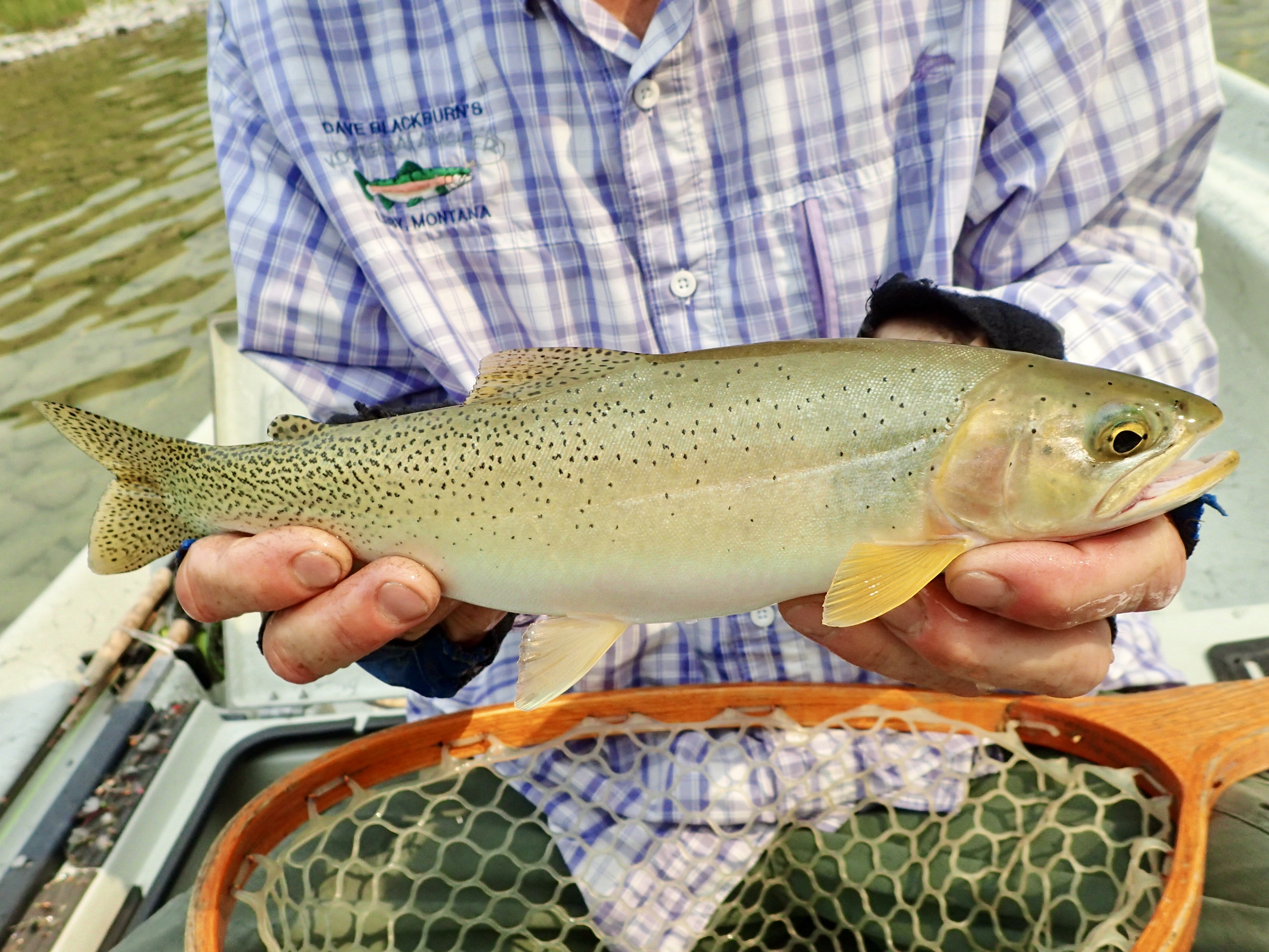
Let’s start with our new old buddy, the Kootenai Redband Rainbow trout. The ones I connected with — and they were plentiful — were generally under a foot long. Nonetheless, they were spunky and frantic when hooked, and I can’t even begin to describe their breathtakingly beautiful flanks adorned with delicate parr marks.It’s a sucker! It’s a bonefish! No, wait. It’s a northern whitefish, native to these parts. Despite their appearance, whitefish are a salmonid. Every one I hooked was taken on a nymph. This was the biggest one by far, and she gave me a good tussle. Two down.On this day, I hooked and landed my first cutthroat trout. Consider me a fan. Another native fish, these are beautifully colored and look like someone took a fine point black Sharpie to their sides as an exercise in minimalism. This fish was an epic eat. We were fishing western style, pounding the banks with a hopper-dropper, when we approached a grove of trees with overhanging branches that nearly touched the waterline. Naturally, the sweet spot of the run was beneath the branches. I made a cast, and began mending, dropping my rod tip nearly into the water so the floating line would clear the branches. Three…two…one…and whack! She ate the hopper right where we thought she’d be. That’s one take I wish I had on film.A few minutes later, I asked Jeff what that green thing in the water was. As we got closer, we could see it was a hopper going for a swim. We fished him out of the water and put him on the oar to dry off. We were going to use him for a science experiment, but before we could send him on his way, he decided to go for another swim. I haven’t seen many hoppers in the water, but this was proof that it does happen — and the way this thing was struggling, it’s not surprising that they get eaten. My fourth species was a pikeminnow. Sadly, no photo. But before you laugh at the noun “minnow,” you should know that they grow over two feet long! Mine was about 18″. Pikeminnow are a member of the dace family.If you look under the maxillary, you can see the reddish band that gives the cutthroat trout its name.Ooh. Ahh. Ohh. To complete the smudge, I offer you the cutbow. As its name suggests, it’s a cross between a rainbow trout and a cutthroat trout, with characteristics of each. I was fortunate to be able to tangle with a half dozen of these gorgeous creatures. Is it time to go back to Montana yet?



 currentseams.com