Steelhead Report 12/5/14: Neither here nor there

You get two kinds of steelhead reports.

The first is celebratory. The bite was on, the hookups plentiful, and the giddy recollections make you wish it was you who had written them. Such reports are usually accompanied by multiple grip-and-grins, or artistic renderings of gleaming flanks, spotted tails, and hook-and-Estaz neatly secured in mouth.

The second focuses on the friends you fished with, or the solitude you basked in, but most of all the glory of just being there. Umm, the fishing was slow. What else is there to write about?

No matter which end of the spectrum your trip falls into, the truth always lies somewhere between the two. Yes, there is no other rush in fishing that compares to the knowledge that the bellicose, cartwheeling silver machine you’ve been dancing with is going to be in your hands in a matter of moments. And yes, it is glorious just to be there. (You cannot, after all, catch a steelhead in Connecticut.)

Here’s my somewhere-in-the-middle from Friday.

Morning. I had planned to fish one of the nearby creeks, but the water was falling too fast for my liking. So I explored some of the diversions below Altmar. Friends, I covered water to the point of excessive thoroughness. I moved around. I gave the steelhead a choice. Nothing. Whatever was there, it wasn’t eating what I was throwing. I spent the first three hours picking ice out of my guides and trying to coax my fingertips into a functional setting. At least I had my pick of spots. By 11am, though, I’d had enough.

It wasn’t cold by Pulaski standards, but it was cold enough to make crystal lily pads. IMG_2619

Afternoon. From the start, I viewed this as a bonus trip. After my wildly successful November, I was playing with house money. So I decided to head downriver, instead of up to where the heavier concentrations of steelhead (and anglers) would likely be. If I had to do it over again, I probably would have chosen both.

I learned that some of the places I can cross the river at 1,000cfs are far more challenging at 1,400cfs — even with a wading staff — and still others are plain impassable. That limited my choices here. Run A was a blank. Run B produced my only steelhead action of the day. I kicked it. Asleep at the switch. By the time I realized the bottom was a steelhead, it was  swimming indifferently downstream, never to be seen again. (I am working on an algebraic proof that states: after the 499 good drifts you make, eyes keenly focused on the indicator, reaction potential equal to a cobra’s, looking for an excuse to set the hook, the one take you get will come on the 500th when your senses are taking a nap.)

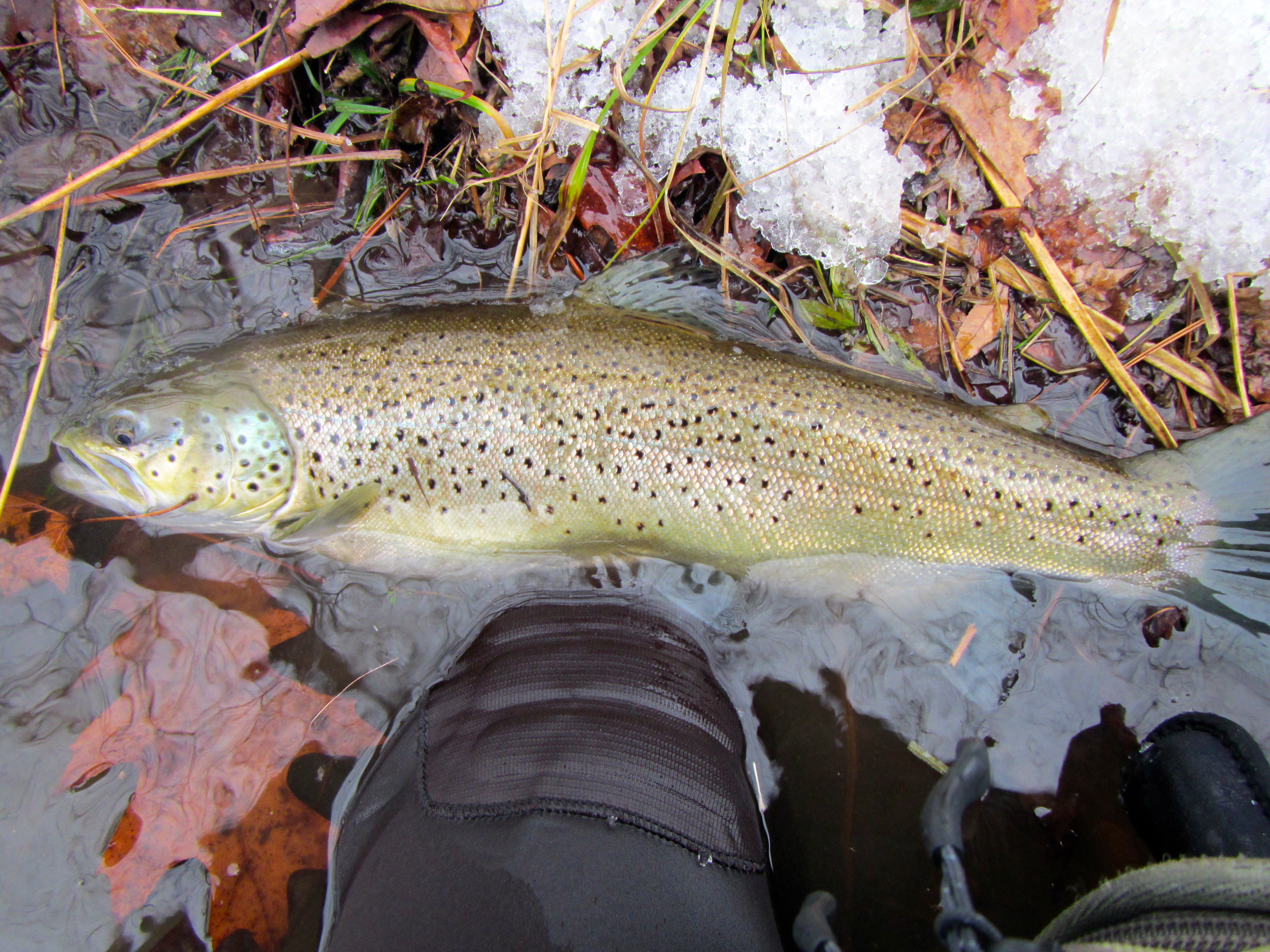
Run C was dark and deep and surely held a few fish fresh from the lake. Or not. Run D was formed by a perilous conglomeration of deadfall. I waded out between logs, stripping out line, trying to decide where to cast. I was already a little annoyed by the missed opportunity (and lack of others). So when my fly got snagged on one of the submerged logs before I could even make a cast, I angrily tried to snatch it back. Thrummm! Asleep at the switch again, only this time the fish was hooked. Not a steelhead — that was abundantly clear from the non-hysterical headshakes. Good thing, too, because with all the barriers and overhangs, there was zero chance of landing something chrome. But I will take a 20″ brown trout over the skunk any time.

Lousy picture. Decent brown. Incredible luck. IMG_2642

Run E appeared to have potential, but after 45 minutes it remained unrealized. So I went back to the dropped steelhead location well, in hopes of a repeat. Hopes were dashed. At 3:15pm, with over eight hours of hard fishing in the books and lake-effect sleet bouncing off my hood, I began the hike back to the truck.

I tell you, it was really great just being there.

Christmas tree, Pulaski style. IMG_2628

It’s sum, sum, summertime on the Farmington

Now that we’re well into July, the Farmington has settled nicely into its usual summer patterns. The fish are spread out, and we’ll start to see some of the bigger guns moving into the fast water. Terrestrials are a good bet in daylight hours, for prospecting, or during periods when there is no hatch activity. Nymphing deep pockets and fast water can be very rewarding. This is the time of year when I love to walk the river and lazily swing wet flies over fishily-looking lies, or drift them hard against the riverbank.

Current hatches include tiny BWOs, smaller sulphurs and other yellow/creamy bugs (16-20), the omnipresent tan caddis, and for those of us who enjoy fishing minuscule patterns that blend in perfectly with the river bottom, Needhami. In my experience, sparser is better with the Needhami — I use a fly that’s basically some fine thread on a 22-26 hook with a CDC puff wing. At the opposite end of the fly size spectrum, it’s a good time to crack open the hoppers box, or swing and strip big streamers after dark. (And let’s not forget the mouse patterns.) If you’re going the after dark route, be sure to stay off MDC property. They can and will ticket you.

Now, if I could only get out there.

A big ‘ole Farmington River summertime brown, taken on a March Brown hackled wet.

IMG_0865

I shoulda gone nymphing

A Farmington River mini-report for 3/11/14: a glorious dose of spring after a hellacious winter. Sunny, 50+ degrees, water running crystal clear and 35 degrees. The Upper TMA was packed for a weekday in early March. The trout seemed fairly cooperative; most anglers I spoke with who were nymphing got into fish, like currentseams follower John Jascot who landed this fine holdover brown:

Image

I had my heart set on dredging up a big ‘ole brown on a streamer, but ’twas not to be. Hard to be sad about a skunking when you’re enjoying an El Rey Del Mundo Flor de Llaneza on a sunny Tuesday.

So much water the stream was on fire

I had taken about six steps into the brook when I fell in. A poor foothold, a little water ballet in a desperate attempt to regain my balance, then flat on my seat, left forearm soaked and a shot glass-worth of water into my waders.

Well, I thought, things could only get better.

They did. The creek was up, but at a perfect medium-high level, almost imperceptibly tinged, and running at a cool 63 degrees. What’s more, the skies were a grey block of granite. Rain was coming. But for now, it was just me, the woods, the brook, and the trout.

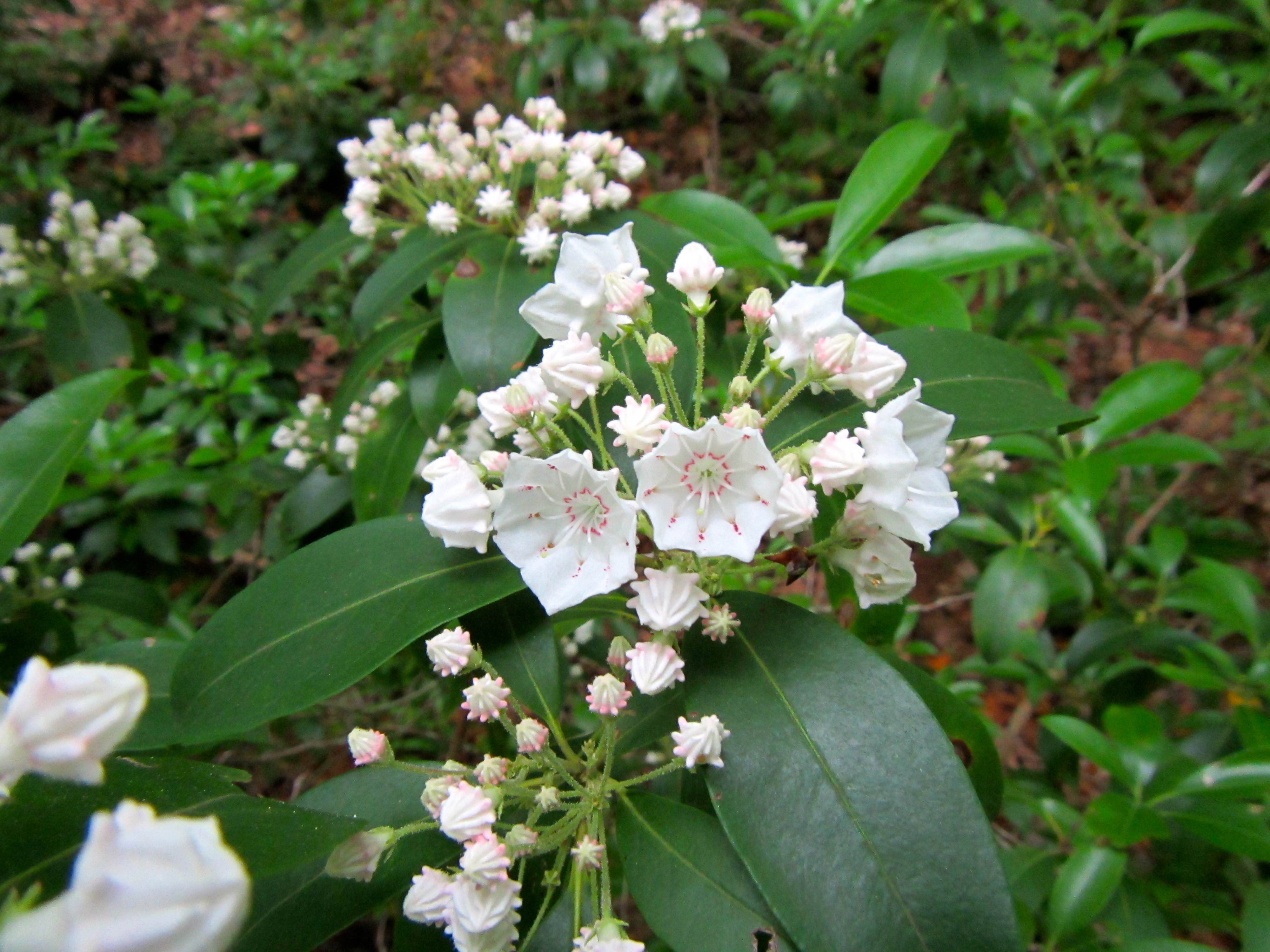
How you can tell it’s mid-June in the Connecticut woods. Our state flower, the mountain laurel, grows wild anywhere there’s shade. Some of the shrubs don’t produce flowers, but plenty of them were decked out in their white streamside finery.

Image

I spent the better part of the morning committed to the dry upstream cause, even though I knew it was costing me fish in some of the deeper pools. Most of the trout I raised were small — three inches or less — and very few of them were actually hooked. That was OK with me, though. Just to know they’re there tells me the brook is in fine shape, and those fish will be seven-inch lunkers in a few years.

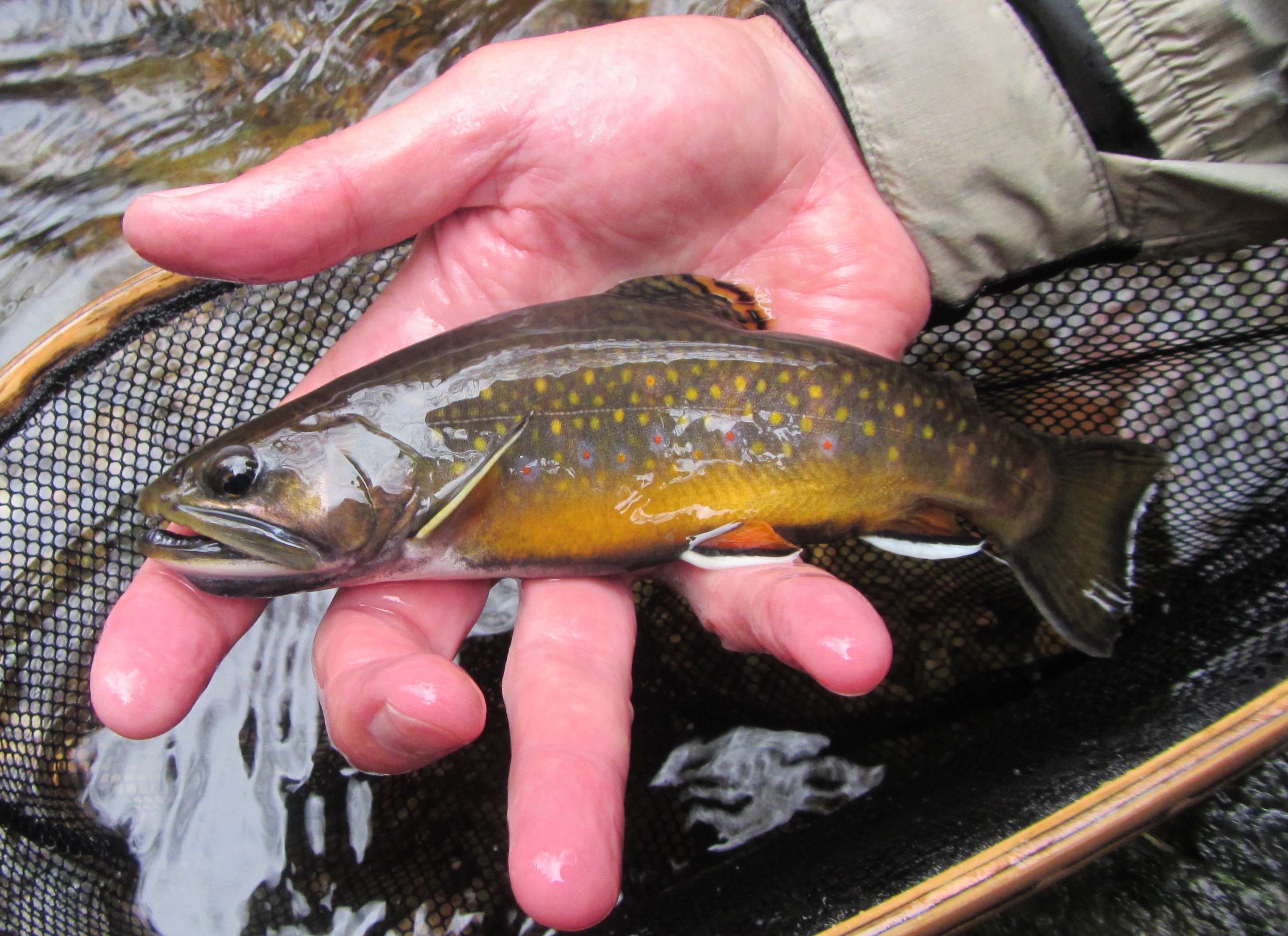
My best brookie of the day took a dry presented upstream in a dappled seam that rushed along the side of a large boulder. She ran all the way into the bottom of the next pool. Terrific little fighter, this one.

Image

One product of receding high waters is that the fish are spread out in the brook. I found trout almost everywhere I went, including some places where I usually don’t. Many times I could see them bull-rush the fly (a size 16 Improved Sofa Pillow) as soon as it hit the water. When the water’s up like this, I like to plop the fly in the middle of a glassy micro-pond at the edge of a plunge pool or current seam. The brookies suddenly  materialize from beneath the maelstrom, or the inky protective edge of underwater structure. I had a lot of first cast hits today.

Not much going on hatch-wise: midges, mosquitos, and a few stay caddis.

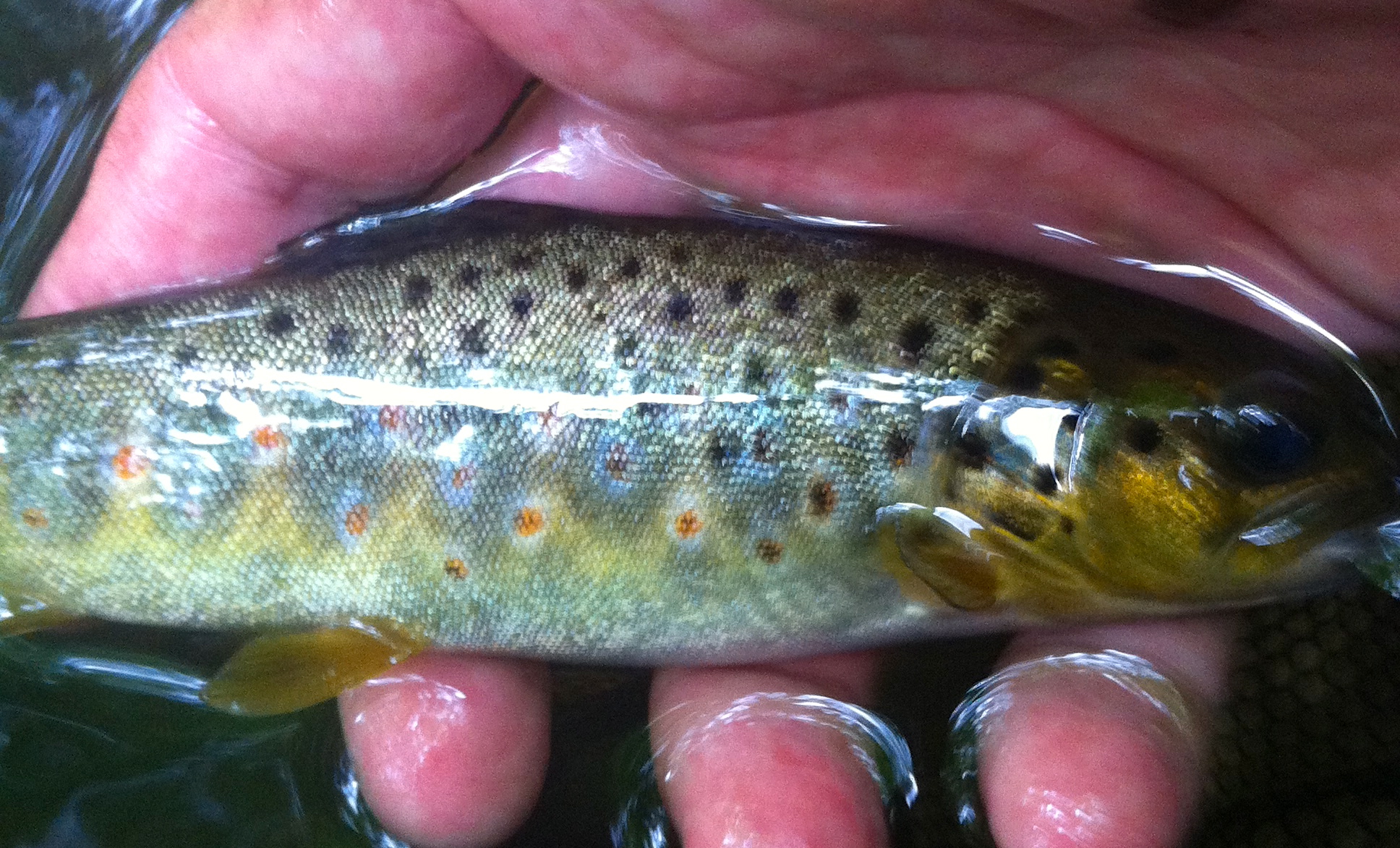
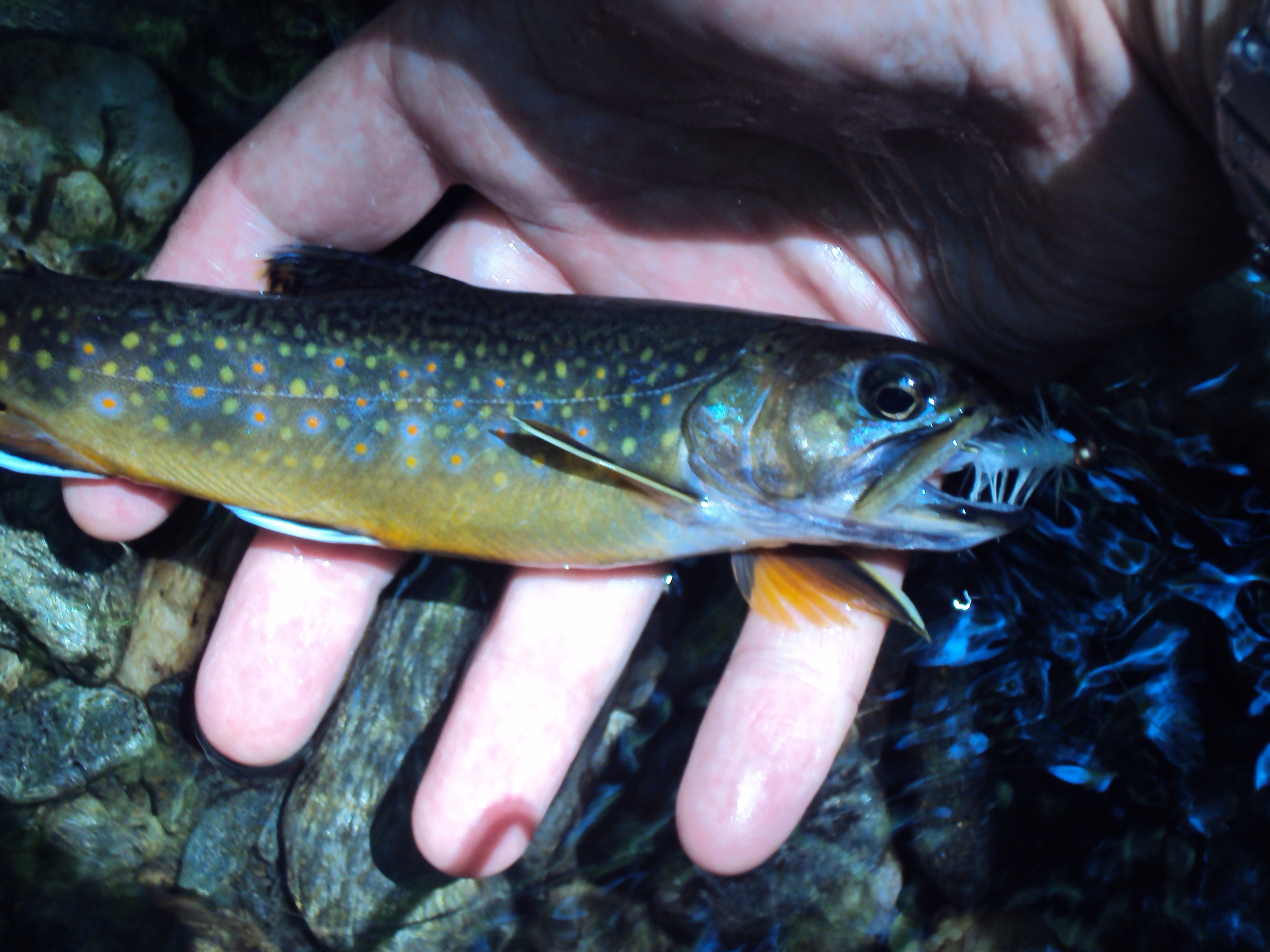
On the way out, I decided to take a page from my recent Upstream, Downstream, Small Stream article and fish a few of the deeper pools with a downstream weighted wet. The fly was a beadhead Grey Hackle Peacock, and among the trout that found it to their liking was a spiffy brown, who tracked the fly on the retrieve before striking.

Halo, I love you. Nice brown, lousy photo. This is what happens when your good camera runs out of battery and you’re forced to go with a quickie from the phone.

Image

I was able to coax the better part of two hours out of this morning’s cigar, a Gispert Churchill. The air was still enough to blow smoke rings over dark waters, where the fishing was incendiary.

Small Stream 101: Fishing the outgoing tide.

The brook was dozens of miles from the sea. Yet there I was, fishing the outgoing tide. At least that’s what I started calling it several years ago. Let me explain.

What I mean is, I’m fishing a small stream in the day or days after a heavy rain. As with an ebbing tide, the water level is dropping. It’s a great time to fish. Here’s why. The waters have gone from raging and murky to some semblance of normal. They may still have a light tea stain to them, which makes it a little harder for the fish to see you, but not your fly. Most of all, the trout have transitioned from hunker-down survival mode to dinner bell-ready. That was certainly the case today.

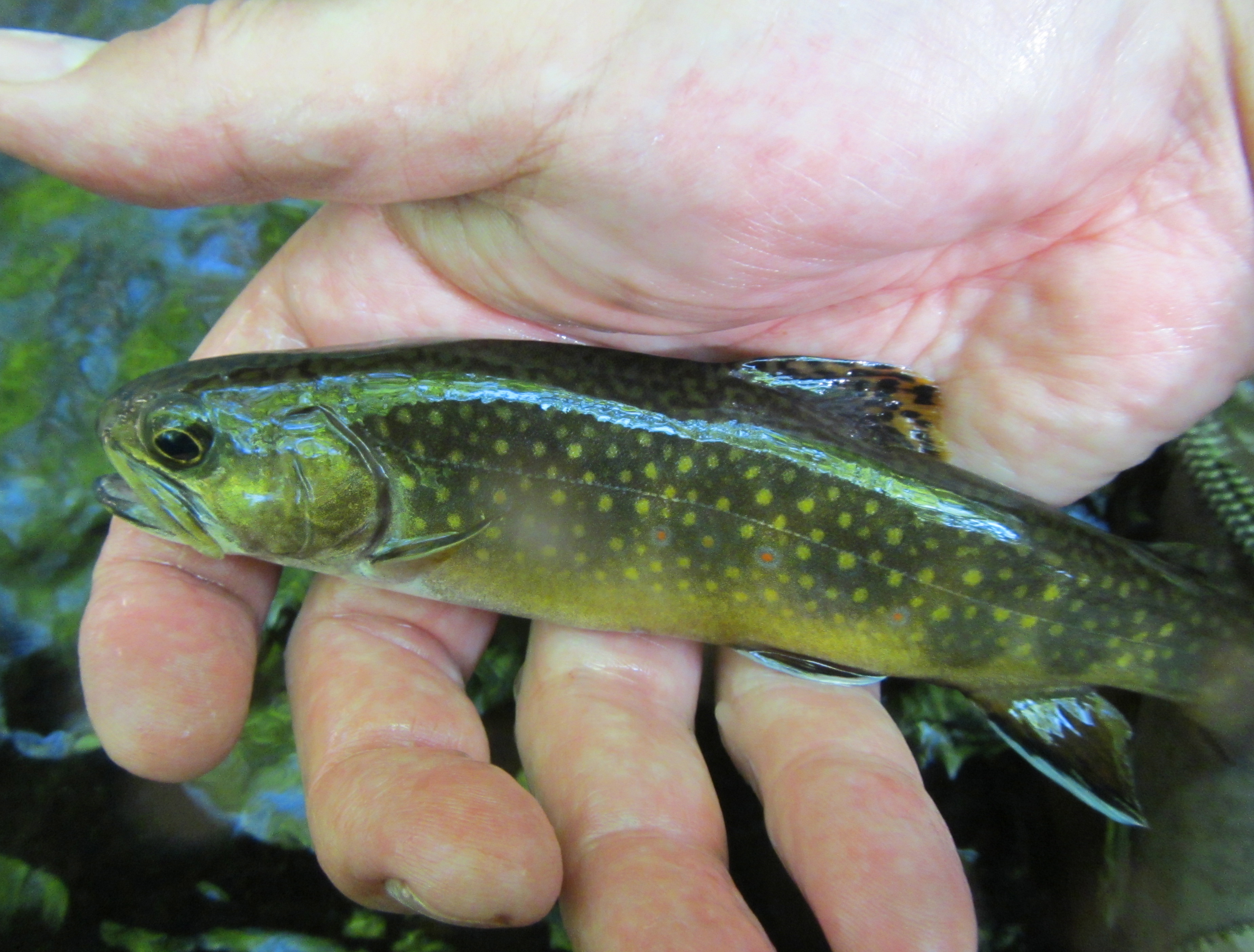
I would crawl on my hands and knees through a skunk cabbage-filled boggy mess to catch a wild brookie like this. Oh, wait. I did.

Image

The lovely woodland stream I visited today is one I haven’t fished in many months. I usually make a pilgrimage in April, but the time-space fishing continuum conspired against me. The woods are only starting to display a vague suggestion of green in April, but on May 31st they were  lush. It was already too hot and humid to be bushwhacking in waders at 8am, and non-biting midges swarmed me. Such was the price of admission for the wild troutstavaganza.

There were fish everywhere, with plenty of young-of-year brookies in the mix. This is always a good sign, as 2012’s new recruits will be 2015’s lunkers. It’s especially gratifying to see nature finding a way after last year’s terrible late summer drought and heat wave.

This blindingly beautiful wild brown hit the dry like a ton of bricks. Excuse me for a minute. I’ve got to wipe away the drool I got while gazing longingly at those parr marks.

Image

The fish were particularly active today. I witnessed three good-sized (for this stream — it’s small enought to jump across in more than one spot) trout feeding on the surface. Two were noisily slashing at emergers; the third was clearing the surface as he chased caddis. All of them were camera shy. Every time I tried to shoot some video, they suddenly stopped feeding. Little bastards.

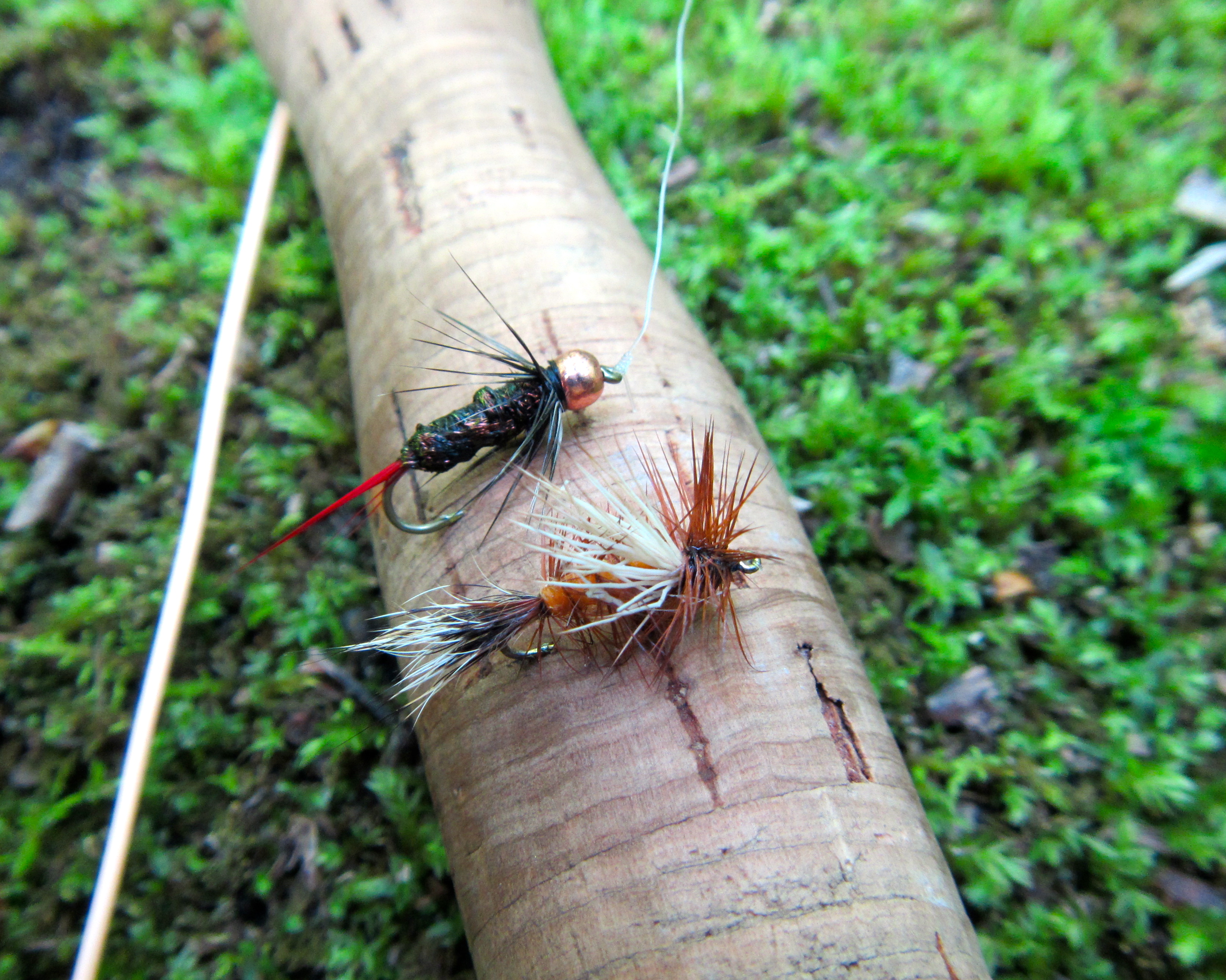
Fished a new dry today, the (Improved) Sofa Pillow in a size 16, along with a bead head Grey Hackle Peacock. The dry got the lion’s share of the action, fished mostly upstream. Pricked a good couple dozen trout, and lost many of them when the hookee ran into the omnipresent underwater stick pile. These twig and branch masses were everywhere. One of the pitfalls of fishing right after a big storm.

Today’s implements of destruction: A bead head version of the classic wet, the Grey Hackle Peacock, and the (Improved) Sofa Pillow.

Image

I held out on the cigar for as long as possible, but eventually the midges tipped the scales. Nonetheless, I declared victory as they scattered. Thank you, Romeo & Julieta Havoc Magnum. Besides, I managed to ignore work for the entire morning while catching wild trout. Clearly, that makes me the winner.

How does a stream stay cool in piss-stinking hot weather like today’s? Canopy. This photo was taken at high noon, yet virtually the entire stream is covered in shade. Nature finds a way.

Image

Chunky Farmington browns on streamers

On Thursday night, the Farmington crested in the upper TMA at around 1,500cfs. By this afternoon, is was still pumping out 750. Winds were gusting to 30mph. What a great day for some streamers.

I felt like fishing something new, so this morning I went down to the bench and pulled out a size 6 streamer hook. Since I didn’t know how much the water had cleared, I went for high-visibility. On went a gold bead, seated with some heavy wire. Made a tail out of marabou and gold Krystal flash, a body of gold mylar braid, and a doubled white marabou collar as long as the fly. On top, some silver Krystal flash. Any self-respecting ambush predator should be able to see that.

Line choice was a bit of a puzzler. I hemmed and hawed, and finally decided to go with an integrated full-sink tip, not so much to get the fly down — that would certainly be welcomed in areas where the current slowed — but mostly for casting in the banshee wind, and to keep the line below the flotsam that was sure to be bobbing merrily on its way downriver.

Yowzah, it was cold. I immediately regretted leaving my fleece vest in the truck. The wind chill had to be in the 40s or 30s. Some pinhole leaks in my waders and 53 degree water certainly didn’t help. But at least I was no longer slinging mulch in my garden. Even if I was able to do that in the comfort of a t-shirt.

The river was off-color, more of a tea-stain than muddy. As I suspected, lots of leaves/branches/twigs combos in the water. There were bugs out, but their presence was mostly belied by the legions of swallows working overhead. And yes, there were trout.

I spent most of my two hours working the banks, casting and stripping in short bursts. In my first cycle through the run, I took four browns and dropped a couple more. The trout weren’t particularly big, but most of them were chunky holdovers that fought well in the current. (Sorry, no pictures. Left the camera at home. Too cold/lazy to get the iPhone out.) I had a few swipe, miss, and come back for seconds. That’s always good for a thrill.

Dropped a handful more on my second and third go-rounds, and that was it. Pretty soon it will be time for streamers under cover of the night. And if I’m lucky, I’ll be fishing in shirtsleeves.

Small Stream Wild Browns For Lunch.

No, no. Not the kind you eat. The kind you use as an excuse to avoid that pitfall of adulthood: Responsibility.

Back when I had a salaried job, I was fortunate to work within short driving distance of two Class 1 WTMAs. Many were the warm spring days when I’d take an elongated lunch to wet a line. Well, just because I’m working from home now doesn’t mean I couldn’t do likewise. And so today, I did.

I hadn’t been to either of these streams in years. “Hello, old friend,” I said to the first as I stepped out of the truck. The water was a perfect height, clear, 44 degrees, and there were midges and small grey stones flitting about. After last summer’s drought I wasn’t sure what to expect. So I decided to hedge my bets by fishing a size 14 beadhead white mini-bugger. I never met the wild trout who didn’t like a flashy streamer in early spring.

Hello, Mr. Stone. You successfully navigated to this rock without falling prey to Mr. Trout’s jaws. Fly and be free!

Stonefly

It felt both familiar and comforting to cast, mend, and swing that fly across my old stomping grounds. Nothing in a few of my favorite pools, then – bump – was that a fish or the bottom? Next cast I’m on with a lovely little brown, about five inches long. A fish to hand is currency, and with that trout my trip was bought and paid for. More nothing as I waded downstream. Then, near the tailout of a languid pool – was that a rise? You betcha. Small fish, smutting, and the best solution I had in my box was a size 20 Winter/Summer caddis. First drift, up he comes, but the hook point found no purchase. And that was that. Try as I might, I couldn’t coax a reprise.

With my time budget melting like the remaining snow pack, I motored over to WTMA number two. Fished a run where I’d had some early season success before, but drew a blank. I was just getting ready to leave when I talked myself into venturing about 50 yards downstream. There, in some shallow riffles, I hooked another small brown who liberated himself as I pulled him out of the water. Then, in the run below, bang! Classic hit on the strip. A stunning brown about ten inches long, his tummy the color of aged cheddar and pectoral fins the size of kayak paddles.

So what if I would have to work tonight?

Stalking Wild Trout on Connecticut’s Small Streams

by Steve Culton © 2006

Wow. Has it been seven years already since I wrote this? “Stalking Wild Trout” was one of my first web articles. Its initial home was flyaddict.com, and now it’s here on currentseams. I’ve tidied up a few rough patches and thrown in a few photos. And here it is:

It was a perilous approach to the bend. I crept down the steep bank, grabbing the trunk of a sapling for support, all the while trying to dodge the broken glass and poison ivy. Wading gingerly over the slime-coated rocks, I moved through the shallow riffles, past a submerged old-fashioned home radiator. When I got to the opposite bank, I tiptoed over discarded bricks, fired long ago in some nearby kiln, and loose streamside boulders that threatened to pitch me into the deep pool if I wasn’t careful. There, 30 feet away, wild brown trout were sipping insects off the delicate line of foam that curled into a gentle slack water eddy. Like Quint hooking himself to his fighting chair in “Jaws,” I removed the size 16 Tan Caddis from the hook holder and quietly stripped line off the reel. One, two false casts, then line, leader and tippet settled gracefully onto the water. The Caddis never had a chance. It had barely drifted a foot before the trout sucked it under. I set the hook. And, like Quint, I was into a ferocious fighter of a fish.

Ooh. Aah. Oh.

Ooh. Aah. Oh.

Fishing for wild trout has become a passion for me. It has taken me to many of the State’s Class 1 WTMAs (Wild Trout Management Areas) as well as nameless brooks most fishermen wouldn’t give a second look. Sure, I love the Farmington, and you’ll find me there an awful lot. But there’s nothing quite like the satisfaction one gets from bagging a wild fish, one that grew up with no knowledge of food pellets, feeding schedules, holding tanks, or stocking trucks. These are primal, wary, wanton creatures that, when hooked, fight like fish twice their size — and if you’re going to catch one, you’d better bring your “A” game.

The Water

Connecticut currently has eleven Class 1 WTMAs, defined by the DEP as “Abundant wild trout, not stocked.” Fishing here is with a single, barbless hook fly or an artificial. Catch and release only. No bait ever. Sidebar: I’m not going to list the names of the streams, or tell you how to get to them, not because I’m a secretive jerk, but because I consider them a precious resource. The last thing our Class 1 WTMAs need are hordes of fisherpeople — or worse, poachers — descending upon them. I figure that if you really want to fish them, you can do your homework and look them up in the DEP guide, find them on a map, and figure out how to get there. That’s what I did. Fishing Class 1 waters is not casual casting, it’s a commitment.

What’s more, fishing these streams will not appeal to everyone. They can be technically difficult to fish, and in many cases require special equipment and tactics. Some of them are less than pristine, and can give off a gamey odor in warmer weather. Poison Ivy and mosquitoes abound. You may have to hike hundreds of yards through steep ravines and dense, trailless woods. If you’re out of shape, you may want to hit the Stairmaster a few times before heading out. Sound like fun? Read on.

You need to take the DEP’s use of the word “abundant” with a grain of salt. Many could be the outing you get skunked, especially if you go during mid-day  or when the water is low or off-color. Rest assured, they’re in there. Getting them to come out to play is the challenge.

The waters are as varied as the state’s weather. Some of them are lilting meadow brooks, others are more a series of waterfalls than an actual stream. Some are so martini-clear and cold you’d swear you were in northern Maine, while others are in urban settings with stained flows and enough river bottom debris to start your own salvage yard. But they all hold wild trout, mostly brookies and/or browns, with an occasional surprise tiger trout for good measure. And because most of these streams haven’t been stocked in years, it’s the only way to know for sure that you’ve caught a wild fish — or in the case of brook trout, a native wild fish.

If there is a fish native to the eastern US that's prettier than the brook trout, I've yet to see it.

If there is a fish native to the eastern US that’s prettier than the brook trout, I’ve yet to see it.

Beyond the Class1s, there are hundreds of unnamed – or at least unstocked – small streams crisscrossing the state. The colder, canopy-covered ones can be wild brook trout bonanzas. Sadly, many are on private property, but the enterprising, courteous angler can always ask for permission from the landowner. My personal favorite tactic is to take my three-year-old with me. After all, who can turn down a polite tow-headed youngster who wants to fish with daddy?

Tackle and Equipment

Think light and small. Your 9-foot 5-weight rod serves you well on the Farmington, but in tight small stream quarters it’s only going to make you miserable. I have a Fenwick 6-foot 5-weight fiberglass rod that makes me weep with joy every time I use it in a densely wooded area. A 6-foot leader is all you need, and surprisingly, you don’t need micro tippet to fool the fish. I use 4x or 5x. When you hook trees and branches on every third cast, you’ll appreciate a tippet that gives you the luxury of getting medieval with a snagged branch.

Waders are a must, even on small streams. You’ll be in and out of deeper holes, climbing up riverside banks, and marching through forests of poison ivy. There are frequently no parking lots or trails, so be prepared to hike and bushwhack. Bug repellent: yes. Water if it’s a hot day, and snacks to keep you fueled. Cell phone in case you have an emergency, but don’t count on a signal. And because you could be in a remote spot, a small medical kit with some basic first aid supplies. I keep mine in an old mint tin tucked in the back of my vest.

Polarized glasses are a big help for spotting fish. I usually take my net, but keep it strapped up to my vest because I rarely use it. And though it may not be your thing, I find there’s nothing like a fine cigar (or two) to celebrate the landing of a wild trout. Plus, the smoke does a fine job of keeping the bugs away.

 Flies

You don’t need a lot of different flies in your box to fool wild fish. If it’s a brookie stream, all you really need is a size 16 Yellow Stimulator and size 16 Tan Caddis. Basically, any bushy attractor pattern will do, and if you want to go up or down a size you’ll be covered. The fish you’ll be catching are mostly going to be in the four to nine inch range, but I’ve caught them as small as two inches, and heard of 20+ inch fish being taken by DEP sampling crews. The point is, a smaller fish may need a smaller hook, so if you must catch that pesky little fink who keeps whacking your size 16, you might consider tying on a size 20. Brookies are the kamikaze of wild fish, and they will, with suicidal abandon, hit the same fly over and over. I’ve cast to a fish and gotten a dozen hits on a Stimulator before finally hooking him.

In the summer months, ants, crickets, hoppers, and beetles can be lethal. You can hedge your bets with a nymph dropper off a cricket or hopper. Nymphing works well when the fish aren’t rising. Think basic patterns like Copper Johns, Tung Head Caddis, Bead Head Pheasant Tails, Hares Ears, etc. Go small: 16-20. And don’t forget streamers. I had great success this spring stripping in Wooly Buggers and Zonkers. Streamers are particularly effective in high water conditions — if you can find the room and a pool deep enough to fish them.

And of course, if you see a hatch coming off, by all means match it.

You could fish a wild trout stream with nothing but bushy dries and expect to do well. This is a size 14 Improved Sofa Pillow.

You could fish a wild trout stream with nothing but bushy dries and expect to do well. This is a size 14 Improved Sofa Pillow.

Tactics

On Class 1 WTMAs, your approach is everything. Think s-t-e-a-l-t-h. You need to be very light-footed as you walk to the stream, particularly the ones with soft clay banks. I remember earlier this year thinking I had done a good job sneaking up on a pool, only to stumble on my last step. The trout tore through the water in a Chinese fire drill before bolting for parts unknown. Needless to say, that pool was done for a while. Now, on the waterfall-type streams surrounded with rocks, you can get away with a more cavalier style of walking and wading. Just remember, these fish don’t see a lot of people, and any streamside movement they detect will trigger their flight reflex. Whenever possible, approach pools from the rear. Keep a low profile. Yes, you may have to crawl a little — even through shallow water — to get where you need to be to catch fish.

Logjam Pool

Some wild trout streams are so small, you can easily leap across them. I like to look for structure like these logjams, and fish the seams around the whitewater in plunge pools. I pulled several brookies out of this small hole, and they were still biting when I left it.

Ever fished Greenwoods on the Farmington? You could false cast out to your backing in that pool. On many WTMAs, false casting is neither advisable nor even doable, thanks to canopy and streamside vegetation. (Please resist the temptation to break off that branch you just hooked. It provides much-need shade in the summer.) If you’re going to fish small streams, you’ll need to become adept at the bow-and-arrow cast, the roll cast, and what I call the drift cast. If you’re unfamiliar with the first two, there are plenty of on-line references and tutorials. The drift cast isn’t something I invented, but I have practiced and perfected it to the point where I can reach spots, unseen by the fish, that were previously out of my fishing range.

Use the drift cast to reach a pool you can’t sneak up on from behind. On one of the Class1s I go to, there’s a terrific little bend pool with a massive log fall over it; it’s virtually impossible to fish it from the tail of the pool. Not to worry. I sneak to a spot about 40 feet above the downed tree, strip off some line, and feed the line, leader, and fly into the current. I start stripping off line to continue drifting the fly to just under the log. The fly line, and therefore the fly, move at the speed of the current, creating a natural drift. No takes? Load the rod tip, and shoot the fly half way back upstream, and repeat.

Since many of these streams don’t allow you to fish streamers at a 90-degree angle to the current (due to stream size and the fact that you’d spook the fish) use the drift cast to drift your streamer down through a pool. You can then strip the fly in, and repeat.

Sometimes the drift cast works too well. I had discovered a gorgeous little brookie stream in March with a pool that cornered at a 120-degree angle. It looked extremely fishy. Problem one was that it was so covered with collapsed saplings and brush there was no way to present the fly other than to drift cast. Problem two was that there was a three-inch brookie that would nip at, miss, and sink the fly before it could get to the target area I believed held his big brother. The solution? The drift cast with a twist. I placed my dry fly on a concave dead leaf, and float the leaf down through the current, over the pesky little fish. Just short of the target area, I gently tugged the line and pulled the fly off the leaf (this took some practice). BANG! There was the eight-inch brookie I knew was hiding in there.

One nice thing about small brookie streams is that you can sometimes get away with wet fly swings using a dry, or even skating the dry through the current. Try dangling a Stimulator in the current and see what explosive strikes you can trigger.

Handle fish as little as possible, and then always with wet hands. Once the trout is close it will frequently shake itself off if you just grab your leader or tippet. In hot weather the fish are under stress, so don’t overplay them, and keep them in the water if you can. Exposing a fish to 90o air is a huge shock to their system. Remember, if you kill a wild fish, the DEP isn’t coming back in a month to replace it. Likewise, don’t hit the same stream every other day for a week. Give the trout a break. They’re not going anywhere, and conditions permitting, they’ll be even bigger and stronger next year.

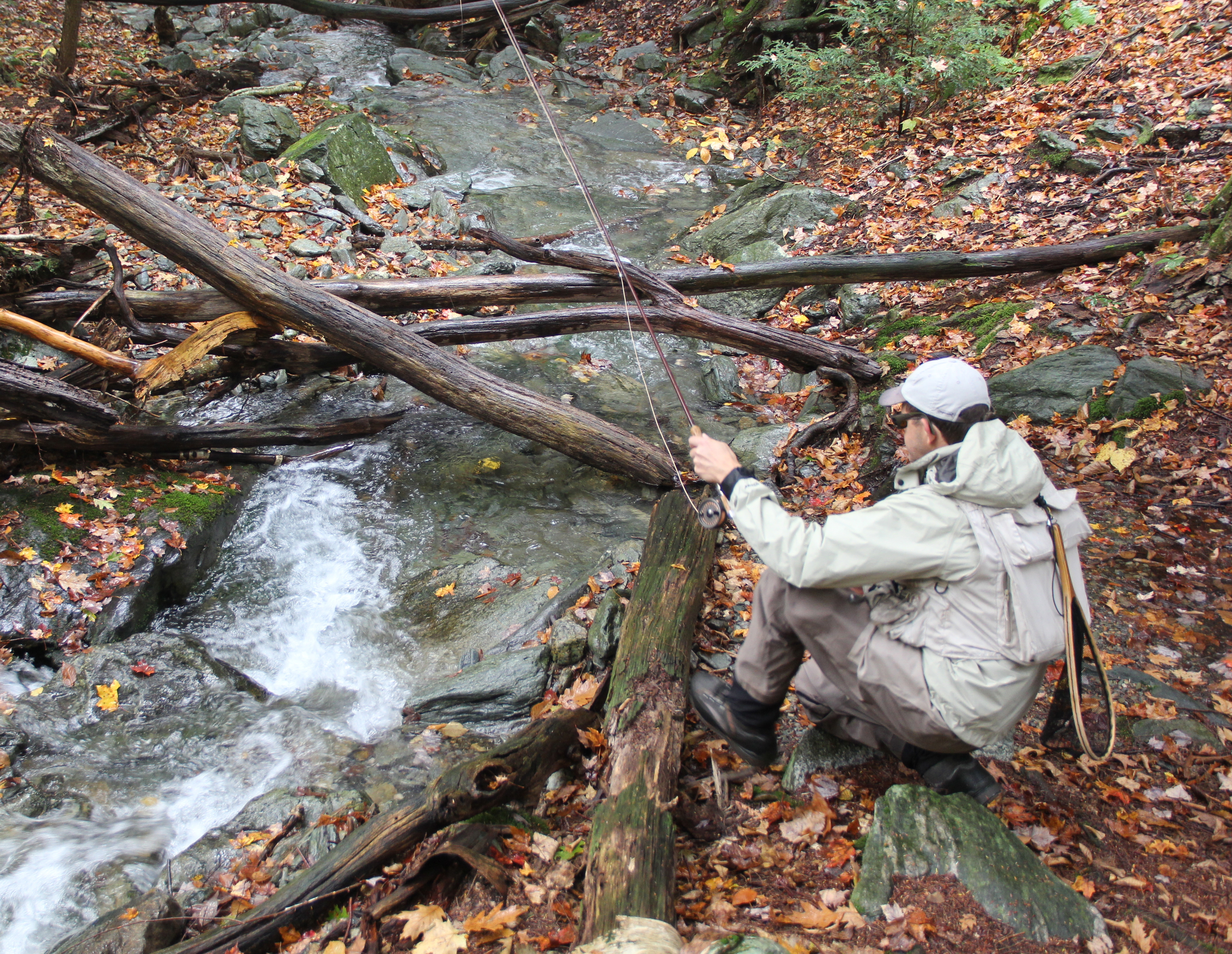
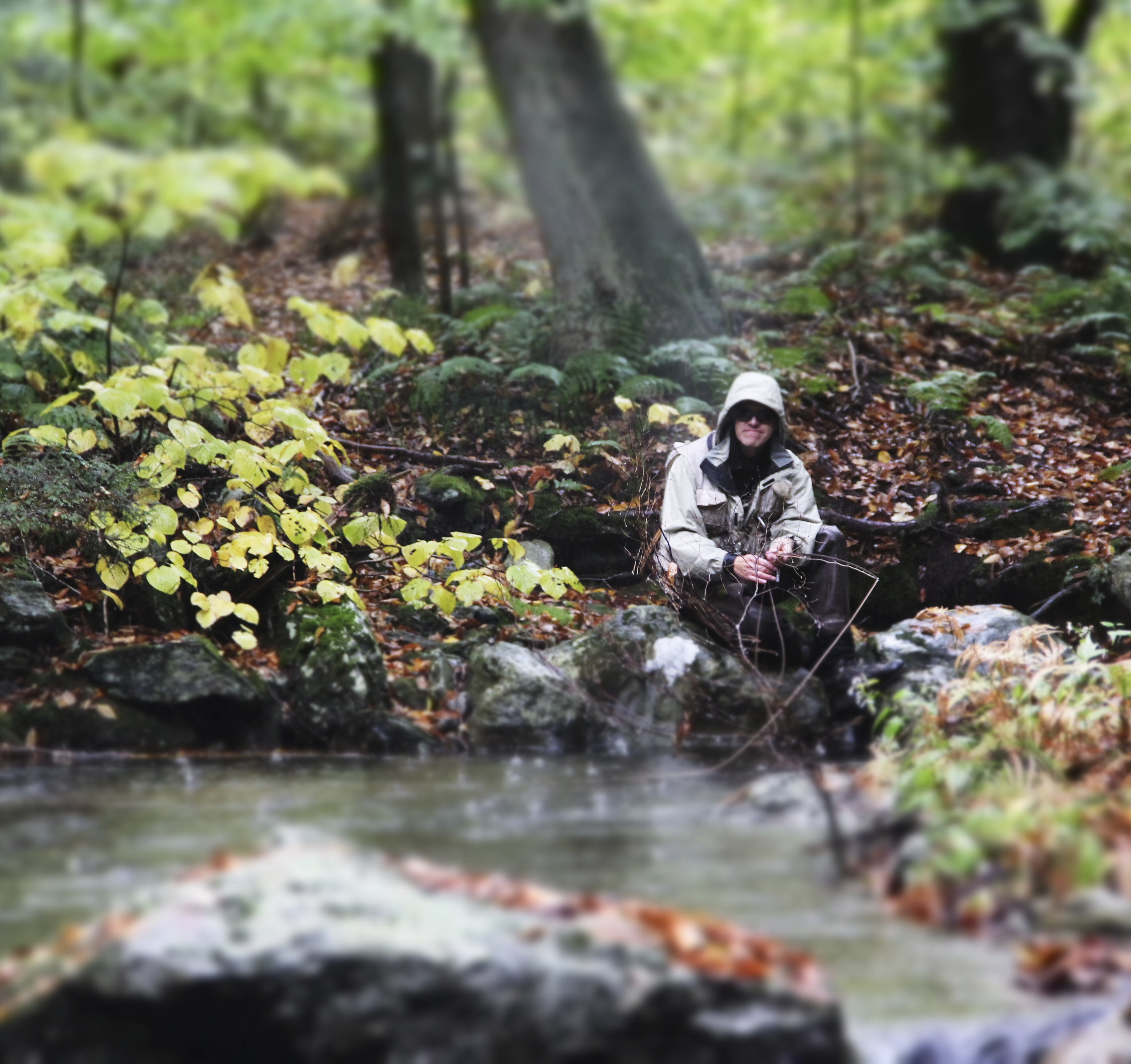
I'm usually a lot happier on a small stream than I look in this picture. Either someone's got his game face on, or is mortally depressed that the weatherman kicked the forecast.

Such a grim countenance. Either someone’s got his game face on, or is mortally depressed that the weatherman kicked the forecast. Again.

 A Fish Story

His name is Gus, and he lives in __________ Brook. Gus is a 9” brook trout, and smart — or at least careful — for a fish. He lives in a bathtub-sized pool behind a rock, just above a one-foot waterfall, and I’ve semi-hooked him a couple dozen times. I always know it’s Gus because of his size (this is a brook in every sense of the word, and he has very distinctive coloring). Gus likes to whack whatever I drift over him, but he just refuses to truly eat the fly. It’s our little game, and we love playing it. But I’m competitive, and I’m betting I can out-stubborn Gus. And when that day comes, I’m going to shake his fin. Offer him a cigar. Then happily send him back to his comfortable little home on this gorgeous woodland stream.