So, this guy walks into the woods carrying a fly rod…

We haven’t had rain in a while; the brook was low and the forest floor dry as tinder. Still, I found a spirited rivulet of groundwater that wended down the fall line before tumbling over a mossy ledge. When the water is this clear and low, the brookies tend to stay in the darker, deeper sections — or in the whitewater just below that miniature waterfall next to the moss-covered boulder.

Image

~

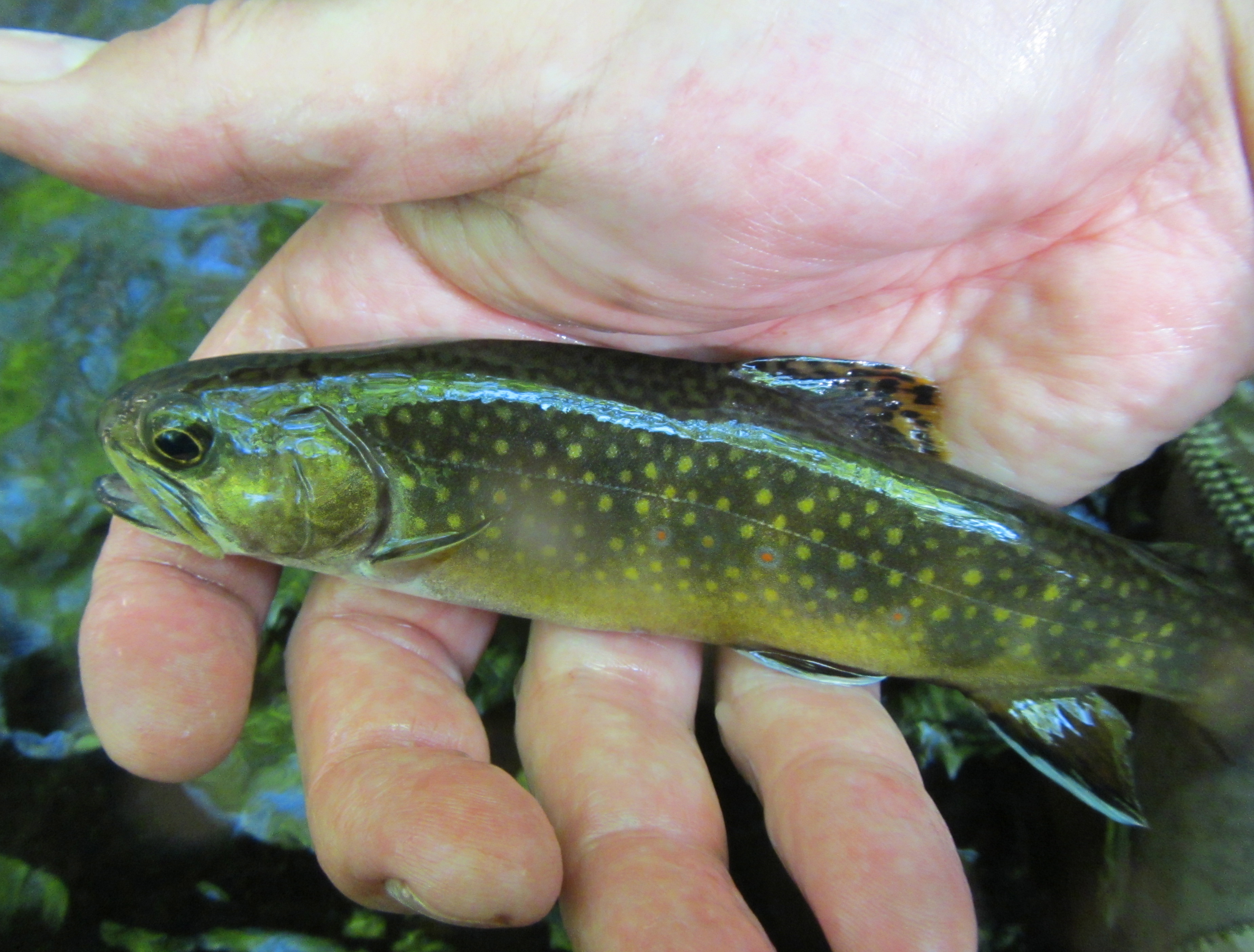
Vibrant red spots ringed by blue halos adorn an eastern brook trout. Brookies are the only trout (technically, they are char) native to much of the eastern United States.

Image

~

Fall is living up to its name. The deluge of soon-to-be-ex-flora has already begun in the hills. Fishing-wise, the leaves weren’t really an issue; I only hooked a few here and there. I was looking for photo ops when I glanced down at my feet. I was struck by contrast of these two leaves against the rock, but what really captured my fancy was how, in that swift current, did they manage to find a toehold — and how are they able to so stubbornly cling to their perch?

Image 

~

A lot of people don’t know this, but Vincent Van Gogh was an avid fly fisherman. He used to jet from his estate in Holland to his cabin in the Appalachian foothills, where he could pursue his passion: fishing for Salvelinus fontinalis. The flank of the brook trout is said to have been Vincent’s inspiration for his masterwork Starry Night

Well, at least that’s what I heard.

Image

Fishing notes: Water was 56 degrees. Not surprisingly, most of the fish I pricked came from deeper holes, dark runs, and plunge pools. I found one abyss where there was a bona fide lunker (for this size stream) of about 11-12 inches. Pricked him twice, but couldn’t get a good enough hookset to close the deal. I tried for over a half hour, and in the end decided that that fish might be responsible for populating hundreds of yards of brook — and with spawning season so close, would be better left uncaught. I fished mostly downstream. Dry fly was a size 16 Improved Sofa Pillow; wets were a cornucopia of bead head soft-hackles. Cigar was an Aroma de Cuba Reserve maduro Churchill.

El Rey Del Mundo

I used to work at an advertising agency where the owner would go from floor to floor and ask each of us, “Is this the best job you’ve ever had?” At the time, for me, it was. But as it turns out, now I’ve got the best job I’ve ever had. I work for myself. There are multiple tradeoffs with any entrepreneurial venture, particularly in writing for a living. For example, I don’t get any paid vacations. But I do get to set my own schedule. And no. I’m not trading with you.

Because last Friday, I decided I needed some photos of small stream wild trout for an upcoming article. So while most of the rest of the world was working for someone else, I was heading out into to the woods on one of the Ten Best Days of the Year. You know the kind. Bluebird skies. Sun that coats your body with gratifying warmth. Cool, crisp air you can almost taste as you suck it into your lungs.

When this tree fell, it changed the whole structure of the pool. I don’t often use it for a bridge, but ants and squirrels do.

Image

The brook was at an ideal height, 60 degrees, and running clear. While there wasn’t much in the way of hatch activity (impossibly small creamy midges and some size 16 tan caddis), the water was teeming with aggressive brook trout. I started working my way upstream on the surface with a size 16 Improved Sofa Pillow. (At first glance, you’d think the fly was a Stimulator, but among its differences are a tail made of soft fox squirrel. I like that material, as it makes it easier to get a hook set with smaller fish.) I pricked dozens of brookies, mostly in the four-to-six inch range. Some of them I could see as dark forms materializing from the mosaic of the streambed, lunging at the fly as it skittered along the surface before resigning themselves to defeat, or stubbornly refusing to relinquish pursuit until the prize was theirs. Others launched themselves clear of the water, cartwheeling across the surface once hooked. All of it made for magnificent sport, and if there’s such a thing as rapture while fly fishing, I do believe I have reached that state many times now on waters like this.

Clearly, Mother Nature needs to have her name added to the list of great impressionists.

Image

Once I reached the top section of the brook, I switched to subsurface. I discovered a long time ago that wild brookies are of a curious mien; when you introduce an artificial fly into their world, they rush to examine it, and more often than not, try to eat it. Deeper holes that drew no rises to the dry were packed with trout that weren’t the slightest bit bashful about telling me they preferred their dinner wet. I was using some underweighted flies: a black and grizzly beadhead micro-bugger, and a beadhead version of the classic Gray Hackle Peacock wet. Both served me well in the more substantial plunge pools, where I could swing, jig, and strip them across the depths.

The Kate McLaren makes its small stream debut. Stonefly? Salamander? Sculpin? Clearly something that looks alive and good to eat.

Image

Then it occurred to me. I’ve never fished that size 14 Kate McLaren I tied up last winter. It seemed like the perfect fly for dapping along the broken surface. On it went. Nothing at first, and I began to regret my decision. Surely there would be some takers. Yes? You betcha. There, in that shallower run. On the other side of that seam. Between those two boulders. Just past that undercut bank with the sapling ready to keel over during the next freshet. I was having so much fun, I almost forgot the reason I came out today.

Having a job like this makes me wonder whether, in fact, life actually is fair. I don’t know the answer. But I do spend a lot of time laughing while I’m working.

A picture perfect day. A small stream filled with hungry brook trout. And an El Rey Del Mundo Flor de Llaneza. Surely I must be the king of the world.

Image

So much water the stream was on fire

I had taken about six steps into the brook when I fell in. A poor foothold, a little water ballet in a desperate attempt to regain my balance, then flat on my seat, left forearm soaked and a shot glass-worth of water into my waders.

Well, I thought, things could only get better.

They did. The creek was up, but at a perfect medium-high level, almost imperceptibly tinged, and running at a cool 63 degrees. What’s more, the skies were a grey block of granite. Rain was coming. But for now, it was just me, the woods, the brook, and the trout.

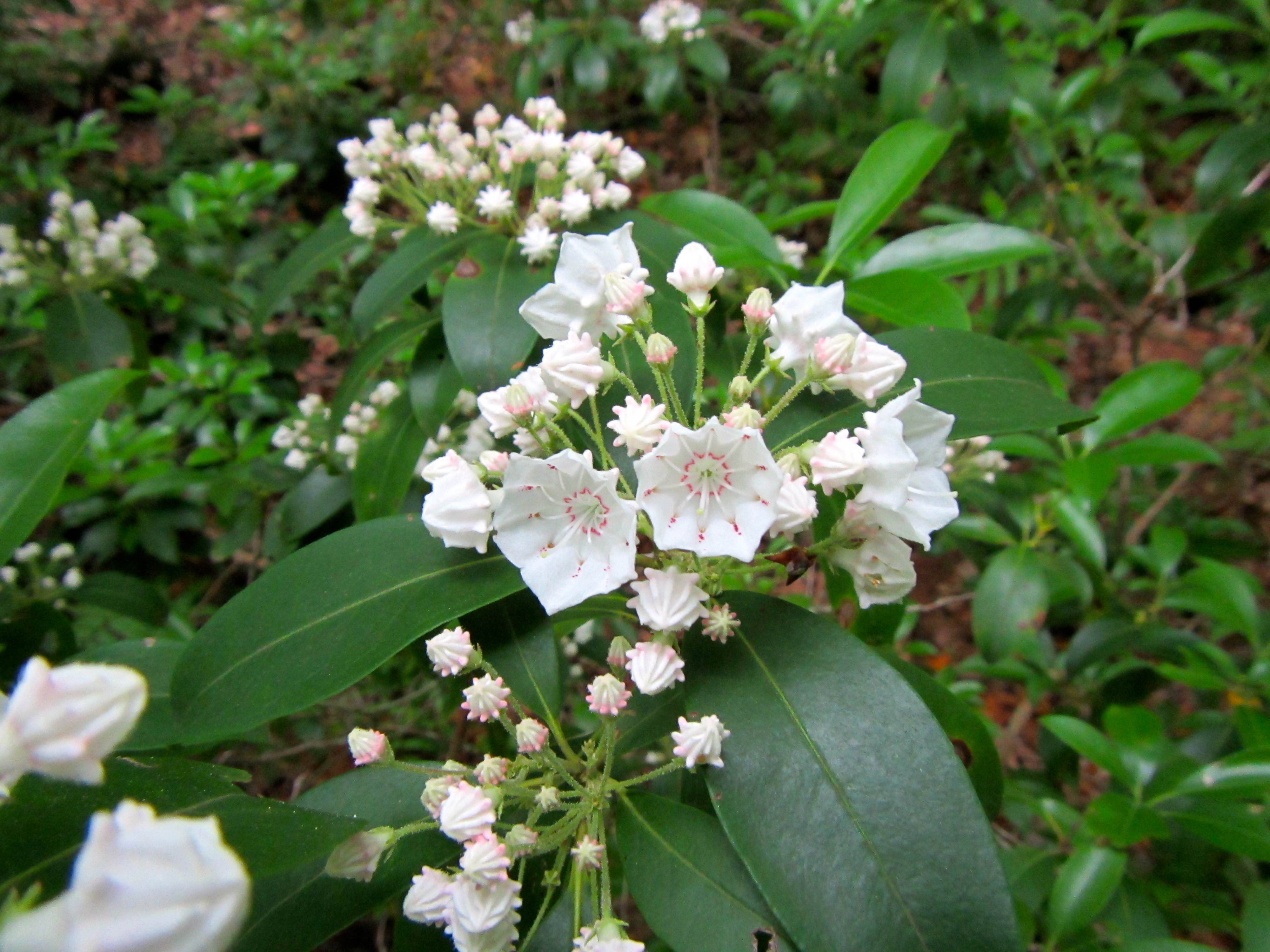
How you can tell it’s mid-June in the Connecticut woods. Our state flower, the mountain laurel, grows wild anywhere there’s shade. Some of the shrubs don’t produce flowers, but plenty of them were decked out in their white streamside finery.

Image

I spent the better part of the morning committed to the dry upstream cause, even though I knew it was costing me fish in some of the deeper pools. Most of the trout I raised were small — three inches or less — and very few of them were actually hooked. That was OK with me, though. Just to know they’re there tells me the brook is in fine shape, and those fish will be seven-inch lunkers in a few years.

My best brookie of the day took a dry presented upstream in a dappled seam that rushed along the side of a large boulder. She ran all the way into the bottom of the next pool. Terrific little fighter, this one.

Image

One product of receding high waters is that the fish are spread out in the brook. I found trout almost everywhere I went, including some places where I usually don’t. Many times I could see them bull-rush the fly (a size 16 Improved Sofa Pillow) as soon as it hit the water. When the water’s up like this, I like to plop the fly in the middle of a glassy micro-pond at the edge of a plunge pool or current seam. The brookies suddenly  materialize from beneath the maelstrom, or the inky protective edge of underwater structure. I had a lot of first cast hits today.

Not much going on hatch-wise: midges, mosquitos, and a few stay caddis.

On the way out, I decided to take a page from my recent Upstream, Downstream, Small Stream article and fish a few of the deeper pools with a downstream weighted wet. The fly was a beadhead Grey Hackle Peacock, and among the trout that found it to their liking was a spiffy brown, who tracked the fly on the retrieve before striking.

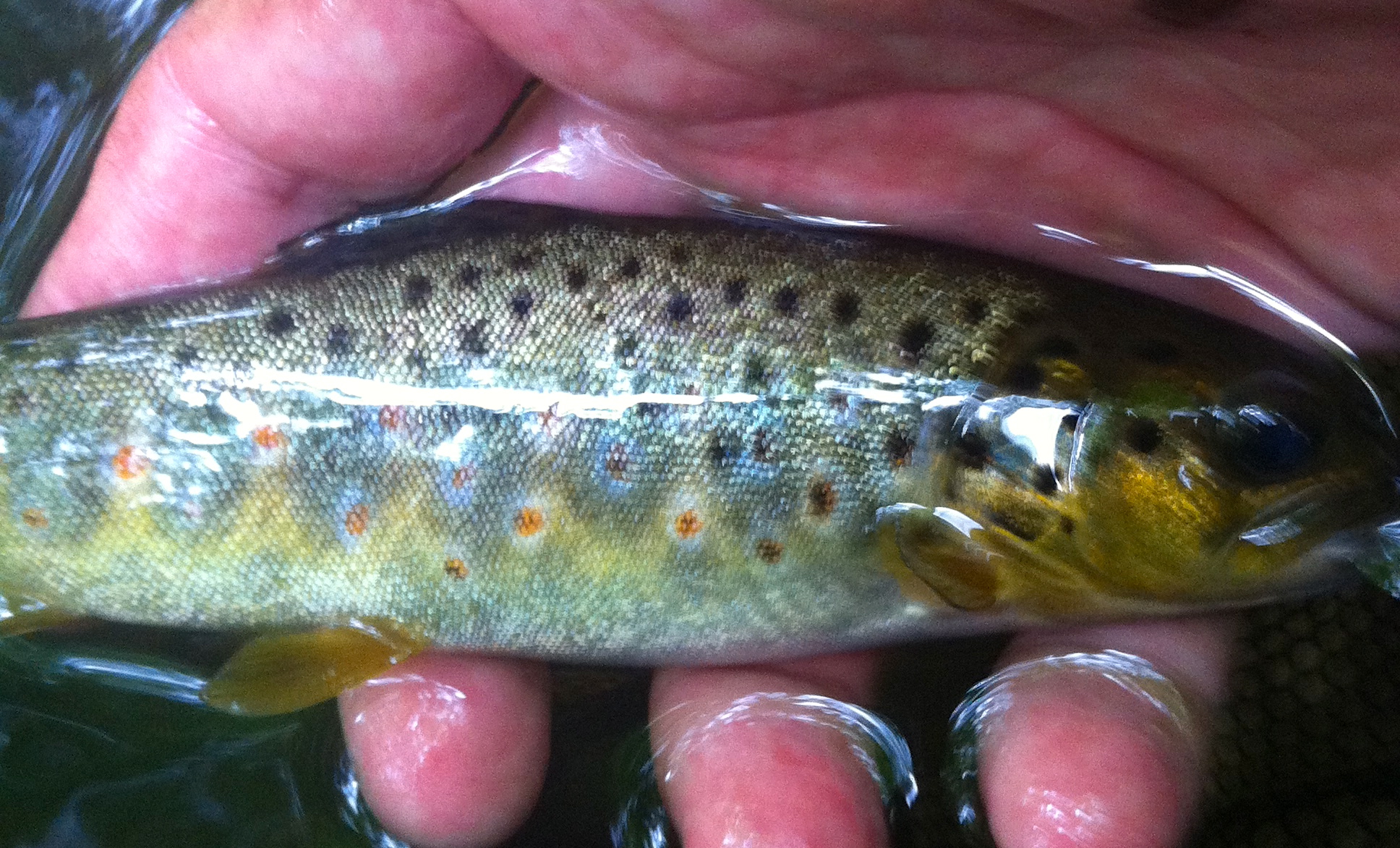
Halo, I love you. Nice brown, lousy photo. This is what happens when your good camera runs out of battery and you’re forced to go with a quickie from the phone.

Image

I was able to coax the better part of two hours out of this morning’s cigar, a Gispert Churchill. The air was still enough to blow smoke rings over dark waters, where the fishing was incendiary.

Small Stream 101: Fishing the outgoing tide.

The brook was dozens of miles from the sea. Yet there I was, fishing the outgoing tide. At least that’s what I started calling it several years ago. Let me explain.

What I mean is, I’m fishing a small stream in the day or days after a heavy rain. As with an ebbing tide, the water level is dropping. It’s a great time to fish. Here’s why. The waters have gone from raging and murky to some semblance of normal. They may still have a light tea stain to them, which makes it a little harder for the fish to see you, but not your fly. Most of all, the trout have transitioned from hunker-down survival mode to dinner bell-ready. That was certainly the case today.

I would crawl on my hands and knees through a skunk cabbage-filled boggy mess to catch a wild brookie like this. Oh, wait. I did.

Image

The lovely woodland stream I visited today is one I haven’t fished in many months. I usually make a pilgrimage in April, but the time-space fishing continuum conspired against me. The woods are only starting to display a vague suggestion of green in April, but on May 31st they were  lush. It was already too hot and humid to be bushwhacking in waders at 8am, and non-biting midges swarmed me. Such was the price of admission for the wild troutstavaganza.

There were fish everywhere, with plenty of young-of-year brookies in the mix. This is always a good sign, as 2012’s new recruits will be 2015’s lunkers. It’s especially gratifying to see nature finding a way after last year’s terrible late summer drought and heat wave.

This blindingly beautiful wild brown hit the dry like a ton of bricks. Excuse me for a minute. I’ve got to wipe away the drool I got while gazing longingly at those parr marks.

Image

The fish were particularly active today. I witnessed three good-sized (for this stream — it’s small enought to jump across in more than one spot) trout feeding on the surface. Two were noisily slashing at emergers; the third was clearing the surface as he chased caddis. All of them were camera shy. Every time I tried to shoot some video, they suddenly stopped feeding. Little bastards.

Fished a new dry today, the (Improved) Sofa Pillow in a size 16, along with a bead head Grey Hackle Peacock. The dry got the lion’s share of the action, fished mostly upstream. Pricked a good couple dozen trout, and lost many of them when the hookee ran into the omnipresent underwater stick pile. These twig and branch masses were everywhere. One of the pitfalls of fishing right after a big storm.

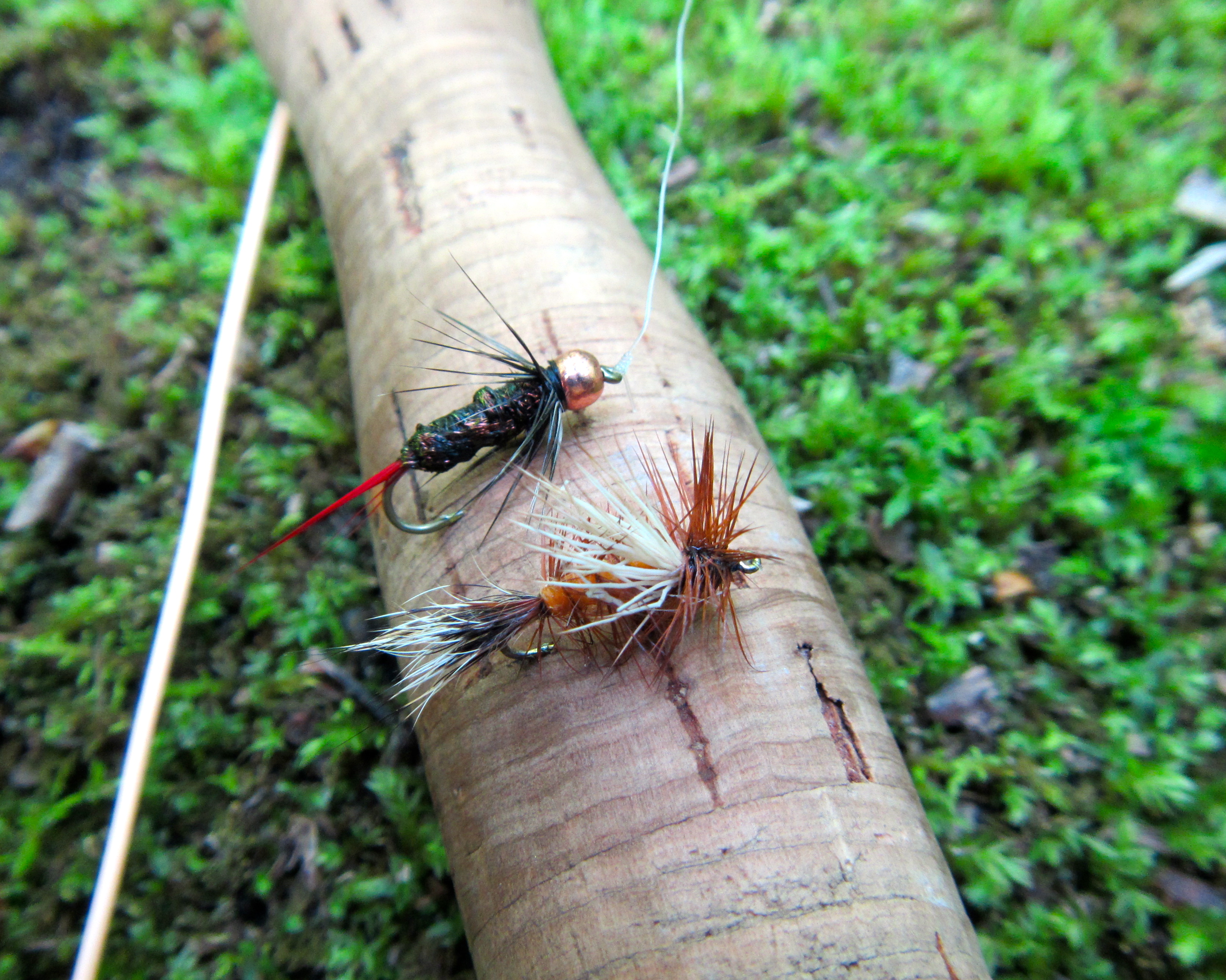
Today’s implements of destruction: A bead head version of the classic wet, the Grey Hackle Peacock, and the (Improved) Sofa Pillow.

Image

I held out on the cigar for as long as possible, but eventually the midges tipped the scales. Nonetheless, I declared victory as they scattered. Thank you, Romeo & Julieta Havoc Magnum. Besides, I managed to ignore work for the entire morning while catching wild trout. Clearly, that makes me the winner.

How does a stream stay cool in piss-stinking hot weather like today’s? Canopy. This photo was taken at high noon, yet virtually the entire stream is covered in shade. Nature finds a way.

Image

A tale of two five-weights

All five weights are not created equal. I should know. I’ve got four of them. You may ask why I need four of the same rod. The answer is that while they’re all five-weights in name, they could not be more different. Each is a specialist in its field. The two I want to talk about here are my 6’ Fenwick glass rod and my 9’ TFO TiCr.

This all started with a steelhead trip I had planned with my ten year-old. We had to cancel due to weather, and we were were both a little bummed about it. But I told Cam that since we weren’t making the drive to Pulaski, we could spend the day fishing closer to home. I gave him options: trout on the Farmington, stripers on the Hous, or wild brook trout over the hills and far away. Cam decided on brookies. I thought that was a fine choice.

I’ve had the Fenwick for many years now. It’s a sweet 2-½ ounce stick that flexes down to the handle. A five-weight line works just fine on it, and like bamboo it’s an exceptionally easy rod to cast. Cam told me he wanted to do a little more of his own fly casting this year, and this would be a good starter setup for him. Unfortunately, the first stream we hit was turbid with runoff. So we hopped in the truck and took a little drive north. The second stream was in fine fettle, medium high, and clear as an aquarium.

 It took us several tries to hook this fish. She kept whacking the microbugger, but we couldn’t seem to get a good hookset. Classic haloes and Fontinalis fin.

Image

Cam got to work with on the surface with a size 14 Improved Sofa Pillow, but we had no takers, even over some confidence-is-high pools and runs. Undeterred, I tied on a blackish micro-bugger with a chartreuse bead head. That did the trick. Whereas the brookies were bashful about showing themselves on the surface, they were more than happy to nip and tug as soon as the fly settled beneath the surface. We landed four nice brook trout with glowing blue haloes and dropped a bunch more. It was a tired and hungry but happy hike out of the mid-April woods.

Eight hours later, I was swinging flatwings for stripers with my TFO TiCr five-weight. Where the Fenwick is a flexible birch sapling, the TFO is one of those redwoods you could drive your car through. I mate this rod with a 9-weight Rio Outbound floating line, and even with that night’s ten mile-per-hour crosswind, casting an eight inch fly was effortless – provided I found that sweet spot where the shooting head met the running line. Not easy on a moonless night.

I was mostly greased-line swinging, my favorite presentation with bigger flatwings. Sometimes the takes are nearly subliminal – instead of a tug, you feel a minute change in pressure that exponentially accelerates into mayhem. On this night it was different. The fish were taking the fly moments after I had completed my mends (I was fishing a narrows that only allowed two) and the takes were an adrenaline-produced amalgam of pull, boil, and surface thrash. I took three stripers on the greased-line swing; two of them in the double-digits pound class.

 31″ of pure pleasure on the five-weight. She fell for my Rock Island flatwing, tied about 8″ long.

Image

Both of those larger fish were quickly played and landed. Both tried to run upstream when I attempted to coax them onto the sandbar I was standing on, and the side pressure I applied with the butt of the rod easily dissuaded both.

Miss Cow never showed up. But she’s out there, somewhere. And one night, on a moon tide, she and I and one of my trusty five-weights are going to go for one hell of a ride.

Industrial-Strength Wild Browns

Not all trout streams are created equal. There may have been a time when this one could have been called pristine. But that was a good industrial revolution and dozens of deserted factories ago.

This river may have hit every branch on its way down the ugly tree, but it is not without its charms. If you can get past the cinder blocks, broken glass, and discarded aluminum siding, you’ll find ducks. Plenty of invertebrate life. And wild brown trout.

Just look at those pecs. Someone’s been working out. My best fish of the day.

Image

I had originally planned to go striper fishing today, but unfavorable reports, unavailable cohorts, and a nasty south wind put that idea to rest. Still, I needed to fish. So I decided to head over to a Class 1 WTMA. Before this past March, I hadn’t fished this stream in years. Buoyed by my success 10 days I ago, I thought I would explore it a little further.

Nothing says “wild trout” like urban factory blight. You could hit this building from the stream with a good enough cast.

Image

Second cast, and I was into the fish pictured above. Today’s fly was a white beadhead min-bugger, and this lovely brown clobbered it on the downstream strip. It’s funny how you find fish in the same sections of river over the years. This one was sitting in — where else? — a current seam. I took a few more smaller fish in parts below, then headed up to another section.

I find that old heater hose gives any fly fishing experience that romantic je ne sais quoi. Don’t you?

Image

That was a mistake. Most of the river was densely overgrown with saplings that made even roll casting impossible. The bottom was covered with fly-eating branches and in one pool, some kind of evil magnetic-to-tungsten bead flies metal grate.  By the third snagging encounter, I decided to pack it in.

I did notice that the suckers were in for spawning. There was also a strong midge hatch. Most of all, there were gloriously-colored wild browns, alive and well in living in their own little version of paradise.

Beauty truly comes from within.

Small Stream Wild Browns For Lunch.

No, no. Not the kind you eat. The kind you use as an excuse to avoid that pitfall of adulthood: Responsibility.

Back when I had a salaried job, I was fortunate to work within short driving distance of two Class 1 WTMAs. Many were the warm spring days when I’d take an elongated lunch to wet a line. Well, just because I’m working from home now doesn’t mean I couldn’t do likewise. And so today, I did.

I hadn’t been to either of these streams in years. “Hello, old friend,” I said to the first as I stepped out of the truck. The water was a perfect height, clear, 44 degrees, and there were midges and small grey stones flitting about. After last summer’s drought I wasn’t sure what to expect. So I decided to hedge my bets by fishing a size 14 beadhead white mini-bugger. I never met the wild trout who didn’t like a flashy streamer in early spring.

Hello, Mr. Stone. You successfully navigated to this rock without falling prey to Mr. Trout’s jaws. Fly and be free!

Stonefly

It felt both familiar and comforting to cast, mend, and swing that fly across my old stomping grounds. Nothing in a few of my favorite pools, then – bump – was that a fish or the bottom? Next cast I’m on with a lovely little brown, about five inches long. A fish to hand is currency, and with that trout my trip was bought and paid for. More nothing as I waded downstream. Then, near the tailout of a languid pool – was that a rise? You betcha. Small fish, smutting, and the best solution I had in my box was a size 20 Winter/Summer caddis. First drift, up he comes, but the hook point found no purchase. And that was that. Try as I might, I couldn’t coax a reprise.

With my time budget melting like the remaining snow pack, I motored over to WTMA number two. Fished a run where I’d had some early season success before, but drew a blank. I was just getting ready to leave when I talked myself into venturing about 50 yards downstream. There, in some shallow riffles, I hooked another small brown who liberated himself as I pulled him out of the water. Then, in the run below, bang! Classic hit on the strip. A stunning brown about ten inches long, his tummy the color of aged cheddar and pectoral fins the size of kayak paddles.

So what if I would have to work tonight?