I’m kicking off my 2024 fall/winter speaking season Thursday night, September 12, 7pm, at the HCTU meeting in Meriden. The topic will be Fly Fishing CT’s Small Streams, a subject that I’m really passionate about. We’ll talk when, where, how, tackle, flies, tactics, conservation, and more. The meeting is open to the public, so I hope to see you there!
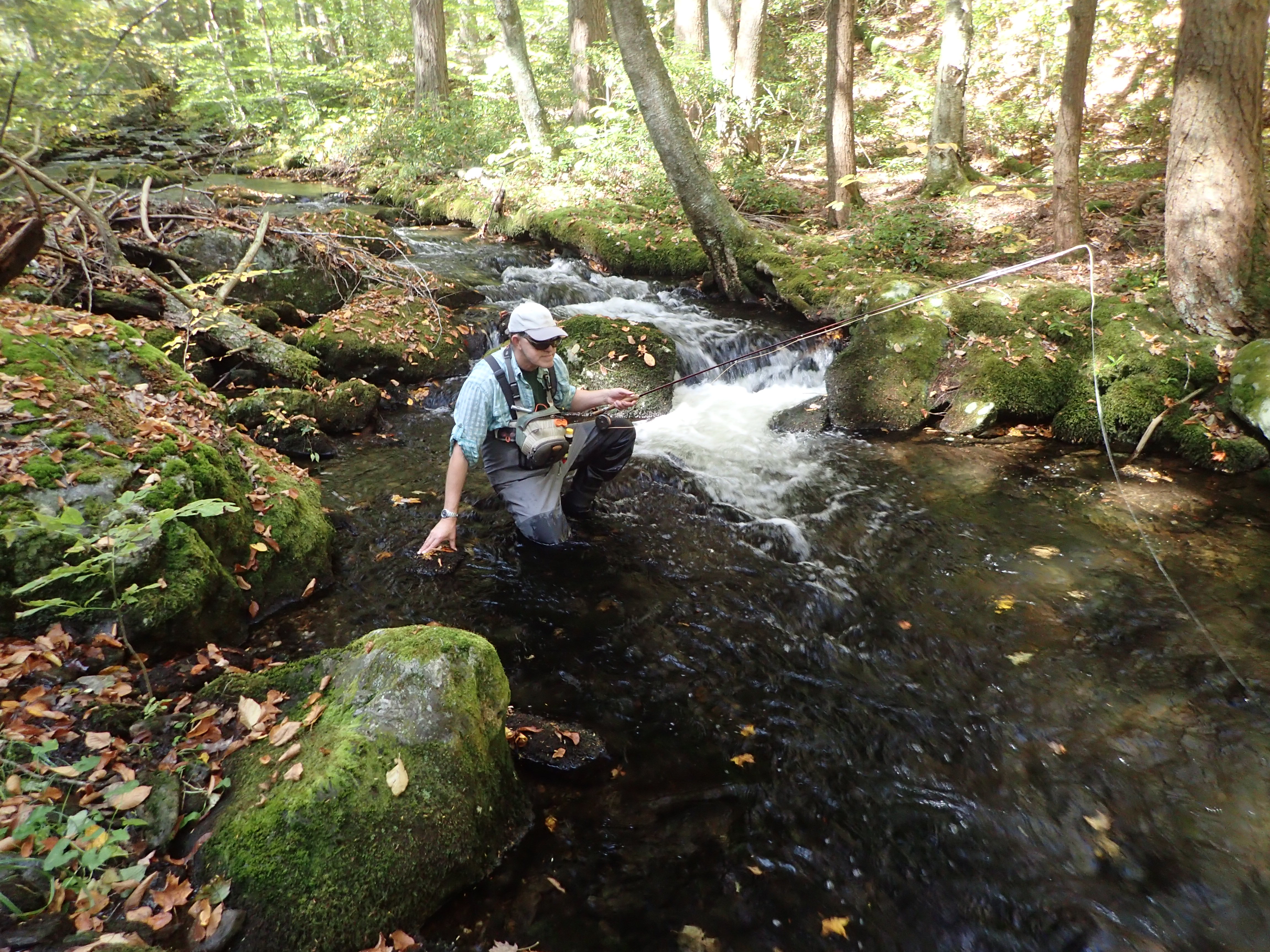
Fishing small streams returns you to the very soul of fly fishing.
That’s all the time I had. But there’s a certain comfort in having a time limit. It forces you to keep moving. To spend more time with your flies in the water. And if you feels the pangs of regret over pools not covered and fish not caught, there’s always next time.
It was a lovely, sunny afternoon, albeit with a slight chill in the air. The water was perfect: dropping after the weekend’s downpours, just a tinge of color, nice and cold. There were the ubiquitous midges, BWOs sz 14-16, and some caddis. I fished with a dry/dropper and a small tungsten bead jig. Although I had a few slashes (and one landed) on the dry, the natives showed a clear preference for the jig. I had great success in deeper, darker holes, and along shaded cutbanks.
When I began, it was all BWO duns. But by the end of the trip, I started to find spinners. I love finding the same mayflies on small streams that I see on bigger rivers. Now, to find some risers…The skunk cabbage is asserting itself in the moist bottoms of the woods. I ran across these on my hike out. Anyone know what they are?The less photos you take, the less stress you place on the fish. I encourage everyone to Take The Wild Trout One Photo Challenge when fishing small streams. You get bonus points if you keep the fish’s gills submerged.
Last month, the Fisheries Division of the CT DEEP announced a new draft action plan for wild trout conservation. They recently held two online presentations with the opportunity for public comment, but you can still review the draft plan and tell them what you think. (For the record, I said that while I was all in favor of wild trout conservation and management, DEEP must be cautious about over-publicizing wild fish and revealing specific locations, especially those that aren’t currently “on the books.” It only takes one motivated poacher — or excess angling pressure — to irreparably damage or wipe out a stream.)
It’s no secret that wild, native char populations are under stress not only in Connecticut, but throughout the northeast. Climate change, pollution, angling pressure — the usual suspects are omnipresent. Wild trout and char need all the help they can get. Here’s to hoping that the CT DEEP does everything right.
As The Traveling Wilburys so eloquently sang, “handle me with care.”
A few months ago I asked that you suspend fishing on Connecticut’s small streams until the drought was remedied and the spawn was complete. Check on both boxes. With a favorable amount of water for two months, the locals that survived the harsh summer conditions have had a chance to recover, fool around, and now prepare to hunker down for the winter. I have two requests (I know, I ask a lot) if you must fish small streams. First, try to stay out of the water as much as possible. The thought behind this is that you don’t want to walk over a redd and destroy the next generation before they’ve had a chance to hatch. Two, consider using a bushy dry with the hook point removed, or an over-sized dry that the little guys can’t get their mouth around. It’s nice to hold a small wild char in your hands and release it, but truly, isn’t the fun really derived just from fooling a fish? I appreciate your consideration. Tight lines, be safe, and be well.
The stark beauty of a small stream in winter. Please respect the brook and its residents. We all thank you.


 currentseams.com