Survivor: Farmington (Browns Built To Last)

“Survivor: Farmington,” an essay about the CT DEEP’s Farmington River Survivor Strain Program, first appeared in the Spring 2014 issue of The Drake. The photo and caption did not appear in the article, and this is my original text. 

by Steve Culton

They took her from the river in September, 2012. She was chosen for her wild traits and rounded belly that indicated a healthy female ready to spawn. Once her eggs were harvested, she was returned to her home waters. But not before a red elastomer was inserted near her left eye. That color and placement would forever identify her as a broodstock female, one of many mothers of the Farmington River Survivor Strain Class of 2013.

The next April, I fished the West Branch of the Farmington. The Hendrickson hatch was winding down, and the trout were transitioning from taking emergers in the film to picking off duns that haphazardly lingered on the surface. Her take was powerful enough to rip the line from my fingertips and cause my drag to buzz in protest. I rarely put trout on the reel; this was going to be my first of 2013. What’s more, this fish was not going to come easy. I ended up walking a fair distance downstream to land her. It wasn’t until I was reviewing the day’s photos that I noticed the elastomer. I had sensed there was something readily distinguishable about the way she hit, bulldogged, and refused to come quietly. Now, it all fell into place. Survivor Strain.

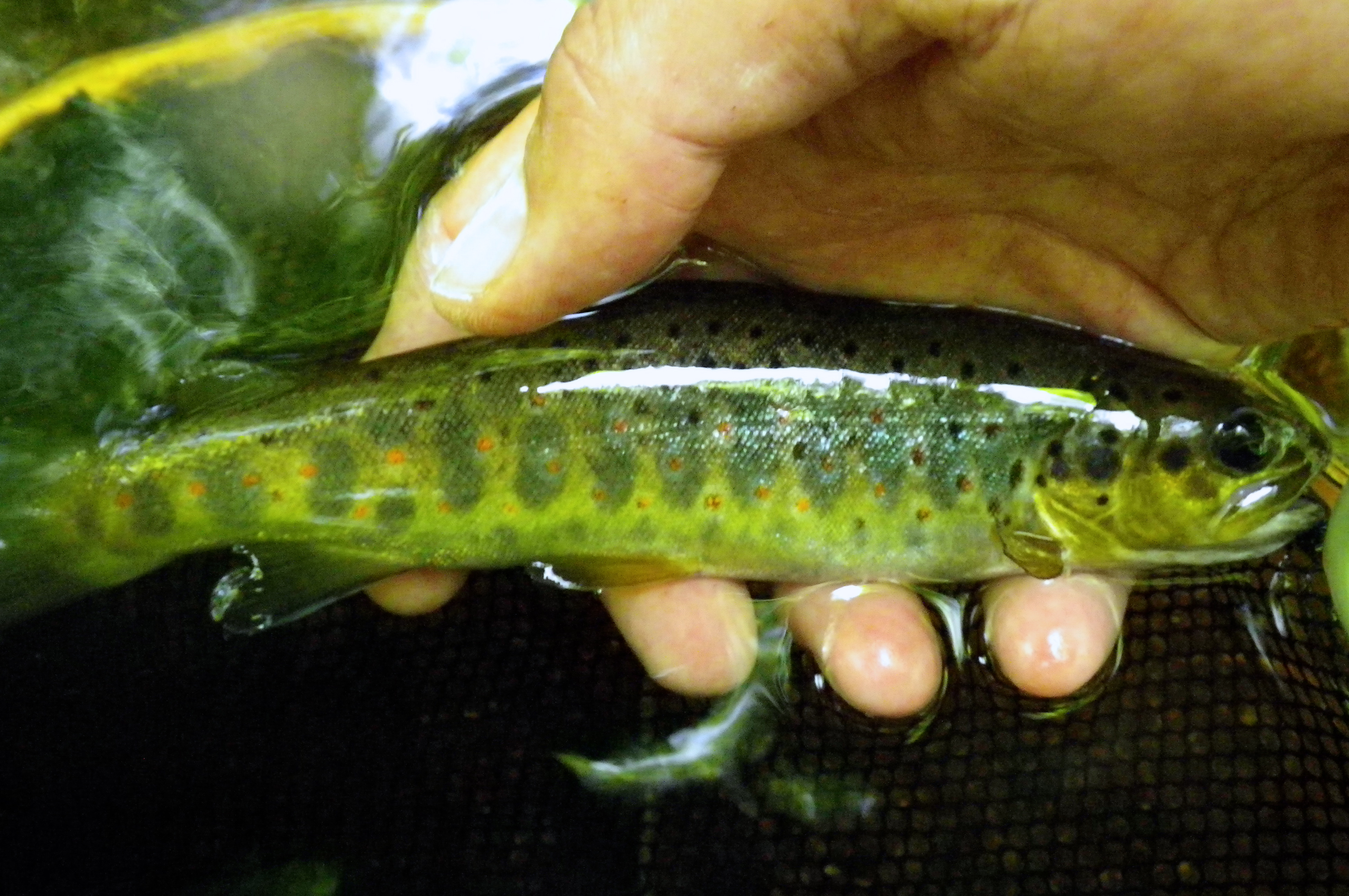
Here she is in all her glory: the actual fish I was writing about.

Big Survivor Strain brown hen

The Farmington River Survivor Strain program was initiated in 1993 by what is now known as the Connecticut Department of Energy & Environmental Protection (DEEP). Neal Hagstrom, DEEP Senior Fisheries Biologist, describes the program as, “an attempt to use the river to select the best possible animals for that environment. We take certain trout to the hatchery, spawn them, then put their progeny back in the river, assuming that those fish will be best adapted for the conditions they’ll face.”

Survivor Strain’s inaugural class were descendants of stocked Cortland, Rome, Bitterroot, and Seeforellen browns. “The hope was that we would get improvements in production and survival,” says Hagstrom, “and we saw that in the first year. We went from about a 20% holdover rate to about 50%. We now find fish in the West Branch that are upwards of eight years old.”

Broodstock for the program are collected through electroshocking. Each September, the Metropolitan District Commission draws down the flow from Hogback Dam so that DEEP crews can complete their harvest. Their goal: one hundred brown trout worthy of producing the next generation of Survivor Strain. Like an NFL scout on draft day, Hagstrom explains the DEEP’s talent evaluation process. “We try to get fish that have spent at least a year in the river. We want genetic diversity. We want browns from multiple age classes, and multiple sources like Survivor Strain, and most importantly, wild fish. We want a lot of different parents to get as many possible combinations of genetic material.”

The DEEP harvested approximately 80,000 eggs in 2013. That biomass will generate 70,000 fry. In keeping with the tenet of genetic strength and diversity, the hatchery will set up dozens of parental combinations for the young ‘uns: wild mother/ wild father; wild mother/Survivor father; small wild father/large Survivor mother; and so on. This elasticity creates a population that is well equipped for the natural challenges of the river – not to mention heavy fishing pressure. Young-of-year Survivor Strain are wary of humans, even in their hatchery pens. Where standard-issue stockers are indifferent to people, Survivor Strain fish will dart away. “When we first saw it, it was like, wow, this is really cool!” says Hagstrom. “We had two tanks together, and their behavior was like night and day.”

To facilitate their annual trout census – and inadvertently, enable you to track your catch – the DEEP color codes Survivor Strain trout with elastomers. Left eye placement means the fish is an adult; right eye, a yearling. Colors change every year; 2011 yearlings received red or yellow, while 2012 yearlings received green. Thankfully, for those of us who are color blind, Survivors also have their adipose fin clipped off.

Not surprisingly, anglers are the program’s biggest fans. What’s not to like about cantankerous trout with breathtaking colors that grow to trophy size? As a bonus, the West Branch has seen an explosion in the wild brown population since the introduction of the program. A new record was set in 2013 of just over fifty percent of trout that were naturally spawned in the river. That bodes well for those of us who live for chasing gator browns. Mike Humphries, DEEP Inland Fisheries Biologist, says it’s a myth that the river’s lunkers are pen raised. “The highest percentage of big trout on the Farmington aren’t hatchery fish. They’re wild.”

And to think it all started with one tough mother of a stocked brown.

Small stream report 6/3/15: Alive and well and living in Connecticut

The original plan was to throw streamers in the murky waters of the Farmington. But the river wasn’t high or dirty enough for my liking. Still, needs must fish. What better option than the outgoing tide on a small stream? None, as it turns out.

Conditions were perfect: 68 degree air temperature, water at a medium-high level after the rains and running clear and cool (58 degrees). Oh, the bugs! Yes, indeed. There were the usual suspects, like caddis and midges and mosquitoes. But how about size 16 sulphurs? Size 14-16 golden stones? Heck, let’s throw in some mongo golden stones (size 4-6?) into the mix — I’ve never seen those on this stream. And some egg-laden mahogany dun spinners, size 16.

The brook fished very well. I pricked dozens of fish, many of them in pools where I haven’t caught anything in years. Mostly brookies, but three wild browns in the mix. All on the upstream dry (elk hair caddis and Stimulators).

After the draconian winter of 2014-2015, how comforting it is to have nature reaffirm that she will always find a way.

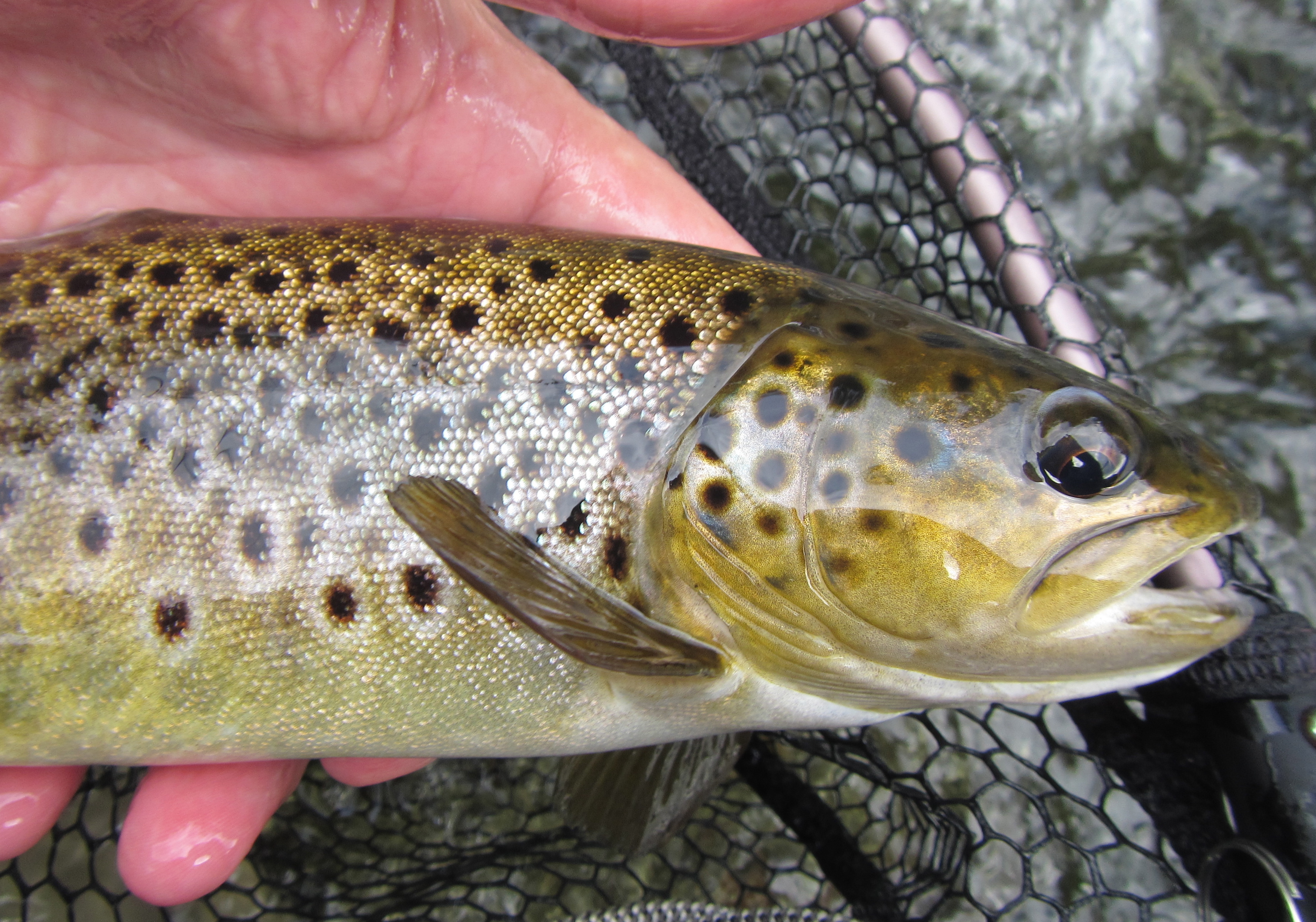
Intriguing markings on this hen.

Brookie 6-2015

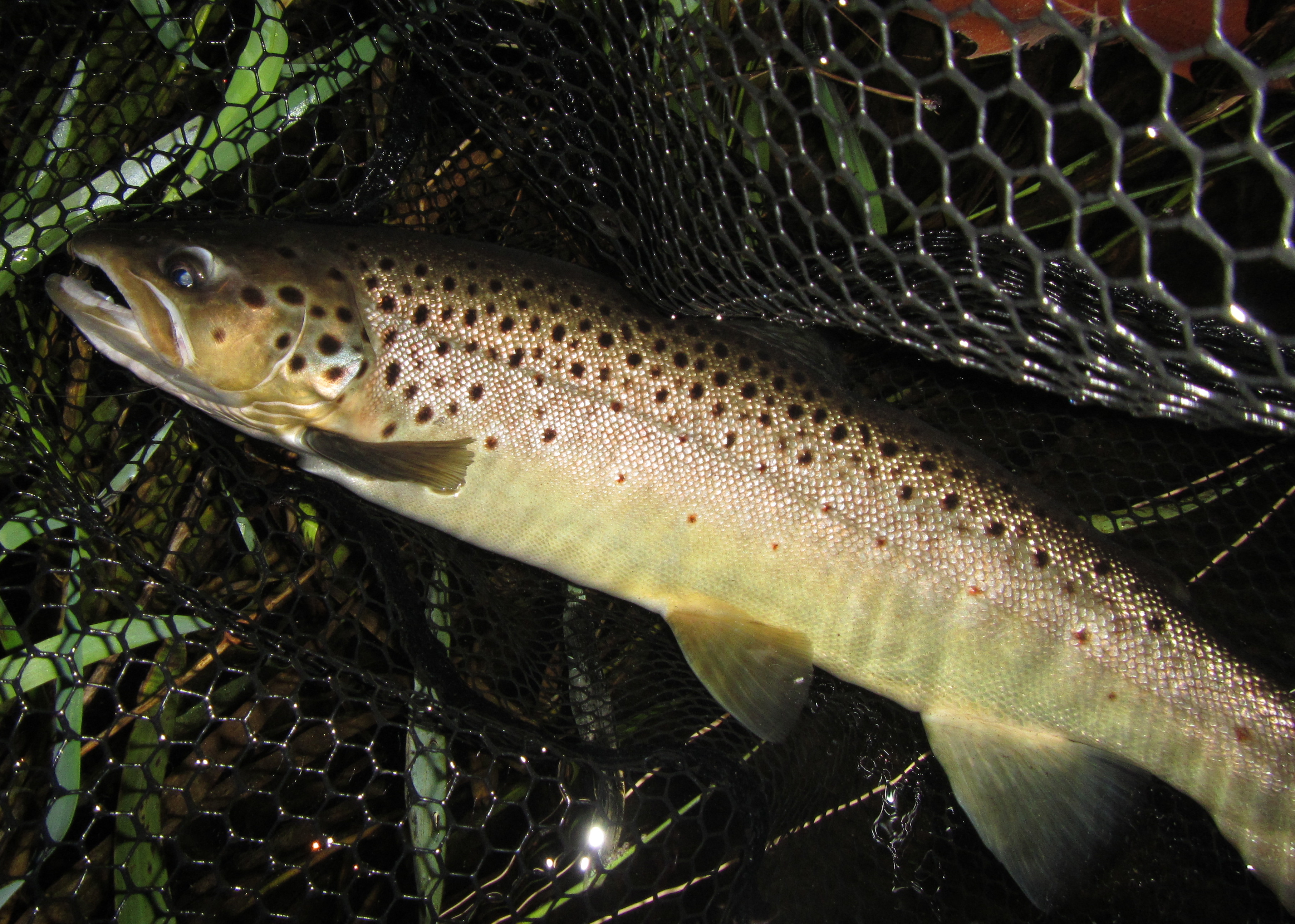
Another hen, this one of the Salmo trutta persuasion. Best hit of the day. She all but slaughtered the fly. You’ll have to bear with me on the substandard photography. I lost my good camera, and my backup had issues today. I hope to have the situation rectified in a few weeks.

Brown 6-2015

The state of the Farmington River and other shocking news

In case you didn’t know (and if you’ll pardon the inflamatory headline) the Farmington River has lots of trout. Lots of big trout. And lots of wild trout. All good news if you like to fish the Farmington.

We know this because every September, the MDC draws down the flow of the dam and electroshocks the river. The electroshocking has two purposes: trout census, and gathering broodstock for future generations, aka Farmington River Survivor Strain. (For more on Survivor Strain, see my article in the Spring 2014 issue of The Drake.)

I didn’t attend, but the DEEP delivered their state of the river address to the FRAA a few weeks ago. Here’s their story in numbers:

Farmington River Report 9/24/14: Move it

If you’ve seen my “Wet Flies 101” presentation or fished with me, you know I’m a proponent of moving along until you find fish. Yesterday was a perfect example of why.

I swung wets for two hours in three locations. My team was a size 12 Squirrel and Ginger on top, a size 10 Hackled March Brown in the middle, and a size 10 soft-hackled bead head Pheasant Tail on point. The first place I fished continues to vex me. It screams wet fly. I know there are trout that live there. And I still haven’t gotten a touch in three trips. Moving right along…the second place was a lot of walking for a single JV Atlantic salmon, Salar the Leaper Jr. though he was. Finally, the last spot — ding-ding-ding. A nice assortment of wild browns from the sub-foot to mid-teens class. They were all attractively colored up for fall. Such impressive fins and tails on these stream-born fish. The hands-down favorite fly was the SHBHPT, and every take came on the dead drift phase of the presentation.

This brown attacked from his ambush position between two boulders in a slick-surfaced run.

9:14 Brown

Farmington River Report 7/31/14: Saving the best for last

I have to confess there are times when I am completely flummoxed by this river and its residents. Like last night.

I arrived on the upper TMA at 5:45pm, committed to the dry fly cause, cane rod and 14-foot leader ready. Here’s what I was dealing with over the next couple hours: trout feeding on caddis emergers. Trout rising delicately to something very small. Trout slashing violently on the surface, breaking the film and leaving an air bubble. Trout taking sulphur and March Brown duns off the top. All of it rather haphazard, with no consistency to the rise forms or even with specific fish feeding. In one thirty second period, five fish would rise. Then nothing for the next fifteen minutes. Random would be a good word.

So I took a kitchen sink approach to fly selection. Small Magic Fly. Big Cahills. Small Cahills. Small caddis emergers. Small ants. All I had to show for it was a bunch of refusals and a JV Salmon on the Magic Fly. So I made a plan: as darkness fell, the trout would get sloppy. A size 12 Light Cahill would do the trick.

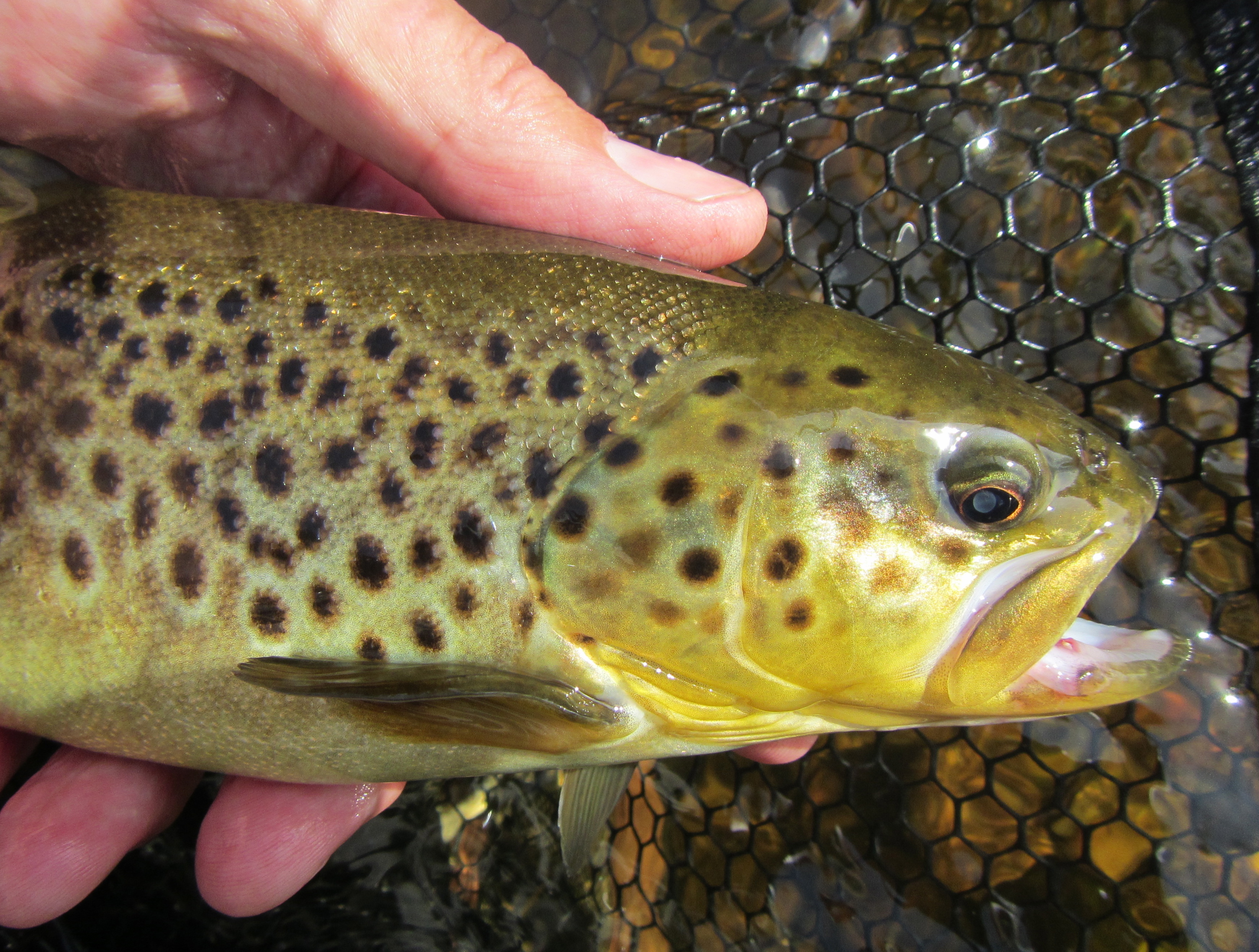
And that’s how I managed to cross paths with this handsome fellow, a wild brown in the high teens  who gave me a thrilling battle on the click-and-pawl South Bend:

Dry Brown 7:14


I stuck a few more of his friends even after it was too dark to see the fly. Then celebrated with a cheeseburger from Five Guys.

River notes: upper TMA 475 cfs. Golden stones (about a size 14) came out at nightfall. Water running cool and clear.

Walking through the woods carrying a stick

A bit of a late start this morning. At 10:15am I was making haste into the woods through a phalanx of poison ivy. It was already sweltering, even below the canopy. Midges swarmed me. But I only had one cigar, a short robusto, and it would have to wait. The game plan was upstream dry, then downstream wet. In addition to the aforementioned midges, there were little black stones, some creamy mayflies, and (always) regrettably, mosquitos. Summer can’t be far off, for the sulphus had also made an appearance; I saw two spinners captured in spider webs. While the air was steamy, the brook was cool 61 degrees and running at an ideal height.

Never eat anything bigger than your head. This little guy made seven attempts at the fly before succeeding on the eighth.

Image

Today’s dry was a size 16 Improved Sofa Pillow, and after a slow start, the brookies began to show themselves in earnest. Pricked far more than I landed, but that was just fine with me. Mostly smaller fish in the mix, although I did land a titan of a wild brown. As usual, there were a few runs were I had no takes on the dry that left me scratching my head. I made note of those pools for the return trip. Halfway up the stream, I decided my patience with the nuisance gnats was at an end. Wonderful thing, a cigar. You introduce its tip to flame, and the entire universe of winged insects ignores you.

Why a small piece of fluorescent green chenille tied to a hook works so well on a small stream. Dozens of these dangling from trees everywhere.

Image

On the way back downstream, I didn’t do as well subsurface as I thought I would. But I still managed to get into plenty of char. Three hours was about all I had in my tank (today’s word should have been “hydration”) so I called it at 1:15pm. A shower beckoned. Besides, I needed to try out that poison ivy soap my wife put in my stocking last Christmas.

This breathtaking wild brown absolutely hammered the dry. She was so powerful she momentarily put herself on the reel, peeling off a foot of line into the bargain. 

Image

The sulphur hatch has started. This spinner was still squirming in the web when I walked by.

Image

I spent a good chunk of time yesterday planting hydrangeas, amending the soil, taking out all manner of rocks and pebbles so my shrubs would have a nice home. What a kick in the groin to find plants growing green and strong on top of boulders. This gives new meaning to the phrase “rock garden.” Once again, nature finds a way.

Image


7/31/13 Farmington River Report: “So a guy who can’t hear and a guy who can’t talk walk into a river…”

As Woody Allen said, sometimes 80% of success is just showing up. Pete had gone downstream, and I went to the head of the run. It was a-quarter-to-noon, but the bank was already in the shade. First cast, BANG! The wet flies had barely settled into the water. I saw the splashy rise and felt the weight of the fish. A bantamweight wild brown had delivered a roundhouse right to the top dropper, a Squirrel and Ginger.

A feisty pug of a wild Farmington brown. This fish had an almost perch-like shape, with a tubby midsection that tapered dramatically before the tail.

Image

I took two more wild browns on the way down to where Pete was fishing. He was also doing well with a combination of wet flies and nymphs. (I was dedicated to the wet fly cause all afternoon.)

What pair we made. I’m partially deaf in one ear. Pete had his vocal chords compromised by recent surgery and can only speak in a whisper.  After my tenth, “What?!?” we decided on a policy of sign language and close-quarters conversation.

After our fast start, though, things slowed. Dramatically. We walked well over a half mile of prime water in the upper TMA with only one dropped fish to show for it. “What?!?” indeed. Very little hatch activity, and the water was running clear and cold.

Pete left around 2:30, so I took a flyer on a spot I hadn’t fished since May. I started off in some snotty water above it and was rewarded with a nice little brown and a few juvenile salmon. Then, in the run proper, I took a beautiful holdover brown on a mended swing. The water was clear enough to see the whole transaction, from the flash of gold as the trout darted out from behind a rock, to its striper-like thrashing on the surface at hook set. Another (dis)satisfied customer on the Squirrel and Ginger (this fly has become an automatic as my top dropper). I took two more smaller fish, then called it a day. A damn fine day. Thanks, July. Ya done good.

This could be a wild fish, but whether it’s stream-born or not, it had large pectoral fins that it used to repeatedly glide into deeper parts of the run.

Image

Industrial-Strength Wild Browns

Not all trout streams are created equal. There may have been a time when this one could have been called pristine. But that was a good industrial revolution and dozens of deserted factories ago.

This river may have hit every branch on its way down the ugly tree, but it is not without its charms. If you can get past the cinder blocks, broken glass, and discarded aluminum siding, you’ll find ducks. Plenty of invertebrate life. And wild brown trout.

Just look at those pecs. Someone’s been working out. My best fish of the day.

Image

I had originally planned to go striper fishing today, but unfavorable reports, unavailable cohorts, and a nasty south wind put that idea to rest. Still, I needed to fish. So I decided to head over to a Class 1 WTMA. Before this past March, I hadn’t fished this stream in years. Buoyed by my success 10 days I ago, I thought I would explore it a little further.

Nothing says “wild trout” like urban factory blight. You could hit this building from the stream with a good enough cast.

Image

Second cast, and I was into the fish pictured above. Today’s fly was a white beadhead min-bugger, and this lovely brown clobbered it on the downstream strip. It’s funny how you find fish in the same sections of river over the years. This one was sitting in — where else? — a current seam. I took a few more smaller fish in parts below, then headed up to another section.

I find that old heater hose gives any fly fishing experience that romantic je ne sais quoi. Don’t you?

Image

That was a mistake. Most of the river was densely overgrown with saplings that made even roll casting impossible. The bottom was covered with fly-eating branches and in one pool, some kind of evil magnetic-to-tungsten bead flies metal grate.  By the third snagging encounter, I decided to pack it in.

I did notice that the suckers were in for spawning. There was also a strong midge hatch. Most of all, there were gloriously-colored wild browns, alive and well in living in their own little version of paradise.

Beauty truly comes from within.