Farmington River Report: Wet, dry, hot, cold

On Saturday I guided Randy and John from noon to evening. We spent the bulk of our time walking a long stretch of the upper TMA swinging wets. The fishing was great — we barely saw another soul (contrast to Church Pool, populated by a good dozen-and-half anglers when we drove over the bridge). The catching, not so much. Despite the cloud cover and the threat of precipitation, the BWO hatch never really got going. We pricked a few fish, and John lost a pig in a secluded side stem, but other than that it was a lot of casting and wading. That we had such a good time anyway is a testament to my two clients: they fished hard, they fished well, and they realized that some days the bear eats you.

John exploring the nooks and crannies of one of the Farmington’s many side stems.

IMG_2259

Randy working the seams, ready for a take that never came.

IMG_2261

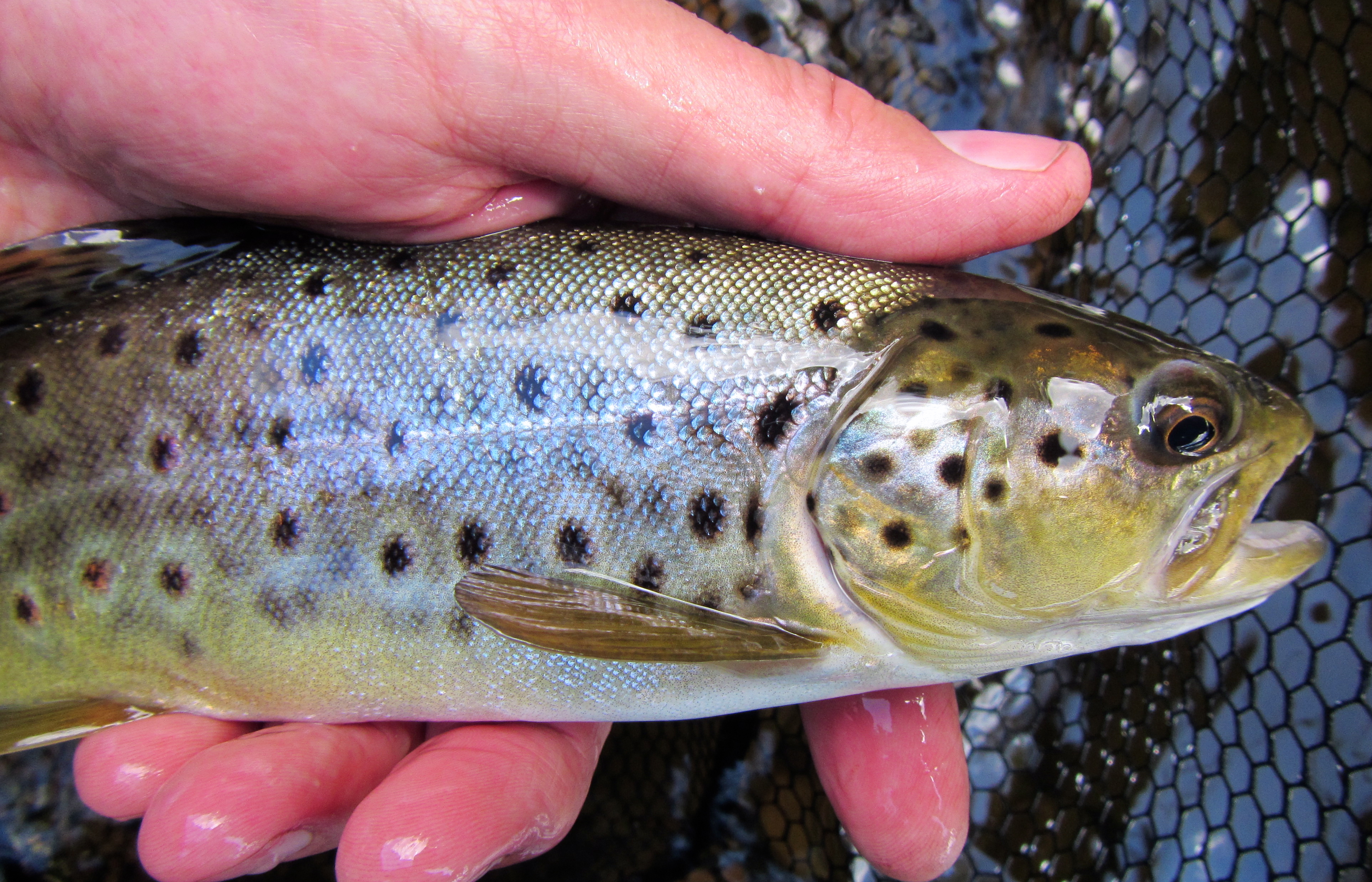
On to Plan B: catch the evening rise. We found some lovely dry fly water at 5pm that we had all to ourselves. By 7pm it looked like we had been teleported to Church Pool. Where the heck did all those people come from? Our focus was on fishing wets like dries, particularly the Magic Fly. The bugs certainly cooperated: sulphurs (size 14 and 18), March Browns, 16-18 BWOs and some size 16 tan caddis. For two-and-a-half hours, it was JV salmon city. Then the trout came out to play. When our time wound up, John and Randy graciously shared the water with your humble scribe. I was fortunate to connect with four lovely wild browns, cookie cutter in their length (10-12″) and unique in their markings: one had an odd scarcity of spots; another was rainbow-like in the density of his spotting; yet another still had faint traces of parr marks. Exquisite.

~

Sunday night I ventured to a different spot to check out the summer steno situation. They did their part, but sadly the trout didn’t cooperate. I had fair enough action from about 5:45pm-7pm (size 16 sulphurs hatching). Past 7pm it was total shutdown, even during the magic hour of 8-9pm. The summer stenos were out in force, but the trout weren’t interested. Massive spinner fall at dark with nothing on it. Perhaps when the water warms and drops a bit more (last night 57 degrees and 516 cfs).

An abundance of spent mayflies on the surface Sunday night, but a strange lack of sippers.

IMG_2268

Farmington River report 6/4/14: The return of the hat

Since yesterday’s outing was cut short by cloudburstus interruptus, I returned to the river today to finish the job. A quick in-and-out session before I had to go pick up the kids. Oh. And I had the hat this time. Much better. Life is beautiful. All is as it should be. Spot A was a 100-yard snotty pocketed run that proved to be a treacherous wade (the river came up slightly from last night’s rain, but was running clear). I managed two rainbows and two browns as I swung wets along its length. The size 16 black caddis were massed again, but there were no risers that I could see. Plenty of midges in the air, and a few stray small tan caddis. If you’ve ever taken my classes, or heard my “Wet Flies 101” presentation, you know I preach that absent any hatch activity or actively feeding fish, move, cover water, and present your flies in the most likely holding water. If you want to catch more trout on wets, I cannot emphasize this enough. All four fish came in different sections; all came because I was willing to wade and cover water. Another commonality was that all four took the point fly, a tungsten bead head soft-hackle Pheasant Tail, on the mended swing.

I made one more stop. It’s 50-yard section of river that I haven’t fished in at least five years. Once I remembered where the cafeteria line is, I came tight to a rainbow who thought he was a steelhead. One sky-high aerial, a bit of deep sulking, then another aerial before he spit the hook.

Not a bad way to spend 90 minutes in the mid-day June sun.

Where were you yesterday when I needed you?

Image

Farmington River report 5/30/14: Persistence pays off

Despite two strong caddis hatches, yesterday was a slow day on the Farmington River for swinging wets. I guided Jerry and Steve, and both of them did a great job presenting their wares over likely holding water. We fished hard and long, but in the end, the trout just weren’t in the mood to play. On a positive note, both guys got into trout, and the weatherman totally kicked the forecast (“numerous rain showers/thunderstorms, heavy at times” — it was sunny most of the day, and we had only one five minute-long sprinkle). Water was running cold (about 50 degrees) and 482cfs in the upper TMA. In addition to the caddis, we saw some size 16 BWOs, charcoal and cream midges, and one big honkin’ stonefly.

Stream-side meadow wildflowers, 11:30am

Image


Late afternoon, we saw a trout rise in about two feet of water. Steve put some casts over him, and a few minutes later he was playing tug-of-war.

Image

Steve’s co-conspirator, a halo-spotted wild brown. He took a size 10 soft-hackled bead head Pheasant Tail.

Image

What goes up must come down

Last week’s rains are long gone, but their effects on the Farmington — and elsewhere — linger. As of 1:30pm today, the MDC continues to bleed water from the Hogback dam at 540cfs, making the water above Riverton uncomfortably high and cold. Add in the flow from the Still River, and the Upper TMA is cruising along at nearly 900cfs. This water is all fishable, but it is high, and as you can imagine it’s put a damper on dry fly activity. We’re supposed to get little in the way of rain this week, and I expect the flows to moderate over the next few days. In the meantime, subsurface presentations are creating the best opportunities for fly anglers. The Lower TMA is another story: nearly 1,900 cfs. Blech.

Even the mid-sized rivers nearby are still way up. The Mattabesset here in Middletown is flooding the low-lying plains, and is the color of chocolate milk. After cresting at 900cfs, the Coginchaug is down to 250 (60 is normal for this time of year).

And to think, this time last year the flows were low.