The Hot Chocolate Stone steelhead nymph

You’re up before the sun. As you hike to the river, there’s a distinct chill in the air that tells you in another month the trail will be covered in snow. Once you get to your spot and wade in, you can feel the gripping cold of the water against your legs. Should have worn the neoprenes. Maybe not, though. It’s supposed to get up to the high 50s today. It’ll be warm enough later. But for now, damn, you’re just about shivering. You’ve already had your coffee, but you want something else. Something warm. And sweet. A cup of hot chocolate would do nicely. The kind your mom used to make after you came in from outside on a snow day. Hmm. Maybe the steelhead would like some, too. A little chocolate brown stone, just like the ones you saw hatching yesterday morning. A hot orange bead to get their attention. Soft hackles that say, “I’m alive.” And a buggy body because that’s what fish like. Once you get that first steelhead on, you’ll be downright toasty.

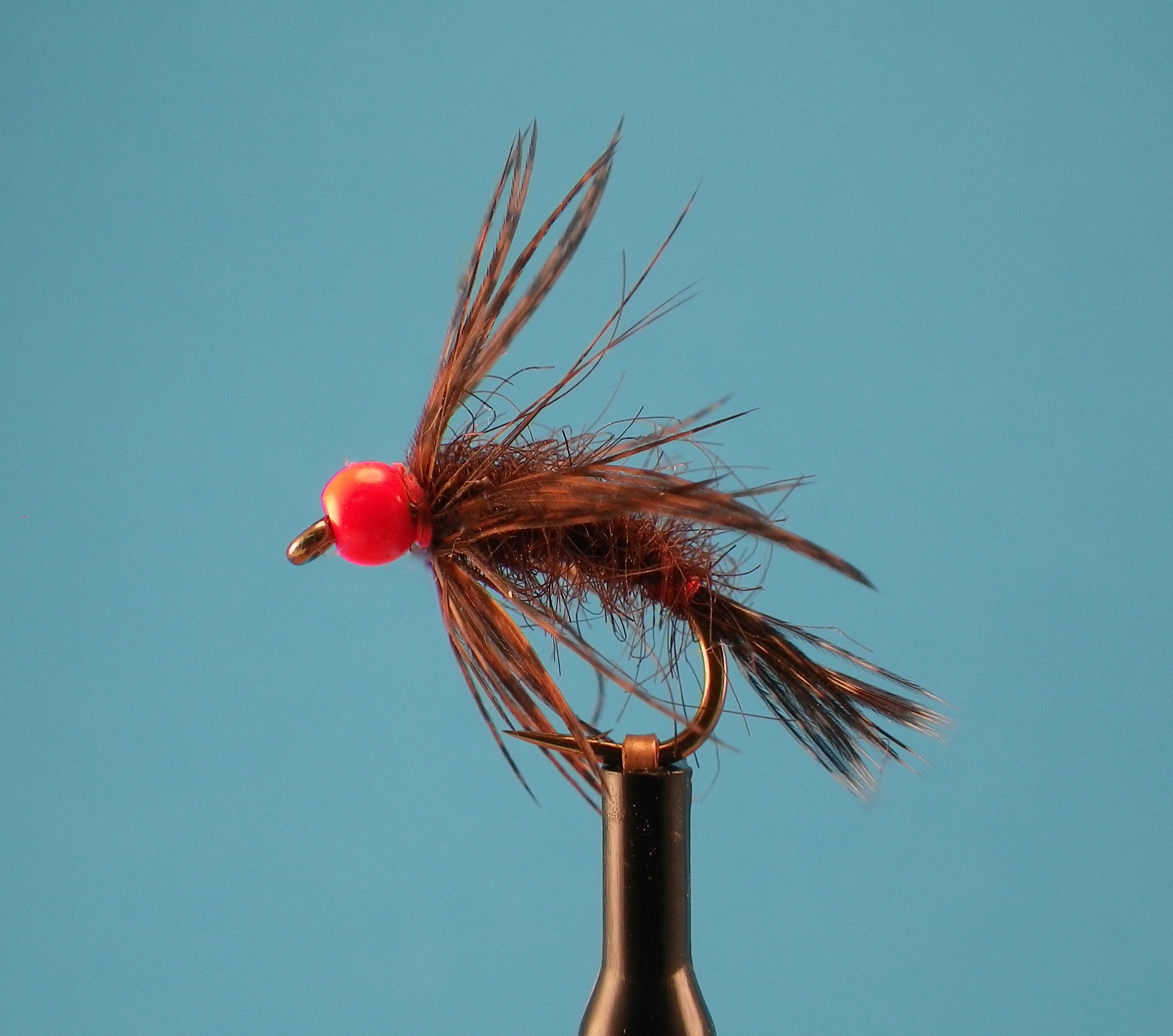
The Hot Chocolate Stone
Image

Hook: 2x strong, 1x short emerger, size 8-12
Thread: Hot Orange
Tail: Brown Coq de Leon
Body: Fiery brown angora goat, dubbed roughly
Hackle: Grouse
Bead: Hot Orange

Tying notes: This is a pretty straightforward tie. If you want to add a little more weight to the fly, you can seat the bead with about 8 wraps of undersized wire. Coq de Leon and grouse are beautifully barred materials that naturally create the illusion of segmentation. Angora goat is one of my favorite body materials; it’s spikey and rough, and you can get it in all kinds of colors from muted naturals to fluorescents. Use a dubbing loop to get than uber-buggy look. Play around with different bead colors at your discretion; the fish will always tell you if they have a preference.

~

The Hot Chocolate Stone Rogues’ Gallery:

Salmon River (NY) November 2012

Image

So, this guy walks into the woods carrying a fly rod…

We haven’t had rain in a while; the brook was low and the forest floor dry as tinder. Still, I found a spirited rivulet of groundwater that wended down the fall line before tumbling over a mossy ledge. When the water is this clear and low, the brookies tend to stay in the darker, deeper sections — or in the whitewater just below that miniature waterfall next to the moss-covered boulder.

Image

~

Vibrant red spots ringed by blue halos adorn an eastern brook trout. Brookies are the only trout (technically, they are char) native to much of the eastern United States.

Image

~

Fall is living up to its name. The deluge of soon-to-be-ex-flora has already begun in the hills. Fishing-wise, the leaves weren’t really an issue; I only hooked a few here and there. I was looking for photo ops when I glanced down at my feet. I was struck by contrast of these two leaves against the rock, but what really captured my fancy was how, in that swift current, did they manage to find a toehold — and how are they able to so stubbornly cling to their perch?

Image 

~

A lot of people don’t know this, but Vincent Van Gogh was an avid fly fisherman. He used to jet from his estate in Holland to his cabin in the Appalachian foothills, where he could pursue his passion: fishing for Salvelinus fontinalis. The flank of the brook trout is said to have been Vincent’s inspiration for his masterwork Starry Night

Well, at least that’s what I heard.

Image

Fishing notes: Water was 56 degrees. Not surprisingly, most of the fish I pricked came from deeper holes, dark runs, and plunge pools. I found one abyss where there was a bona fide lunker (for this size stream) of about 11-12 inches. Pricked him twice, but couldn’t get a good enough hookset to close the deal. I tried for over a half hour, and in the end decided that that fish might be responsible for populating hundreds of yards of brook — and with spawning season so close, would be better left uncaught. I fished mostly downstream. Dry fly was a size 16 Improved Sofa Pillow; wets were a cornucopia of bead head soft-hackles. Cigar was an Aroma de Cuba Reserve maduro Churchill.