If you care about building a sustainable striped bass fishery, please take a few minutes to send your comments. Here’s the link to last week’s post that gives you everything you need to know about the ASGA’s position/plan, and how to submit a comment. Thank you.
I get this question all the time. As with many fly fishing questions, the answers can be simple and complex. This post is designed to be a mini-article rather than a treatise, so I’ll keep it simple.
If you’re asking “How do I know what bait is in the water?” you’re probably trying to match the hatch. That’s rarely a bad idea, especially if the stripers are keyed on a specific bait. Just be aware that while stripers can be selective feeders, they aren’t always selective feeders. So a generic baitfish pattern like my Soft-Hackled Flatwing may work just fine even when there’s nothing like it swimming around. Still, you want to know what’s for dinner, so…
Get a large fine mesh dip net and go fishing. Or, if you have a drag net and a partner, use that. You can do this on a beach, or off a well-lit dock and night, or in an outflow or an estuary. Sometimes you don’t need to get wet: get a bright light and shine it in the water at night. If the water goes nuts, it’s probably silversides. This first step is obvious, but many anglers are either too lazy or oblivious to do it. I’ll tell you in advance that you may surprised at the volume of small stuff that’s in the water.
Research the bait in your area. Get a field guide, or use the web for research. You should know what the resident baits are, and be able to ID them. A mummichog is not a silverside is not a peanut bunker.
Know what bait is likely to be when and where. Again: do your homework. Discover the patterns. Know when herring come up the rivers off Long Island Sound to spawn. Know when the sand eels show up in Newport, RI. Know when the cinder worms are swarming in the salt ponds of SoCo. Every year is different, but nature is always right on time.
Not a silverside. Sometimes, when the bait is in thick, you’ll accidentally snag one of the critters. That was the case with this peanut bunker several years ago.
I had the pleasure of fishing with Toby Lapinski earlier this week and even though it’s that time of year, our quarry was not striped bass, but rather small wild trout and char. This brook was new to me, so I was stoked to be on undiscovered waters. The stream is overgrown with briars and saplings, to say nothing of the broken limbs and downed trees that seemed to be everywhere. It had riffles, glides, plunges — a nifty combination for a brook that is in some places small enough to jump across. (That’s, of course, if I could get a running start. And not be wearing waders. And be 20 years younger.) Funny thing! I’ve driven past this brook hundreds of times and never knew it was there.
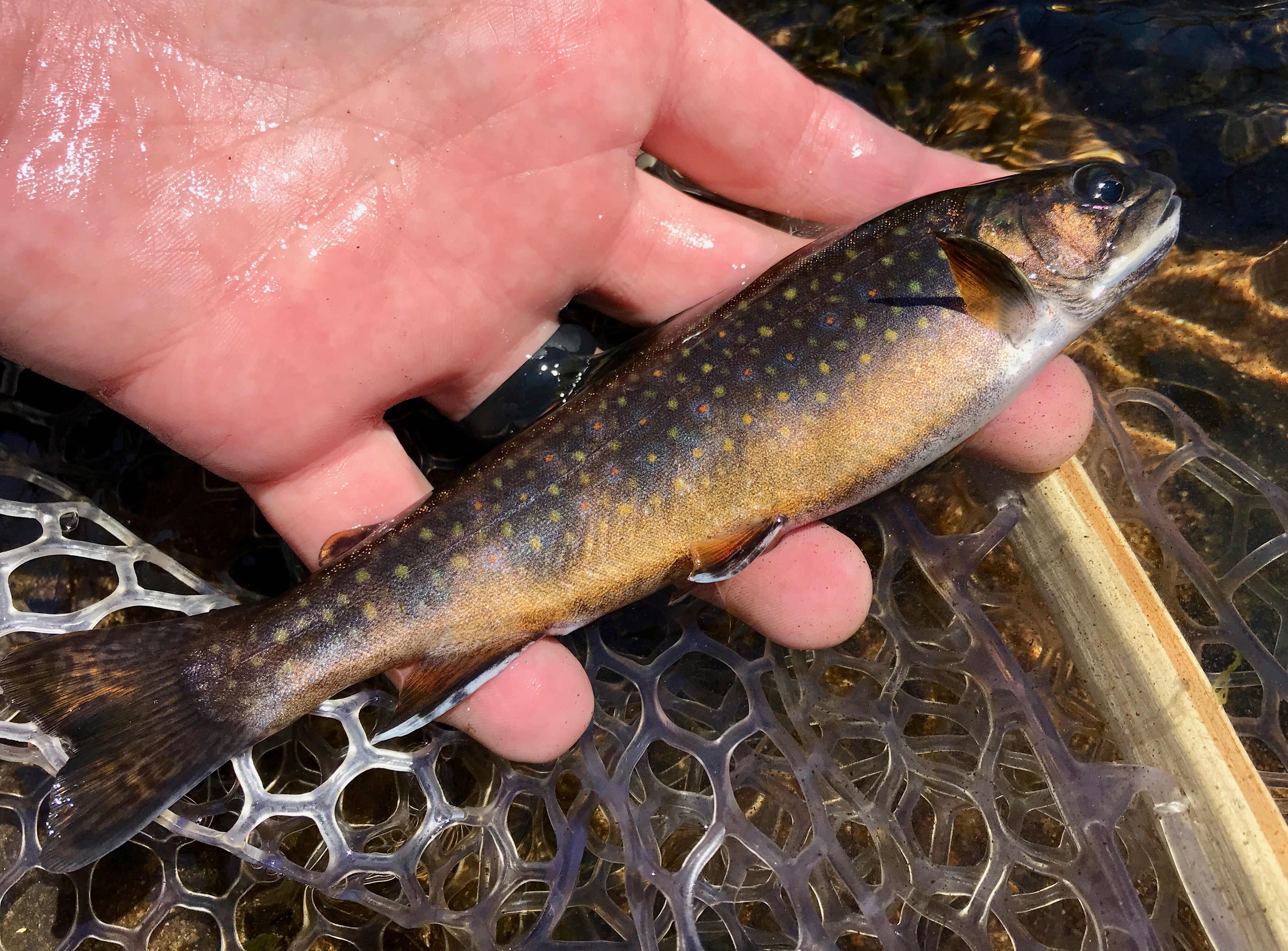
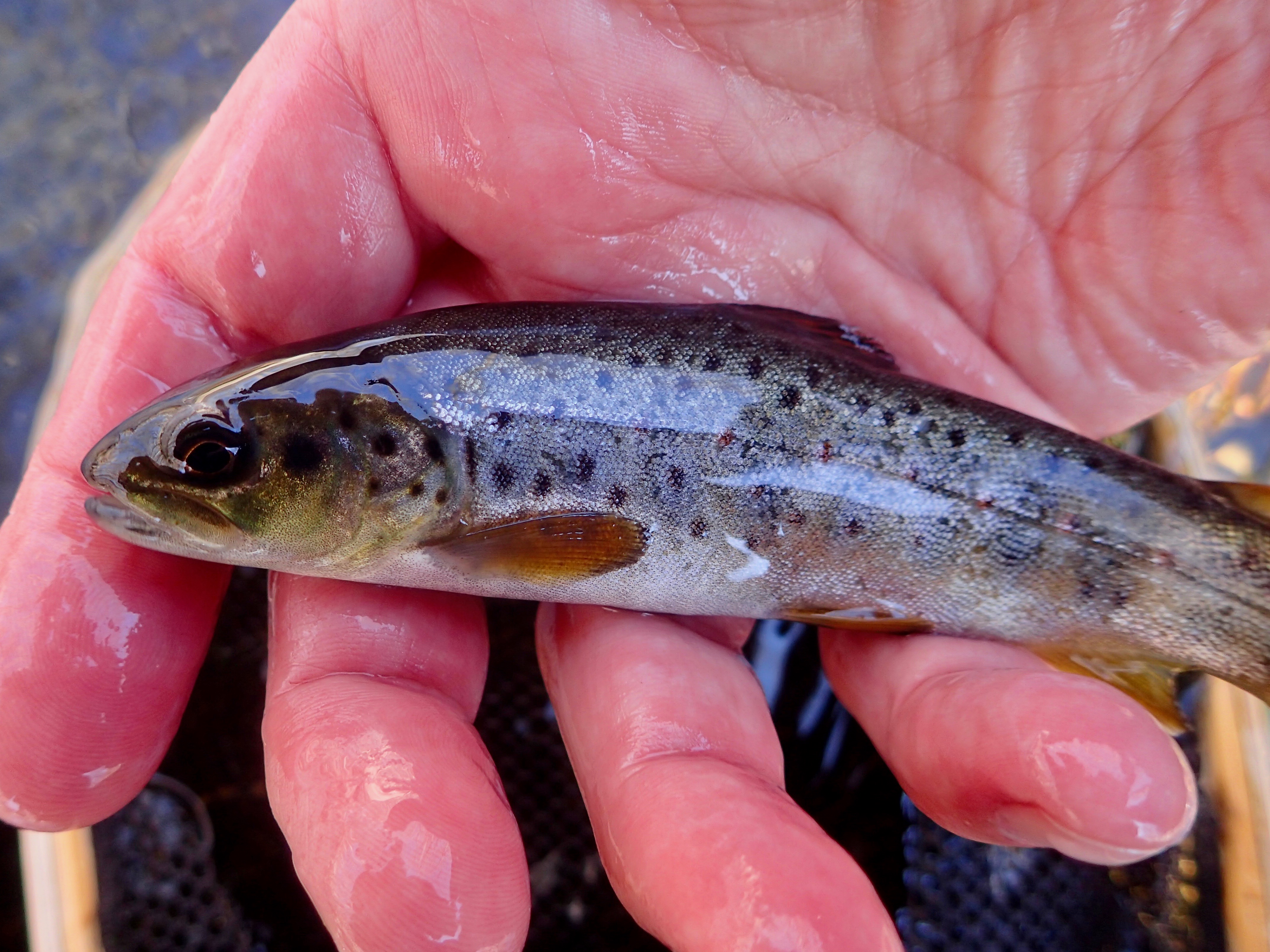
I was hoping these schools of fry in the sunlit shallows were YOY browns or brookies. But no. They’re black nosed dace YOY, maybe a couple centimeters long. Did you know that some scientists think that the eastern BND spread after the last ice age from a single colony in present-day Connecticut?Not a bad bit of camo. You get the sense of the wildness of the place. I’d estimate the water to have been medium-high — remember, this was my first time here — which is a good spring flow, but we had bright sunshine and no canopy working against us. We saw midges, and there was also a decent hatch of small (16-18) tan caddis. Some of the sexiest runs and holes were surprising blanks, like this one. There’s always next time. Photo by Toby Lapinski.Toby captured the largest fish of the outing, this vibrant char. We both fished a dry/dropper, and while Toby had some takes on the dry, all of my action came on the dropper, which was 2x short size 18 BHPT. I also tried some micro streamers, but had no takers. I highly recommend a dry/dropper setup on a new stream. It’s the fastest way to find out what the fish want. Photo by Toby Lapinski.Small stream wild browns like this are fearsome fighters. It’s almost like playing a minute smallmouth bass. I pricked several more little browns on the tiny dropper nymph.


 currentseams.com